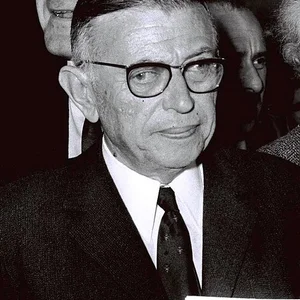
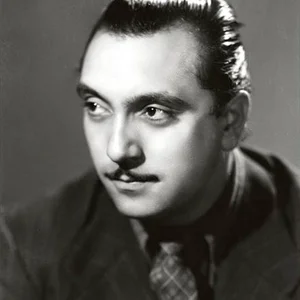
French philosopher and musicologist, professor at the Sorbonne. A thinker of morality, time, and the ineffable, he also dedicated a major work to memory and the refusal to forgive Nazi crimes.
Vladimir Jankélévitch(1903 — 1985)
Vladimir Jankélévitch
France
5 min read
Frequently asked questions
Famous Quotes
« Forgiveness died in the death camps.»
Key Facts
- Born in 1903 in Bourges into a Jewish family of Russian origin, died in 1985 in Paris
- He passed the agrégation in philosophy (1926) and defended his doctoral thesis on Schelling in 1933
- Stripped of his teaching position by the Vichy regime in 1940 due to antisemitic laws, he joined the Resistance
- Professor of moral philosophy at the Sorbonne from 1951 to 1978
- Published *L'Imprescriptible* (1971), a reflection on the impossibility of forgiving Nazi crimes
Works & Achievements
His first major study, which reveals Bergson's decisive influence on his thinking about time and duration.
A reflection on irony as a moral attitude and a freedom of the mind in the face of seriousness.
A vast inquiry into morality and the virtues, one of his most ambitious works.
A meditation on the “je-ne-sais-quoi” and the “almost-nothing,” notions at the heart of his philosophy.
A major work of philosophical musicology: music expresses without meaning to say anything.
A long essay on human finitude, time, and the instant of death.
A famous text refusing forgiveness and the forgetting of Nazi crimes: “forgiveness died in the death camps.”
Anecdotes
Vladimir grew up surrounded by books: his father, Samuel Jankélévitch, was one of the first to translate Freud, Hegel, and Schelling into French. The young Vladimir thus learned German philosophy very early on… though he would ultimately reject it after the war.
Jankélévitch was a passionate pianist who played every day and wrote many books on music (Fauré, Ravel, Debussy, Satie). For him, music cannot be explained: it belongs to “the ineffable,” what we feel but no word can express.
In 1940, the Vichy regime expelled him from teaching because he was Jewish, in application of the “Jewish Statute.” He then joined the Resistance in the south of France and lived in hiding under a false identity.
After the Shoah, Jankélévitch refused for the rest of his life to set foot in Germany, to have his works translated into German, or to publicly listen to the German music he nonetheless loved. He wrote that “forgiveness died in the death camps.”
In May 1968, the elderly Sorbonne professor sided with the rebelling students, faithful to his conviction that morality sometimes demands taking the side of those who call for justice.
Primary Sources
Forgiveness! But did they ever ask us for forgiveness? […] Forgiveness died in the death camps.
Music means something in general, without meaning anything in particular.
Death is that event with no tomorrow that leaves us no time to draw the lesson from experience.
The almost-nothing is what separates being from non-being, the infinitely small that changes everything.
Key Places
City in central France where Vladimir Jankélévitch was born in 1903 into a Jewish family of Russian origin.
On the Rue d'Ulm, he was a student here from 1922, training in philosophy before the agrégation exam.
In the early 1930s, he taught French philosophy here while abroad.
In the occupied southwest, he took part in the Resistance after being dismissed by the Vichy regime.
A professor of moral philosophy from 1951 to 1978, he spent the heart of his academic career here.
The city where he lived most of his adult life and where he died in 1985.
Liens externes & ressources
Références
Œuvres
Henri Bergson
1931
L'Ironie
1936
Le Traité des vertus
1949
Philosophie première
1954
La Musique et l'ineffable
1961
L'Imprescriptible (Pardonner ?)
1971