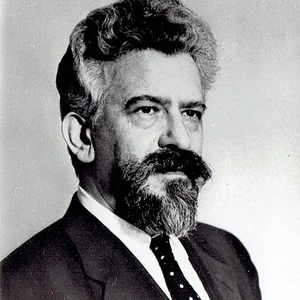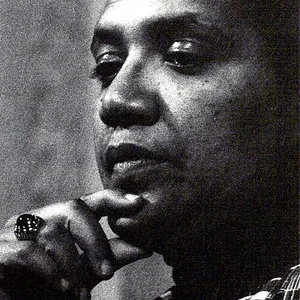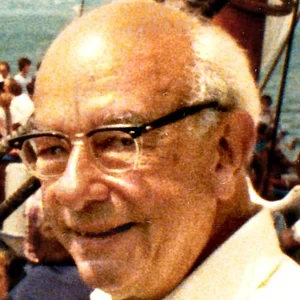

American philosopher and logician, a major figure in 20th-century analytic philosophy. He challenged the distinction between analytic and synthetic truths and defended a holistic, empiricist view of knowledge.
Willard Van Orman Quine(1908 — 2000)
Willard Van Orman Quine
États-Unis
6 min read
Frequently asked questions
Famous Quotes
« To be is to be the value of a bound variable.»
« No entity without identity.»
Key Facts
- Born in 1908 in Akron, Ohio, and died in 2000 in Boston.
- Published 'Two Dogmas of Empiricism' in 1951, an article that challenges the analytic/synthetic distinction.
- Released 'Word and Object' in 1960, in which he develops the thesis of the indeterminacy of translation.
- Taught philosophy at Harvard University for most of his career.
- Developed the thesis of epistemological holism (the web of beliefs confronting experience as a whole).
Works & Achievements
Article proposing an original system (“NF”) for set theory, still studied by logicians today.
A mathematical logic textbook that helped train several generations of students.
A famous article raising the question of ontology: “to be is to be the value of a variable.”
A standard textbook for teaching formal logic, reprinted many times.
A text that revolutionized analytic philosophy by rejecting the distinction between analytic and synthetic truths.
A collection of foundational articles that widely spread his ideas, including “Two Dogmas.”
His major work, which develops the indeterminacy of translation through the “gavagai” thought experiment.
A work written with J. S. Ullian presenting knowledge as a web of interconnected beliefs.
Anecdotes
Quine typed his texts on an old Remington typewriter that he had modified to fit logical symbols. To make room, he had sacrificed a few keys, including the question mark. When asked how he managed without it, he replied: "You see, I work with certainties."
During the Second World War, this armchair philosopher enlisted in the U.S. Navy and spent several years decoding the coded messages of German submarines. He ended the war with the rank of lieutenant commander.
In computing, a "quine" is a program able to print its own source code without reading anything else. This name is a tribute paid to him by the scientist Douglas Hofstadter, who was fascinated by the self-referential sentences that Quine studied.
As a young Harvard PhD, Quine traveled in 1932-1933 to Vienna, Prague, and Warsaw to meet the great European logicians, including Rudolf Carnap. He attended lectures in German and struck up a friendship with Carnap that left a lasting mark on his thinking.
Quine loved to travel and ended up visiting more than one hundred and ten countries across six continents. He would learn the rudiments of each language he encountered — he who spent his life reflecting on what "to translate" really means.
Primary Sources
To be assumed as an entity is, purely and simply, to be reckoned as the value of a variable. (“To be is to be the value of a variable.”)
The totality of what we call our knowledge or beliefs [...] is a man-made fabric which impinges on experience only along the edges.
A rabbit scurries by, the native says “Gavagai,” and the linguist notes down the sentence “Rabbit” as a tentative translation, to be tested in further cases.
Carnap was my first experience of sustained intellectual engagement with anyone of an older generation.
Key Places
Industrial city in Ohio where Quine was born in 1908 and spent his childhood.
Institution where Quine completed his undergraduate studies in mathematics and discovered logic.
Site of his doctorate and then his entire career as a teacher and researcher, for more than forty years.
Capital where Quine came into contact in 1933 with the Vienna Circle and logical empiricism.
City where Rudolf Carnap taught; Quine attended his lectures there and formed a decisive intellectual friendship.
City where Quine died on Christmas Day 2000, very close to Harvard where he had spent his life.
Typical Objects

An old 1927 machine that Quine had converted to add logic symbols, even if it meant removing the question mark and other keys. It stayed with him throughout his career.

An everyday tool of the logician and the teacher, on which Quine traced formulas, quantifiers and variables in front of his Harvard students.

Quine, a great traveler, accumulated stamps by visiting more than one hundred and ten countries. The passport symbolizes his curiosity for languages and cultures.

Typed articles and chapters that Quine exchanged by mail with Carnap, Tarski or Davidson, forming a scholarly dialogue at a distance.

Small dictionaries that Quine took along on his travels to learn a few words of each language, a concrete echo of his reflection on translation.
School Curriculum
Vocabulary & Tags
Key Vocabulary
Tags
Daily Life
Morning
Quine rose early and devoted his mornings to writing, seated at his modified typewriter. He liked to work in quiet, polishing each sentence with a great economy of words.
Afternoon
In the afternoon, he went to Harvard to teach his logic and philosophy classes, or to meet with students and colleagues. He also took part in the department's seminars and discussions.
Evening
In the evening, he read, answered his abundant scholarly correspondence with philosophers from all over the world, and prepared his texts. He enjoyed the company of his family and his university friends.
Food
Quine led the sober, regular life of a twentieth-century American academic. A great traveler, he sampled with curiosity the cuisines of the many countries he visited.
Clothing
He wore the classic suit and tie of the university professor of his era, plain and neat. His attire reflected the rigor and discretion of his character.
Housing
He lived in the Boston-Cambridge area, near Harvard, in a house full of books. His study, with its typewriter and papers, was the heart of his activity.
Historical Timeline
Period Vocabulary
Liens externes & ressources
Références
Œuvres
New Foundations for Mathematical Logic
1937
Mathematical Logic
1940
On What There Is
1948
Methods of Logic
1950
Two Dogmas of Empiricism
1951
From a Logical Point of View
1953
Word and Object
1960