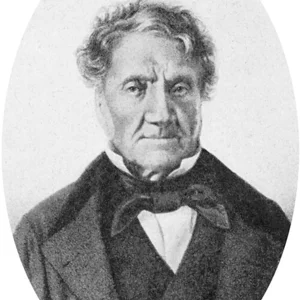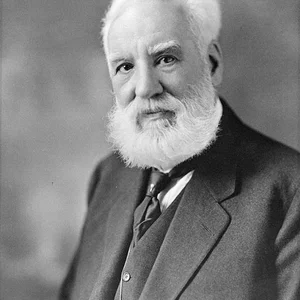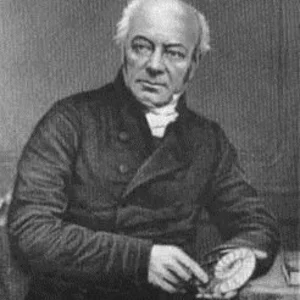

British geologist and palaeontologist, a pioneer of palaeontology. In 1824, he described and named Megalosaurus, the first dinosaur ever described scientifically.
William Buckland(1784 — 1856)
William Buckland
Angleterre
5 min read
Frequently asked questions
Key Facts
- Born in 1784 in Axminster (England), died in 1856
- In 1824, the first scientific description of a dinosaur, Megalosaurus
- First professor of geology at the University of Oxford (1818)
- In 1821, studied Kirkdale Cave, proving it had been a den of prehistoric hyenas
- In 1836, published one of the Bridgewater Treatises reconciling geology and natural theology
Works & Achievements
Study of ossuary caves, notably Kirkdale, demonstrating that they were hyena dens. A founding work of palaeoecology.
First scientific description of a dinosaur, a major milestone in the history of palaeontology.
Excavation of the oldest known ceremonially buried human skeleton in Western Europe.
A Bridgewater Treatise reconciling geology with natural theology, widely read during the Victorian era.
Buckland adopted and promoted Agassiz's ice age theory in Britain, explaining landscapes through the action of glaciers.
He coined the term "coprolite" and showed how fossil excrement provides insight into the diet of extinct animals.
Anecdotes
William Buckland was famous for having vowed to eat an animal of every species. He is said to have tasted mole, mouse, panther, crocodile and even porpoise head. He reportedly declared that the mole and the bluebottle fly were the worst dishes of his entire life.
In 1824, Buckland described the Megalosaurus from a jaw and a few bones found in a quarry near Oxford. It was the very first dinosaur to be scientifically described, nearly twenty years before the word “dinosaur” was coined by Richard Owen.
During a visit to a cathedral, he was shown stains of “martyr's blood” that never dried on the floor. Buckland bent down, dipped his finger in them, licked it and immediately declared: “This is bat urine.”
Buckland studied a cave in Yorkshire, Kirkdale Cave, filled with gnawed bones. Through the presence of fossilised excrement (which he named coprolites), he demonstrated that the cave had been a den of prehistoric hyenas, and not the result of the biblical Flood.
In 1823 he described a human skeleton stained with red ochre, which he mistakenly named the “Red Lady of Paviland,” believing it to be a Roman woman. It was in fact the oldest ceremonial human burial in Western Europe, and a man.
Primary Sources
In the course of the year 1818 the bones of an enormous animal of the Lizard tribe were discovered near Oxford... I have ventured, in concurrence with my friend and fellow-labourer, the Rev. W. Conybeare, to assign to it the name of Megalosaurus.
The bones of the cave at Kirkdale... bear the marks of having been gnawed and broken by the teeth of the animals to which they belonged; and the cave appears to have been a den of hyaenas.
The phenomena of geology... afford the most decisive proofs of the wisdom, power, and goodness of the Creator.
Key Places
William Buckland's birthplace, in the south-west of England, a region rich in fossils that sparked his calling.
Buckland was a student here and then the first reader in geology from 1819. It was here that he studied and named the Megalosaurus.
A cave filled with bones where Buckland demonstrated the existence of an ancient hyena den, earning the Copley Medal for this work.
A coastal cave where Buckland unearthed the “Red Lady of Paviland” in 1823, the oldest ceremonial human burial in Western Europe.
The quarry where the bones of the Megalosaurus that Buckland described in 1824 were found.
Buckland was appointed dean here in 1845 and carried out his ecclesiastical duties until the end of his life.
Typical Objects

The geologist's basic tool for detaching and splitting rocks in order to extract fossils and minerals. Buckland carried it constantly on his excursions.

A fragment of tooth-lined jawbone found in the Stonesfield quarry. It was from this specimen that Buckland described the first dinosaur in 1824.

Fossilised droppings studied by Buckland to reconstruct the diet of extinct animals. He even had some inlaid into a polished table.

Optical instruments used to examine the fine structure of minerals, bones and fossil shells. Indispensable to the work of description.

The notebook in which the geologist recorded rock layers, drew fossils and noted the location of discoveries. The foundation of all stratigraphic work.

A glass-fronted cabinet displaying the personal collection of fossils, bones and minerals. Buckland's study at Oxford overflowed with specimens.
School Curriculum
Vocabulary & Tags
Key Vocabulary
Tags
Lieu
Daily Life
Morning
Buckland often began his day surrounded by fossils and live animals — his Oxford home housed a veritable menagerie. He taught his geology lectures with great enthusiasm, brandishing bones and maps before his students.
Afternoon
Afternoons could be devoted to fieldwork, hammer in hand, examining rock strata and collecting specimens. He also corresponded with fellow scholars such as Mary Anning and Charles Lyell.
Evening
In the evenings, Buckland entertained guests, enlivening conversation with his wit and eccentric experiments. He catalogued his fossils, drafted scientific memoirs, and prepared his publications.
Food
Curious even at the table, Buckland practised what he called "zoophagy": he claimed to have tasted the flesh of nearly every animal, from hedgehog to crocodile. Day to day, he enjoyed the comfortable table of a prosperous English clergyman and academic.
Clothing
As a churchman and professor, he wore the black dress of the Anglican clergy. In the field, he was known for keeping his academic gown or mortarboard on even while wielding a geologist's hammer.
Housing
He lived in university lodgings at Oxford, crowded with fossils, minerals, and live animals. Upon being appointed dean, he moved into the deanery residence at Westminster, in London.
Historical Timeline
Period Vocabulary
Liens externes & ressources
Références
Œuvres
Reliquiae Diluvianae
1823
Description et nom du Megalosaurus
1824
Découverte de la « Dame rouge de Paviland »
1823
Geology and Mineralogy Considered with Reference to Natural Theology
1836
Théorie de la glaciation
1840
Étude des coprolithes
1829