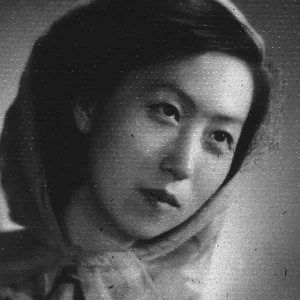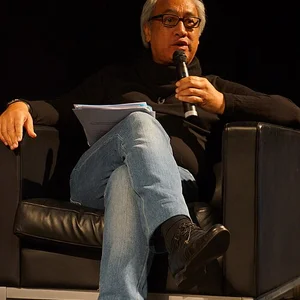

Witi Ihimaera, born in 1944 in Gisborne, is a New Zealand novelist and short-story writer of Māori descent who writes in English. The first Māori to publish a collection of short stories and then a novel, he gave a literary voice to his people, notably with “The Whale Rider”.
Witi Ihimaera(1944 — ?)
Witi Ihimaera
Nouvelle-Zélande
6 min read
Frequently asked questions
Key Facts
- Born in 1944 in Gisborne, on the east coast of the North Island (New Zealand)
- Published “Pounamu, Pounamu” in 1972, the first short-story collection written by a Māori
- Published “Tangi” in 1973, the first novel written by a Māori author
- Published “The Whale Rider” in 1987, adapted into a film in 2002 (“Whale Rider”)
- Pursued a parallel career as a New Zealand diplomat (consul, embassies)
Works & Achievements
The first short-story collection published by a Māori, depicting the life of rural communities on the East Coast.
The first novel written by a Māori, exploring grief, the extended family and attachment to the land.
A novel exploring a single day in a Māori community and the importance of family ties.
An ambitious family saga blending colonial history and Māori memory, award-winning in New Zealand.
His most famous work: a young girl defies tradition to save her tribe; adapted for the screen in 2002.
An East Coast family novel, winner of the prize for best New Zealand work of fiction.
A largely autobiographical novel that openly addresses homosexuality.
A novel interweaving the Vietnam War and Māori gay identity.
Anecdotes
In 1985, Witi Ihimaera was working as a New Zealand diplomat in New York. One day, he spotted a whale swimming up the Hudson River in the heart of Manhattan. That image, combined with complaints from his two daughters that the heroes of stories were always boys, inspired *The Whale Rider*: he wrote the novel in just three weeks.
In 1972, with his short-story collection *Pounamu, Pounamu*, Ihimaera became the very first Maori to publish a work of fiction. The following year, his novel *Tangi* made him the first Maori novelist in history. At a time when New Zealand literature was dominated by writers of European descent, he opened up an entirely new path.
Adapted for the screen in 2002 as *Whale Rider*, *The Whale Rider* enjoyed worldwide success. The young Maori actress **Keisha Castle-Hughes**, who played the heroine Paikea, became at age 13 the youngest actress ever nominated for the Academy Award for Best Actress at the time.
Ihimaera long led two lives: a writer by night and a diplomat by day for New Zealand's Ministry of Foreign Affairs, posted notably in New York and Australia. He also taught creative writing at the University of Auckland, training a new generation of Maori authors.
His stories draw on his ancestral village of Waituhi, near Gisborne, and on his tribe (*iwi*) Te Aitanga-a-Mahaki and Ngati Porou. He transforms the oral memory, legends, and genealogy (*whakapapa*) of his people into modern novels read all over the world.
Primary Sources
In the old days, in the years that have gone before us, the land and sea felt a great emptiness, a yearning.
A collection in which Ihimaera tenderly portrays the everyday life of rural Māori communities on the East Coast, blending Māori (te reo) and English; the first work of fiction published by a Māori author.
A novel centered on the mourning (tangi) of a young Māori who returns to his village for his father's funeral, and on the importance of the extended family (whānau) and the land.
Key Places
City on the east coast of the North Island where Witi Ihimaera was born in 1944, in the heart of a region with a strong Maori presence.
Small ancestral village in the Waipaoa Valley, near Gisborne, where his family (whanau) lives and which inspires the setting of many of his stories.
Institution where Ihimaera pursued his higher education and earned his degree.
City where Ihimaera served as a New Zealand diplomat in the 1980s and where, upon seeing a whale on the Hudson, he came up with the idea for “The Whale Rider”.
University where Ihimaera teaches creative writing and trains young Maori authors.
Typical Objects

The 20th-century writer's working tool, on which Ihimaera composed his short stories and novels before the computer age.

Sacred green stone (greenstone) carved into pendants or weapons by the Māori. It gives its title to Ihimaera's first collection and symbolizes a treasure (taonga) passed down between generations.
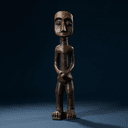
A Māori pendant made of pounamu depicting a stylized human figure, worn around the neck as an ancestral and protective object.

A Māori cloak woven from flax (harakeke) and adorned with feathers, worn during important ceremonies to express prestige and respect.

A traditional Māori wooden weapon, a kind of staff-spear used in combat and in ceremonial dances, a symbol of courage present in the culture evoked by Ihimaera.

A book published in 1987 that tells the story of Paikea, a young girl destined to lead her tribe. It has become a worldwide classic of Māori literature and was adapted for the cinema.
School Curriculum
Vocabulary & Tags
Key Vocabulary
Tags
Daily Life
Morning
Like many writers pursuing a double career, Ihimaera devoted his mornings to his work as a civil servant or teacher. Coffee downed, he would head to his office at the Ministry of Foreign Affairs or at the university, in a large modern city such as Wellington, Auckland or New York.
Afternoon
The afternoon was divided between diplomatic meetings, creative writing classes and reading. He took notes on the stories of his childhood and the legends of his tribe, which he intended to turn into tales when evening came.
Evening
In the evening, once his duties were over, he wrote, sometimes late into the night. It was in these stolen hours that he composed most of his novels, including *The Whale Rider*, written in just a few weeks.
Food
His table reflected 20th-century New Zealand, blending Western cooking (meat, bread, tea) and traditional Māori food prepared in a hāngī, an earth oven heated by stones, in which sweet potatoes (kumara), pork and fish are cooked.
Clothing
Day to day, Ihimaera wore the plain attire of the civil servant and academic: shirt, jacket, modern city clothes. For ceremonies on the marae, he would don traditional Māori items such as the feather cloak (korowai).
Housing
Born in a rural Māori community near Gisborne, he later lived in apartments and houses in large cities, both in New Zealand and abroad. The heart of his world, however, remained the marae and the meeting house (wharenui) of his ancestral village.
Historical Timeline
Period Vocabulary
Liens externes & ressources
Références
Œuvres
Pounamu, Pounamu
1972
The Matriarch
1986
Bulibasha, King of the Gypsies
1994
Nights in the Gardens of Spain
1995