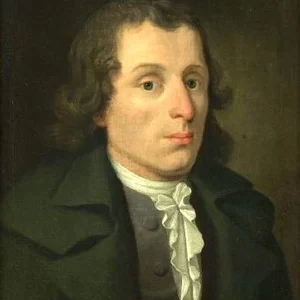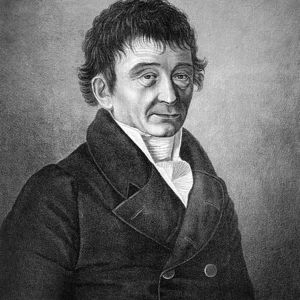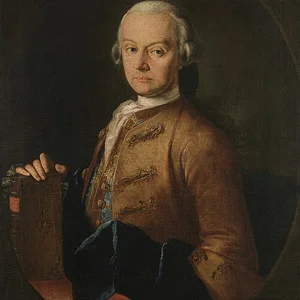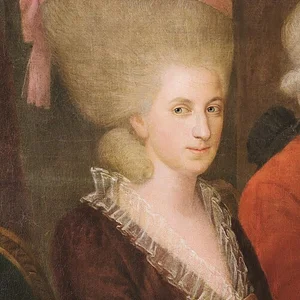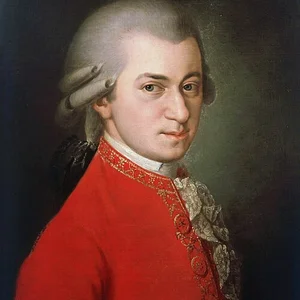

An Austrian composer of the 18th century, Wolfgang Amadeus Mozart (1756–1791) is considered one of the greatest composers in the history of music. A child prodigy, he composed more than 600 works spanning every musical genre and stands as the ultimate embodiment of the Classical style.
Wolfgang Amadeus Mozart(1756 — 1791)
Wolfgang Amadeus Mozart
principauté archiépiscopale de Salzbourg
9 min read
Frequently asked questions
Famous Quotes
« Music is my universal language»
Key Facts
- 1761: Early debut as a child prodigy, performing concerts across Europe
- 1775: Composition of The Magic Flute, his operatic masterpiece
- 1782: Premiere of the opera The Marriage of Figaro in Vienna
- 1787: Composition of Symphony No. 40 in G minor
- 1791: Death in Vienna at the age of 35, having composed more than 600 works
Works & Achievements
A serenade for strings and one of Mozart's most beloved works. This light, melodious composition embodies classical perfection and remains a staple of the musical repertoire.
An opera composed in German that blends fantasy, magic, and sublime music. This final great work by Mozart combines comic opera and drama, becoming one of the greatest successes in operatic history.
An opera in Italian following the exploits of the seducer Don Giovanni. A masterpiece of the genre, this work showcases Mozart's mastery of musical drama and orchestration.
A major composition left unfinished at Mozart's death and completed by his student Süssmayr. The Requiem is a prayer for the dead and one of the composer's most deeply moving creations.
A concerto celebrated for its lyrical and accessible second movement. This work illustrates the perfect balance between virtuosity and emotion that defines Mozart's classical style.
A comic opera in Italian based on Beaumarchais's play, blending charming music with social commentary. This composition revolutionized opera buffa through its musical and dramatic richness.
An intense and dramatic symphony, notable for its minor key — unusual for Mozart. This dark and passionate work stands in sharp contrast to the composer's typically graceful style.
A virtuosic violin concerto combining elegance and technical complexity. This composition remains one of the cornerstones of the classical repertoire for solo violin.
Anecdotes
At the age of 5, Mozart composed his first minuet and began a tour of Europe with his father Leopold and his sister Maria Anna. These concerts at the courts of kings and princes made him a celebrity from childhood. Rulers were astonished by this small boy who could play the harpsichord and violin with extraordinary mastery.
Mozart wrote his first symphonies before the age of 10 and composed his first opera, 'Mitridate, re di Ponto', at just 14. This exceptional musical precocity made him a child prodigy recognized throughout Europe. Despite his young age, his compositions rivaled those of established adult composers.
In 1785, Mozart joined the Freemasons in Vienna — an important decision in his life that influenced some of his works. His opera 'The Magic Flute' (1791) contains Masonic symbolism and reflects the ideas of the Enlightenment. This membership shows his commitment to the values of freedom and tolerance of his time.
Mozart wrote more than 600 works in just 35 years, including 41 symphonies, 27 piano concertos, and 17 operas. This extraordinary productivity reflects his constant creative genius and complete mastery of every musical genre. Among his masterpieces are 'A Little Night Music' and 'Don Giovanni'.
Mozart died in Vienna on December 5, 1791, at the age of 35, most likely from an infectious disease. His final days were marked by financial hardship, despite the fame that should have secured him a comfortable life. Yet his short life left an immense and timeless influence on classical and Western music as a whole.
Primary Sources
I am currently occupied with composing an opera for Prague. It is a great undertaking, but I am confident that I shall produce something remarkable.
Our son has composed a symphony that was performed to great success. The court musicians were surprised by the maturity and originality of his work.
Kyrie eleison, christe eleison, kyrie eleison. Dies irae, dies illa solvet saeclum in favilla.
The young composer Mozart presented several of his compositions to the Viennese public, which were received with enthusiasm and repeated applause.
It is agreed that Herr Wolfgang Amadeus Mozart shall compose an opera in three acts for the Prague theatre, under the terms established by director Guardasoni.
Key Places
Mozart's birthplace in Austria, where he was born on January 27, 1756. It was in Salzburg that he began his early musical training under the guidance of his father, Leopold Mozart.
The Austrian capital where Mozart settled in 1781 and composed the majority of his great works, including his most celebrated operas and symphonies. It was in Vienna that he died in 1791.
The city Mozart visited as a child prodigy from 1764 to 1765 to perform and make a name for himself. Paris was a major center of European musical life in the 18th century.
The Italian city where Mozart stayed on several occasions and composed operas, including 'Mitridate, re di Ponto' in 1770. Italy and Milan played an important role in his musical education.
The Czech city where Mozart achieved great success with his operas 'The Marriage of Figaro' and 'Don Giovanni'. Prague was hugely important to Mozart's recognition as an opera composer.
The house at 9 Getreidegasse where Mozart was born, now converted into a museum. This memorial site preserves mementos of the composer and attracts music lovers from around the world.
Typical Objects
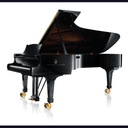
A keyboard instrument and ancestor of the modern piano, used by Mozart to compose and perform. This revolutionary 18th-century instrument was central to classical musical practice and allowed for far greater expressiveness than the harpsichord.
📷 CC BY-SA 3.0 · Wikimedia Commons ↗
Sheets of paper bearing staves and hand-written notes, the primary working material for Mozart. The composer wrote over 600 works in classical musical notation, preserving his creations for posterity.

A stringed instrument that Mozart had mastered since childhood. An iconic instrument of classical music, the violin held a central place in Mozart's compositions, particularly in his concertos and symphonies.

Aristocratic attire of the Enlightenment era, featuring an embroidered coat, knee breeches, and stockings, worn by Mozart during his many tours and performances. These outfits reflect the status of a court musician and the social life of the Classical period.

A typical fashion accessory of the 18th century, worn by Mozart and other notable figures of his time. The powdered wig is a visual symbol of Classicism and the aristocratic elegance of the period.

Dramatic musical works such as The Magic Flute and Don Giovanni, a major genre explored by Mozart. Classical opera represents the pinnacle of compositional talent and the fusion of music and theatre in his era.

The mode of transport used by Mozart during his tours across Europe — Paris, London, Italy. Travelling by coach was essential to the professional life of concert musicians in the 18th century.

Indispensable writing tools for musical composition in the 18th century. Mozart used a quill and ink to inscribe his hundreds of compositions onto music paper.
School Curriculum
Vocabulary & Tags
Key Vocabulary
Tags
Époque
Mouvement
Daily Life
Morning
Mozart generally wakes up early, between 6 and 7 in the morning. He has a light breakfast of coffee or hot chocolate with bread, then immediately begins composing, taking advantage of the morning clarity to write out his scores with a quill and ink.
Afternoon
Afternoons are often devoted to rehearsals with musicians, private lessons he gives to supplement his income, or performances at court and in theaters. Mozart dines around 2–3 p.m. — the main meal of the day — and then continues his musical or social activities into the late afternoon.
Evening
Evenings are reserved for concerts, opera performances, or musical salons where Mozart performs as both pianist and composer. He moves in the circles of Viennese aristocracy and the patrons who support his career. He generally goes to bed around 10–11 p.m., after jotting down any musical ideas that came to him during the day.
Food
Mozart follows the typical diet of the 18th-century urban middle class: bread, meat (poultry, pork, game), and vegetables and fruit according to the season. He regularly drinks coffee, hot chocolate, and white or red wine — a staple of Viennese aristocratic circles. Sweets and pastries are occasional treats enjoyed at receptions.
Clothing
Mozart wears the elegant attire of the nobility and upper middle class: a colored coat (blue, green, or brown), knee breeches, silk stockings, and buckled shoes. He wears a powdered wig or powders his natural hair — an essential part of court musicians' appearance at the time. For concerts and public appearances, he dons his finest, richly decorated clothes.
Housing
Mozart lives in urban apartments in Vienna, renting various lodgings throughout his career, typically in buildings owned by wealthy bourgeois families. His home includes a drawing room for lessons and private concerts, a bedroom, and a workspace for composing. These residences reflect his rising status, though his finances often remain unstable despite his many successes.
Historical Timeline
Period Vocabulary
Visual Style
Un style rococo-classique raffiné mêlant l'opulence des salons viennois du XVIIIe siècle à l'élégance musicale. L'ambiance privilégie les pastels dorés, les éclairages doux aux chandelles et une atmosphère de concert de chambre intime et prestigieuse.
Sound Ambience
Une ambiance sonore raffinée évoquant les salons musicaux viennois du XVIIIe siècle, mêlant délicatement les sons d'instruments classiques, les chuchotements des aristocrates et la magie d'une époque où Mozart composait ses chefs-d'œuvre.