 flip
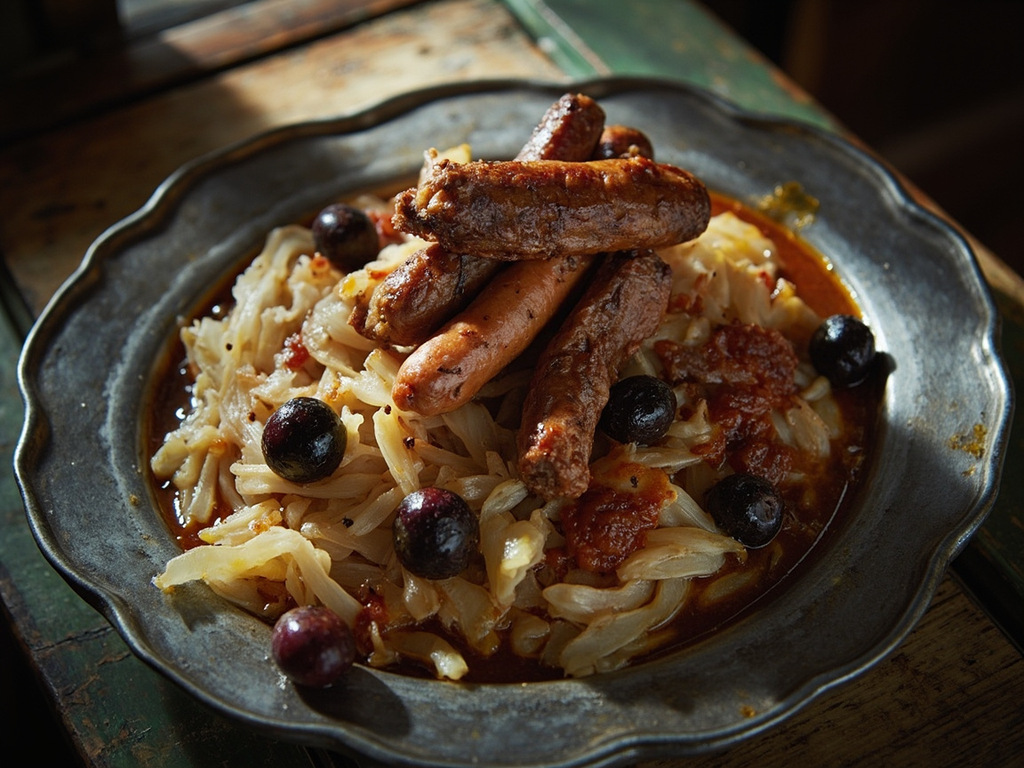
flipSauerkraut — Braised Lacto-Fermented Cabbage
Sauerkraut — Braised Lacto-Fermented Cabbage
Why this dish? Mozart listed sauerkraut among his favorite dishes, a faithful companion to liver dumplings. A reserve of vitamins for winter, it was on every table, from the humblest to the most noble.
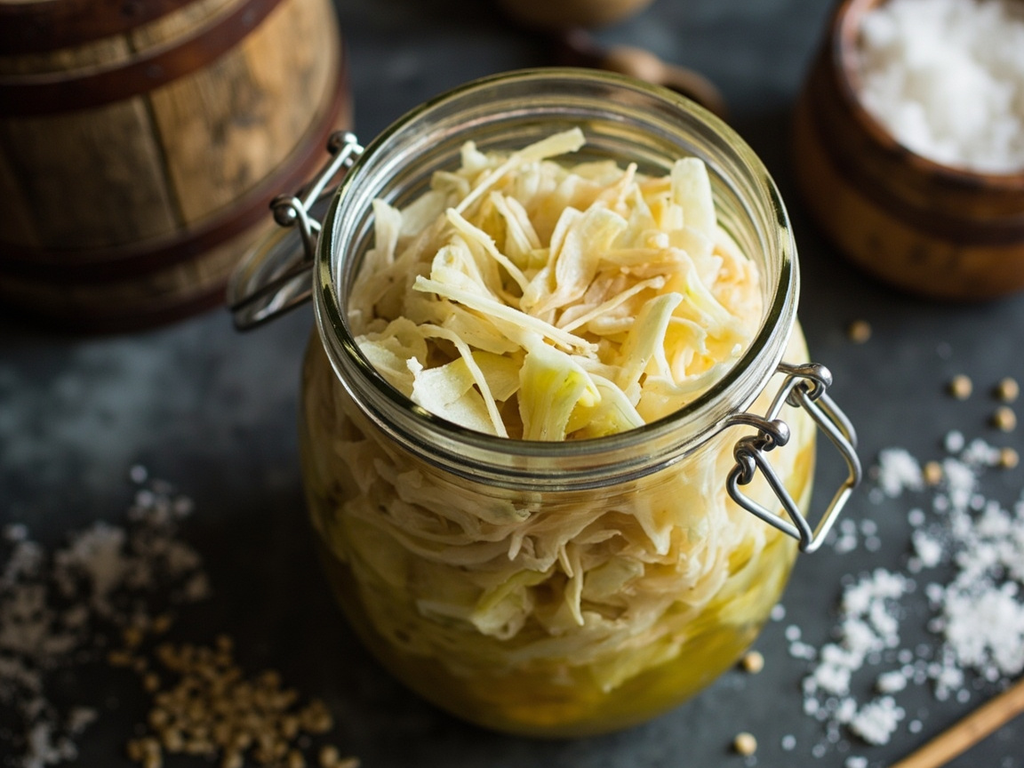
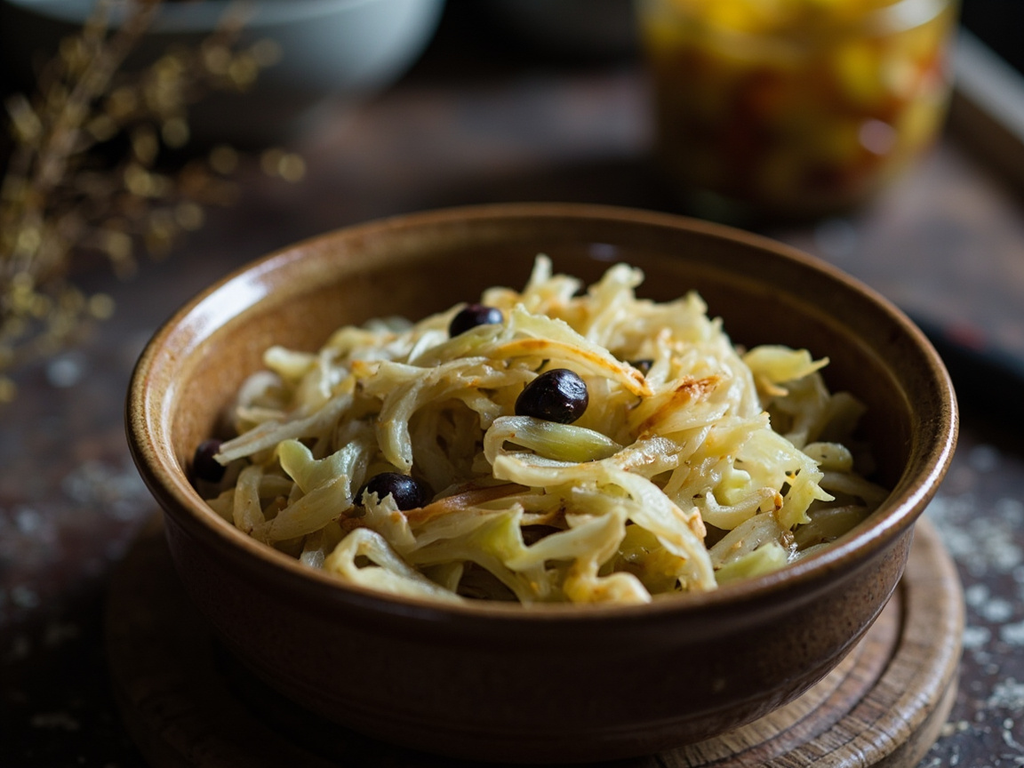
Finely shredded white cabbage, salted and left to ferment for weeks until tangy and crunchy, then gently braised in white wine with juniper and caraway. The preservation technique par excellence before the invention of refrigeration.
Do not laugh at the humble cabbage! It is what keeps us going when winter bites and the gardens sleep under snow. You slice it fine, salt it, tread it into a barrel, and patience does the rest: weeks later, it returns sharp and lively as a witty remark. With my liver dumplings, it was my favorite treat, and I made no secret of it to anyone who would listen!
- •White cabbage — one large head (vegetable to ferment)
- •Salt — in proportion (fermentation agent)
- •Juniper berries — a handful (flavor)
- •Caraway seeds — a little (flavor, digestion)
- •Lard — a knob (for braising)
- •White wine — a glass (braising liquid)
Sauerkraut — Braised Lacto-Fermented Cabbage
Finely shredded white cabbage, salted and left to ferment for weeks until tangy and crunchy, then gently braised in white wine with juniper and caraway. The preservation technique par excellence before the invention of refrigeration.
Why this dish? Mozart listed sauerkraut among his favorite dishes, a faithful companion to liver dumplings. A reserve of vitamins for winter, it was on every table, from the humblest to the most noble.
Do not laugh at the humble cabbage! It is what keeps us going when winter bites and the gardens sleep under snow. You slice it fine, salt it, tread it into a barrel, and patience does the rest: weeks later, it returns sharp and lively as a witty remark. With my liver dumplings, it was my favorite treat, and I made no secret of it to anyone who would listen!
Ingredients (period version)
- White cabbage — one large head (vegetable to ferment)
- Salt — in proportion (fermentation agent)
- Juniper berries — a handful (flavor)
- Caraway seeds — a little (flavor, digestion)
- Lard — a knob (for braising)
- White wine — a glass (braising liquid)
Ingredients
- White cabbage — 1.5 kg (vegetable to ferment)
- Non-iodized salt — 25 g (≈ 1.7%) (fermentation agent)
- Juniper berries — 1 tsp (flavor)
- Caraway seeds — 1 tsp (flavor)
- Bay leaf — 1 (flavor)
- Lard or butter — 30 g (braising fat)
- Onion — 1 (braising aromatic)
- Dry white wine — 150 ml (braising liquid)
Method
- Shred cabbage very finely. Massage vigorously with salt until it releases its juice.
- Pack tightly into a clean jar with juniper and caraway, ensuring brine covers the cabbage; weigh down so it stays submerged.
- Ferment at room temperature for 2–4 weeks, away from light, checking that cabbage remains under brine.
- Once tangy, rinse briefly. Sweat onion in lard.
- Add sauerkraut, bay leaf, white wine, and braise covered for 40 min over low heat.
- Serve hot as an accompaniment to meats or liver dumplings.
How it was made : Each autumn, families fermented whole barrels of cabbage to get through winter. Lacto-fermentation preserved the vegetable for months and, without anyone yet knowing, retained its vitamin C — precious against scurvy.
The contemporary twist : A spoonful of raw, unbraised sauerkraut as a small fresh salad with grated apple: the 'raw' version makes a very current tangy counterpoint.
Sources : Wolfgang Amadeus Mozart, family correspondence (letters)
Wolfgang Amadeus Mozart · Charactorium