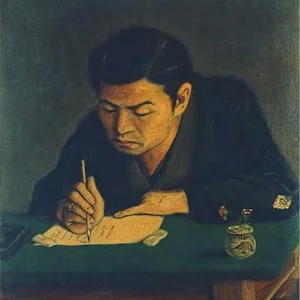

Japanese admiral, commander-in-chief of the Combined Fleet of the Imperial Japanese Navy during World War II. The architect of the surprise attack on Pearl Harbor in 1941, he was one of the leading naval strategists in the Pacific before being shot down in 1943.
Yamamoto(1984 — ?)
Yamamoto
Japon
6 min read
Frequently asked questions
Key Facts
- Born in 1884 in Nagaoka (Japan), he was wounded at the Battle of Tsushima in 1905 during the Russo-Japanese War
- Studied in the United States (Harvard, 1919-1921) and served there as a naval attaché, which fed his wariness of a war against America
- Became commander-in-chief of the Combined Fleet in 1939 and planned the attack on Pearl Harbor on 7 December 1941
- Suffered a decisive defeat at the Battle of Midway in June 1942, the turning point of the Pacific War
- Died on 18 April 1943, his plane shot down over Bougainville during Operation Vengeance carried out by the United States
Works & Achievements
Surprise naval-air operation against the American Pacific Fleet, a major strategic design that opened the Pacific War.
Championing of carrier-based aviation and aircraft carriers as the primary weapon, over battleships; a vision ahead of its time.
As head of the Navy's Aeronautics Department, he developed carrier aircraft and pilot training.
A vast offensive plan intended to destroy the American aircraft carriers; it ended in a decisive defeat for Japan.
As Vice-Minister of the Navy, he fought against the alliance with Nazi Germany and Italy, at the risk of his own life.
Upon taking command, he modernized the training and doctrine of Japan's principal naval force.
Anecdotes
At the age of 21, the young Isoroku fought at the Battle of Tsushima in 1905 against the Russian fleet. An explosion tore off two fingers from his left hand: the geishas would later nickname him “eighty sen,” because a full manicure cost ten sen per finger.
A student at Harvard University and later a naval attaché in Washington, Yamamoto traveled all across the United States and even visited the oil fields of Texas. From these experiences he drew a conviction he would repeat for the rest of his life: America's immense industrial power made a long war impossible for Japan to win.
Opposed to the war against the United States, he is said to have warned his superiors: “For the first six months, I will win victory after victory; but if the war lasts two or three years, I have no confidence at all.” Pearl Harbor confirmed the first part, Midway the second.
A passionate gambler, Yamamoto loved shogi, go, bridge, and poker. He used to say he would have liked to retire to Monaco to play roulette there, and he drew on his knowledge of probability to think through his strategic bets.
In April 1943, the Americans decrypted a coded message announcing his inspection itinerary. Sixteen P-38 fighters took off to intercept him over the island of Bougainville: his plane was shot down, making him the target of a deliberate assassination operation made possible by intelligence.
Primary Sources
If I am told to fight, I will run wild and win victory after victory for the first six months or the first year, but I have absolutely no confidence about the second or third year.
To win this war, we would have to dictate the terms of peace in the White House, in Washington.
In the event of war with the United States, our only hope is to destroy the American Pacific Fleet on the very first day, through a surprise carrier-borne air attack.
The Commander-in-Chief of the Combined Fleet will inspect Ballale, Shortland, and Buin on 18 April; arrival at Ballale at 08:00.
Key Places
Yamamoto's birthplace, in northwestern Japan. A memorial museum dedicated to the admiral can be found there today.
Training school for officers of the Japanese navy, near Hiroshima, where Yamamoto pursued his military studies.
Site of the 1905 naval battle against the Russian fleet, where the young Yamamoto was wounded and lost two fingers.
American naval base struck on December 7, 1941 by the surprise attack devised by Yamamoto.
Scene of the June 1942 battle where Yamamoto's fleet suffered a decisive defeat, a turning point in the Pacific War.
Island in the South Pacific over which Yamamoto's plane was shot down on April 18, 1943 during Operation Vengeance.
Typical Objects
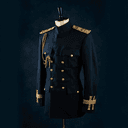
White or navy-blue attire adorned with gold braid and decorations, the symbol of Japan's highest naval command. Yamamoto wore it during fleet inspections.
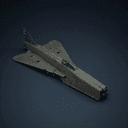
Flagship of the Japanese naval air force and the spearhead of the attack on Pearl Harbor. It embodied Yamamoto's doctrine built on carrier-based aviation rather than battleships.
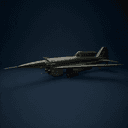
A carrier-based torpedo bomber used in large numbers at Pearl Harbor and Midway. It symbolizes Yamamoto's gamble on naval air power.

Japanese chess, to which Yamamoto, a passionate player, devoted his leisure time. He saw it as training in strategic thinking and the calculation of probabilities.
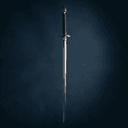
A blade carried by senior Japanese officers, heir to the samurai tradition. It marked membership in the military caste and the code of honor.
Yamamoto practiced calligraphy and wrote poems, a literary art prized by cultivated officers. His calligraphic works are preserved today as keepsakes.
School Curriculum
Vocabulary & Tags
Key Vocabulary
Daily Life
Morning
Aboard his flagship, Yamamoto rose early and studied intelligence reports and the positions of the fleet. Methodical, he spent long hours poring over maps of the Pacific with his staff.
Afternoon
The afternoon was devoted to strategic conferences, crew inspections, and the review of operational plans. He insisted on rigorous training for his pilots and sailors.
Evening
In the evening, he liked to relax with a game of shogi, go, or bridge with his officers. A formidable player, he used these games to observe the character and decisiveness of his subordinates.
Food
He shared the ordinary fare of the Japanese navy: rice, fish, miso soup, pickled vegetables, and green tea. Temperate, he drank little alcohol, which was unusual for an officer of his rank.
Clothing
On duty, he wore an admiral's uniform — white in the tropics or navy blue — trimmed with gold braid. In private, he sometimes donned the traditional Japanese kimono.
Housing
His life unfolded mainly aboard flagships, such as the battleship Yamato, in functional quarters. Ashore, he stayed in officers' residences or the modest family home in Nagaoka.
Historical Timeline
Period Vocabulary
Liens externes & ressources
Références
Œuvres
Doctrine de la guerre aéronavale
années 1930
Modernisation de l'aéronavale japonaise
1933-1936
Opération de Midway
1942
Opposition au pacte tripartite
1936-1940
Réorganisation de la Flotte combinée
1939