
Yemoja is a major orisha of the Yoruba pantheon, goddess of waters and protective mother. Venerated in West Africa, she became a central figure in Afro-American religions (candomblé, santería) born of the diaspora.
Yemoja
Yemoja
9 min read
Frequently asked questions
Key Facts
- Yemoja is one of the most powerful orishas in the Yoruba pantheon, associated with the Ogun River in Nigeria
- Her name means 'Mother whose children are like fish' in Yoruba (Yeyé Omo Eja)
- She is considered the mother of many other orishas in Yoruba cosmology
- Carried across the Atlantic during the transatlantic slave trade (16th–19th c.), she became Iemanjá in Brazil and Yemayá in the Caribbean
- She is today venerated by millions of followers in Brazilian candomblé, Cuban santería, and other Afro-diasporic religions
Works & Achievements
The Ifa is the sacred divination system of the Yoruba people, composed of 256 Odu (chapters) containing mythological narratives in which Yemoja plays a central role. These oral texts, transmitted by babalawo (priest-diviners), constitute the primary source on her attributes and deeds.
The transposition of the Yemoja cult into the figure of Iemanjá within Brazilian candomblé represents a major act of collective cultural creation, allowing the Yoruba tradition to survive and flourish despite the violence of slavery.
This public celebration, drawing hundreds of thousands of people to the beaches of Bahia, has become one of Brazil's great popular festivals and a symbol of African heritage in Brazilian culture.
The international recognition of the Ifa system, which contains the myths of Yemoja, enshrines the universal value of the Yoruba tradition and ensures the preservation of these mythological narratives for future generations.
In Cuba, Yoruba enslaved people overlaid the cult of Yemoja onto that of the Black Virgin of Regla, creating a religious syncretism that allowed the deity to survive under Catholic cover. This fusion remains alive today in Santería.
Anecdotes
The name Yemoja comes from the Yoruba expression 'Yeye omo eja', meaning 'Mother whose children are like fish'. This poetic image reflects her protective nature: she watches over all aquatic beings and humans as a mother watches over her countless children. She is therefore considered the mother of most other orishas in the Yoruba pantheon.
During the transatlantic slave trade (16th–19th century), millions of Yoruba people were deported to Brazil, Cuba, and Haiti. They carried with them the worship of Yemoja, which survived in new forms: she became Iemanjá in Brazilian *candomblé* and Yemayá in Cuban *santería*. This cultural transmission under extreme conditions is one of the most remarkable examples of cultural resistance in history.
In Brazil, every February 2nd, millions of devotees gather on the beaches of Salvador de Bahia to honor Iemanjá. They craft small wooden or paper boats filled with offerings — perfumes, white flowers, mirrors, combs — and send them out to sea. If the offerings drift away from the shore, it is a sign that the goddess has accepted them.
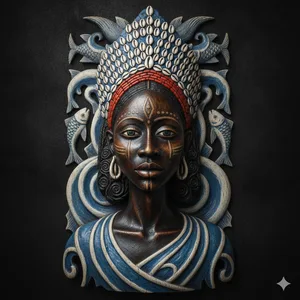
In Yoruba mythology, Yemoja is associated with the Ogun River in Nigeria, which she is said to embody. She is depicted as a woman with an ample bosom, a symbol of fertility and motherhood, wearing a blue and white dress like the waves of the ocean. Her womb is sometimes described as an inexhaustible source of fresh water — the source of all life.
In the Yoruba religious system, Yemoja is considered the wife of Olokun, deity of the unfathomable ocean depths. Together, they govern all the waters of the world: she reigns over surface freshwaters and rivers, while he rules the ocean's abyss. This complementarity illustrates the Yoruba vision of the cosmos as a balance of opposing forces.
Primary Sources
Yemoja, mother of fish and children, reigns over the waters. When she dances, the waves rise. When she weeps, the rivers overflow. None are born without having crossed her waters.
The river Ogun is held sacred to Yemoja, the goddess of waters, who is propitiated by the Egba and other Yoruba clans. Her worship involves offerings cast upon the river, and her priests maintain the sacred rites passed down through generations.
Yemoja is one of the principal deities of the Yoruba pantheon. Her cult, carried to the Americas by the slave trade, gave rise to vibrant traditions in Brazil and the Caribbean, where she is venerated under the names Iemanjá or Yemayá.
The Yoruba peoples venerate deities linked to the forces of nature, among which aquatic deities hold a central place. The mother of the waters receives regular offerings on the banks of the sacred rivers of Yoruba country.
Yemayá is the mistress of the waters, mother of fish and all children of the sea. Her colors are blue and white, like the waves of the ocean. She shelters sailors and mothers in childbirth.
Key Places
The Ogun River, which flows through present-day southwestern Nigeria, is Yemoja's original sacred domain in Yoruba tradition. Its banks have been the site of rituals and offerings in her honor for centuries.
A Yoruba city founded in the 19th century on the banks of the Ogun, Abeokuta is a historic center of Yemoja's worship. Its inhabitants invoke her as a protector and hold annual ceremonies in her honor.
The former colonial capital of Brazil and the heart of Afro-Brazilian Candomblé, Salvador hosts the world's largest festival in honor of Iemanjá every February 2nd, drawing hundreds of thousands of devotees to its beaches.
This village on Havana Bay is the main center of Yemayá (Yemoja) worship in Cuban Santería. The Church of Our Lady of Regla embodies the syncretism between the Black Madonna and the Yoruba goddess of the waters.
Regarded as the cradle of Yoruba civilization and the place where the world was created according to their cosmology, Ile-Ife is also the original spiritual home of all the orishas, including Yemoja.
Typical Objects

Cowrie shells are Yemoja's sacred objects par excellence: they symbolize prosperity, fertility, and the connection to the sea. Used in divination rituals and placed as offerings, they also adorn the costumes of her priestesses.
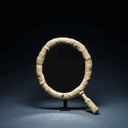
This fan made of silvered metal, often shaped like a fish or a moon, is Yemoja's iconic attribute. It symbolizes the reflective surface of water and is brandished by dancers during ceremonies held in her honor.
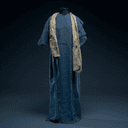
Yemoja's colors are blue and white, the colors of water and waves. Her devotees and priestesses wear these shades during ceremonies, and offerings made to her strictly follow this color code.

An earthenware container filled with fresh water is kept in sanctuaries dedicated to Yemoja. It represents her permanent presence in the home and is regularly replenished with river or sea water.
📷 CC BY-SA 4.0 · Wikimedia Commons ↗
During festivals in her honor, especially in Brazil, small wooden or paper boats are loaded with flowers, perfumes, and mirrors, then set out to sea. If they drift away, it is a sign that the goddess has accepted the offering.

As queen of the waters and mother of fish, Yemoja receives fish, shrimp, and seafood as offerings. These foods are consecrated to her, and some may be forbidden to her initiates.

Yemoja's ritual necklaces (*ileke*) are made of blue and transparent beads, evoking the depth and clarity of water. Worn by her initiates, they signal their belonging to her cult and their protection by the goddess.
School Curriculum
Vocabulary & Tags
Key Vocabulary
Tags
Daily Life
Morning
At dawn, when the first light touches the surface of the water, Yemoja awakens with the movement of the tides. The priestesses of her cult begin the day by pouring a libation of fresh water on the altar, reciting her praises (oriki) to invoke her and ask for her protection over pregnant women and sailors setting out to sea.
Afternoon
During the day, Yemoja is invoked at births, for she is considered the protector of mothers and newborns — every child who is born symbolically passes through her waters. Her initiates carry out their daily work wearing their blue and white beads, marking their connection to the goddess and her constant protection.
Evening
At sunset, it is time for offerings. The faithful go to the riverbank or seashore to lay white flowers, watermelons, popped corn, and perfumes on the surface of the water. The ritual bata drums begin to sound to call Yemoja, and sometimes she 'mounts' — entering the body of an initiate during a sacred possession ceremony.
Food
The foods sacred to Yemoja include fish, seafood, white corn, watermelons, and coconut. Her initiates sometimes observe dietary restrictions, refraining from eating certain fish that are sacred to her. Food offerings must be prepared without salt, as salt is associated with death in this tradition.
Clothing
Yemoja is depicted wearing long, flowing robes in shades of blue and white, evoking the movement of waves. Her priestesses wear these same colors during ceremonies, along with many necklaces of blue, white, and clear beads. The head may be covered with a white turban, and the body adorned with cowrie shells sewn onto the garment.
Housing
Yemoja's domain is the expanse of waters: rivers, lakes, seas, and oceans all belong to her. In cult houses (terreiros or ilê), her sacred space is an altar (peji) decorated with blue and white fabrics, shells, vases of water, and her ritual fan. This space is an open gateway to her aquatic kingdom, a point of contact between the human world and that of the orishas.
Historical Timeline
Period Vocabulary
Liens externes & ressources
Références
Œuvres
Corpus des Odu Ifa — chants et mythes de Yemoja
Tradition orale plurimillénaire
Fondation du culte d'Iemanjá au Brésil
XVIIIe-XIXe siècle
Fête annuelle d'Iemanjá à Salvador de Bahia
Établie vers 1923, chaque 2 février
Inscription de l'Ifa au patrimoine immatériel de l'UNESCO
2008
Syncrétisme Yemayá / Notre-Dame de Regla (Cuba)
XVIIIe-XIXe siècle