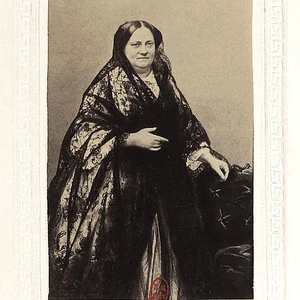
Yongden (1899–1955) was a Tibetan monk adopted by the explorer Alexandra David-Néel. He accompanied her on her travels across Central Asia and Tibet, most notably during the clandestine entry into Lhasa in 1924, and co-authored several works with her.
Yongden
Aphur Yongden
7 min read
Frequently asked questions
Key Facts
- Born in 1899 in Sikkim, legally adopted by Alexandra David-Néel in 1929
- Accompanied Alexandra David-Néel during the clandestine entry into Lhasa in 1924
- Co-author of the novel 'The Power of Nothingness' (1954)
- Died in Digne-les-Bains in 1955, a few years before Alexandra David-Néel
Works & Achievements
An account of the clandestine entry into Lhasa in 1924, co-written with Alexandra David-Néel. Translated into numerous languages, the book introduced Yongden to the world as the indispensable guide and companion of the adventure.
The first French translation of the Tibetan national epic, produced together with Alexandra David-Néel. Yongden collected the songs from Tibetan bards and handled the translation from the original.
A Tibetan novel written by Yongden and translated into French by Alexandra David-Néel. The first Tibetan novel accessible to French readers, it offers a vivid portrait of Tibetan society and spirituality.
An esoteric novel by Yongden exploring the themes of Tantric Buddhism and Himalayan spiritual practices, translated and prefaced by Alexandra David-Néel.
A work by Alexandra David-Néel to which Yongden contributed his firsthand accounts of Tibetan esoteric practices, including *tummo* (inner heat) and the paranormal phenomena witnessed during their travels.
Anecdotes
To secretly enter Lhasa in 1924, Yongden and Alexandra David-Néel disguised themselves as Tibetan beggars. Yongden passed the French explorer off as his elderly mother, a pilgrim seeking blessings. This ruse saved them several times from checks by Tibetan guards who turned away any foreigner.
During the journey to Lhasa, Yongden used his knowledge as a monk to perform divination and healing rituals in the villages they passed through. These practices allowed them to obtain food and shelter from the inhabitants, as a lama was always welcomed with respect and generosity in the Tibetan countryside.
Yongden had been taken in by Alexandra David-Néel around 1914, when he was a young monk in Sikkim. She officially adopted him and he became her adopted son, travel companion, and co-author. Their unusual relationship — a French Buddhist woman and a young Tibetan man — astonished both Asia and Europe.
Yongden was the author of several Tibetan novels, including 'Mipam, the Lama of the Five Wisdoms', translated into French by Alexandra David-Néel. This novel, the first Tibetan novel translated into French, tells the story of a young lama and immerses the reader in Tibetan culture and spirituality.
At the end of his life, settled with Alexandra David-Néel in her house in Digne-les-Bains (Samten Dzong), Yongden actively contributed to the translation and writing of numerous works on Tibetan Buddhism. He died in 1955, ten years before his adoptive mother, who outlived him to reach the age of one hundred.
Primary Sources
With Yongden, my adopted son, we trudged forward bent under our loads, feet wrapped in rags, like two wretched Tibetan beggars. No one could have guessed that the stooped old woman behind the young lama was a European.
Mipam grew up in contemplation of the snow-capped mountains and temples resounding with prayers. From childhood, he perceived the world through the eyes of a lama, seeing in every being the possibility of awakening.
Yongden gathered from Tibetan bards the epic songs of Gesar, the legendary hero of Tibet, and produced a literal translation before Alexandra David-Néel shaped them for the Western reader.
Yongden's devotion and intelligence are remarkable. Without him, I could never have crossed these forbidden regions. He speaks every language of the land and understands people better than anyone.
Key Places
It was in Sikkim, around 1914, that Yongden met Alexandra David-Néel and became her disciple and later her adoptive son. This Himalayan region was the starting point of their long shared adventure across Asia.
Yongden and David-Néel spent several years at this great Tibetan monastery. Yongden deepened his monastic training there and helped the explorer study Buddhist texts in depth.
The spiritual capital of Tibet, at the time completely closed to foreigners. Yongden entered it clandestinely with Alexandra David-Néel in 1924, disguised as pilgrims — an achievement that made headlines around the world.
The city where Yongden and David-Néel settled during World War II, stranded in China from 1937 to 1946. Despite the turmoil, they continued their writing and translation work throughout their stay.
Alexandra David-Néel's home, named “Fortress of Meditation,” where Yongden lived and worked from 1946 until his death in 1955. The house is today a museum dedicated to their shared body of work.
Liens externes & ressources
Références
Œuvres
Voyage d'une Parisienne à Lhassa (co-auteur)
1927
La vie surhumaine de Guésar de Ling (co-traducteur)
1931
Mipam, le lama aux cinq sagesses
1938
La puissance du néant
1954
Mystiques et magiciens du Tibet (contribution)
1929