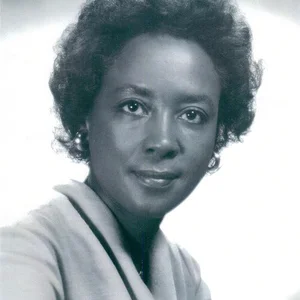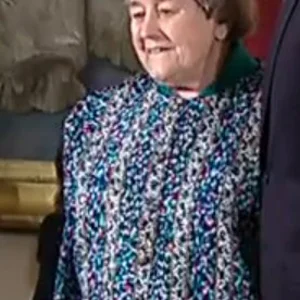

Canadian-American aerospace engineer (1924-2013), a pioneer of spacecraft propulsion. She invented a hydrazine propulsion system that kept satellites in orbit, a technology that became an industry standard.
Yvonne Brill(1924 — 2013)
Yvonne Brill
Canada, États-Unis
6 min read
Frequently asked questions
Key Facts
- Born in 1924 in Winnipeg (Canada), she studied mathematics and chemistry despite the obstacles placed in front of women.
- In the 1970s, she invented the hydrazine thruster (electrothermal resistojet), which became a global standard.
- She contributed to the TIROS and Nova satellite programs and to the space telescope.
- In 2011 she received the National Medal of Technology and Innovation from President Barack Obama.
- She died in 2013 and was inducted into the National Inventors Hall of Fame posthumously.
Works & Achievements
Her major invention, patented in the 1970s. It became a worldwide standard for keeping satellites in their orbit with a minimum of fuel.
Contributions to the propulsion of the first weather-observation satellites, improving the reliability of forecasts.
In charge of propulsion for many communication satellites, whose technology extended their operational life in orbit.
Participation in the design of propulsion systems for powerful launch vehicles studied during the space race.
Provided propulsion expertise for a mission to explore the planet Mars, broadening her contributions beyond Earth orbit.
One of her patents describing an engine able to modulate its thrust, useful for the precise maneuvers of satellites.
Anecdotes
In 2013, Yvonne Brill's obituary in the New York Times opened by praising her beef stroganoff and her qualities as a mother before mentioning that she was a brilliant rocket scientist. The outcry online was immediate: how could you sum up a pioneer of space propulsion by her cooking? The episode became a textbook example of how women scientists are talked about differently.
A brilliant teenager, Yvonne wanted to study engineering at the University of Manitoba, but the program was not really open to women at the time. She fell back on mathematics and chemistry, graduated top of her class in 1945, and went on to become one of the great aerospace engineers of the 20th century anyway.
When she joined the Douglas Aircraft Company in 1945, Yvonne Brill is often described as the only woman then working on rocket science in the United States. She calculated trajectories with a slide rule, in an era when computers did not yet exist.
Her invention, the electrothermal hydrazine thruster, allows satellites to correct their position while using very little fuel. This technology has extended the lifespan of hundreds of telecommunications and weather satellites, and has become a standard of the space industry.
In 2011, President Barack Obama personally presented her with the National Medal of Technology and Innovation at the White House, the highest American technological honor. Yvonne Brill was then 86 years old and continued to champion the place of women in science and engineering.
Primary Sources
She made a mean beef stroganoff, followed her husband from job to job and took eight years off from work to raise three children. “The world's best mom,” her son Matthew said.
For her innovation in propulsion systems for geostationary and low-orbit communication satellites, which greatly improved the reliability of weather and telecommunications satellites.
Yvonne Brill invented the electrothermal hydrazine thruster, a propulsion system that helps communication satellites maintain their orbit.
Key Places
Yvonne Brill's birthplace, where she grew up in a family of Belgian immigrants. It was there that she developed her love of science.
The institution where she studied mathematics and chemistry, since she was unable to enter engineering. She graduated at the top of her class in 1945.
The university where she earned a master's degree in chemistry in 1951, taking evening classes while working.
The aircraft manufacturer where she started out in 1945 and worked on the earliest rocket projects, often the only woman on her team.
The region where she spent most of her career at RCA Astro Electronics and where she passed away in 2013.
Typical Objects

A small rocket engine that heats hydrazine to produce a fine, fuel-efficient thrust. It is Brill's flagship invention, used to keep satellites in orbit.

A craft placed at an altitude of 36,000 km that appears to hang motionless above a single point on Earth. Brill's thrusters keep it from drifting out of its orbit.

A highly energetic liquid propellant used as rocket fuel. Brill knew how to use it in a reliable, long-lasting propulsion system.

A sliding instrument that allows multiplication and division without a machine. Brill used it to calculate trajectories before the arrival of computers.

A tilted board fitted with drawing instruments for sketching the technical plans of engines and satellites. An everyday tool in aerospace design offices.

An American honorary medal rewarding the greatest technological contributions. Brill received it in 2011 for her propulsion systems.
School Curriculum
Vocabulary & Tags
Key Vocabulary
Tags
Daily Life
Morning
Settled in the New Jersey suburbs, Yvonne Brill rose early to organize the household before driving to RCA's research center. The daily commute set the rhythm of her mornings as an engineer, balancing family life and the design office.
Afternoon
Her afternoons were spent in technical meetings, calculating trajectories, and designing propulsion systems. Often the only woman at the table, she made her case through the rigor of her figures and blueprints.
Evening
In the evenings, back home, she looked after her three children and the house, and was known for her talents as a cook. She also continued reading scientific journals and patents to stay at the cutting edge of her field.
Food
Her diet was that of a mid-twentieth-century North American middle-class family: slow-cooked dishes, meats and vegetables, including her famous beef Stroganoff — mentioned even in her obituary. Family meals gave structure to daily life.
Clothing
She wore the polished professional attire of a female executive from the 1950s through the 1980s: suits, dresses, and blouses suited to the heavily male world of engineering offices. Her dress affirmed her seriousness in an environment where she constantly had to prove herself.
Housing
She lived in an American residential suburban home, typical of the engineering and executive families of the postwar era. Proximity to the workplace and modern comfort went hand in hand.
Historical Timeline
Period Vocabulary
Liens externes & ressources
Références
Œuvres
Propulseur électrothermique à hydrazine (EHT)
1972
Systèmes de propulsion des satellites météo TIROS
années 1960-1970
Propulsion de satellites de télécommunications chez RCA Astro Electronics
années 1960-1980
Travaux sur l'étage supérieur de la fusée NOVA
années 1950-1960
Système de propulsion de la sonde Mars Observer (NASA)
années 1980
Brevet du propulseur à double niveau de poussée monergol
années 1970