Imaginary dialogue between Charles Babbage and Ada Lovelace
by Charactorium · Ada Lovelace (1815 — 1852) · Sciences · 6 min read
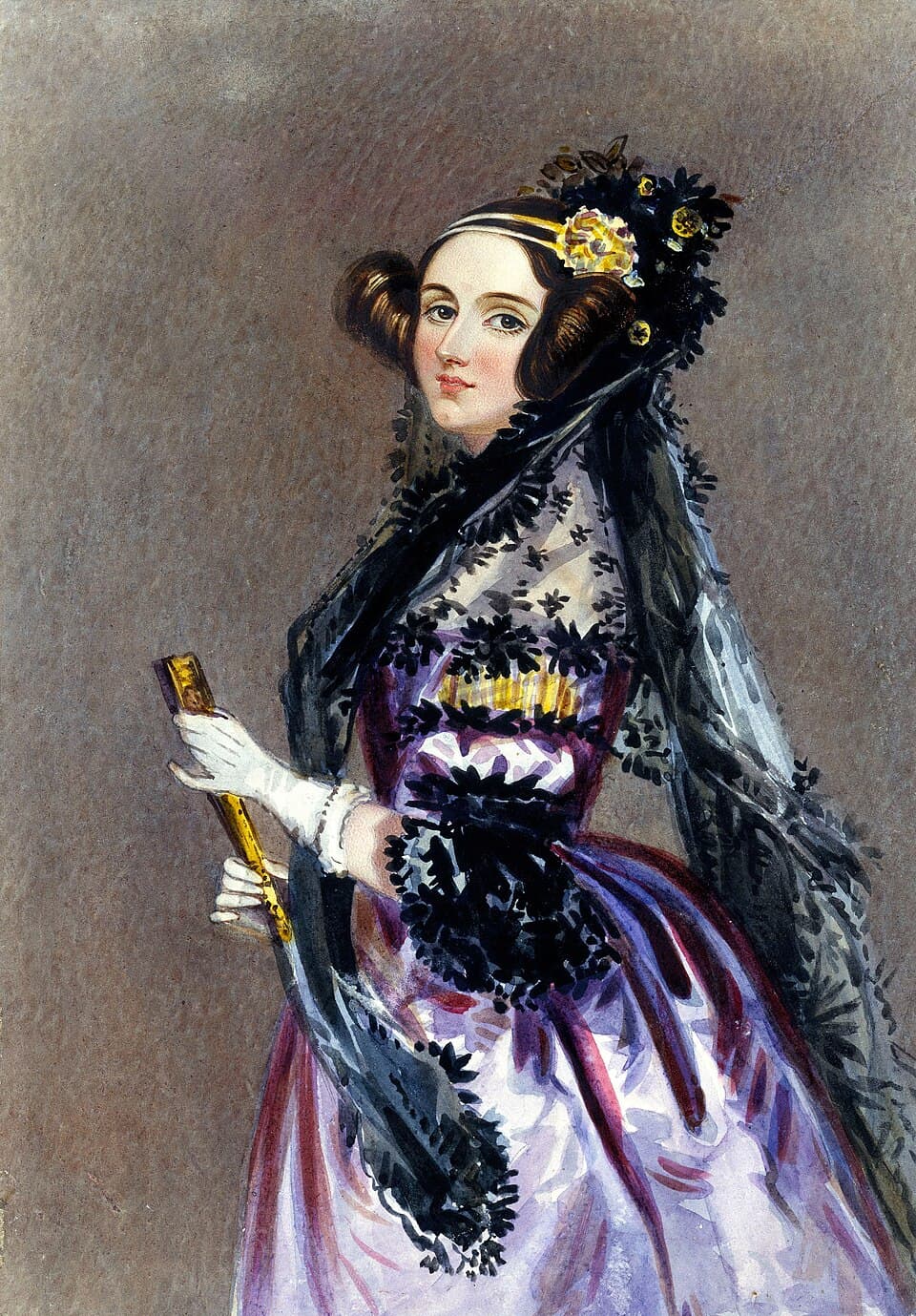
It is in the grand salon of 1 Dorset Street, amid the brass gears and unrolled plans of the Analytical Engine, that Charles Babbage receives Ada Lovelace this autumn of 1843, a few weeks after the publication of her Notes. An oil lamp illuminates the proofs still annotated in her hand. They have known each other since that evening in 1833 when a seventeen-year-old girl leaned, fascinated, over his gears. The old mechanic comes tonight to seek from the one he calls his enchantress of numbers the reasons for a work that far surpasses anything he had imagined.
—Ada, when I met you in 1833, you were already an accomplished mathematician. How did the daughter of Lord Byron come to numbers?
You touch there, my dear Babbage, on a paradox that my mother orchestrated all my life. I was born on Christmas Day 1815, and my father, the poet, left home when I was only a few weeks old — I never knew him. My mother, Annabella, feared above all that I would inherit his artistic temperament, that unbridled imagination she deemed dangerous. So she immersed me from childhood in geometry and algebra as one administers a remedy. But see the irony: it is precisely my father's imagination that I find in mathematics. They wanted to tear me away from poetry; they gave me a poetry of another order. Byron's blood does not let itself be so easily calculated.
They wanted to tear me away from poetry; they gave me a poetry of another order.
—You studied with De Morgan by correspondence, without ever setting foot on the benches where I was taught. Was this exceptional education easy to conquer for a woman?
Easy? No, never. They leave us the salons, the embroidery, light conversation, but the doors of universities remain closed to us. I had to learn analysis through letters, through the patience of a De Morgan, and wrench every demonstration from fragile health and conventions that would see me a countess before a mathematician. I have a very particular way of learning: I need rigid exactitude in the statement of principles, but I grasp difficulties with a rapidity that many men envy me. If I were judged on my mind rather than my dress, I think people would be less surprised to see me debate algebra with you. A learned woman remains, in this century, a singularity that is tolerated more than encouraged.
If I were judged on my mind rather than my dress, people would be less surprised to see me debate algebra.
—I had entrusted you with the translation of Menabrea's memoir. You returned a text three times longer than the original. What seized you so?
Forgive me this excess, my friend, but the Italian memoir seemed to stop at the threshold of the house without ever entering. Menabrea described your machine; I wanted to show what it could do. So I added these Notes, designated by letters, where I unfolded step by step the calculation of Bernoulli numbers — a complete sequence of operations that the machine would execute without the intervention of any hand. This is, I believe, the first time such a chain of instructions has been set down on paper for a device. Translating was not enough; I had to prove. Three times longer, yes — but it is in these additions that the essential lies, and you know that better than anyone since you provided the tables.
Translating was not enough; I had to prove.
—This calculation of Bernoulli numbers, you carried out with an obstinacy that sometimes worried me. What were you trying to demonstrate beyond the result?
I was trying to demonstrate that the machine is not a simple calculator faster than our clerks. The choice of Bernoulli numbers was not innocent: they are quantities obtained only through long recurrent work, where each term depends on the previous ones. If your machine could generate them alone, by looping on its own results, then it accomplished far more than addition — it followed a reasoning. I spent weeks checking every cell, every carry, and I believe I pestered you with a thousand questions about variables. But it was necessary: a single error, and the whole edifice collapsed. It was not the vanity of a feat; it was the necessity of an irrefutable proof.
If the machine generates these numbers alone, then it does not calculate: it reasons.
—In your Notes, you write that the machine weaves algebraic patterns. This image of the Jacquard loom, where did it come from?
It came from your own punched cards, my dear Babbage! Listening to you explain how the machine would read its instructions from perforated cards, I immediately thought of Jacquard looms that weave flowers and leaves according to the same principle. The Analytical Engine weaves algebraic patterns as the Jacquard loom weaves flowers and leaves. The analogy is not an ornament of style: it speaks a profound truth. Where the loom only combines silk threads, your machine would combine symbols, operations, abstract relations. The weaving of numbers replaces the weaving of fabrics. It is this lineage, from thread to calculation, that made me understand that a new science was being born under our hands.
The Analytical Engine weaves algebraic patterns as the Jacquard loom weaves flowers and leaves.
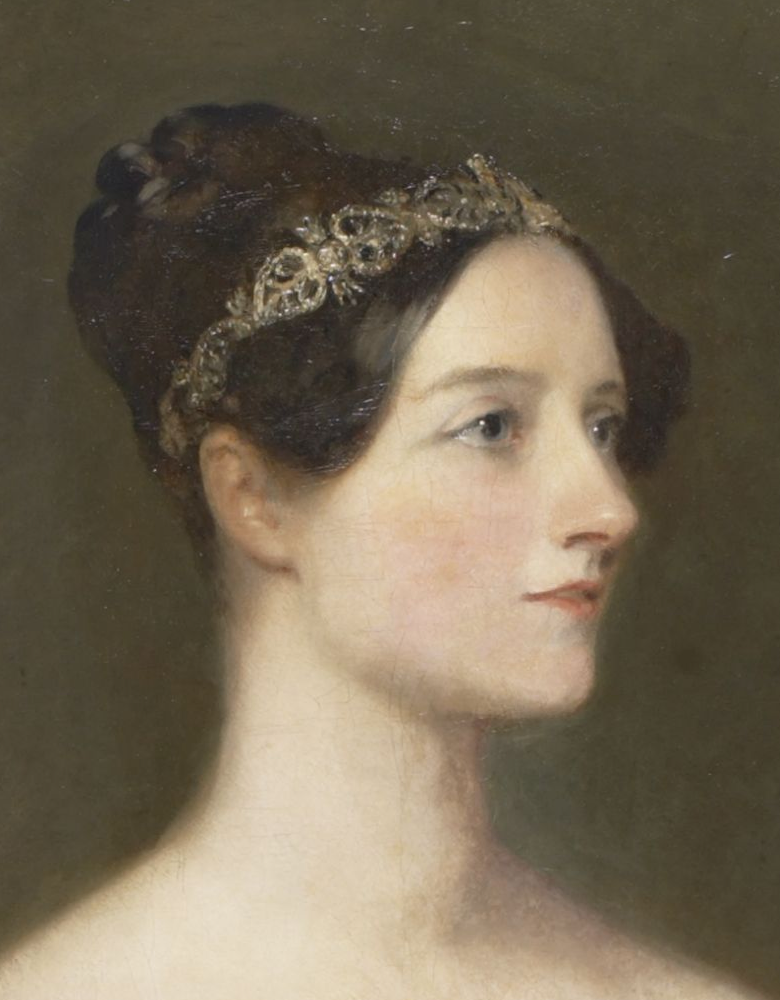
—You sometimes speak of scientific poetry. For an engineer like me, the expression intrigues. What exactly do you mean by that, Ada?
I know it makes you smile, that expression, you who love metal and precision. But see: I was raised to flee my father's poetry, and I found it whole in algebra. True science requires as much imagination as rigor — one must see before demonstrating. When I contemplate your machine, I see not only gears: I glimpse a new language, vast and powerful, that will develop for the uses of humanity. Mathematics are to me a silent music, a sequence of regulated harmonies. Understanding the machine is not just counting its gears; it is sensing what it might sing. That is my scientific poetry: imagination placed at the service of demonstrable truth.
Mathematics are a silent music, a sequence of regulated harmonies.
—Some imagine that your machine might one day think for itself. You, who know it intimately, do you share this hope?
No, and I insist on this point more than any other. The Analytical Engine has no pretension to originate anything. It can follow analysis, execute whatever we know how to order it to do, but it has no power to anticipate truths or relations that have not first been taught to it. It does what we know how to command it to do — nothing more, nothing less. Let us temper our enthusiasms: its greatness is not to replace the human mind, but to extend it, to spare it mechanical labor so it can return to pure thought. That is already immense. But the spark of invention, my dear Babbage, will always remain on our side, never on its.
The machine has no pretension to originate anything; it does what we know how to order it to do.
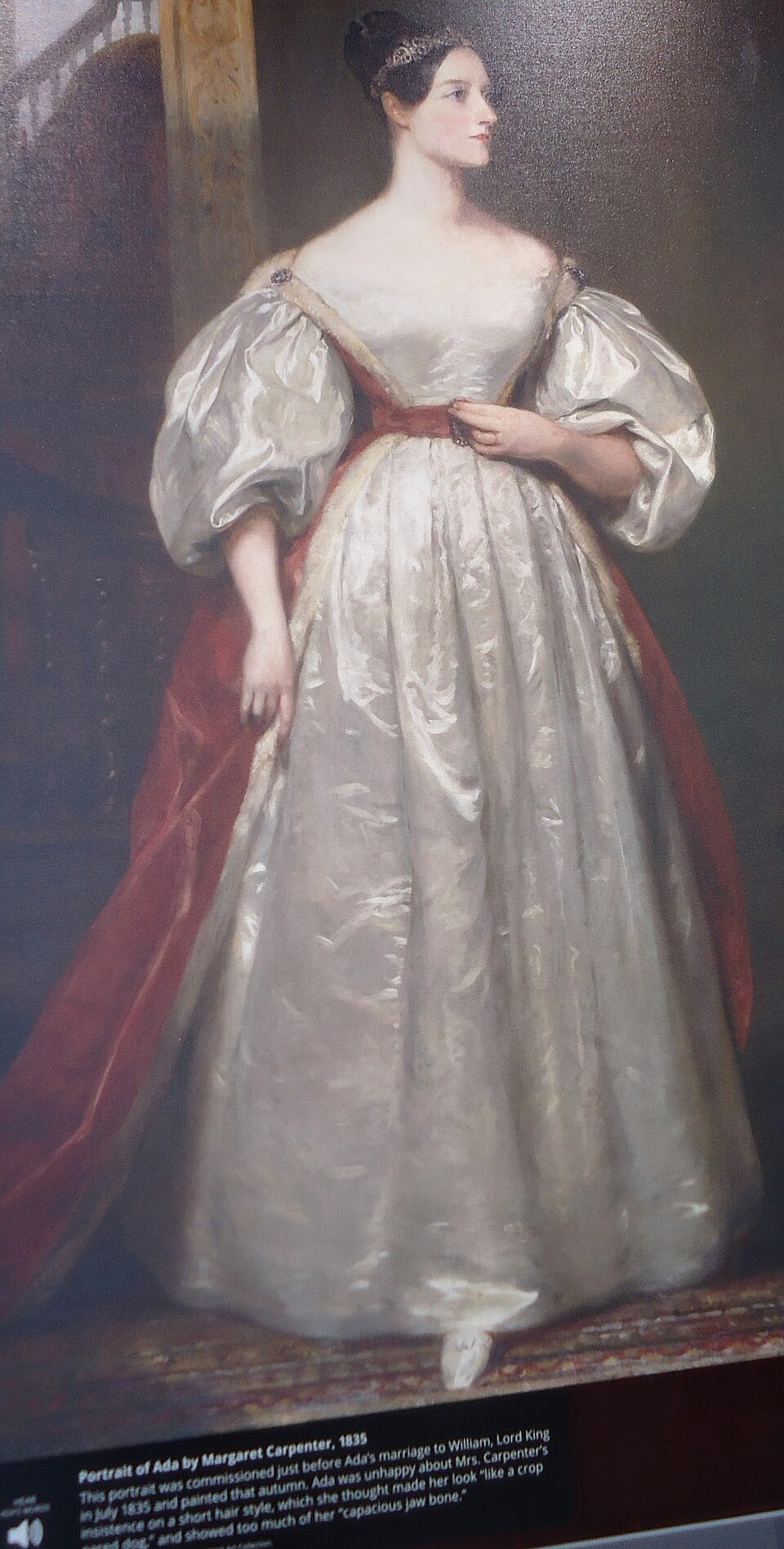
—I must address a delicate subject. When I altered one of your Notes without consulting you, you replied with a letter… most spirited. Do you care so much?
Spirited, indeed, and I do not regret it! I was very annoyed that you altered my Note. I am always willing to make necessary corrections myself, as you know, but I cannot bear that another hand should meddle with my sentences. Understand me well: it is not pride of pen. Every word of these Notes was weighed to support a demonstration; moving one risks distorting the whole reasoning. Our friendship is worth my speaking frankly — and you yourself, who defend your iron plans against anyone who touches them, understand me better than anyone. I demand rigid exactitude from myself; I demand it also from anyone who approaches my work. Only at this price does the work remain sound.
I cannot bear that another hand should meddle with my sentences.
—It has been nearly ten years that we have corresponded and worked together. What has this collaboration, which nothing foretold that evening in 1833, brought you, Ada?
Everything, or nearly. That evening, in that London salon, I was seventeen and I was one of the few who understood what you were showing; the other guests admired a toy, I saw a revolution. Since then, your letters have been my university. You opened for me a workshop of ideas that no woman of my station could hope to frequent. In return — allow me to say it — I believe I gave your machine what it lacked: a voice to explain to the world what it is. You conceived it of iron and wheels; I tried to write its soul. Neither you without me, nor I without you: that, my dear Babbage, is the most accurate calculation of our friendship.
You conceived it of iron and wheels; I tried to write its soul.
—Your health taxes you, I see, and the learned world still struggles to welcome you. What do you hope, deep down, from these Notes we have just published?
I hope they will outlive my strength. My health is shaky, you know only too well, and I am constantly reminded that a countess should not sign scientific memoirs — I had to content myself with my initials alone. But what matter the name: it is the ideas that must live. If these Notes can show, if only to one attentive mind, that your machine opens the way to a new language for the needs of humanity, then I will not have worked in vain. I do not know how many years I have left, nor whether this century will know how to receive what we offer it. But a just idea, my friend, only awaits its time — and this one, I am convinced, will come.
What matter the name: it is the ideas that must live.
This imaginary interview was generated by artificial intelligence from sources documented in Ada Lovelace's profile. It dramatises what the figure might have said based on what we know about them, but does not constitute attested historical testimony. For primary sources and factual documentation, refer to the full profile.