Imaginary interview with Adam and Eve
by Charactorium · Adam and Eve · Mythology · 5 min read
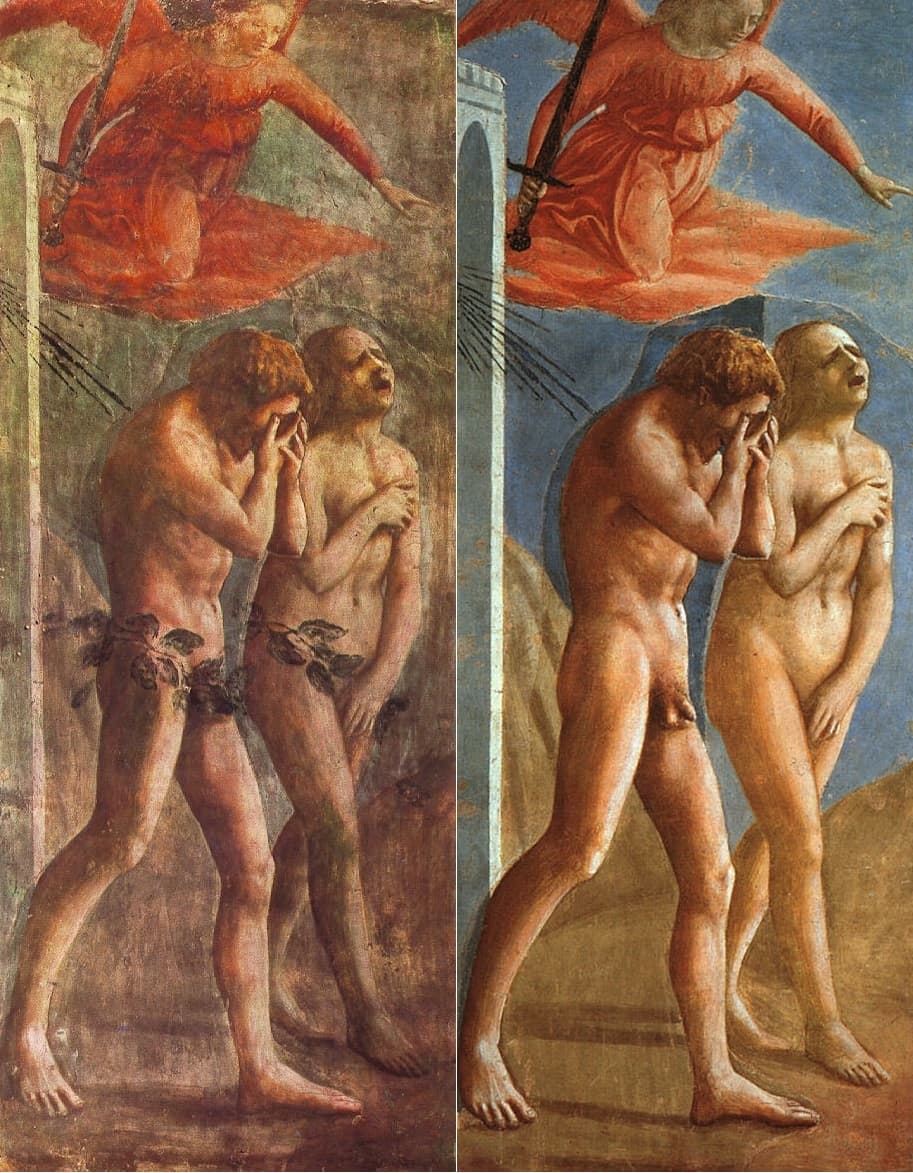
The Garden of Eden, in the gentle hour when light has no name yet. Under the tree that stands in the middle of the orchard, a man and a woman stand, still close to the hand that shaped them. They agree to speak of the beginning — theirs, and that of all who will come.
—How did you both come into existence?
I, Adam, was formed from the dust of the ground, and a breath was breathed into my nostrils: that is how I became a living soul. I walked alone at first, naming every beast that passed — and none was like me. Then a deep sleep fell upon me, and God took a rib from my side to make Eve. When I saw her, I knew she was bone of my bone, flesh of my flesh. She was not born of the earth like me, but of me: that is why, since that first morning, we are one flesh in two persons.
She was not born of the earth like me, but of me.
—What were your days like in the Garden, before all that?
We woke up not knowing what lack was. In the morning, I tended the orchard, naming what lived; Eve picked from the trees what they bore — fruits laden with seed, for God had given us all that for food. We went naked, and we did not even know it — nakedness was not yet a thing one noticed. In the evening, in the cool of the day, He who made us walked in the Garden of Eden, and we waited for Him without hiding. There was no weariness in our limbs, no distance between Him and us. That was paradise: not the abundance of fruits, but having nothing to conceal.
Nakedness was not yet a thing one noticed.
—Eve, do you remember the voice that spoke to you near the tree?
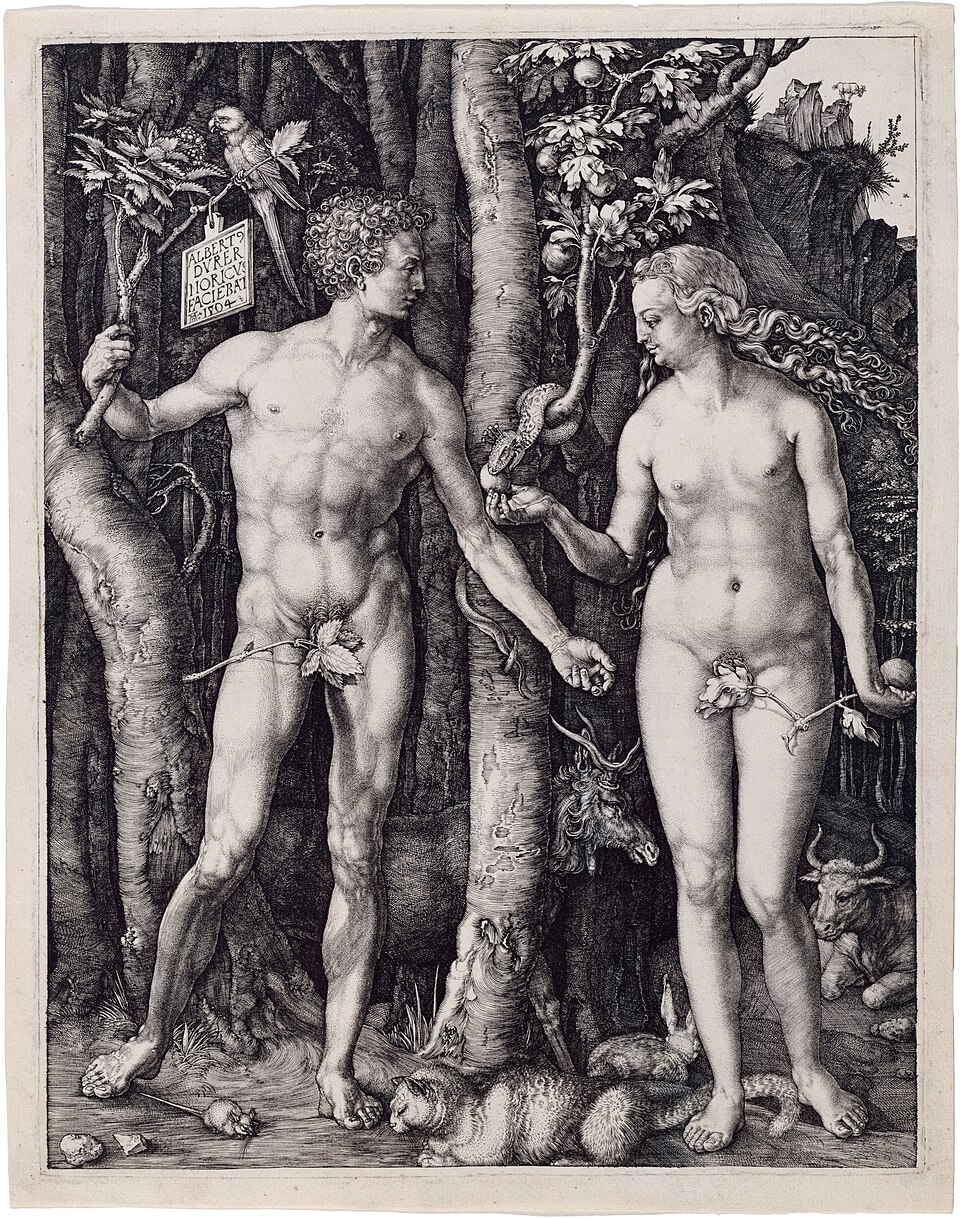
I remember it as one remembers a sudden chill. The serpent was the most cunning of all the beasts of the field, and it did not command me — it questioned me. It asked whether God had really said not to eat from any tree. Then it insinuated that the fruit would not cause us to die, but that our eyes would be opened and we would be like God, knowing good and evil. That was its cunning: it did not fully lie; it twisted a crumb of truth until it shone like a promise. And I looked at the tree differently than before. It seemed desirable to eat.
It did not fully lie: it twisted a crumb of truth until it shone.
—What made that fruit so different from all the others in the Garden?
All the trees were open to us, except one: the tree of the knowledge of good and evil, standing in the middle of the Garden. Its fruit was not poisoned, understand — it was forbidden, which is something else. What God placed there was not poison, but a word: do not eat. As long as that command held, we knew where our will ended and His began. In biting that fruit, we did not taste flesh, but disobedience. I ate, I gave some to Adam, and he ate too. In that instant, something opened within us — but it was not the promised light.
Its fruit was not poisoned: it was forbidden, which is something else.
—What did you feel in the moment that followed?
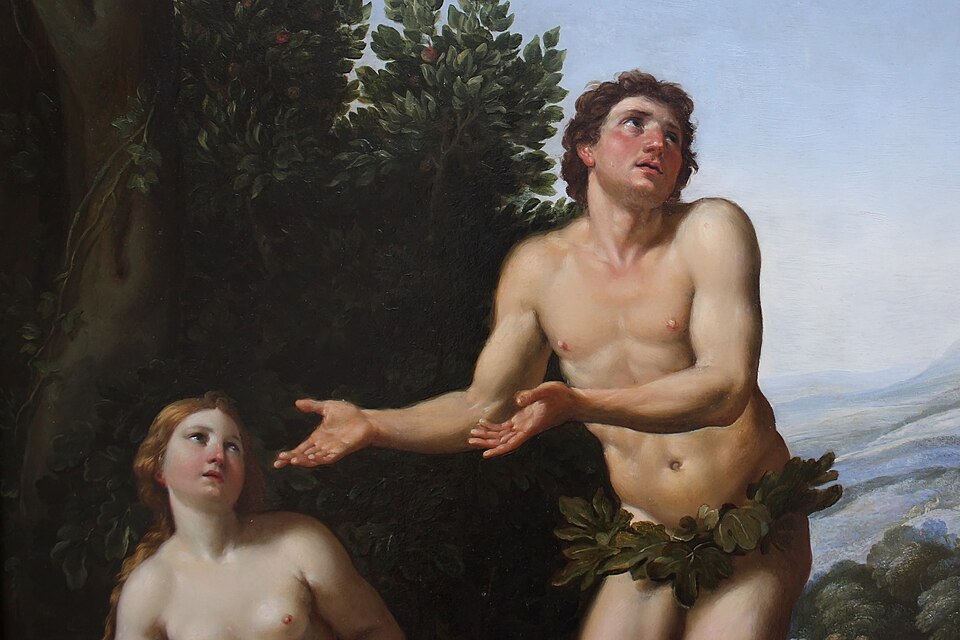
Our eyes were opened, yes — but upon ourselves. For the first time, we saw that we were naked, and an unknown thing rose in us: shame. We sewed fig leaves to cover ourselves, as if one could sew innocence back with leaves. And when, in the cool of the evening, we heard God walking in the Garden, we did what we had never done: we hid among the trees. That is when I understood what we had lost. It was not the fruit, nor even the Garden. It was being able to stand before Him without turning away.
We sewed leaves, as if one could sew innocence back.
—How did your departure from the Garden happen?
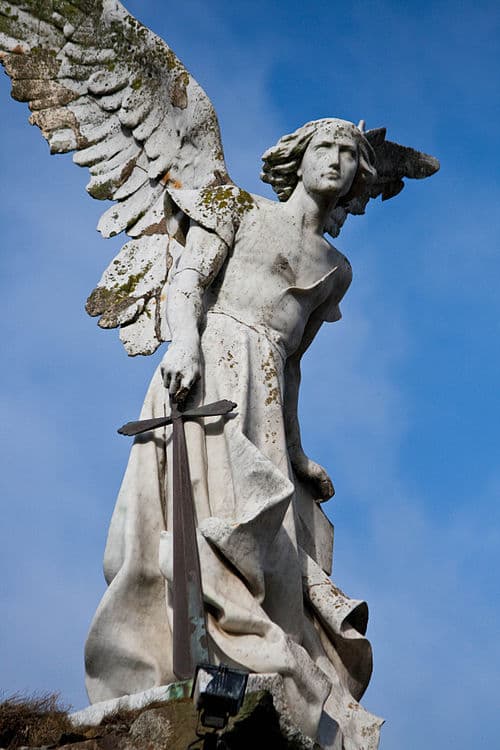
God drove us out of the Garden of Eden, and behind us He placed a guard so that no one could return. We crossed to the other side, where the ground no longer yields of itself. To me, Adam, it was said that the ground would be cursed because of me, that it would bring forth thorns and thistles, and that I would eat my bread by the sweat of my brow until I returned to the dust from which I was taken. The first time I pushed the plow into resisting soil, I felt in my arms the exact weight of what we had done. Paradise is not regained; it is left once.
Paradise is not regained; it is left once.
—Eve, did the condition announced to you seem fair?
I was told that I would bring forth children in pain, and that I would know desire and the hardship of shared life. I do not dispute the measure of what was said to me — it is not my time that judges His. But I know this: the same mouth that pronounced the penalty also called me mother of all living. The suffering given to me is not only a punishment; it is bound to the life that will come from me. Every child I will bear is wrested from that pain. That, I believe, is the hidden meaning of my name: to bear life at the cost of pain, outside the Garden we left.
The same mouth that pronounced the penalty called me mother of all living.
—What would you say about your first children, born far from Eden?
Our sons came into a harsh world, not the Garden. Cain clung to the soil, working it like his father; Abel led flocks through the pastures. To see a generation born after us was to see our fault and our hope walking side by side on two legs. For from us, through them, would come the whole line of humans — every face to come, each carrying a little of the dust from which I was formed. We are not just two who sinned: we are the root. All that will be born of man traces back to that first couple standing outside the orchard.
Our fault and our hope walked side by side on two legs.
—Your story has traveled through centuries in sacred texts. How do you feel about being recounted this way?
In the very beginning, it is written that God created man in his image, in the image of God he created him; male and female he created them. That is the seal placed upon us: not beasts among beasts, but beings made according to a likeness — what those who came after call the Imago Dei. This is what the scrolls and books repeat from generation to generation: that we bear, even exiled, a dignity received from above. Our nakedness has been covered with shame, but our origin has never been erased. One can lose the Garden without losing the mark of the One who shaped you.
One can lose the Garden without losing the mark of the One who shaped you.
—To finish: when you look back, what do you hope people will remember about you?
That they do not see us only as those through whom misfortune entered. It is true that through one man sin spread, and with it death, to all who are born from me — I do not deny it. But those who meditate on our story also read a promise: that where a fault opened a wound, a redemption will come to close it. I do not yet know the face of that hope; I only know that it was glimpsed at the threshold of the Garden. Let people remember this: we are the first morning and the first night of all, and our story awaits not an end, but a new beginning.
Where a fault opened a wound, a redemption will come to close it.
Sources
This imaginary interview was generated by artificial intelligence from sources documented in Adam and Eve's profile. It dramatises what the figure might have said based on what we know about them, but does not constitute attested historical testimony. For primary sources and factual documentation, refer to the full profile.