Imaginary dialogue between Léopold Sédar Senghor and Aimé Césaire
by Charactorium · Aimé Césaire (1913 — 2008) · Literature · Politics · 6 min read

In the cool of a veranda in Fort-de-France, in 1983, Léopold Sédar Senghor meets his old comrade, shortly after the publication of Moi, laminaire. The fan stirs the late-afternoon heat; on the table, a dog-eared copy of the collection sits next to a glass of agricultural rum. The two men have known each other since Lycée Louis-le-Grand, where they discovered each other half a century earlier. Senghor, the Senegalese who became poet and head of state, comes to question the child of Basse-Pointe about the path traveled since their student years.
—Aimé, I remember the day I saw you arrive at Louis-le-Grand, in 1931, that fierce Martinican. What were you looking for in that Paris?
You who were already there, Léopold, you know what I felt. I arrived from Basse-Pointe with a scholarship and my head full of Latin, convinced that the mother country would tell me who I was. But the opposite happened. In meeting you, the African, I understood that I knew nothing about Africa, and therefore nothing about myself. Paris taught me my exile before teaching me my return. I was looking for a culture; I found an amputation. That void, that absence of country in the heart of a man who nonetheless possessed one — that was what would become my raw material. Without that Parisian wound, I believe I would never have written a single worthwhile line.
I was looking for a culture; I found an amputation.
—When we launched L'Étudiant noir with Damas in 1935, that word 'Négritude' that you coined — where did it come to you?
It was born of anger, Léopold, and you saw it born better than anyone. They threw 'nigger' at us as an insult, as a flaw to hide behind assimilation. So I decided to pick that word up from the mud and make it a flag. Négritude was not a salon doctrine: it was the simple and proud recognition of being Black, of our history, of our African culture. You made it a gentleness, a civilization of emotion; I made it a revolt. But we were looking in the same direction. In L'Étudiant noir, we stopped apologizing for existing. That was the founding act: transforming the shame imposed on us into the dignity we gave ourselves.
I decided to pick that word up from the mud and make it a flag.
—Your Cahier d'un retour au pays natal, you wrote it over there, in our cold Parisian rooms. How do you write the return when you are in exile?
You write it precisely because you are far away, Léopold. From Basse-Pointe, I did not see Martinique; it took the distance of Parisian cobblestones for it to come back to me whole, with its hills, its poverty, its huts, and its light. The Cahier is a cry hurled toward an island that I held all the tighter because it escaped me. I put everything into it: revolt against the colony, shame overcome, love for my people standing tall. I began it around 1936, reworked it for years, and it appeared in 1939. The first readers were few, the echo slow to come. But I had understood one thing: to find your native land again, you must first have the courage to name it in all its truth, without glossing it over.
It took the distance of Parisian cobblestones for my island to come back to me whole.
—And then you returned to teach at Lycée Schœlcher in 1939. You who could have stayed near us, why that return?
Because a poem is not enough, Léopold. I had celebrated my country on paper; now I had to live and work there. At Lycée Schœlcher, I had before me young Martinicans who were being trained to despise their own skin, just as they had tried to train us. Opening their eyes, restoring their pride — that was extending the Cahier in another way. With Suzanne, we soon founded the journal Tropiques, in the middle of the war, under the watch of Vichy. Teaching, publishing, resisting: it all held together. I did not want to be an export poet, applauded in Paris and absent from home. My struggle made sense only with my feet in the red earth of Martinique, among my own people.
—In 1950, your Discourse on Colonialism struck like a thunderbolt. Did you measure the violence of what you were asserting?
I weighed it, and I still stand by it today, Léopold. They talked to me about civilization; I talked about proletarianization and mystification. My idea was simple and terrible: colonization first dehumanizes the colonizer. Europe, which had grown used to treating overseas peoples like beasts, ended up turning that same barbarism against itself. I dared to write that colonial crimes had paved the way for what Europe suffered in its own wars. This text was not an academic essay; it was a weapon handed to the peoples rising up in Africa and Asia. I was accused of exaggerating. But look around us: it is those pages, more than my poems, that traveled to the maquis of decolonization.
Colonization first dehumanizes the colonizer.
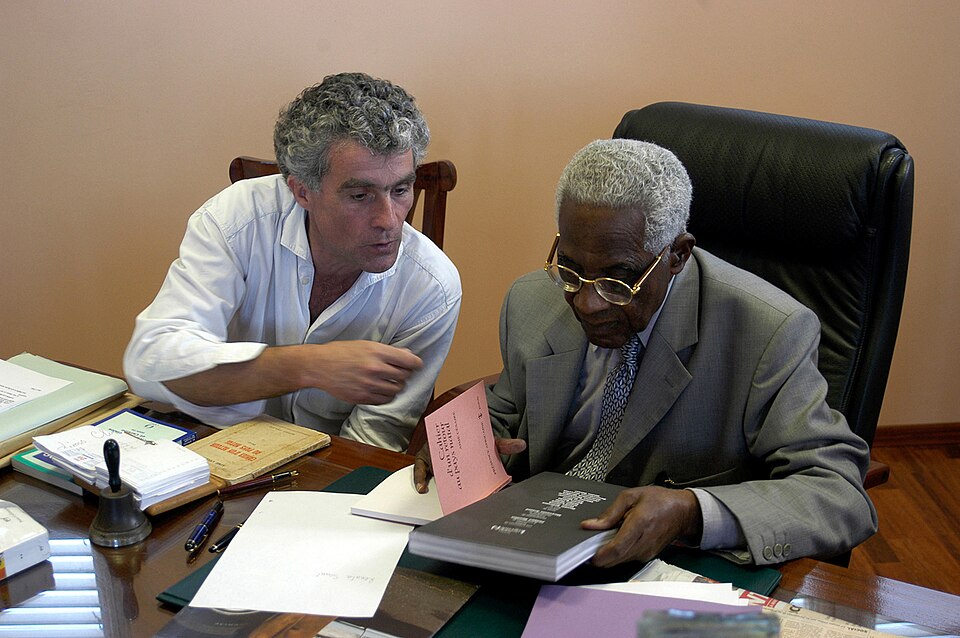
—In 1946, you championed the departmentalization law. You, the bard of Négritude, making Martinique a French department — was that not a paradox?
I have been reproached enough for it, Léopold, and I understand the question. But remember the state of our islands in 1945: poverty, abandonment, second-class citizens denied the rights of the mother country. For me, departmentalization was not a dilution into France; it was first and foremost demanding real equality, the same social rights, the same status, which had been denied us since abolition. I was demanding that the Republic finally keep its promises to the descendants of slaves. Black pride and social justice were not separate struggles for me. I knew the risk of assimilation; I said it again and again. But in 1946, giving bread and rights to my people took precedence over theoretical quarrels. Dignity also begins with the hospital and the school.
—You have been mayor of this city for nearly forty years. How do the writer and the road-builder coexist in the same man?
With difficulty, and wonderfully, Léopold — you who have governed a state, you know what I am talking about. The morning belongs to the mayor: sewers, schools, housing for crowded families, the town accounts. The poet must wait for the night, when the city falls silent. For a long time I thought politics would devour writing. And then I understood that they nourish each other. Administering Fort-de-France is still loving my people, but with sidewalks and pipes instead of metaphors. The mayor's office kept my feet on the ground, prevented me from becoming a poet of clouds. If Moi, laminaire was published last year, it is because these forty years of service gave me something hard and true to say about men.
Administering my city is loving my people with sidewalks instead of metaphors.
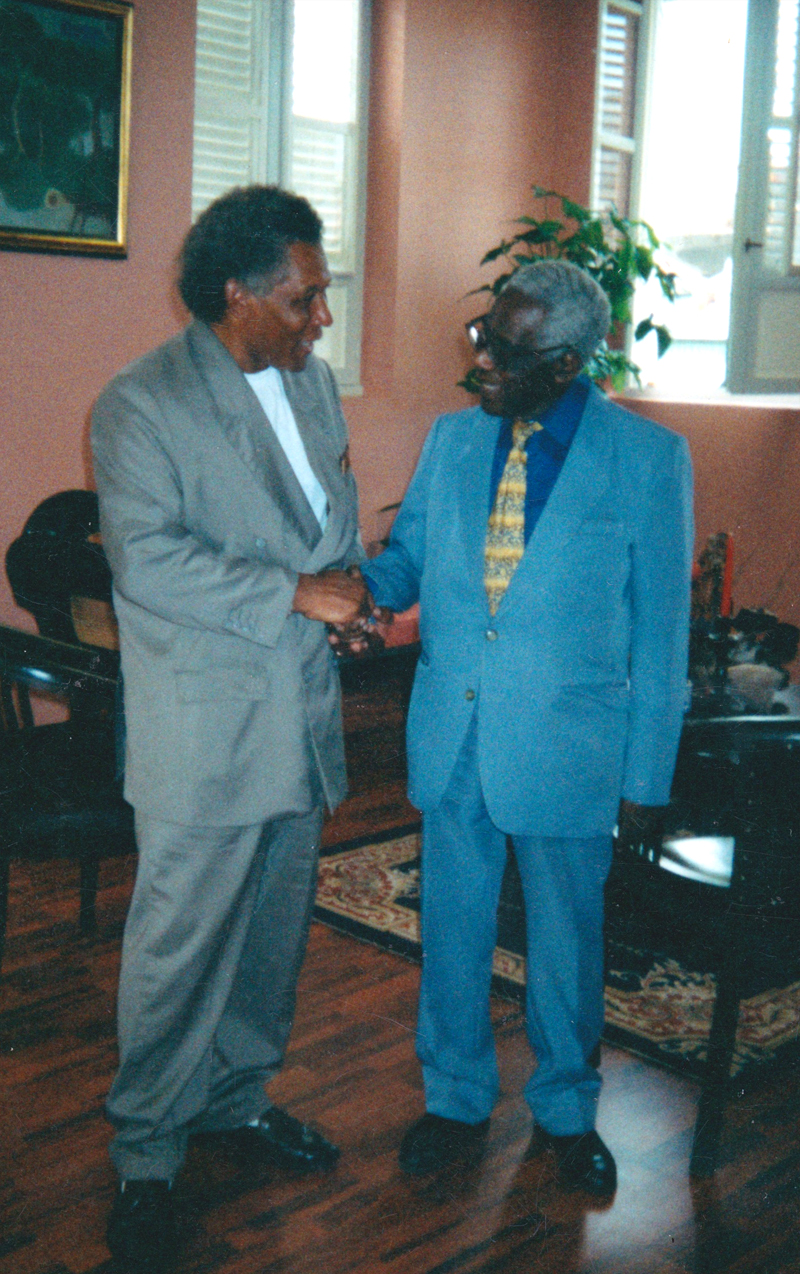
—In 1956, your Letter to Maurice Thorez caused quite a stir. Breaking with the Communist Party after so many years — was it heartbreaking?
It was a necessity, and yes, heartbreaking. I had militated with those men, I had believed in their struggle against exploitation. But the Party wanted to think for us, to bend our particular struggle to its European doctrine. Yet no doctrine from elsewhere could exhaust the Black problem, the colonial problem, which is singular. When I saw its silence on the crimes of Stalinism and its blindness toward us, I wrote to Thorez that I refused to trade my Black brotherhood for an abstract brotherhood. I wanted a path that starts from us, from the Antilles, from Africa. I was told I was isolated. But better a lucid solitude than an obedience that mutilates you. That letter, you see, was still Négritude: the refusal to let another decide who we are.
Better a lucid solitude than an obedience that mutilates you.
—Two years later, in 1958, you founded the Martinican Progressive Party. What path were you seeking, between independence and France?
A Martinican path, Léopold, suited to our measure. You led Senegal to sovereignty; our islands are different — small, marked by centuries of assimilation, economically chained. Proclaiming independence with a snap of the fingers would have been a cruel adventure for my people. But total assimilation, I did not want that either: it erased us. With the PPM, I sought autonomy: that Martinicans manage their own affairs, on their own land, according to their own genius, without brutally breaking all ties. Some found me too cautious, others too bold. But a people's freedom is not a textbook formula; it is tailor-made. I preferred a patient emancipation to an independence that would have starved my people.
—Half a century after our Parisian rooms, what remains for you of that child from Basse-Pointe who wanted to name his country?
The essential remains, Léopold: he kept his word. That kid from the north of the island with a scholarship and a rage, he wanted to restore dignity to his people and name his land without glossing it over — and I believe he stuck to it, from the Cahier to this Moi, laminaire lying here between us. The laminaire is that seaweed that clings to the rock beaten by the sea and yet holds fast. That is what I feel I am: rooted, shaken, but standing. I did not succeed in everything; the wounds of slavery and colonialism do not close in a lifetime. But we, you and I, have opened a path on which others already walk. The native land, in the end, I did not only find it again: I tried to make it habitable.
Rooted, shaken, but standing: that is what I feel I am.
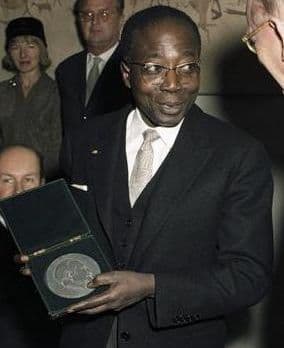
This imaginary interview was generated by artificial intelligence from sources documented in Aimé Césaire's profile. It dramatises what the figure might have said based on what we know about them, but does not constitute attested historical testimony. For primary sources and factual documentation, refer to the full profile.