Kids interview Aimé Césaire
by Charactorium · Aimé Césaire (1913 — 2008) · Literature · Politics · 5 min read

Two 12-year-old students, on a field trip, have an appointment with an old gentleman in Fort-de-France. He welcomes them with a big smile, happy that children have come to listen to him. He invites them to sit near his library and begins to tell his story.
—How old were you when you left to study in Paris?
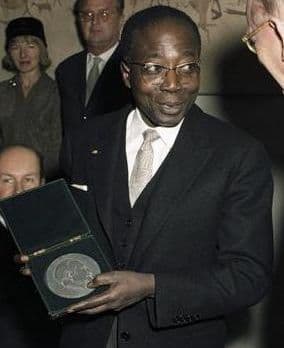
I was eighteen years old, my child. In 1931, I left Martinique thanks to a scholarship. Imagine: a boy from the Antilles arriving in a big, cold, gray city, far from the sun and the sea. At the Lycée Louis-le-Grand, I met another student from Africa, Léopold Sédar Senghor. We were two kids, a bit lost, proud and shy at the same time. We talked about our homelands for hours. You know, people think great things are born in palaces. No. They are often born between two friends who feel alone and refuse to remain silent.
Great things are often born between two friends who refuse to remain silent.
—Is it true that you invented a word? Which one?
Yes! With my friends, we forged the word Négritude. Back then, they told us the word "nègre" was an insult. So we decided to turn it around, like turning a weapon. We made it proud. With Senghor and another comrade, Léon-Gontran Damas, we even created a small student newspaper, L'Étudiant noir, in 1935. Imagine a simple sheet of paper, printed in few copies. Négritude is just that: saying that being Black is not a shame, it is a beauty and a history. A word can straighten the back of an entire people.
We took an insult and turned it into a pride.
—What was it like, writing your great poem far from home?
It was both painful and burning. In Paris, I was homesick. So I wrote the Cahier d'un retour au pays natal, in 1939. It is a long poem where I return home through words, since I could not really go back. I wrote that I wanted to be a "man-crier," someone who shouts to awaken others. Imagine a cry so strong it knocks down the walls of fear. I did not write to be pretty. I wrote so that my people would lift their heads. That poem is my heart laid on paper.
I returned home through words, since I could not really go back.
—Why did you want to shout in your poems instead of speaking softly?
Good question, my child. Because my people had been ordered to be silent for centuries. When you have been silenced for so long, speaking softly is no longer enough. Imagine a classroom where a child has never been allowed to raise their hand. The day they speak, their voice trembles and rises loudly. My poem was that cry. I wanted to awaken the Antilleans, to tell them: your skin, your history, your ancestors, all of it is worthy. Surrealism, that art that frees the imagination, helped me find new words. Poetry, you see, is a gentle and terrible weapon.
When you have been silenced for so long, speaking softly is no longer enough.
—You said that colonizing was barbarism. Why?
Because it was true, my child. In 1950, I wrote the Discourse on Colonialism. They talked to me about "civilization," about roads and schools brought to the colonies. But I saw hunger, contempt, bleeding peoples. Imagine someone stealing your house and then telling you, "Look, I built you a pretty door." Colonizing a people means debasing them, and debasing the other always ends up debasing the dominator as well. That little book became a weapon for all peoples who wanted their decolonization, their freedom. You can fight a huge injustice with a few well-written pages.
You can fight a huge injustice with a few well-written pages.
—Is it true that you were mayor for a super long time?
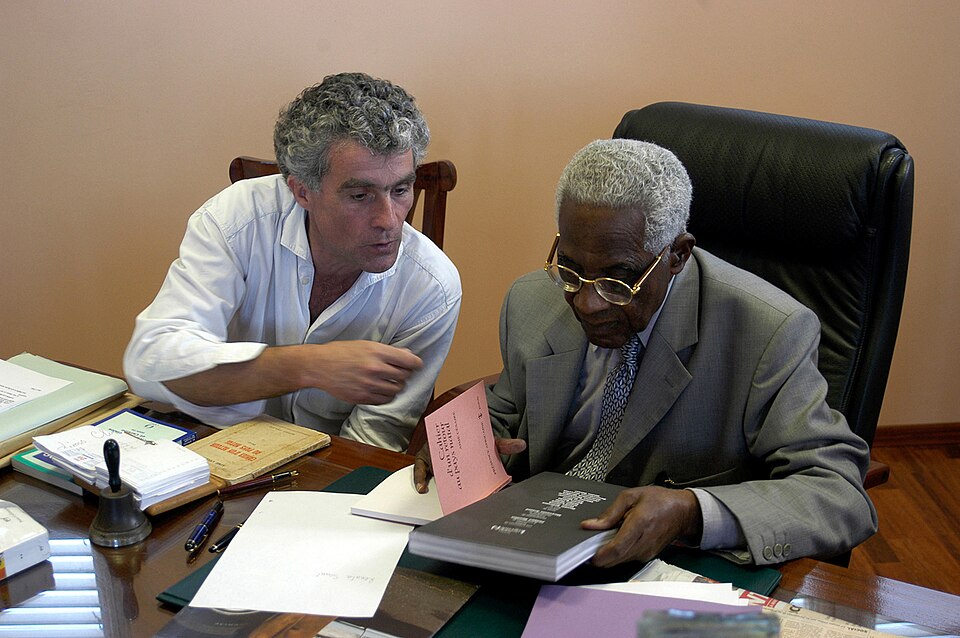
Fifty-six years, my child! From 1945 to 2001, mayor of Fort-de-France, my city. That is almost a whole lifetime. Imagine: babies I saw born had become grandparents when I left city hall. In the morning, I read my mail at my desk, received people, took care of the streets, water, schools. And in the evening, I became a poet again, writing late into the night. Two jobs in one man. It was not always easy to switch from poems to plumbing problems! But serving your city is also a form of poetry, you know.
Serving your city is also a form of poetry.
—What did your home smell like in the morning? What did you eat?
Ah, you take me back home! In the morning, it smelled of coffee and ripe fruit. I had a light Creole breakfast, because of the heat. At home, we eat accras, fish court-bouillon, yams, bananas. When there was a celebration, a little rhum agricole for the adults. Imagine a kitchen where the smell of the sea and the sound of birds come in through the window. My house was full of books, entire walls of books. I lived between two things I loved: the table of my land, and the library of the whole world.
I lived between two things I loved: the table of my land, and the library of the world.
—You were in a political party. Why did you leave it?
Yes, I was in the Communist Party. But in 1956, I slammed the door. I wrote a letter to its leader, Maurice Thorez, to explain why. You see, that party mostly looked at Europe's problems and forgot us, the Black and colonized peoples. Imagine being part of a team, but they never listen to you and decide everything without you. One day, you leave. I wanted to defend my own people with my own words, not repeat those of others. Leaving is not betraying. Sometimes, leaving is staying true to yourself.
Leaving is not betraying. Sometimes, leaving is staying true to yourself.
—And then what did you do? Did you give up politics?
Oh no, my child, I never give up! Two years later, in 1958, I founded my own party, the Martinican Progressive Party. I wanted Martinique to decide more of its own affairs, while remaining linked to France. Imagine a grown child who wants to make their own choices, without leaving their family. That was my idea. I continued being mayor, deputy, and writing at the same time. When you believe in something, you don't just sit back and complain. You build a new tool and get back to work.
When you believe in something, you don't complain: you get back to work.
—If we remember just one thing about you, what would it be?
Remember this, my young friends: no one has the right to make you believe that you are worth less than another. I spent my life, with my poems like the Cahier d'un retour au pays natal and my struggles, telling my people: stand tall. Imagine a seed planted in hard ground: if you water it a little, it will eventually lift the stone. Words are that water. You are young, you will read, you will speak in turn. So water dignity around you. It is the most beautiful job in the world, and it has no age.
No one has the right to make you believe that you are worth less than another.
This imaginary interview was generated by artificial intelligence from sources documented in Aimé Césaire's profile. It dramatises what the figure might have said based on what we know about them, but does not constitute attested historical testimony. For primary sources and factual documentation, refer to the full profile.