Kids interview Al-Hakim bi-Amr Allah
by Charactorium · Al-Hakim bi-Amr Allah (985 — 1021) · Politics · Spirituality · 5 min read
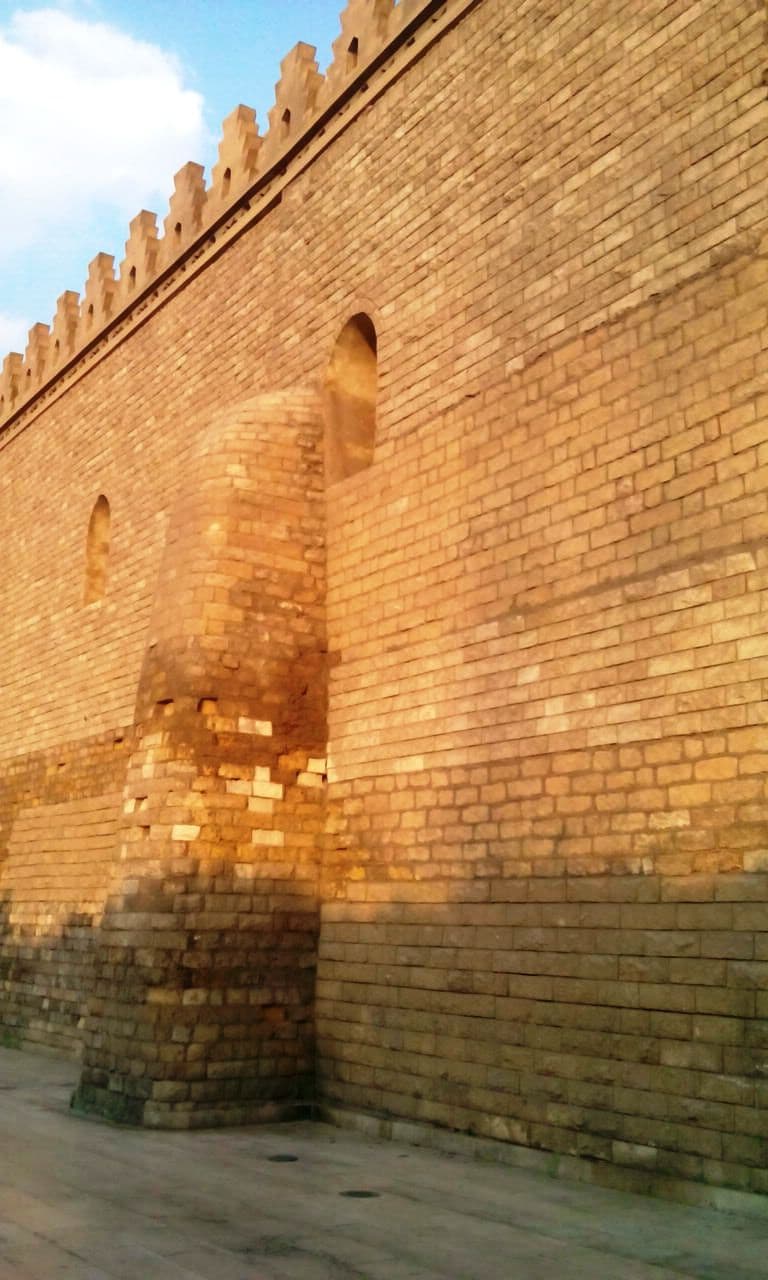
Two young visitors, aged twelve, step through the gate of the Great Palace of Cairo. At the far end of a cool hall, a man dressed in white linen awaits them, smiling. He places his hand on his gray donkey and beckons them closer.
—Is it true you used to wander the city alone at night?
Yes, my child, almost every night. Imagine dark alleys, without any light, just the step of my gray donkey on the cobblestones. A servant carried an oil lantern, a small flame dancing on the walls. Other kings stayed locked in their golden palaces. I went out to see my people for real. I wanted to know who was cheating on prices, who was crying from hunger. A chronicler, Yahya ibn Sa'id, wrote that I punished the unjust and rewarded the good with my own hand. That's how people came to believe I could see everything.
A king who stays in his palace sees only his walls.
—Why a donkey and not a beautiful horse, like other kings?
Ah, that question — you know, they already asked me that in my time! A caliph — that's the leader of all believers, the successor of the Prophet — was supposed to appear magnificent. I chose a humble beast. I also wore simple white linen robes, not gold embroideries. Imagine: my palace was immense, with gardens and libraries, but I dressed like a poor man. It wasn't a game. I believed true power does not show in clothes. A donkey brought me closer to the people of the markets. On a golden horse, I would have stayed above them, far away.
—They say you loved the stars. What did you do with them?
I adored the stars, yes! I had an observatory built on the Muqattam hills, above Cairo. At night, we would go up there with an astrolabe — a engraved metal disk used to measure the position of the stars in the sky. We calculated the calendar, festivals, the movement of planets. In my time, reading the sky was a very learned science. I wasn't content just to look: I wanted to understand. Like a child counting stars, but with instruments and books. The sky, for me, was the greatest of books, and I wanted to turn every page.
The sky was the greatest of books.
—What was the House of Wisdom you built?
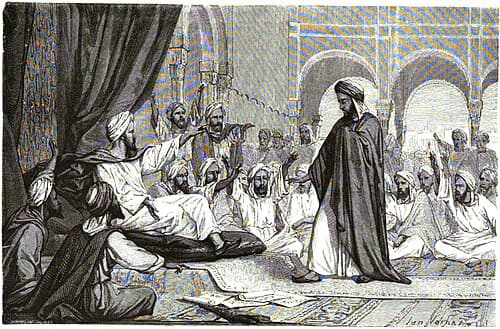
It was my greatest dream, my child. The Dar al-Ilm, the “House of Wisdom.” I gathered tens of thousands of manuscripts there: astronomy, medicine, mathematics, philosophy. Imagine a huge hall full of scrolls and books, where any scholar could enter and read, for free. Rich or poor, everyone was welcome. People spoke of the great library of Alexandria, vanished for centuries; I wanted to offer a new one to my people. In the afternoon, I would go there to read with the scholars. A king who builds a library plants a tree that will bear fruit long after him.
A library is a tree that bears fruit after us.
—Is it true you banned a vegetable? Why would you do that?
Ha, the molokhia! Yes, I banned the sale of that vegetable, and many other things besides. I governed through marsums, decrees written on parchment, proclaimed suddenly in the markets. My inspectors, the muhtasib — those who oversee merchants and weights — had to enforce them. Why? Sometimes even I didn't explain it to anyone. I liked to show that my word alone made the law. Then, years later, I canceled everything. You find that baffling? The people of my time did too! Some believed I was inspired by Heaven, others thought I was mentally disturbed. It's up to you to make up your mind.
—You prevented women from going out? That must have been horrible for them.
You have a just heart to think of them, my child. Yes, I ordered shoemakers to stop making women's shoes, so they would stay home. It was harsh, I know. A caliph at that time believed he could regulate even the steps of everyone in the street. But listen to the rest: toward the end of my life, in 1019, I erased those rules. I set them free to go out again. Why this reversal? No one ever knew, not even my close ones. I spent my life giving orders, then undoing them. Perhaps even a king can change his mind, and regret.
Even a king can change his mind, and regret.
—Why did you destroy such an important church in Jerusalem?
You touch on my heaviest deed, my child. In 1009, I ordered the razing of the Church of the Holy Sepulchre in Jerusalem — the most sacred place for Christians. A chronicler, Al-Maqrizi, wrote that I had that church and many others torn down, with their crosses. Jerusalem was under my authority, and tensions between religions were high there. This act struck all of Christendom with terror, far away, all the way to Europe. A century later, they still remembered it to call for war. Destruction is easy and quick; the fear it sows can last a hundred years. That is what I learned too late.
Destruction takes a day; the fear it sows lasts a hundred years.
—Tell us! Is it true you disappeared and your body was never found?
That is the great mystery, yes. One night in February 1021, I went out alone into the Muqattam hills, as I often did. But this time, I did not return. They found my donkey stained with blood. No body, ever. Imagine my followers that morning, searching everywhere among the rocks, finding nothing. That silence gave rise to an immense question: was it murder? An accident? Or something else? Some, my child, refused to believe I was dead. They said I had only hidden myself, and that I would return. It is from that answerless night that an entire faith was born.
—Some people say you are a god? How is that possible?
Listen carefully. During my lifetime, a man named Hamza ibn Ali began to proclaim that I was a manifestation of God on earth. With his companions, he wrote the Rasa'il al-Hikma, the “Epistles of Wisdom,” in my name. They said that recognizing God in al-Hakim was to attain the supreme truth. From that was born the Druze religion, which still lives today. For them, my disappearance is not a death: it is a ghayba, an “occultation.” This word means that I am hidden, not gone, and that I will return at the end of time to dispense justice. A figure never quite dies when people still await him.
You never quite die when people still await you.
—How does it feel to know that people still talk about you, a thousand years later?
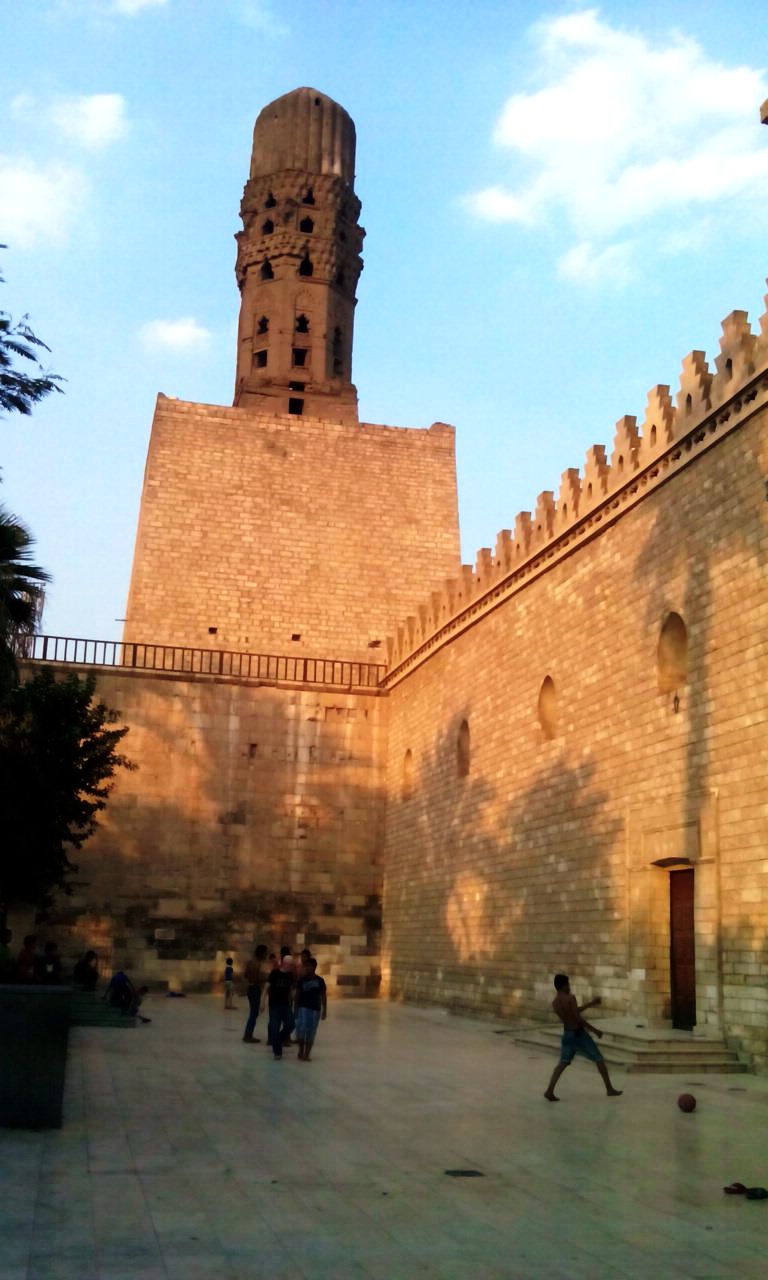
It moves me, my child, more than you can imagine. I was a feared caliph, with baffling decrees, terrible deeds and great works alike. My mosque still stands in Cairo; it served as a prison, a stable, a warehouse, then was restored. A million Druze still await my return in the world. And here come two children to listen to me with curious eyes. That is true survival: not golden palaces, but the memory of the living. Only remember this: a man is made of his light and his shadow together. Look at me whole, and judge for yourself.
A man is made of his light and his shadow together.

This imaginary interview was generated by artificial intelligence from sources documented in Al-Hakim bi-Amr Allah's profile. It dramatises what the figure might have said based on what we know about them, but does not constitute attested historical testimony. For primary sources and factual documentation, refer to the full profile.