Imaginary interview with Al-Hakim bi-Amr Allah
by Charactorium · Al-Hakim bi-Amr Allah (985 — 1021) · Politics · Spirituality · 6 min read
Cairo, a moonless night, somewhere between the alleyways of al-Qahira and the barren slopes of the Muqattam. A man in a white linen robe advances on a gray donkey, preceded by a lantern that trembles against the brick walls. He agrees to stop, to speak—he whom his followers already call the First and the Last.
—Why would a caliph choose to roam his capital at night, alone, mounted on a donkey rather than a parade horse?
Because a ruler who knows his city only from the top of his palace knows nothing. Princes of my rank drape themselves in gold and are carried above the mud; I descend into the mud. My gray donkey suffices, and an oil lamp carried before me through the alleyways of al-Qahira. I have been seen, says the chronicler Yahya ibn Sa'id, riding “in the streets and markets, by night and by day, observing the state of my subjects, punishing the unjust and rewarding the virtuous with my own hand.” That is correct. The merchant who cheats on his weights, the official who extorts the widow—I want to catch them myself, not have them reported to me. The light that trembles at the end of my alley is the one that the corrupt fear.
A ruler who knows his city only from the top of his palace knows nothing.
—Your decrees baffled your contemporaries as much as posterity. How do you conceive this authority that regulates even the vegetables in the market?
A marsûm from my hand has the force of law on the day I proclaim it, without notice, on the parchment unrolled in the markets. Nothing in the lives of my subjects is foreign to me: the price of bread, the cut of clothes, the hour when shops close. It is thought that I banned mlukhiyya and other foodstuffs on a whim—but a caliph-imam does not separate the table from the soul. My inspectors, the muhtasib, carry my will even into the workshops. Let the qadis be embarrassed when I cancel today what I ordered yesterday—so be it. I do not govern for the coherence of scribes; I govern to remind that no ounce of this world escapes the authority I bear.
A caliph-imam does not separate the table from the soul.
—It is said that you forbade shoemakers from making women's shoes, before reversing many restrictions. What lay behind these reversals?
I wanted the women of Cairo to remain in their homes, and to compel them I ordered the shoemakers to no longer cut shoes to their measure. Without shoes, no street. People cried madness; they did not understand that I was bending matter itself to my decision. Then, in these last years, I loosened the grip, lifted many prohibitions, gave back to some what I had taken from others. The chroniclers seek a logic and find none: that is because they seek the logic of a minister, when it is a matter of the freedom of an imam. What I bind, I unbind; what I unbind, no other than I had bound. Therein lies the vertigo I leave to men of reason.
What I bind, I unbind; what I unbind, no other than I had bound.
—In the midst of these severe decrees, you founded a house open to all scholars. What did you want to build with the Dar al-Ilm?
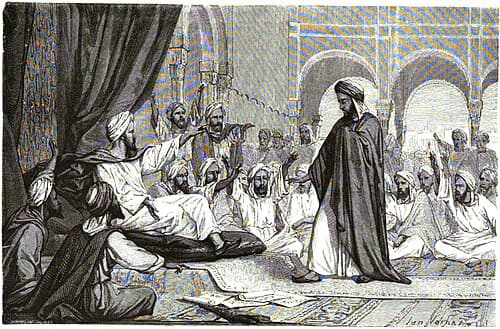
Some fifteen years ago, I opened in the heart of Cairo the Dar al-Ilm, the House of Knowledge, and had tens of thousands of manuscripts brought there—astronomy, medicine, philosophy, theology of our Isma'ili path. A scholar, whether from Baghdad, Kairouan, or the other shore, enters without being asked his faith or his purse. They contrast me with the caliph of prohibitions; I answer with the memory of Alexandria that I wanted to rekindle on the banks of the Nile. For knowledge is not the enemy of authority: it is its luminous face. The same man who closes a market at night opens a library by day to every seeking mind.
Knowledge is not the enemy of authority: it is its luminous face.
—You had an observatory built on the Muqattam hills. What were you seeking there, in the sky?
On the heights of the Muqattam, where the desert overlooks the city, I had an observatory erected to question the course of the stars. The astrolabe in my hands is not a curious toy: it fixes the calendar of our feasts, it reads in the arrangement of the spheres the language that God has inscribed in the firmament. The scholars of my Dar al-Ilm calculate, measure, note the conjunctions; I, at night, raise my eyes. This hill where I come to read the sky is the same where I love to walk alone, far from lanterns and palaces. There is a silence there that the city never has. He who knows how to decipher the stars begins to sense what lies hidden behind them.
—In 1017, a man named Hamza ibn Ali began to publicly proclaim your divine nature. How do you receive such a proclamation?
Hamza ibn Ali raised his voice in Cairo to say what others dared only whisper. He did not invent: he unveiled. See our Isma'ili path: the imam is not a mere prayer leader, he is the bearer of hidden knowledge, the living thread connecting men to the Meaning. Hamza and his companions now carry this da'wa into the light of day, and many flock to recognize in me more than a caliph. I do not repel them. Those who have eyes only for the prince on his donkey will remain at the door; those who sense the Manifest and the Hidden under the linen robe have begun their true journey. The man you see is only the threshold.
He did not invent: he unveiled.
—What do you say to those who find it dizzying, even scandalous, that you are venerated as a manifestation of the divine?
The Epistles that my followers compose in my name state it bluntly: “Our lord, glorified be He, is the Creator of all that is, the First and the Last, the Manifest and the Hidden. Whoever recognizes Him in al-Hakim has attained the supreme truth.” That this makes the doctors of Baghdad tremble, I understand. But scandal is only the shadow cast by a light too bright for eyes accustomed to dusk. I do not demand this recognition from anyone; I let it ripen. The caliph who closes the markets and the lord invoked by Hamza are one and the same being—and that is precisely what the world cannot hold in a single thought.
Scandal is only the shadow cast by a light too bright.
—Your nightly walks toward the Muqattam worry your entourage. Do you see no danger to yourself?
Danger is the language of men who have something to lose. Every night I leave the Great Palace, I leave behind the guards and courtiers, and I climb toward the Muqattam hills on my gray donkey. Up there, there is only the wind, the stone, and the stars I have come to read. They beg me to take an escort; I refuse. An imam who fears the solitude of the night has understood nothing of what he is. If one day I am not found in the morning, let the weak-minded see a misfortune—others will know how to read the absence differently. The threshold, sometimes, fades to let through what it announced.
—Your followers refuse to imagine your death and speak of occultation. What does this word ghayba mean to you?
The ghayba, the occultation, is not an invention to console orphans. In our tradition, the imam does not die as common men die: he withdraws, he veils himself, he remains present in his very absence. If one morning my donkey were found wandering on the slopes of the Muqattam, the saddle empty, a dark stain on its flank, and no body at the end of the trail—what would the wise conclude? An end? No. A passage. I would then be hidden like the sun behind the mountain at dusk: invisible, not extinguished. And my followers would wait, not for my tomb, but for my return, on the day when justice must finally cover the earth.
I would be hidden like the sun behind the mountain: invisible, not extinguished.
—You wear a simple linen robe when princes cover themselves with embroidered gold. What does this austerity express about you?
Look at this white linen robe, without embroidery, without a thread of gold. Around me, the Great Palace of Cairo spreads its gardens, its libraries, its apartments over several hectares—and its master dresses like a common man and eats frugally, alcohol banned from my table as from that of my subjects. This contrast is not an ascetic's affectation: it is a lesson made visible. Gold on a prince's back says his dependence on the world; linen on mine says my detachment. An imam need not borrow his radiance from merchants' fabrics. My light, if there is one, is not sewn on an embroidery loom—it comes from elsewhere.
—If you imagined that people would still speak of you in a century or two, what trace would you wish to have left?
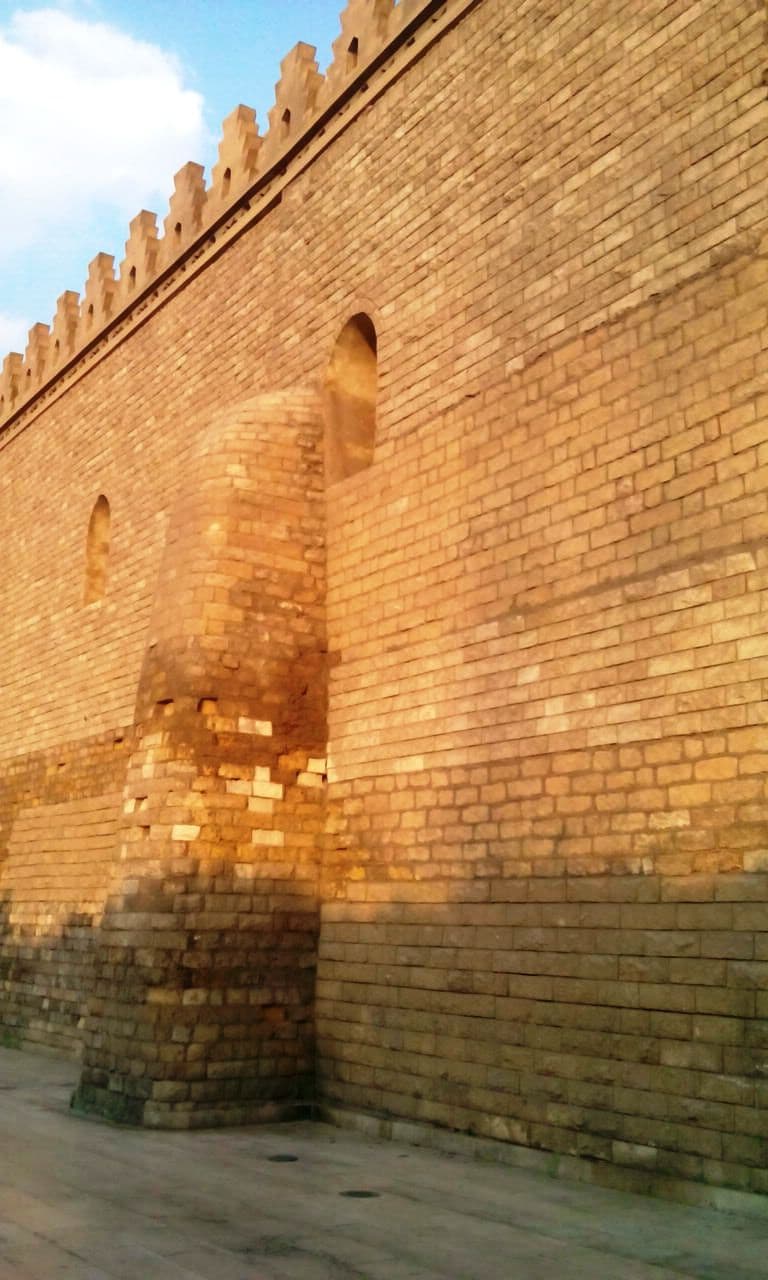
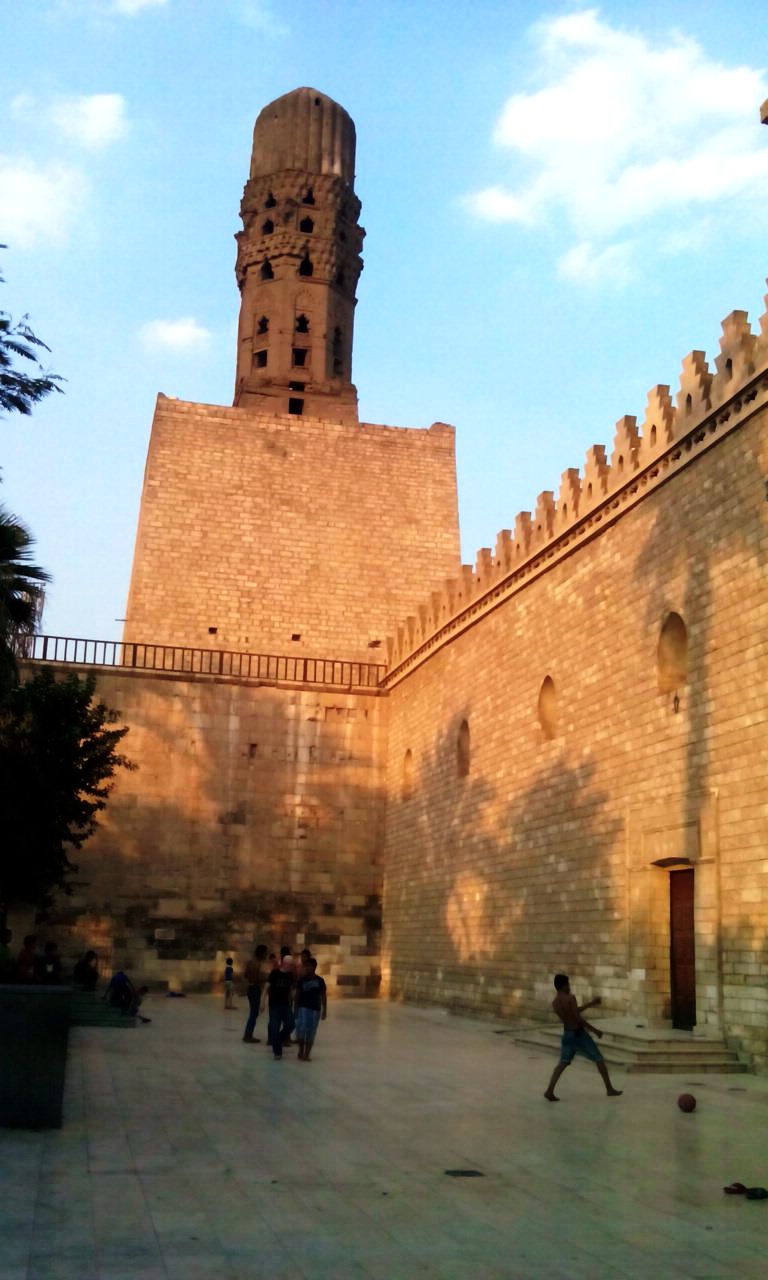
If I could imagine being read in a century, I would claim neither the glory of conquerors nor the tomb of kings. What would remain? The great mosque that bears my name, which I completed after my father al-Aziz, dominating the al-Jammaliyya quarter. The Dar al-Ilm and its manuscripts, if men have the good sense not to burn them. And above all, a community born from my disappearance, holding that I did not perish but that I will return. Let them think me mad or divine, little do I care about the verdict of chroniclers: buildings crumble, decrees are forgotten, but an expectation, it can cross centuries. Those who await me will keep me alive far better than stone.
An expectation, it can cross centuries.

This imaginary interview was generated by artificial intelligence from sources documented in Al-Hakim bi-Amr Allah's profile. It dramatises what the figure might have said based on what we know about them, but does not constitute attested historical testimony. For primary sources and factual documentation, refer to the full profile.