Imaginary interview with Al-Khwârizmî
by Charactorium · Al-Khwârizmî (780 — 850) · Sciences · 6 min read
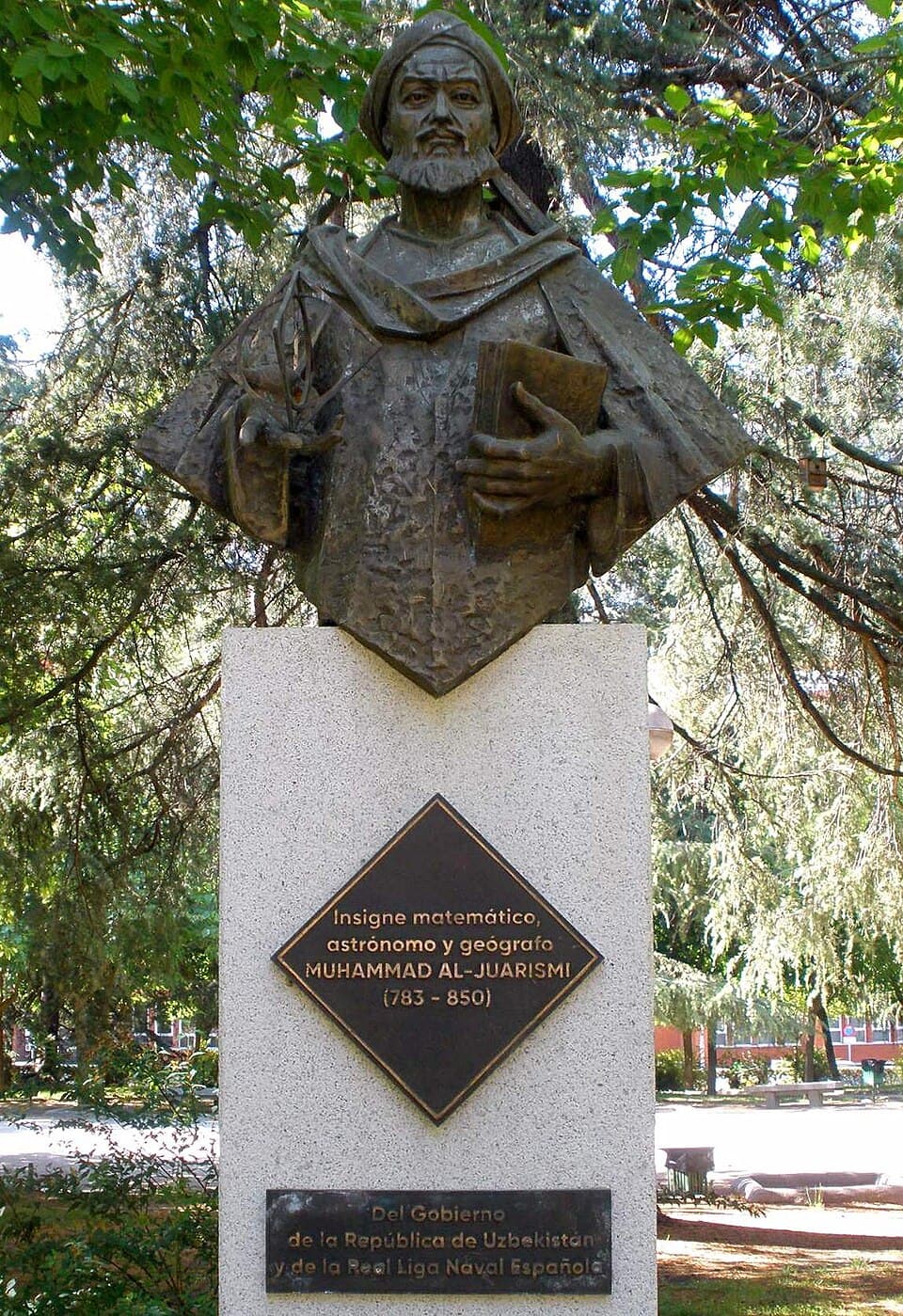
Baghdad, under the reign of al-Ma'mun. In a cool room of the House of Wisdom, among Greek and Indian scrolls copied by candlelight, a man with a turban dusted with ink looks up from his tablets. He agrees to speak about what occupies his days: restoring, confronting, counting.
—Where exactly are we, and what brought you to this house?
You are in the House of Wisdom, the Bayt al-Hikma, which our master the Caliph al-Ma'mun intended as a granary where all the grain of the world is stored. Here, we translate the ancients: the Greek geometers, the calculators from India, the sages of Persia. I come from far away, from a land in Asia where the cold bites; but it is here, near the Tigris, that my mind found its worktable. I rise before dawn for the fajr prayer, break my fast with bread and a few dates, then go to these halls where disciples and scrolls await me. God has allowed that separate knowledges meet under one roof; my duty is only to arrange them in good order.
A house where all the grain of the world is stored.
—You speak of order. What did you want to put in order in your book on algebra?
When I am presented with a problem — an inheritance to divide, a field to survey — almost the same thing always happens: on one side of the scale, known quantities; on the other, something unknown. My book, the Kitab al-Jabr wa-al-Muqabala, which I composed around the year 820, teaches nothing but two patient gestures. Al-jabr, restoration: when a term is missing from one side, you restore it by adding the same to the other. Al-muqabala, confrontation: you bring like terms face to face and subtract the superfluous. Thus I reduce every first- or second-degree equation to six simple forms, which anyone can solve like following a proven recipe. I did not invent these problems; they are as old as commerce and division. I only gave a method by which one no longer gets lost.
Restore what is missing, confront what is alike: all the rest follows.
—Why insist so much on a method, rather than on solving a particular problem?
Because a solved problem feeds one man for one day, while a method feeds all men for a long time. Consider the merchant who cannot read my demonstrations: if I give him the procedure, step by step, without his needing to understand its root, he will still arrive at the correct number. That is what I seek in the Kitab al-Jabr: not the brilliance of a discovery, but the reliability of a path that the humblest foot can take. The ancient geometers loved figures; I love rules that can be recited. God made the mind fallible and memory short; a clear procedure is a mercy to both. That is why I break everything into steps, as one teaches a child the gestures of prayer before their meaning.
A solved problem feeds one man for one day; a method feeds all men for a long time.
—You are also said to be a transmitter of the digits from India. How did you discover them?
In the scrolls that our translators brought back from India, I found a way of counting that at first seemed strange, then luminous. Only ten signs, and each one is worth according to its place: the same mark says units here, tens one place further. I recorded this around the year 825, in my book on Indian calculation. But the wonder of wonders is that little circle they call empty: the zero. Where the old calculator left a gap and made a mistake, this sign holds the vacant place and keeps each rank in its rank. On my calculation tablet, I no longer need the abacus or counters: I write, I erase, I start again. What once required a board and pebbles now fits in the width of a hand and the tip of a reed pen.
That little circle they call empty holds the vacant place and keeps each rank in its rank.
—What do these ten digits change, concretely, for the person who calculates?
Everything, and first the weight of calculation on a man's shoulders. With the old letter-numbers, adding two large sums required a trained mind and much time; multiplying was almost a miracle. With Indo-Arabic decimal numeration, the operation descends into the hand: you align the ranks, carry what overflows, and the result forms almost by itself under the calame. I wanted to describe these gestures — add, subtract, double, divide — so simply that a tax collector or an inheritance divider could follow them without a teacher. For our Law demands fair divisions, and injustice often arises from faulty calculation more than from a wicked heart. Giving everyone the means to count correctly is to serve the equity that the Most High commands. That is why I hold this little book of the Indians as dear as my algebra book.
Injustice often arises from faulty calculation more than from a wicked heart.
—What does one of your days look like within these walls?
It follows the sun and the call to prayer, like every man's life in Baghdad. After fajr and my morning bread, I go to my tablets; the middle of the day I give to the disciples who come to learn geometry and calculation, and to the scholars with whom I debate a demonstration or a star's position. We are never alone: a Persian recites what his master said, another brings a Greek scroll just translated, and from these mingled voices sometimes arises a clarity that none of us would have found alone. In the evening, after maghrib and the family meal, I keep the last light for reading, or I go up to observe the stars, the astrolabe in my hands. Thus the day belongs to men, and the night to the firmament; and both, I believe, give glory to Him who ordered them.
The day belongs to men, and the night to the firmament.
—You mention the stars. How did you move from calculation to measuring the sky?
The sky is but a vaster calculation, where numbers take the face of the stars. The Caliph al-Ma'mun wanted to know the position of the stars and the exact time of prayers in every place of his empire; for that, reliable tables were needed. So I compiled sine and tangent tables, those columns of numbers where the calculator reads, without starting over each time, the ratio of sides in a triangle. With the astrolabe, I observe a star's height above the horizon; with my tables, I derive a distance, a direction, a time. The ancients of Babylon already counted the sky by sixties, and I kept their sexagesimal system for angles, for proven tradition is not rejected on a whim. Measuring the sky is not piercing it: it is recognizing the order that God has placed there, and writing it in numbers.
The sky is but a vaster calculation, where numbers take the face of the stars.
—And the Earth? They say you described it entirely.
Described, not traversed: I am a man of tablets more than of caravans. But the same spirit that orders the stars can order places. In my Description of the Earth, the Kitab Surat al-Ard, I gathered the positions of cities, rivers, and mountains of the known world, each fixed by two numbers like a star in the firmament. Where the traveler says 'far' or 'after many days', the geometer says a longitude and a latitude, and one no longer gets lost. For the caliph, we also drew a map of the world as it extends under his caliphate. I corrected, as much as my measurements allowed, what the ancient Greeks had left erroneous. Thus the Earth enters the same net of numbers as the sky: what is above and what is below obey, for those who know how to count, a single rule.
Where the traveler says 'far', the geometer says a longitude and a latitude.
—Your very name seems to carry a story. Where does it come from?
Al-Khwârizmî means nothing other than 'the one from Khwarezm', that region I come from, over there in Central Asia, beyond the great rivers. Among us, a man bears the name of his land like a cloak he never takes off; wherever he goes, they know where he drank his first water. In Baghdad, they call me that, and I am honored, for no one denies the soil that formed him. It is a name of geography, you see, before being a man's name: it says a place on Earth before it says a scholar. I cannot imagine it could mean more than that — the trace of a traveler who left the East to arrange numbers on the banks of the Tigris.
Among us, a man bears the name of his land like a cloak he never takes off.
—Imagine you are still read in a century or two: what would you wish to remain of you?
What ever remains of a man, except what God wills to preserve? If I may dream aloud, I do not ask that my face or my name of Khwarezm be remembered, but the gestures I wanted to make easy. Let a child, in a land I will never see, trace those ten digits from India and the little circle of zero without even knowing who transmitted them to him: that is my true posterity. Let them follow, step by step, a calculation procedure like following a marked path, and arrive at it with certainty — it matters little whether they name me or forget me. A well-made method is like a road built in the desert: long after the builder is dust, the traveler still walks on it. I will be content if my road carries steps I never knew.
A well-made method is like a road built in the desert: the builder dies, the traveler still walks on it.
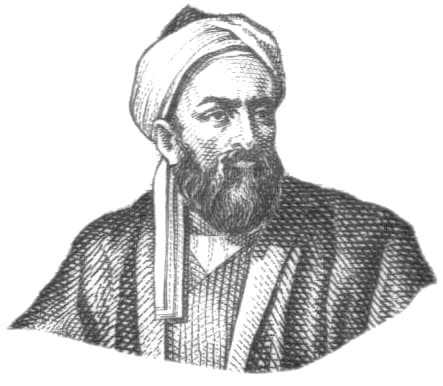
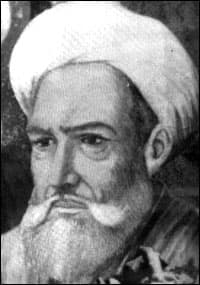
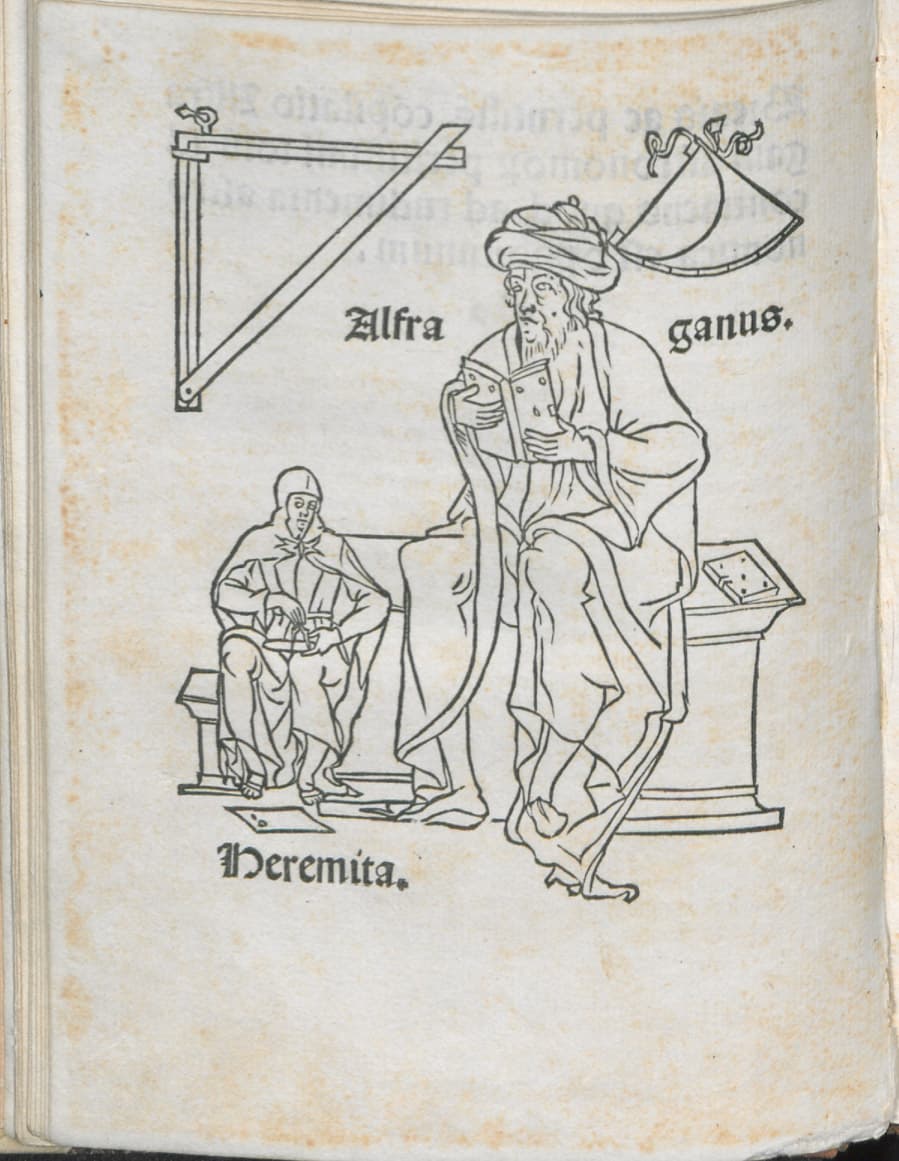
This imaginary interview was generated by artificial intelligence from sources documented in Al-Khwârizmî's profile. It dramatises what the figure might have said based on what we know about them, but does not constitute attested historical testimony. For primary sources and factual documentation, refer to the full profile.