Kids interview Al-Khwârizmî
by Charactorium · Al-Khwârizmî (780 — 850) · Sciences · 5 min read
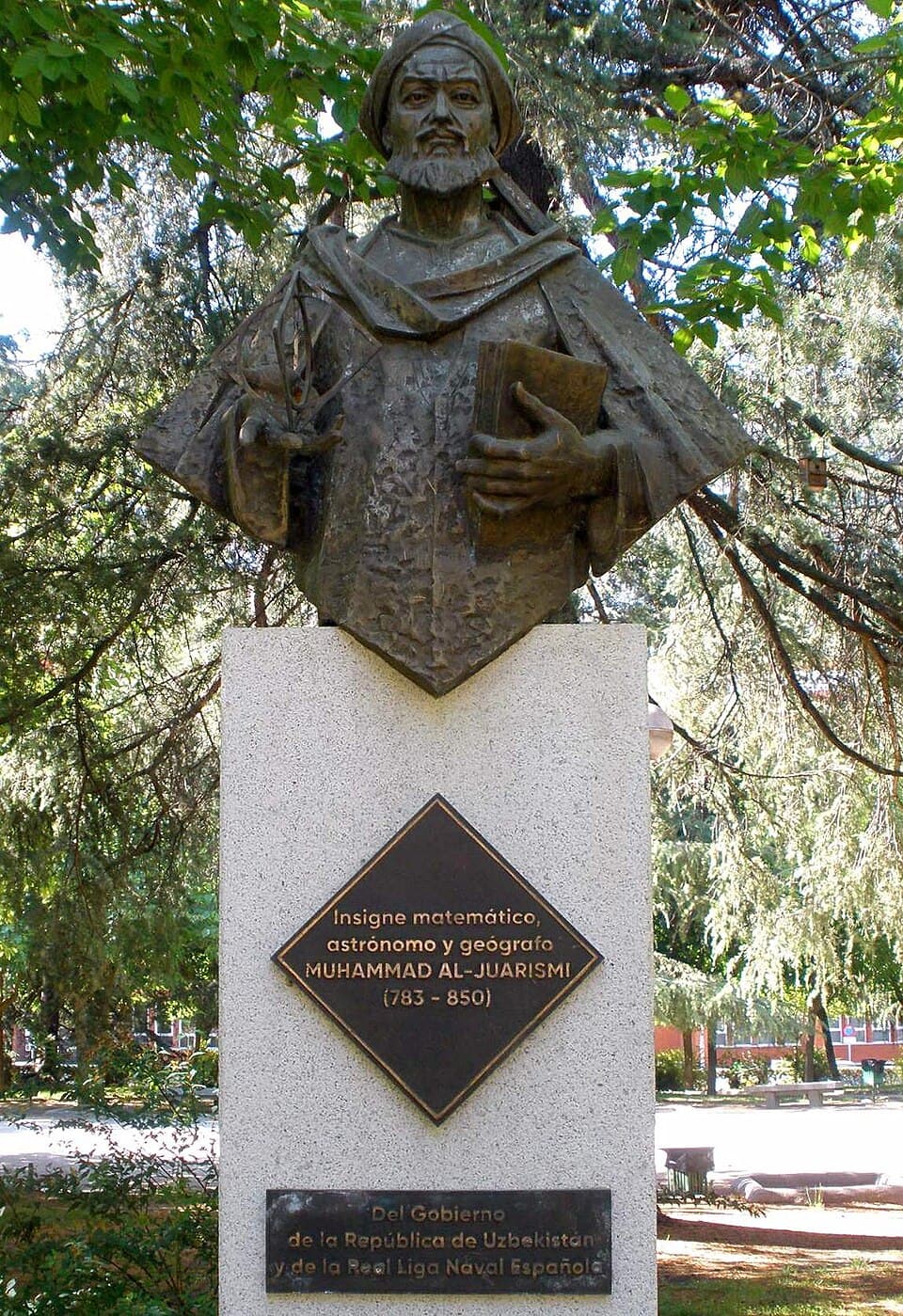
That morning, two fifth-graders on a field trip push open the door of a room full of manuscripts. An old scholar awaits them, with a gentle smile. His name is al-Khwârizmî, and he has agreed to answer all their questions.
—What was it like, working at the House of Wisdom in Baghdad?
Ah, my child, imagine a large house filled with books from everywhere. It was called the House of Wisdom, in Arabic Bayt al-Hikma. The caliph al-Ma'mun had founded it to gather knowledge. There, I worked alongside scholars who spoke Greek, Indian, Persian. We translated, discussed, and calculated from morning till night. You know, it was like a huge workshop of the mind. In the morning, after prayer, I would take some bread and a date, then walk to the house. And there, ideas from three different worlds would meet on my table. I could never have done my work alone.
Ideas from three worlds met on my table.
—Were you afraid of displeasing the caliph who paid you?
That's a fair question, you know. A caliph was the leader of the entire empire, both king and religious guide. When he asks you for astronomical tables or a map, you don't refuse! But al-Ma'mun truly loved science. He didn't want flatterers, he wanted true answers. So I was mostly afraid of making a mistake in a calculation, not of displeasing him. Imagine offering your work to someone you admire: you want it to be perfect. When he died, in 833, all of Baghdad slowed down. That day I understood that a scholar needs a patron who loves learning.
—Is it true you invented algebra? What does that word mean?
Invented, no, I don't like that word. Let's say I brought order. Around 820, I wrote a book to solve equations, those problems where a number is missing. Its title contained two words: al-jabr and al-muqabala. Al-jabr means 'restoration', like a doctor repairing a broken bone. You move numbers from one side to the other to restore balance. Later, that word al-jabr became your word 'algebra'! Before me, people solved these problems case by case. I gave clear rules that anyone could follow. It was like tracing a path through a forest.
Al-jabr means restoring numbers, like mending a bone.
—Why was it so important to give rules, instead of figuring it out each time?
Imagine you're learning to make bread. If I show you once, you'll forget. But if I give you the recipe, you can make it your whole life, and pass it on to your children. Mathematics is the same! Before my book of 820, everyone cobbled together their own solution. I wrote methods that anyone could follow, step by step, without being a genius. That's what makes a science alive: it is shared. Knowledge kept to oneself dies with its owner. Clearly written knowledge travels through centuries. And look: you still learn algebra today.
Knowledge kept to oneself dies with its master.
—They say you made zero known. How did people count before?
Ah, zero! I did not invent it; Indian scholars did, long before. Around 825, I wrote a book to explain it to the Arab world. You know, in Europe at the time, people counted with Roman numerals: I, V, X... Try multiplying XXIV by VII! It's a nightmare. With the ten Indian numerals, from 0 to 9, and the brilliant idea of zero to mark 'nothing in this place', everything becomes simple. That's decimal numeration, the one you use every day without thinking. Imagine a lock where each position changes everything: that's the power of zero.
Zero is the digit that says: here, there is nothing to count.
—And how did those numerals reach us in Europe?
Patience, it took a very long time, my child! My books first traveled westward to Al-Andalus, Muslim Spain. There, scholars translated them into Latin. Then, in the 12th century, an Italian merchant named Fibonacci discovered these numerals during his travels. He saw they were much more practical for trade, for counting money and goods. So he championed them in Europe. Imagine a good idea passing from hand to hand, from city to city, for three hundred years, until it became obvious to everyone. I never saw Europe. But my numerals did arrive there.
—Is it true the word 'algorithm' comes from your name? That's so weird!
Yes, and it makes me smile! My full name, al-Khwârizmî, simply means 'the one from Khwarezm', the region where I was born, in Central Asia. When my books were translated into Latin, scholars couldn't pronounce my name well. They wrote it Algoritmi. And since my books explained step-by-step calculation methods, people ended up calling those methods 'algorithms'. Funny fate, isn't it? A little boy born far away, whose name today designates a way of thinking. Every time someone follows a logical recipe, step by step, they are pronouncing my name without knowing it.
An algorithm is my name turned into a way of thinking.
—But what exactly is an algorithm? I can't picture it.
It's much simpler than you think! An algorithm is a sequence of steps, in the right order, to reach a sure result. You do it every day without knowing. When you tie your shoelaces, you always follow the same motions in the same order: that's an algorithm. When you do an addition, digit by digit, carry by carry, that's also an algorithm. In my books, I wrote down these procedures for difficult calculations. The idea is that you don't need to be clever every time: just follow the steps. A good method is intelligence that can be lent to everyone.
A good method is intelligence that can be lent to all.
—Did you also do astronomy? Did you watch the stars at night?
Yes, and those were my favorite evenings. After dinner, I would go out with my astrolabe, a beautiful brass instrument to measure the height of stars in the sky. You know, in my time, there was no city light: the night was deep black, and the stars shone like silver sand. Around 830, I prepared astronomical tables for the caliph, and even tables for calculating angles. They were used for navigation, telling time, finding the direction of prayer. For me, mathematics and the sky were one. Numbers helped understand the stars, and the stars gave meaning to numbers.
—Did you also draw a map of the world? Had you traveled everywhere?
No, I didn't see everything with my own eyes, and that's what's fascinating! Around 840, I wrote a geography book, the Kitab Surat al-Ard, 'The Description of the Earth'. I gathered the positions of cities, rivers, mountains, with their coordinates, like numbers that say where each place is. I worked from the accounts of travelers and merchants passing through Baghdad. Imagine: someone tells me about a distant river, and I, with my calculations, place it on a map. A scholar doesn't need to walk everywhere. He needs rigor and the ability to listen to those who have traveled.
—If we could thank you today, what would you like us to remember?
What a beautiful question, you move me, my child. I would not want people to remember my name, even if it is everywhere. I would want them to remember a way of doing things. Organize your ideas, write them clearly, give rules that others can follow after you. That's how a small piece of knowledge, born in one house in Baghdad, can illuminate the whole world centuries later. I never knew my books would cross Andalusia, then Europe. I just did my work, as best I could, step by step. So here is what I wish for you: be patient, be clear, and share. The rest, time will take care of.
Organize your ideas, write them clearly: time will do the rest.
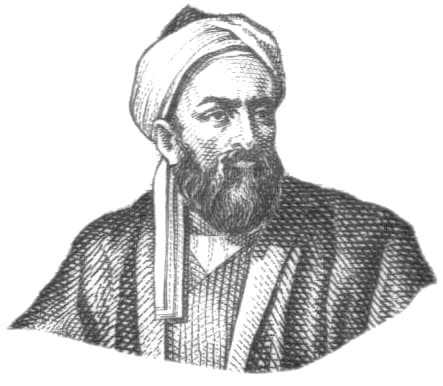
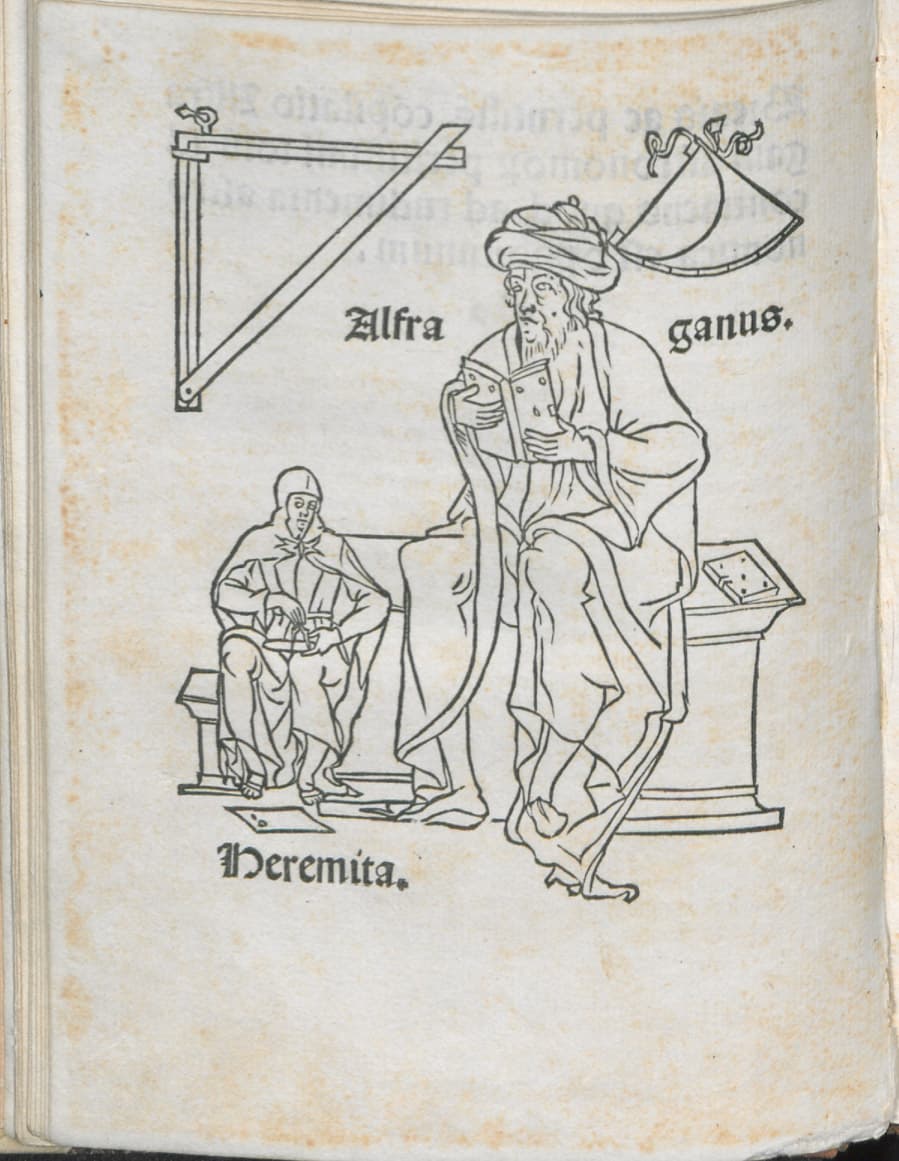
This imaginary interview was generated by artificial intelligence from sources documented in Al-Khwârizmî's profile. It dramatises what the figure might have said based on what we know about them, but does not constitute attested historical testimony. For primary sources and factual documentation, refer to the full profile.