Imaginary interview with Albert Camus
by Charactorium · Albert Camus (1913 — 1960) · Literature · Philosophy · 6 min read
Lourmarin, late autumn 1959. In a stone house in the Luberon where the wind rustles the olive trees, a man with a lined face receives a visitor, raincoat thrown over a chair, cigarette between his fingers. He speaks softly, with that Mediterranean gravity occasionally broken by a smile — the smile of a child from Algiers whom the light never left.
—Where do you come from, exactly — what is this land that keeps recurring in your books?
I was born in 1913 in Mondovi, in a plain of vineyards where the heat crushed everything. My father, a farm worker, I never knew him: he fell at the Marne in 1914, and all I have left of him is a photograph and a story, that of a man who, they say, vomited after returning from a capital execution. We were poor, my mother did housework, she barely spoke. I grew up between a woman's silence and the insolence of the sun. That is where, I believe, everything was decided: one never recovers from a childhood where light takes the place of wealth and where poverty, nonetheless, never wore the face of shame.
—What did a place like Tipasa mean to you?
At Tipasa, among the Roman ruins overrun with wormwood, I learned what I know most certainly: that the sea, the warm stones, and the sky are worth all metaphysics. I returned there as one returns to a wedding feast. But this Algeria I loved was also a land of colonialism, and I could never close my eyes to the misery of the Kabyle peasants, which I had described, as a very young journalist, in reports no one wanted to read. I was later blamed for not taking sides. But when you have seen your own mother exposed to violence, how can you coldly choose between justice as an idea and the blood of your own? I stood in that tension, and it cost me more than people think.
—In 1942, two books were published almost simultaneously. How would you define what you call the absurd?
In 1942, I published The Stranger and The Myth of Sisyphus in quick succession. The absurd is not a system; it is an almost physical evidence: the divorce between man who demands meaning and a world that remains silent. Meursault, my stranger, says from the first line what no one dares to say: “Mother died today. Or maybe yesterday; I don’t know.” He does not lie, and that is why he is condemned. Faced with this evidence, I refuse both escapes, suicide and religious hope. I propose to stay. To carry one's rock knowing it will fall back down. One must imagine Sisyphus happy — not through resignation, but because lucidity, when held to the end, becomes a strange form of joy.
The absurd is not a system; it is an almost physical evidence.
—How does one move, in your thought, from the absurd to revolt?
One cannot remain in the absurd without gradually becoming complicit in everything. For if nothing has meaning, the torturer and the victim are equal — and that, my heart flatly refuses. Revolt is born from this refusal. When the slave says “no,” he simultaneously affirms that there is something in him worth defending, a boundary that will not be crossed. I wrote in The Rebel that “revolt, if it cannot save man, can at least save his dignity in him.” I rebel, therefore we are. That is my only article of faith: there are more things in man to admire than to despise, and the whole challenge is to defend them — against the plague as well as against ideologies that promise paradise.
—During the war, you made journalism an act. What were you seeking in those nights?
Under the Occupation, I joined the Combat network, and after the Liberation of 1944 I became its editor-in-chief. We wrote at night, feverishly, editorials that wanted France not to trade one servitude for another. Journalism was never a minor profession for me: it is where you keep your word in the present, where you call a crime a crime on the very morning it is committed. I also learned there the difficulty of justice: in the early days of the purge, I demanded sanctions, then I saw where the logic of the gallows led, and I changed my mind. To admit one was wrong, in a newspaper, before all one's readers — that is the hardest exercise I know.
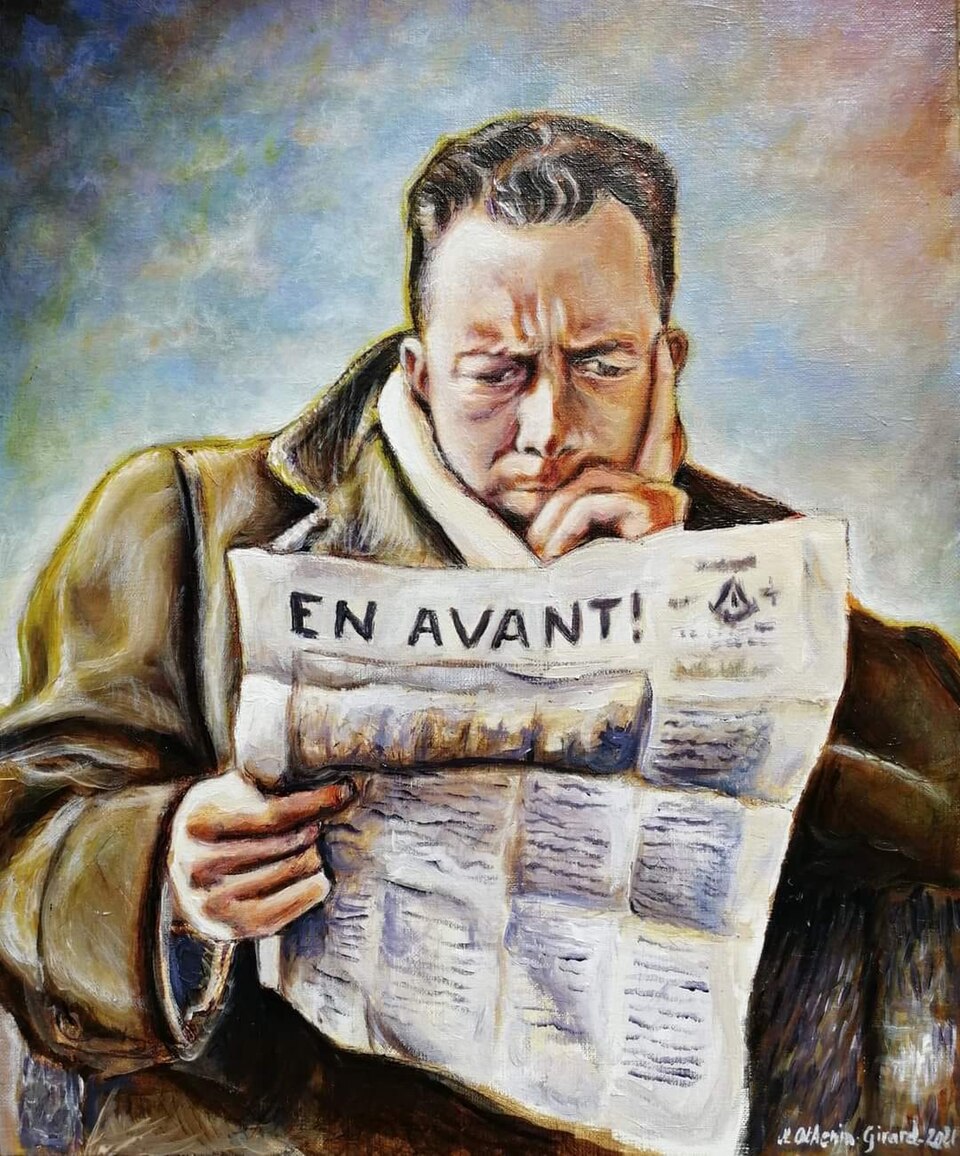
—At that time, writers were expected to take a stand. What meaning did you give to that word?
There was much talk of commitment in those years, as if the writer had to sign a register and march in step with a party. I never believed in that. The artist serves those who suffer history, not those who make it. In Stockholm, accepting the prize, I said that art “obliges us only to understand before judging.” That is my whole politics. I refuse to lie about what I know, and to bow to oppression, even if adorned with the finest reasons in the world. That made me suspect to both sides: too free for some, too scrupulous for others. I accept it. A man who does not want to howl with the pack always remains a little alone.
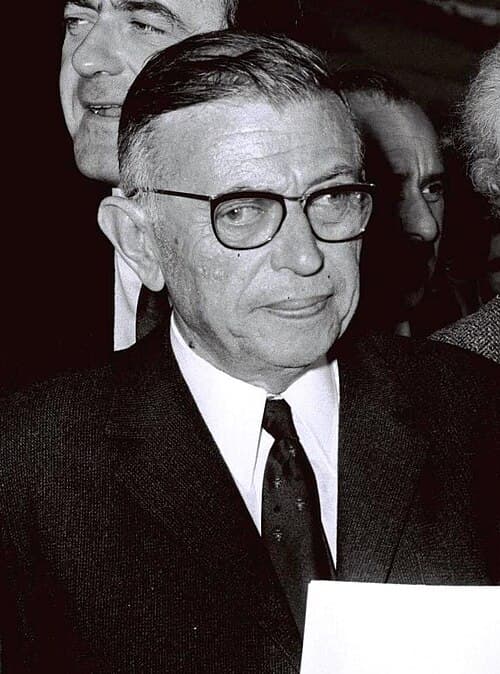
—Your break with Sartre divided all of Paris. What really separated you?
Sartre and I loved each other before tearing each other apart. In 1951, I published The Rebel, where I refuse to absolve the Soviet camps in the name of the meaning of history. For that, in 1952, his journal Les Temps modernes executed me in due form, and he himself reproached me for lecturing him like a beautiful soul. All of Paris took sides. What opposed us was not a quarrel of pride, whatever was said: it was whether one has the right to kill today for a happiness promised tomorrow. He thought so; I did not. I preferred to lose a friend rather than remain silent about the gulags. The solitude that followed was the price of that loyalty.
I preferred to lose a friend rather than remain silent about the gulags.
—You are often classified among the existentialists. Do you recognize yourself in that label?
I am always classified among the existentialists, and that makes me smile, a little sadly. I never was one; I said so clearly as early as 1945. Sartre starts from the idea that existence precedes essence, that man makes himself entirely, free to the point of vertigo. I start from the sun, the body, the sea of my childhood, and I believe in a human nature, therefore in limits. The revolt I defend stops where it would begin to kill; it is a measure, almost a thought of noon, thoroughly Mediterranean. Parisian existentialism was a philosophy of smoky rooms; mine was born on the beaches of Tipasa. We spoke the same language, he and I, but we did not look toward the same horizon.
—The Nobel Prize came to you very early. How did you feel when you learned the news?
When the telegram from Stockholm arrived, in 1957, I felt not joy but a kind of anguish. I was forty-three, one of the youngest laureates, and I thought of Malraux, whom I considered more worthy than myself. Above all, I felt the weight it placed on my shoulders: a man is crowned, and immediately oracles are expected of him. Yet I had only doubts. In my speech, I wanted to speak not of myself, but of my generation born in war, who had to rebuild, from their own negations alone, an art of living. To receive this medal at that age was like hearing one's own eulogy while still alive. I feared that the best of my work was still ahead of me, and that it had already been confiscated.
To receive this medal at that age was like hearing one's own eulogy while still alive.
—You are said to be working on a new book. What would you say about this project?
Yes, I am finally writing the book I have carried within me forever: The First Man. It is the story of a poor child from Algiers who goes in search of the father he never knew, that soldier who fell at the Marne before seeing him grow up. Everything is there: my silent mother, the village school and the teacher who saved me, the warmth of the streets, the shame and tenderness of poverty. I return there in the first person of the heart, without the mask of the absurd. I believe my true books are only beginning; The Stranger, The Plague, were perhaps only a long preparation. If I were to be read in a century, I would like it to be through that one, the most naked, where I stopped reasoning and only remembered.
This imaginary interview was generated by artificial intelligence from sources documented in Albert Camus's profile. It dramatises what the figure might have said based on what we know about them, but does not constitute attested historical testimony. For primary sources and factual documentation, refer to the full profile.