Kids interview Albert Camus
by Charactorium · Albert Camus (1913 — 1960) · Literature · Philosophy · 5 min read
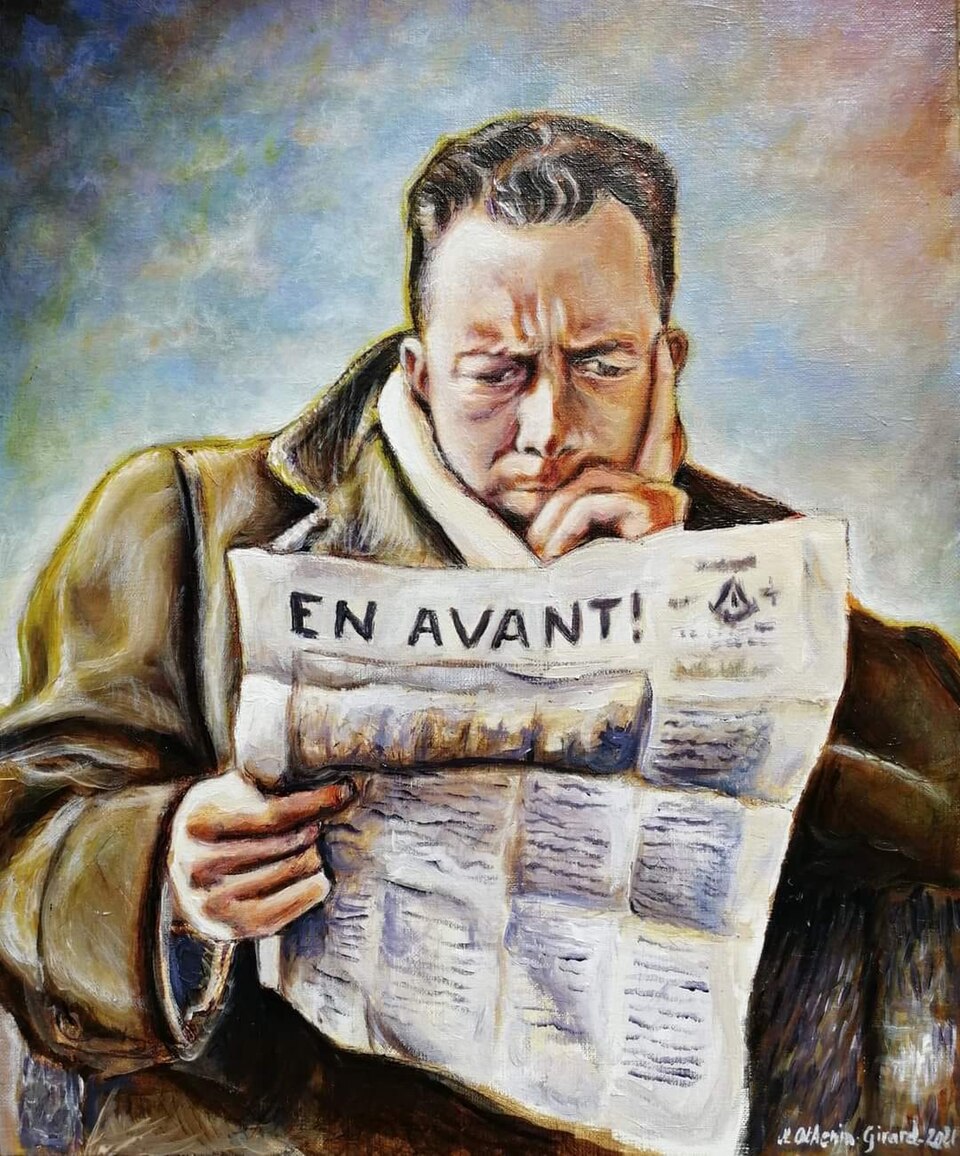
Two young visitors, on a school trip, push open the door of a small office. A typewriter sits on the table, a cigarette smolders in an ashtray. Albert Camus greets them with a tired but gentle smile, glad that people still take an interest in him.
—Where were you born, and what was it like when you were little?
You know, I was born in 1913 in Mondovi, Algeria. Not in a big house, no. We were very poor. Imagine a home where you have almost nothing—no books, no hot water. My father, I never knew him: he was killed in the war in 1914, at the Battle of the Marne. I was a few months old. My mother raised me, and she was nearly deaf. But there was the sun, the sea of Algiers, the ruins of Tipasa. When you have nothing, the sky and the sea become your wealth. I believe my whole life I've tried to find that light again.
When you have nothing, the sky and the sea become your wealth.
—Did the war in your country, Algeria, make you sad?
Yes, my child. Very sad, and even torn apart. You see, starting in 1954, a terrible war broke out in Algeria. It was my country, my childhood land. On one side were people like me, born there; on the other, the Algerian people who wanted their freedom. Imagine having to choose between two people you love who are fighting. That was my heart. Many wanted me to shout one side against the other. I wanted first to stop the killing of innocents. I was criticized for that silence. But sometimes, refusing hatred is already a response.
Sometimes, refusing hatred is already a response.
—What is 'the absurd,' that word everyone says about you?
Ah, the big word! Don't be impressed, it's simpler than it sounds. The absurd is when you seek meaning in life, a reason... and the world remains silent. It doesn't answer. Imagine asking someone a very important question, and they look away without saying anything. That silence, that gap, is the absurd. I wrote about it in 1942, in Le Mythe de Sisyphe. Sisyphus is that punished man who must roll a rock up a mountain, and the rock always falls back down. Forever. And yet, I say: one must imagine Sisyphus happy.
You seek meaning, the world remains silent: that is the absurd.
—Why do you say Sisyphus is happy? He's being punished, after all!
Good question, it made me think for a long time. Yes, Sisyphus is punished: he pushes his rock, and it all starts over. It's endless. But listen closely. At the moment he walks back down to get his rock, he is free in his mind. He knows. He accepts. And he keeps going anyway, without lowering his eyes. That is his victory. In L'Étranger, the same year 1942, my character Meursault lives somewhat similarly: indifferent, strange, but true. What I want to tell you is that even without an answer from heaven, you can stand tall. Happiness is not that everything goes well. It's not lying.
Happiness is not that everything goes well: it's not lying.
—During the war, what exactly did you do to resist?
At that time, my child, France was occupied. Foreign soldiers controlled everything, and writing the truth could cost you your life. I didn't have a gun. I had a pen. I wrote in a secret newspaper called Combat. We printed it in secret, distributed it at night. Imagine having to hide sheets of paper as if they were gold, because if you were caught, it was prison or death. That's called commitment: taking sides, risking something for what is right. I believed that a true word could be stronger than a weapon.
I didn't have a gun: I had a pen.
—Does your book about the plague really talk about a disease?
Yes and no, that's clever to ask. La Peste, which I published in 1947, tells of a city, Oran, struck by a terrible epidemic. The gates close, people die, fear sets in. But in truth, I was talking about something else at the same time. The plague was also the Occupation, the evil that befalls a people. Imagine a shadow that suddenly covers an entire city. What interested me was the men who, despite everything, heal, help, stay together. Faced with misfortune, you don't have to run. You can stand shoulder to shoulder. That is our true strength.
Faced with misfortune, you can always stand shoulder to shoulder.
—Is it true you fell out with another famous philosopher?
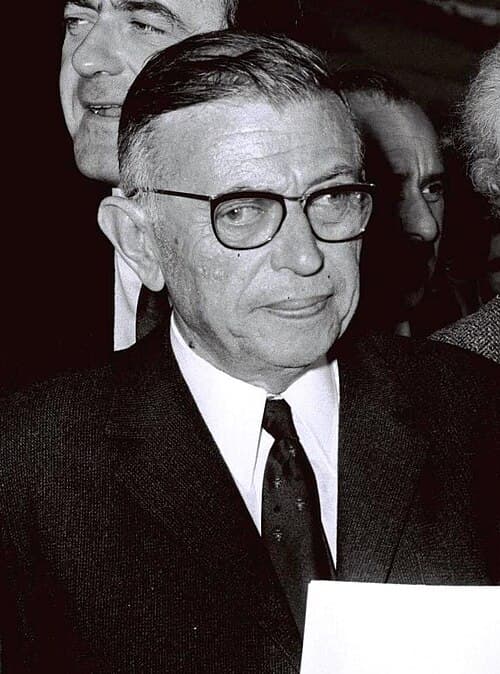
Yes, and it caused me a lot of pain, I admit. His name was Jean-Paul Sartre. We were friends, we talked whole nights away in the cafés of Paris. But in 1952, we fell out. Why? Because of a book I had written, L'Homme révolté. In it, I said that a just revolt must never crush innocents to win. He disagreed. Imagine two friends who love each other but no longer see the world the same way. It caused a great stir, all the intellectuals talked about it. We never really reconciled. Falling out with a friend is one of the hardest things there is.
A just revolt must never crush innocents to win.
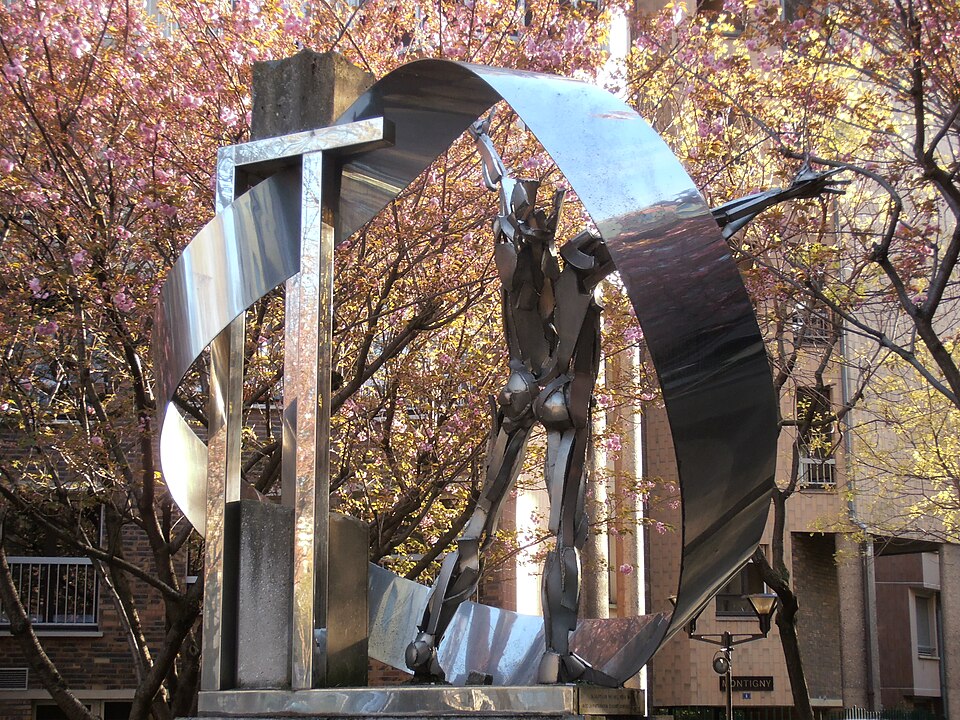
—Why was this idea of 'revolt' so important to you?
Because revolt, my child, is what makes us dignified. Mind you, I'm not talking about breaking everything. I'm talking about saying 'no' when something is unjust. You see a bigger kid bothering a smaller one in the schoolyard? Something in you rises up and says: 'No, not that.' That is revolt. I wrote that revolt, even if it doesn't save everything, can save a person's dignity. But there is a golden rule: you don't fight evil by becoming a monster yourself. Otherwise, you've already lost.
Saying 'no' to injustice is already standing tall.
—What is it like to win the Nobel Prize? Were you happy?
Happy, yes, but mostly very surprised! It was in 1957, and I was only 43 years old. That's young, you know, for that prize: it's often given to old gentlemen after a lifetime. The Nobel Prize in Literature is the greatest reward in the world for a writer. They send you a medal, they make grand speeches. But deep down, I thought of my mother, who could barely read, of my poor childhood in Algiers. How did that penniless little boy get there? It overwhelmed me a bit. Glory never made me forget where I came from.
Glory never made me forget where I came from.
—Your death is sad... Were you still writing a book?
Yes, and that's the whole melancholy of the story. I died in 1960, in Villeblevin, in a car accident. I was 46 years old, that's young, isn't it? I didn't have time to finish. In the wreckage, they found a manuscript, pages filled with my handwriting: Le Premier Homme. It was my most intimate book, I told of my childhood, my father I never knew, my silent mother. Imagine a beautiful drawing stopped in the middle. But you know what? That you still read my words today—that is my true survival.
A book still read is an author who doesn't quite die.
This imaginary interview was generated by artificial intelligence from sources documented in Albert Camus's profile. It dramatises what the figure might have said based on what we know about them, but does not constitute attested historical testimony. For primary sources and factual documentation, refer to the full profile.