Imaginary interview with Anita Borg
by Charactorium · Anita Borg (1949 — 2003) · Technology · Society · 5 min read
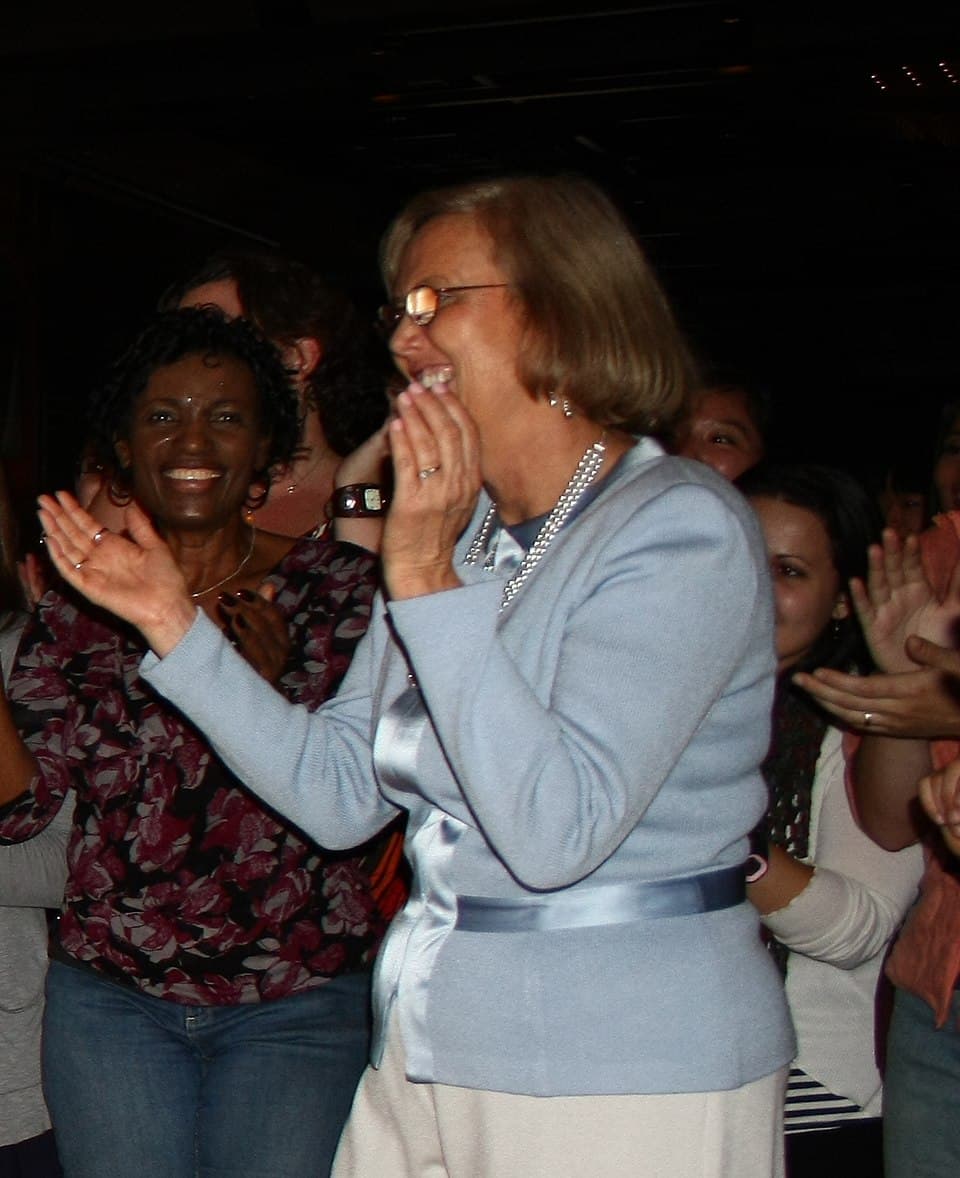
Palo Alto, a spring morning in the late 1990s. In a bright office at Xerox PARC, a Unix workstation still hums, the screen covered with messages from distant time zones. Anita Borg sets down her cup, pushes aside a conference badge left on the table, and agrees to tell how a few lines of code and a great deal of persistence began to change the place of women in machines.
—How was Systers born, in 1987?
Almost by accident, and yet I still think of it as the most right thing I've ever done. At the time, I was exchanging messages with a few colleagues via ARPANET, through a modem that spat out its few kilobits per second into the night. There were only a handful of women in our labs, each convinced she was the only one enduring certain things. So I opened a simple mailing list, reserved for systers — my sisters in computing. The welcome message was modest: a place to communicate, share our experiences, support each other in a field where we were still far too few. Within months, women I would never meet were writing to me from Australia or Germany. An email list had become a living fabric.
Each one thought she was the only one enduring certain things; the list proved them wrong.
—What surprised you about what Systers became?
Its speed, and its warmth. I expected an address book; I got a community that debated, helped each other, sometimes argued like a real family. An isolated engineer in a very male company could, with a message sent in the evening from her terminal, receive ten replies by morning from women who had been through the same ordeal. I administered all of it from my workstation, in California, juggling time zones: I answered Europeans in the morning, Japanese in the evening. What I understood then is that technology doesn't just connect computers — it can break people's isolation, provided it is designed for that.
—Why did you want, in 1994, to physically gather these women in a conference?
Because an email list, however valuable, cannot replace looking each other in the eye. With Telle Whitney, we imagined a gathering, and we named it after Grace Hopper, that naval officer who had popularized the word debugging and proven that a woman could tame the most intimidating machines. The first edition brought together only about fifty participants. I remember that silence, then that extraordinary hubbub when they realized how many they were, finally visible to one another. We wanted to offer them a platform, a life-size mirror. I dreamed that one day they would number in the thousands.
An email list cannot replace looking each other in the eye.
—What did the name Grace Hopper attached to this event represent for you?
A legacy and a promise. Grace Hopper belonged to the generation of women who had programmed the first computers, in rooms where machines occupied entire floors, and whom history had begun to erase. By giving her name to our conference, I wanted to remind that women were not newcomers to computing: they had been there from the start. The very vocabulary we use every day — debugging, that bug-hunt she made famous — bears their imprint. Honoring Hopper was refusing amnesia. You don't build the future of a profession by forgetting those who invented it.
—You often speak of a mirror. What do you mean by that?
That technology always ends up resembling those who build it. If we want it to serve humanity, all of humanity must participate in its creation — women represent half the world, they must represent half of those building our digital future. Technology designed by homogeneous teams will only meet the needs of a fraction of society; it will be a distorting mirror. I repeat it at every conference: it is not primarily a matter of justice, it is a matter of effectiveness. Diverse teams simply produce better solutions. Technology designed without women is incomplete technology.
Technology always ends up resembling those who build it.
—In 1998, you set a parity target for 2020. Why such a specific date?
Because an ideal without a deadline remains a wishful thought, and wishful thoughts never change hiring statistics. So I launched this figure: 50/50 by 2020, gender parity in computing professions. Some found it unrealistic; that was the point. A comfortable goal forces no one to act. By proclaiming it at roundtables, even at MIT, I forced companies to ask where they stood and what they intended to do. That is also the mission I gave to the Institute for Women and Technology: to increase women's impact on technology, and technology's positive impact on women's lives. A compass, not a decoration.
—You earned your PhD after age thirty. What path led you there?
A winding path, and I cherish it. Before earning my doctorate at New York University in 1981, I had already spent years working, notably in Germany. I was older than most of my peers, and a woman, in a milieu that expected neither. My thesis was on computer memory systems — how to make them faster, more efficient. A very technical, very dry subject, where I felt at home. But having tasted the discomfort of being the perpetual outsider marked me forever: I knew, in my bones, that diversity was not a moral luxury. It was a necessity for anyone who truly wants to innovate.
I knew, in my bones, that diversity was not a moral luxury.
—Before becoming an activist, you were a researcher. What remains of the scientist in you?
Everything, really. At Digital Equipment Corporation, in Maynard, I spent entire days hunched over my Unix workstation tracking bottlenecks in machine memory. You learn a valuable discipline there: not to settle for intuition, but to measure, to prove. When later I asserted that mixed teams worked better, I spoke not as an idealist — I relied on studies, on numbers, as I would have analyzed a processor's performance. The activist never betrayed the researcher. I simply applied the same demand for rigor to a question no one dared ask scientifically: what does technology lose when it excludes half of humanity?
—Illness struck you in 2002. How do you experience this fight against time?
With the urgency of one who knows the hourglass is cracked. I was diagnosed with a glioblastoma, a brain tumor — the irony did not escape me, I who spent my life thinking about memory systems. I continue to work, to write, to answer systers, as long as the words still come. Not out of heroism: out of conviction. Every year lost is a generation of young girls giving up believing that these machines are also theirs. From my home in Sonoma, I look at the hills and tell myself that the important thing is not to finish the work, but to ensure it does not stop with me.
The important thing is not to finish the work, but to ensure it does not stop with me.
—If you imagined being read a century from now, what would you want to convey?
That it all began small, and that is precisely reassuring. A crackling modem, an email list called Systers, a conference of fifty intimidated women in a room too large — those were my weapons. None was spectacular. If I could whisper one thing to those who will read me, it would be: do not despise modest beginnings, and never ask permission to exist in a domain that already belongs to you. I like to think that my Institute will outlive me, that others will take up the torch, perhaps with scholarships, networks, tools I cannot even imagine. That technology, at last, will look like everyone. That would be, I believe, my finest memory.
Never ask permission to exist in a domain that already belongs to you.
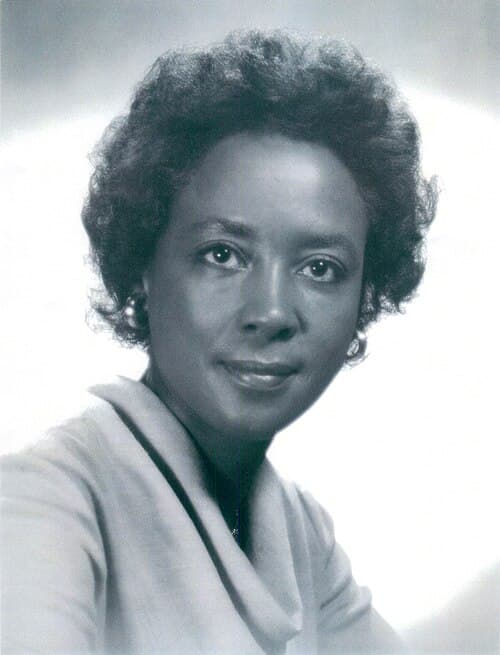
This imaginary interview was generated by artificial intelligence from sources documented in Anita Borg's profile. It dramatises what the figure might have said based on what we know about them, but does not constitute attested historical testimony. For primary sources and factual documentation, refer to the full profile.