Kids interview Anita Borg
by Charactorium · Anita Borg (1949 — 2003) · Technology · Society · 5 min read
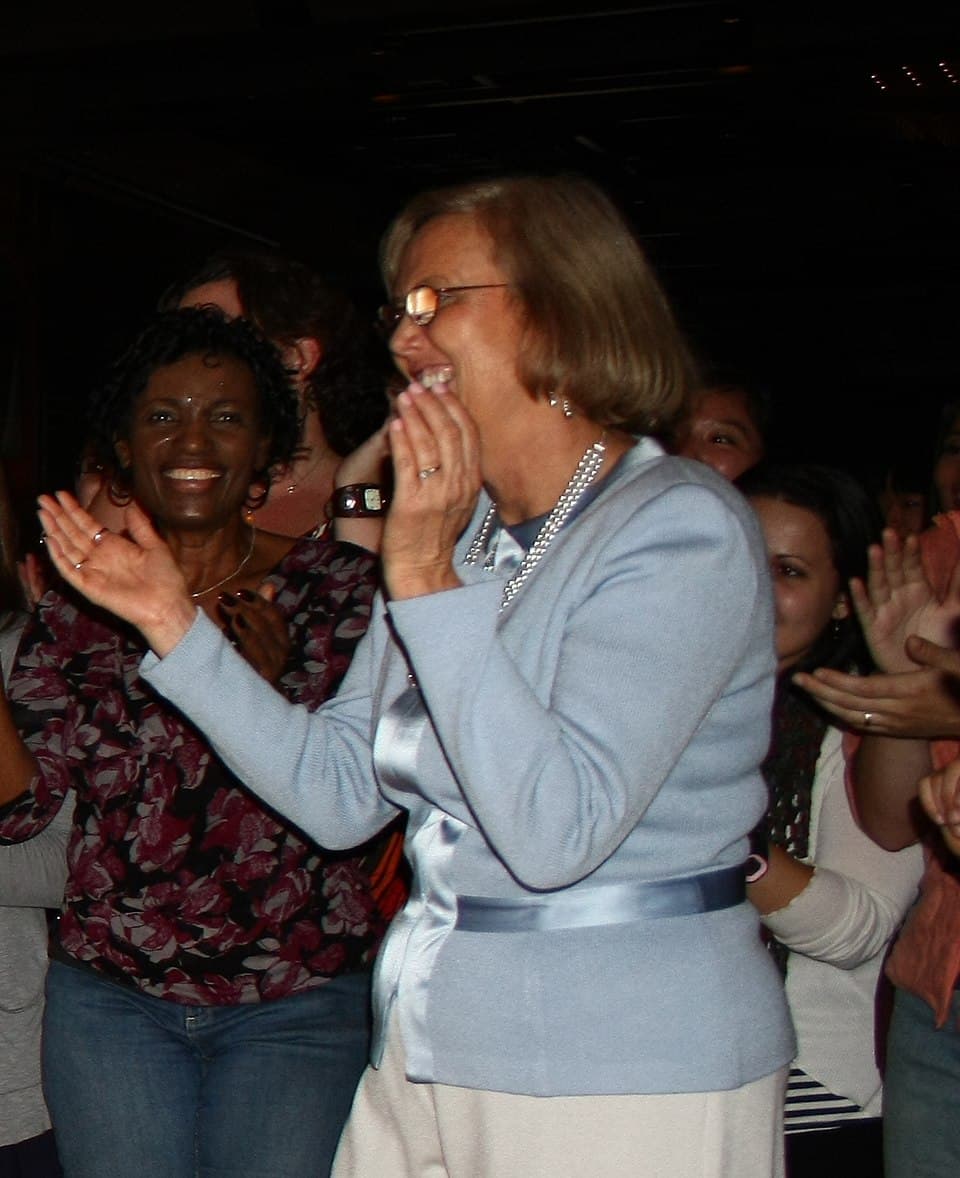
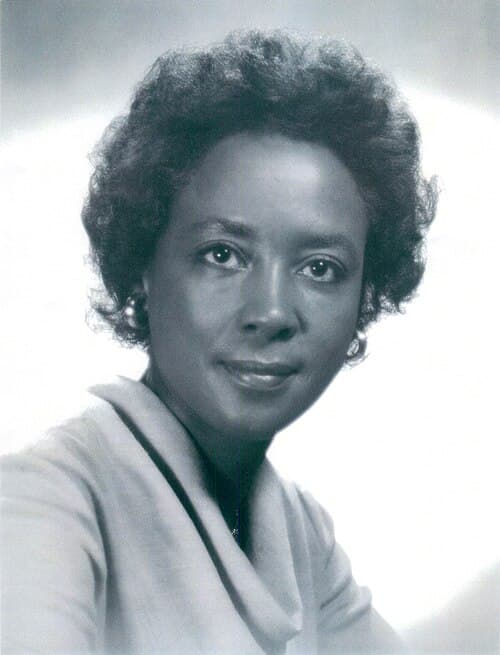
That morning, two middle-school students push open the door of an imaginary lab, notebooks in hand. Before them, a warm-smiling computer scientist awaits. Her name is Anita Borg, and she spent her life opening the doors of computers to women around the world.
—How old were you when you became a doctor in computer science?
You know, my child, I was already over thirty. Not young for a degree! Before that, I had worked several years in Europe, especially in Germany. I felt in my own skin how hard it is to enter a world that doesn't expect you. Then I earned my PhD at New York University, in 1981. My research focused on computer memory—how to make it faster. Imagine a huge attic where the machine stores its memories: my work was to better organize that attic. This somewhat late path taught me something I never forgot.
—What was your work like in a computer lab back then?
Imagine a large quiet room, filled with humming machines. I spent my days in front of a Unix workstation—a powerful computer reserved for researchers. On the screen, green letters glowed against a black background. No images, no colors: just text and numbers. I worked at Digital Equipment Corporation, in Massachusetts, one of the major manufacturers of the time. Around me, almost exclusively men. Sometimes I felt alone, like a slightly different voice in a large choir. But I loved it: understanding how these machines thought and breathed.
—How did you get the idea to create Systers?
One day in 1987, I had enough of feeling isolated. I thought: what if women in this field could talk to each other, despite the distances? So I created Systers. At the time, to send a message far away, you needed a modem: a small box that connected my computer to the ARPANET network, the ancestor of global networks. It made a funny noise, like a whistle. It was a simple list: I wrote an email, and it arrived to all subscribers. Nothing complicated. Just an open door so that lonely women would no longer be alone.
A simple email list can break loneliness.
—And did it work? How many were you at the start?
At the start, we were just a small handful. I knew almost every name. Then, month after month, others arrived—from a city, a country, another continent. Thousands, in the end! Women I would never meet wrote to each other to advise, reassure, sometimes just to say 'courage.' In my very first message, I wrote that this list was to support each other, because we were still too few. Imagine a small candle you light in the evening: you don't yet know it will light up the whole room. Systers was that candle.
—What is the Grace Hopper Celebration you created?
In 1994, with my friend Telle Whitney, I wanted to go further than a message list. I wanted women to see each other in person, in the same room. So we created a big conference. We named it after Grace Hopper, a famous programmer in the U.S. Navy, a pioneer I admired so much. At the very beginning, we were barely fifty. Imagine a small room, a few tables, women happy to no longer be alone. It wasn't much. But for the first time, they could look at each other and think: 'I am not an exception.'
—Why was it so important to bring them all together?
Because you get discouraged quickly when you think you are alone. Coming together gives you strength. In one of my speeches, I said that if we want technology to serve humanity, then all of humanity must participate in its creation. Women are half the world; they must be half of those building the future. This conference, year after year, grew enormously—from fifty women to huge crowds. Imagine a tiny stream that becomes a great river. Each participant left with a bit more courage in her heart, and that cannot be measured.
—You had a big dream for women, what was it?
Yes, a precise dream, with a date! In 1998, I set a challenge: to reach as many women as men in computing jobs by 2020. Fifty-fifty. We call it parity. Many smiled, finding the idea impossible. But I believe a clear goal, with a date, forces action. It's like saying: 'We're going on a trip, and here's the arrival day.' Without a date, you never leave. I repeated this number everywhere, so that big companies could no longer forget it. Even if the dream wasn't yet achieved, it moved a lot of things.
—Is it serious if only men build computers?
Yes, my child, and I'll tell you with an image. I liked to say that technology should be a mirror of all humanity. If only a few people who look alike build it, it only meets their needs. It forgets everyone else. At a meeting at the MIT in 2000, I explained that technology designed without women remains incomplete. It's not first a question of justice: it's a question of efficiency! Diverse teams find better ideas. Imagine a recipe missing half the ingredients: the dish will never be truly successful.
Technology built without women is a half-empty mirror.
—You got sick, but you kept fighting?
Yes. In 2002, doctors told me I had a serious brain disease, a glioblastoma. It's a very difficult tumor to treat. I was scared, of course. But I kept working and speaking for my cause, almost until the end. I felt time was pressing, that each day counted double. I passed away in 2003, in Sonoma, California, in a quiet countryside corner. You know, when you deeply love what you do, you don't want to stop, even very tired. Above all, I wanted other women to take over and continue the road long after me.
—What remains of you today, for girls who love computers?
Many things, and it touches me greatly that you ask. One year after my death, the company Google created a scholarship in my name, to help young women studying computer science pay for their studies. My institute was renamed the Anita Borg Institute. And the big conference continues every year, more vibrant than ever. Imagine planting a tree: you may not see its largest branches. But others will come to sit in its shade. If one day you build something and feel alone, remember: you are not. We are many behind you.
You plant a tree whose shade others will later enjoy.
This imaginary interview was generated by artificial intelligence from sources documented in Anita Borg's profile. It dramatises what the figure might have said based on what we know about them, but does not constitute attested historical testimony. For primary sources and factual documentation, refer to the full profile.