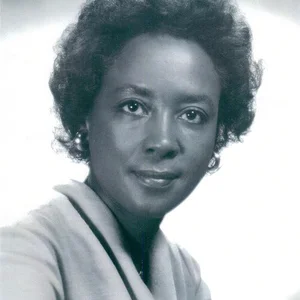

American computer scientist (1949-2003), pioneer for the inclusion of women in computing. She founded the Institute for Women and Technology and co-founded the Grace Hopper Celebration, a global conference dedicated to women in computing.
Frequently asked questions
Famous Quotes
« The technology we create reflects the values of those who create it.»
« If we want technology that serves the full range of humans, we need full range of humans to create it.»
Key Facts
- 1949: born in Chicago, Illinois
- 1987: creation of Systers, the first mailing list for women in computer science
- 1994: co-founding of the Grace Hopper Celebration of Women in Computing
- 1997: founding of the Institute for Women and Technology (IWT, now AnitaB.org)
- 2003: death from a brain tumor; the Anita Borg Award is created in her memory by Google
Works & Achievements
Anita Borg created this electronic exchange network exclusively for women working in computing, bringing together thousands of members worldwide. It allowed isolated professionals to connect, share their experiences, and support one another's careers in a heavily male-dominated field.
Co-founded with Telle Whitney, this annual conference is now the largest gathering of women in computing in the world, providing a platform for thousands of researchers and engineers and honoring the pioneering work of Grace Hopper.
Founded within Xerox PARC and renamed the Anita Borg Institute after her death, this organization's mission was to increase the presence and influence of women in technology careers, through research, partnerships, and training programs.
Her research focused on analyzing and optimizing the performance of computer memory systems, contributing to advances in computing architectures of the era.
Anita Borg publicly formulated and championed the goal of achieving gender parity in computing professions by 2020, a conceptual framework that had a lasting influence on the diversity policies of major technology companies.
Anecdotes
In 1987, Anita Borg created Systers, the first global electronic mailing list devoted exclusively to women working in computing. This modest initiative — a simple email list — quickly became a worldwide network bringing together thousands of professionals, allowing them to share experiences and advice in a heavily male-dominated field.
In 1994, Anita Borg co-founded with Telle Whitney the Grace Hopper Celebration of Women in Computing, named in honor of the legendary U.S. Navy programmer. This conference, which gathered only around fifty women at its inception, now draws tens of thousands of attendees each year, making it the largest global gathering of women in computing.
When Anita Borg earned her doctorate in computer science from New York University in 1981, she was already in her thirties and had spent several years working in Europe, particularly in Germany. This personal experience of the barriers to entering scientific circles forged her conviction that diversity was not a luxury but an absolute necessity for technological innovation.
Anita Borg set herself an ambitious goal: achieving gender parity in computing professions by 2020. She often repeated that if technology was shaped by homogeneous teams, it could only meet the needs of part of society. She used the image of a mirror: technology must reflect all of humanity.
Diagnosed with glioblastoma in 2002, Anita Borg continued to work and advocate until her final months, convinced of the urgency of her cause. She passed away in April 2003 in Sonoma, California. The following year, Google created the Google Anita Borg Memorial Scholarship, an annual scholarship for women studying computer science, which has since become the Google Women Techmakers Scholars program.
Primary Sources
“This list is created so that women in computing can communicate with one another, share their professional experiences, and support each other in a field where we are still far too few.”
“If we want technology to serve humanity, we must ensure that all of humanity participates in creating it. Women make up half the world — they should make up half of those who build our digital future.”
“Our goal is to increase the impact of women on technology and to increase the positive impact of technology on the lives of women around the world.”
“Research shows that diverse teams produce better solutions. This is not a matter of social justice: it is a matter of effectiveness and innovation. Technology designed without women is incomplete technology.”
Key Places
Birthplace of Anita Borg, born on January 17, 1949. Chicago was at the time a major American industrial and academic metropolis, far removed from the early centers of the computing industry.
Anita Borg earned her doctorate in computer science here in 1981, after several years of working in Europe. The degree opened doors to the leading American research laboratories.
Anita Borg worked at DEC during the 1980s, one of the major computer manufacturers of the era, where she conducted research on memory systems and built her professional network.
A renowned Silicon Valley research laboratory, Xerox PARC welcomed Anita Borg from the 1990s onward. It was here that she founded the Institute for Women and Technology in 1997.
Anita Borg lived here in her final years and passed away on April 6, 2003, from glioblastoma (a malignant brain tumor), leaving behind a remarkable legacy for women in computing.
Typical Objects

Anita Borg spent years working on high-end Unix workstations, notably at Digital Equipment Corporation (DEC), where she conducted her research on computer memory system performance.

In the 1970s and 1980s, the green-on-black screen terminal was the everyday tool of computer scientists like Borg, allowing them to interact with remote mainframes via a keyboard.

To create and run Systers in 1987, Anita Borg used a modem connecting her computer to the ARPANET at speeds of just a few kilobits per second — long before the Web existed.

In the 1990s, the laptop became an indispensable tool at professional conferences; Anita Borg used hers to prepare talks, manage Systers communications, and coordinate the organization of the Grace Hopper Celebration.

A symbol of scientific and professional life, the name badge was a constant in Anita Borg's career as she attended countless conferences advocating for women's place in technology.

A staple of 1980s research offices, the dot matrix printer was used to print the program listings and scientific reports that Anita Borg produced in her laboratories.
School Curriculum
Vocabulary & Tags
Key Vocabulary
Tags
Daily Life
Morning
Anita Borg typically started her day early, checking messages from the Systers mailing list she had founded and replying to emails from network members spread across multiple time zones. She read the latest computer science research publications and prepared for her meetings or public appearances scheduled for the day.
Afternoon
Her afternoons were divided between laboratory research — particularly on computer memory systems — and meetings with fellow researchers, technology company executives, or university representatives to promote the role of women in computing. She frequently attended conferences across the United States.
Evening
In the evenings, Anita Borg continued exchanging messages with Systers members in other time zones, drafted articles or partnership proposals, and prepared speeches for upcoming conferences. She read extensively, from specialized computer science journals to books on social sciences and gender issues.
Food
Living and working in California from the 1980s onward, Anita Borg moved in an environment shaped by California's “healthy” culture. Quick meals at the office — sandwiches, salads, fruit — alternated with professional dinners at Silicon Valley restaurants or family meals.
Clothing
In the professional computing environment of the 1980s–1990s, dress was generally casual. Anita Borg wore practical, understated clothing — trousers, shirts, jackets — suited equally to daily laboratory work and the professional conferences where she regularly took the stage.
Housing
Anita Borg lived in the Silicon Valley and Palo Alto area (California), at the heart of America's technological ferment. She resided in a comfortable setting typical of senior researchers and engineers working for major technology companies, before settling in Sonoma in her later years.
Historical Timeline
Period Vocabulary
Liens externes & ressources
Références
Œuvres
Systers — première liste de diffusion pour femmes en informatique
1987
Grace Hopper Celebration of Women in Computing (co-fondatrice)
1994
Institut pour les femmes et la technologie (IWT)
1997
Thèse de doctorat sur les systèmes de mémoire des ordinateurs (NYU)
1981
Modèle de parité technologique — objectif 50/50 en 2020
1998