Imaginary dialogue between Otto Frank and Anne Frank
by Charactorium · Anne Frank (1929 — 1945) · Literature · 6 min read
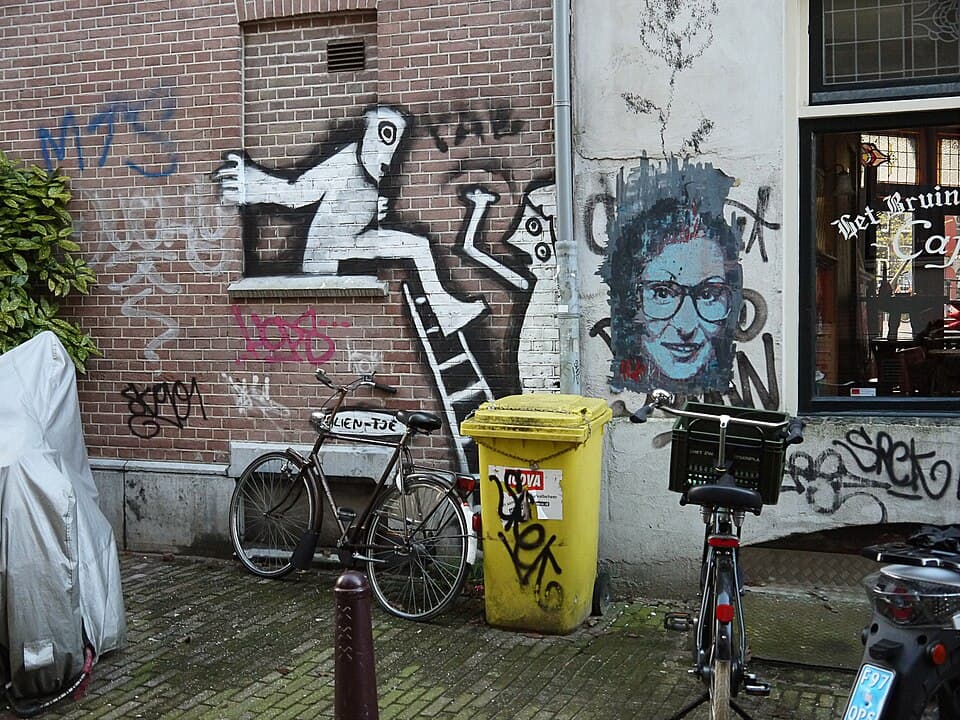
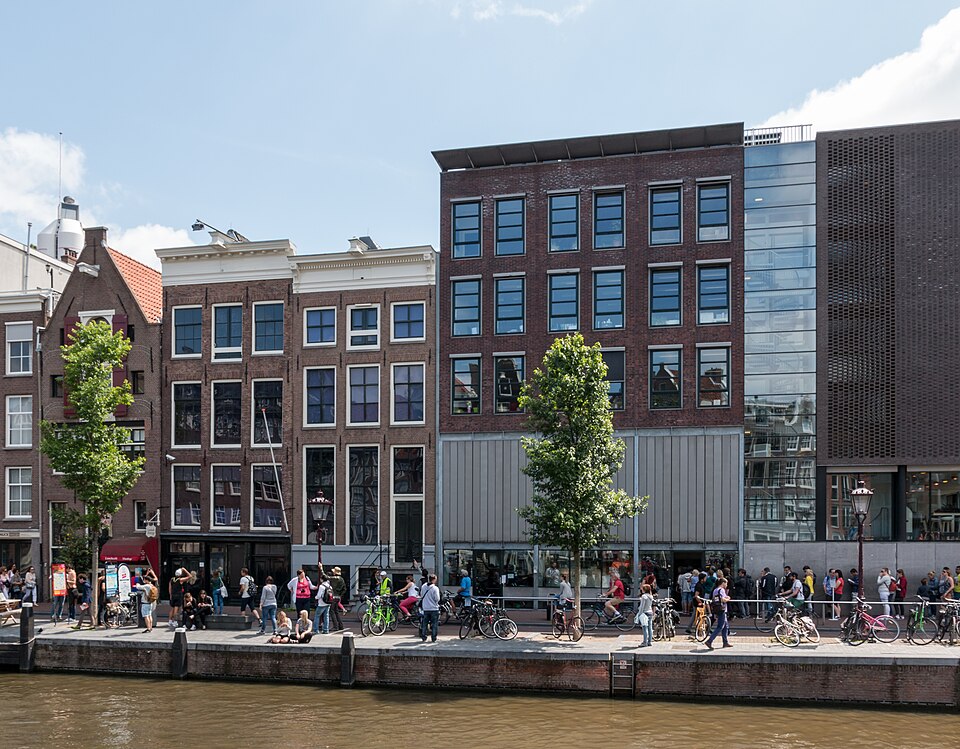
It is in the Annex at 263 Prinsengracht, one evening in the summer of 1944, that Otto Frank sits close to his daughter Anne, after the warehouse workers have left and the curtains are drawn. The low lamp lights up the red-and-white checkered diary resting on her lap; two floors below, the radio still whispers the news from London. Father and daughter know each other by heart, but tonight Pim wants to hear about what she writes every day, in silence, behind the revolving bookcase. He asks his questions in a low voice, so as not to disturb the calm of the sleeping house.
—Anne, I remember giving you that checkered diary for your thirteenth birthday, on June 12, 1942. Why did you immediately name it Kitty, like a friend?
You remember, Pim, I tore off the wrapping paper even before breakfast. A diary all to myself, with its little lock — I felt I could finally say everything. But a diary stays mute until you give it a name and a face. Kitty became the confidante who never judges me, the one I tell about my anger at Mummy, my dreams, my silly thoughts. To you, to Margot, I wouldn't say half of these things. With her, I don't have to play the quiet little Anne that others want to see. In the evening, when I write to her, I feel like I'm breathing a little bigger than these few rooms.
Kitty is the confidante who never judges me — to whom I say what I keep from everyone.
—And that fountain pen you treasured so much, the one that ended up burned in the stove — you spoke of it as a real sorrow. Why?
It seems ridiculous, I know: crying over a pen while the world burns. But that pen, I had it for so long that it knew my hand better than anyone. When it slipped into the stove with the old beans, I felt like I had lost a companion. Writing is not a hobby for me, Pim — it's my way of standing upright between these walls. Without a pen between my fingers, these silent days would crush me. You see me scribbling for hours, and you might think I'm having fun; in truth, that's where I put everything I can't say out loud. A lost pen is a bit of that secret freedom going up in smoke.
—During the day, when the warehouse men work beneath us, we hold back even our coughs. How do you endure these long hours of silence?
It's the hardest ordeal, even worse than fear. From eight-thirty until evening, the slightest sneeze, a flush, a burst of laughter can betray us. So I lie on my bed, I read, I study my correspondence courses, I listen to the ticking of the hours that never end. My body wants to run, to scream, and I have to keep it still as a statue. The worst is that my thoughts never fall silent — they spin, they boil. Luckily there's Kitty: on the page, I can make all the noise my mouth is not allowed to make. When finally the employees leave at five-thirty, I sometimes feel like crying with relief.
My body wants to run and scream, and I have to keep it still as a statue.
—Behind the bookcase that Bep's father pivoted to hide our door, we live eight together. You share your room with Mr. Pfeffer; where do you find a corner of your own?
A corner of my own? That's almost an impossible luxury, Pim. Sharing my room with a dentist old enough to be a grandfather, when I'm fifteen, is not exactly a girl's dream. He has his schedule, his habits, his desk whose every inch he defends. So I built myself a refuge in my own way: the photos of movie stars and princesses pinned to the wall, my diary, the few books that are truly mine. When tensions rise around the table, I retreat into my head, where no one can enter without knocking. That revolving bookcase protects us from the outside, but inside, it's in my pages that I really hide from the rest of the Annex.
—You were very small when we left Frankfurt in 1933 for Amsterdam, fleeing what was rising there. What do you remember of that Germany we left behind?
Almost nothing, Pim, and that's perhaps a blessing. I was four: I have blurry images, a house, a light, your younger face. Amsterdam is where I truly grew up, on the Merwedeplein, at the Montessori school with my friends. Dutch became my language, my games, my songs. For a long time I believed we were safe, that the border protected us from what you had fled. I feel Dutch through and through, even if a piece of paper claims otherwise. What breaks my heart is understanding now that you saw it all coming long before we did — and that the safety you sought for us closed like a trap, even in this city I loved.
—You were expelled from your school to the Jewish Lyceum, then had that star sewn onto your coat; and Margot's call-up hastened everything. How did you see the noose tighten?
Little by little, one prohibition after another, like tightening a rope without noticing at first. First no more trams, no more swimming pools, no more cinemas, this sidewalk forbidden, that shop closed. Then the public school shut, and there we were at the Jewish Lyceum, among ourselves, as if set apart from the world. The yellow star on the coat was humiliation sewn into the fabric itself: impossible to walk without being pointed at. But the day the call-up arrived in Margot's name, I understood it was no longer an inconvenience — it was our lives they wanted. You had prepared the Annex in secret; in two days, we disappeared. I left behind my cat, my friends, my childhood, without being able to say goodbye.
The yellow star on the coat was humiliation sewn into the fabric itself.
—In March, on the radio from London, Minister Bolkestein asked that diaries and letters from this war be preserved. I saw you change after that. What did you decide?
That evening, in front of the set, I felt something light up inside me. The minister said that true history would not be written only with official documents, but with our notebooks, our letters, our ordinary voices. And I thought: but that's exactly what I do every evening with Kitty! Suddenly my diary was no longer just mine — it could serve, bear witness, tell what eight people in hiding really experienced here. So I undertook to rework everything, to copy, to correct, to cut the long parts, to imagine a book I would call The Secret Annex. You think I'm ambitious, I can see it in your smile. But for the first time, what I write in secret may have a future in the open.
—You don't only fill Kitty: there are also your tales, your little stories from the Annex. Do you already dare to dream of making it your profession one day?
Yes, Pim, and I dare say it only to you. Alongside the diary, I write tales, fables, memories of my childhood before — a little world that no one can take from me. I would like to become a writer, or a journalist, to have readers, to leave a trace that lasts longer than me. When I write, I shake off everything, my sorrow disappears, my courage is reborn. But here is the essential question: will I ever be able to write something great, will I ever become a journalist or a writer? I don't know yet. What I do know is that I don't want to have lived for nothing, to die like so many people without having been of use to anyone. Writing is my way of continuing to live even when everything is closed.
Will I ever be able to write something great, will I ever become a journalist or a writer?
—Those faces of movie stars and princesses you pinned to the wall of your room — why were you so attached to putting them up, despite the cramped space?
Because a bare wall, in a room where you can't even open the window, is depressing. I brought my photos of movie stars, princesses, pretty cut-out pictures, and I fixed them above my bed. It's childish, maybe, but when I wake up, instead of sad plaster, I see smiles, dresses, a bit of the world that continues outside without us. Each face is a little window that the Nazis couldn't wall up. Mummy thinks it's frivolous; I, I treasure it like a secret garden. In such a shrunken life, you have to create a corner of beauty, otherwise the gray would swallow everything, even the urge to laugh.
Each face on the wall is a little window that the Nazis couldn't wall up.
—We are not alone: thousands of onderduikers live hidden like us across the country. Where do you, personally, get this hope that you keep despite everything?
I don't always know, Pim. There are nights when I hear the planes, when I think of all those people raided, deported, and I want to disappear under my covers. I see the world gradually turning into a desert, I hear the approaching thunder that will destroy everything, I feel the suffering of millions of people. And yet, when I look at the sky, I think everything will be all right. Deep down, I believe that people are truly good at heart — otherwise, how to explain Miep, Bep, those who risk their lives to feed us? As long as I still have this patch of sky through the skylight and this diary on my lap, I refuse to believe that cruelty will have the last word.
When I look at the sky, I think everything will be all right.
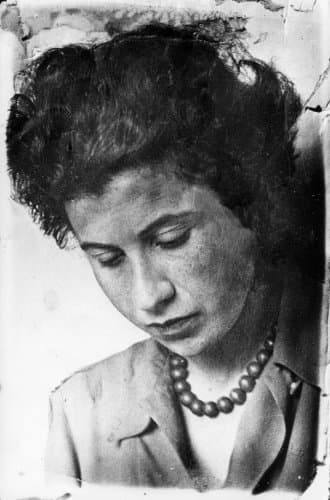
This imaginary interview was generated by artificial intelligence from sources documented in Anne Frank's profile. It dramatises what the figure might have said based on what we know about them, but does not constitute attested historical testimony. For primary sources and factual documentation, refer to the full profile.