Kids interview Anne Frank
by Charactorium · Anne Frank (1929 — 1945) · Literature · 4 min read
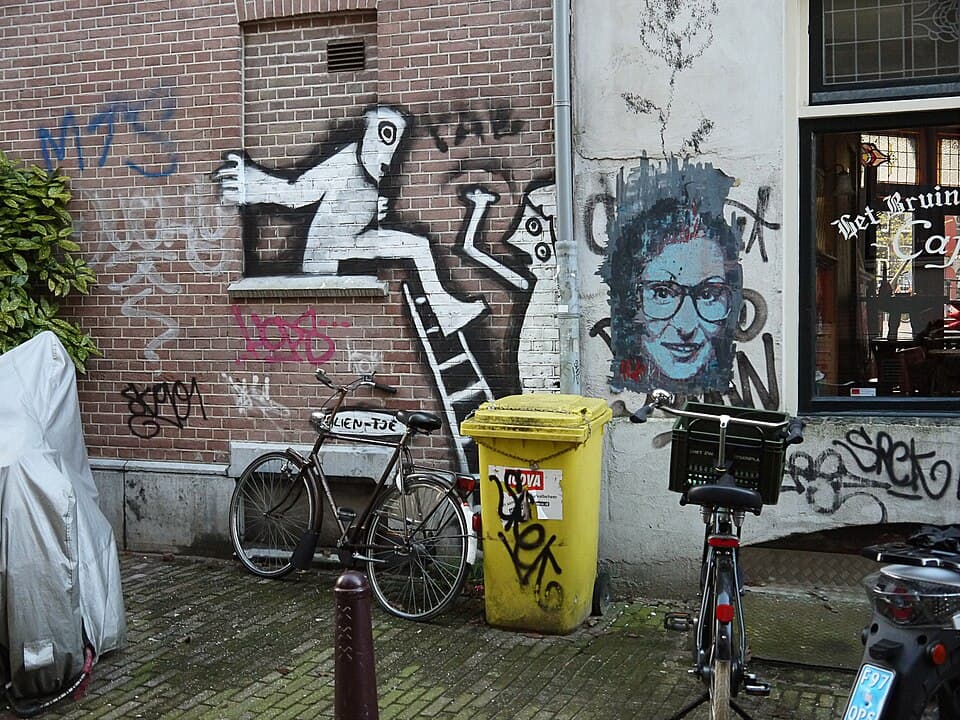
Two young visitors, barely twelve years old, push open the door of the museum on an Amsterdam canal. Behind an old bookcase that swings open, a gentle voice welcomes them. Anne looks at them, moved that people still take an interest in her.
—Is it true you were given your diary for your birthday?
Yes, my child! On June 12, 1942, my thirteenth birthday. Imagine a pretty notebook covered in red and white checkered cloth, with a little lock to close it. It was my favorite gift. I opened it right away. You know, at that age, you have so many thoughts that you don't know where to put them. I put them in those pages. That notebook quickly became my secret corner. No one could enter without my permission. It was mine, all mine.
That notebook quickly became my secret corner.
—Why did you talk to your diary as if it were a real friend?
Because I needed a friend to tell everything to. So I gave my diary a name: Kitty. Imagine writing a letter to someone who will never judge you, who always listens. That's what Kitty was to me. In hiding, I couldn't go out to see my friends. So I talked to them through her. One day I wrote: "When I write, I get rid of everything, my sorrow disappears, my courage is reborn." You see, my child, writing healed my heart.
I needed a friend to tell everything to.
—What was it like being a little Jewish girl at that time?
It was harder and harder, you know. From 1941, I was banned from my old school: Jewish children had to go to a separate lyceum. And we all wore a yellow star sewn onto our clothes, from the age of six. Imagine being forced to wear a visible sign, just to point you out in the street. We could no longer go to the park, or the cinema, or certain shops. Little by little, everything was taken from us. But I was still a twelve-year-old girl who loved to laugh and chat.
Little by little, everything was taken from us.
—Why did your family have to go into hiding all of a sudden?
Because of a terrible paper. In July 1942, my sister Margot received a summons: an order to report for "work" in Germany. In truth, it was a deportation. My parents decided we could not obey. So one morning, we left to go into hiding. I wrote that day: "We walked through the pouring rain, Daddy, Mummy and I, each carrying a satchel and a shopping bag." We couldn't take a suitcase; that would have looked suspicious. So I put several layers of clothes on. I was terribly hot.
We couldn't take a suitcase; that would have looked suspicious.
—Where did you live, and was it big?
We called our hiding place the Achterhuis, the "annex." It was a few small rooms at the back of an office building, at 263 Prinsengracht. Eight people squeezed in there! I shared my room with a dentist, Mr. Pfeffer. Imagine sleeping in a tiny room with an adult you barely know. The windows were always covered so we couldn't be seen from outside. To brighten my wall, I had pinned up photos of movie stars. It was my way of bringing a little sunshine into that grayness.
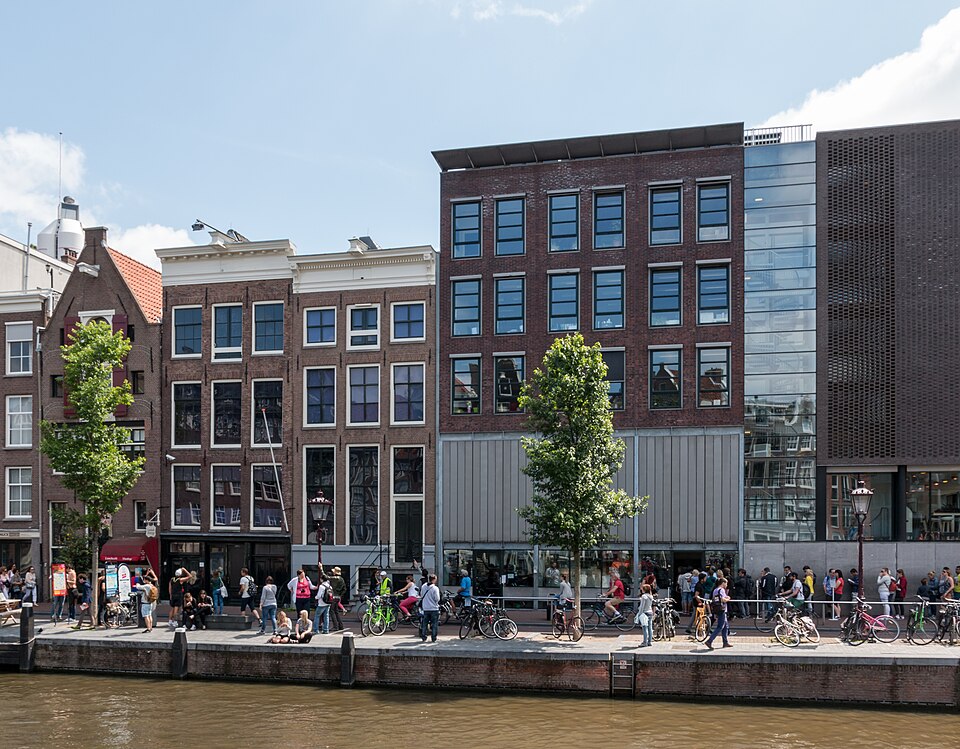
—How did you enter your hiding place without being spotted?
Ah, that was our big secret! The entrance was hidden behind a swiveling bookcase. One of our helpers had made it specially. From the outside, you just saw a shelf full of files. But it opened like a door. And once inside, we had to be quiet. Between 8:30 a.m. and 5:30 p.m., the employees worked right below us. The slightest noise could betray us. Imagine not being able to cough, or flush the toilet, or walk heavily, for hours. We lived on tiptoe. Silence was our shield.
Silence was our shield.
—Did you get news from outside, or were you cut off from everything?
We had a treasure: a radio set. In the evening, after the employees left, we gathered around it, very quietly. We listened to Radio Orange and the BBC from London. Imagine a distant voice telling you that the world still exists out there, and that you haven't been forgotten. It was our only link to freedom. We noted the advance of the armies fighting the Nazis. Each piece of good news gave us a little hope. Without that radio, we would have gone mad with ignorance, locked up knowing nothing.
A distant voice telling you that you haven't been forgotten.
—Was there a moment when you thought it would soon be over?
Yes! On June 6, 1944. The radio announced that the Allies were landing on the beaches of Normandy, in France. You can't imagine our joy in the Annex that day! We all looked at each other, hearts pounding. We said to ourselves: "This is it, they're coming, we'll soon be free." After two years in hiding, we finally dared to dream of going out, seeing the sun and our friends again. That hope carried me. Alas, my child, freedom came too late for us. But that day, we believed it with all our might.
—What did you want to become later?
A writer! And a journalist. That was my big dream, you know. Even in hiding, I never stopped writing. Besides my diary, I invented stories, little tales, childhood memories. In March 1944, I heard on the radio a Dutch minister asking people to keep their war diaries for later. So I began to rewrite mine, more carefully, thinking that one day, perhaps, it would become a book. Imagine: a fourteen-year-old girl preparing her first work in a hiding place. I believed in it wholeheartedly.
Even in hiding, I never stopped writing.
—And today, what has become of your diary?
It's the most extraordinary story, my child. After our arrest, one of our helpers, Miep Gies, picked up my pages from the floor of the Annex. She kept them in a drawer, without reading them, hoping to return them to me. My father, the only one of us to survive, published them in 1947. Today, my diary is read in more than seventy languages, all over the world, by children like you. My dream came true, not in the way I imagined. I once wrote: "When I look at the sky, I think everything will be fine." You see, through you who read me, a little piece of me still lives.
Through you who read me, a little piece of me still lives.
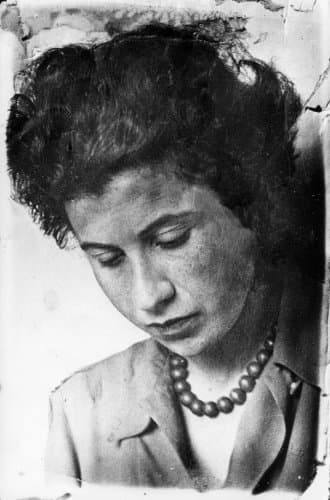
This imaginary interview was generated by artificial intelligence from sources documented in Anne Frank's profile. It dramatises what the figure might have said based on what we know about them, but does not constitute attested historical testimony. For primary sources and factual documentation, refer to the full profile.