Imaginary interview with Antonio Vivaldi
by Charactorium · Antonio Vivaldi (1678 — 1741) · Music · 5 min read
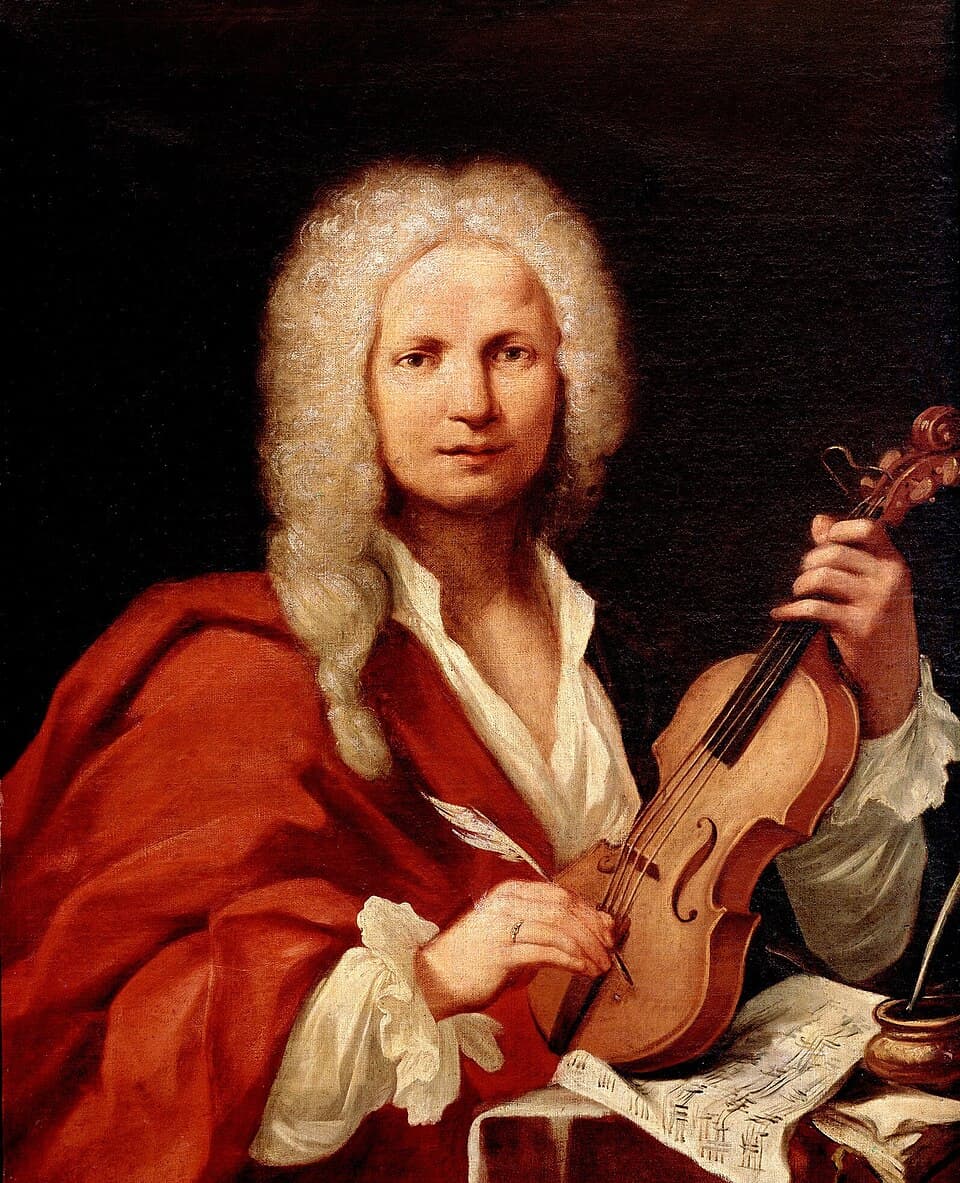
Venice, one morning in 1740, on the Riva degli Schiavoni, a stone's throw from the Ospedale della Pietà. The trunks are nearly packed: the old master is about to leave for Vienna. Between two bundles of scores, the Red Priest agrees to lay down his bow for a conversation.
—You have been nicknamed il Prete Rosso, the Red Priest. Where does this name come from?
The red comes from my blood: my father Giovanni Battista, a violinist at St. Mark's, already carried it on his head before me. I was baptized at San Giovanni in Bragora on a day in 1678 when, they say, the earth of Venice trembled. When I took holy orders in 1703, the black cassock did not extinguish this fiery hair, and the people, who like to name what they see, called me il Prete Rosso. It follows me everywhere, in the corridors of the Pietà as on opera posters. A priest recognized from afar by his head rather than his breviary: that, in two words, is the whole misunderstanding of my life.
—Why did you stop celebrating Mass so shortly after your ordination?
Twenty-five years, sir. As I wrote to the Marquis Bentivoglio in 1737: “It has been twenty-five years since I last said Mass, and I will never say it again, not by prohibition, but by my own choice, because of an ailment that has weighed on me since birth.” I said Mass for a year, then three times I had to leave the altar without finishing it, the tightness in my chest pinning me in place: asthma, perhaps, which doctors cannot name. Some whispered that I fled the service to run to the theater. The truth is simpler and less romantic: my body refused the altar, and my hand, for its part, never refused the pen.
My body refused the altar, and my hand, for its part, never refused the pen.
—What were your days like at the Ospedale della Pietà?
Nearly forty years, off and on, at the Ospedale della Pietà. The word misleads you: an ospedale is not a place for the sick, but a refuge for girls without families, orphans or bastards, whom the state raised for the sole purpose of excelling in music. I entered as violin master in 1703, the very year of my ordination. My afternoons were spent with bow in hand, correcting a cadence with a fifteen-year-old girl who would play that evening before ambassadors. I wrote for them, tailored to their measure, concertos and sacred music. Much of what will be played of mine was born in those rooms, shaped for voices and fingers that no one outside was ever supposed to see.
—What would you say to those who are astonished that an orphanage for girls could rival the best orchestras in Europe?
Go read what the President de Brosses, that Burgundian passing through, said about them: “They sing like angels and play the violin, flute, organ, oboe, cello.” He hardly exaggerated. Behind their grilles, my charges sounded like no male orchestra in Europe. It is for their voices that I wrote my Gloria in D major, that first cry, Gloria in excelsis Deo, launched by girls whom the city called lost. Consider the irony: Venice hid these children out of shame for their birth, and all of Europe crossed the lagoon to hear them. I only lent them notes; the glory, the real one, rose from their throats.
—Why did you want to paint the seasons with a string orchestra?
Because a violin can say everything, sir, if you listen to it. In my Four Seasons, I wanted people to hear the song of birds in spring, the summer storm, the chattering teeth of winter, the heavy step of the drunkard in autumn. So that no one would be mistaken, I attached a sonnet to each concerto, and in the preface to Opus 8, Il cimento dell'armonia e dell'inventione, I wrote that I had placed “the explanatory sonnets, so that the reader may understand the feelings that the music seeks to express.” The title itself says my business: a cimento, a trial, a challenge stretched between harmony and invention. I do not compose seasons: I make them play.
I do not compose seasons: I make them play.
—What, in your opinion, gives the concerto, which you have written so many of, its strength?
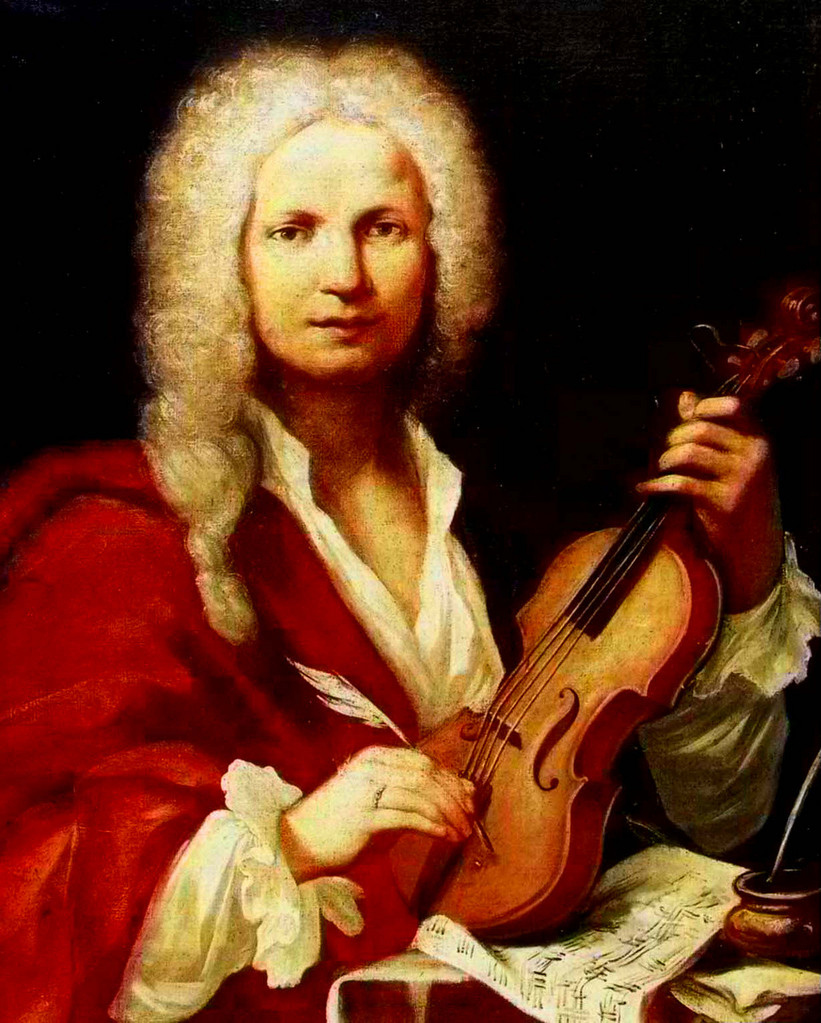
The secret lies in a return. At the heart of the concerto, the orchestra launches a phrase, the ritornello, which goes away and comes back like a tide between the soloist's flights: fast, slow, fast, and the soul stretched between the three. I fixed this form by dint of writing it, and when my twelve concertos of L'Estro Armonico appeared in Amsterdam in 1711, Northern Europe seized them as a new language. I am told that a master in Leipzig, that Bach, transcribed several for his keyboard, turning my bows into keys. That a man of his caliber wanted to remake my concertos with his own hands—that is the tribute I prefer: more silent and truer than all the applause of the lagoon.
—People often forget that you were also a man of the theater. How did you balance composition and managing an opera stage?
Composing is not enough in Venice; you also have to count. At the Teatro Sant'Angelo, I was not only the composer but the impresario: the one who rents the hall, hires the castrati and the prima donnas, bargains with the librettists, and bears the risk of the season on his shoulders. Nearly fifty drammi per musica came out of this machine that I kept running. People imagine the artist dreaming in the clouds; I spent my mornings arguing over a capricious singer's fee and the price of candles. A red priest keeping the accounts of a theater: yet another scandal for the devout. But without that money counted sou by sou, not a note would rise onto the stage.
—Do you remember the refusal you faced from Cardinal Ruffo at the gates of Ferrara?
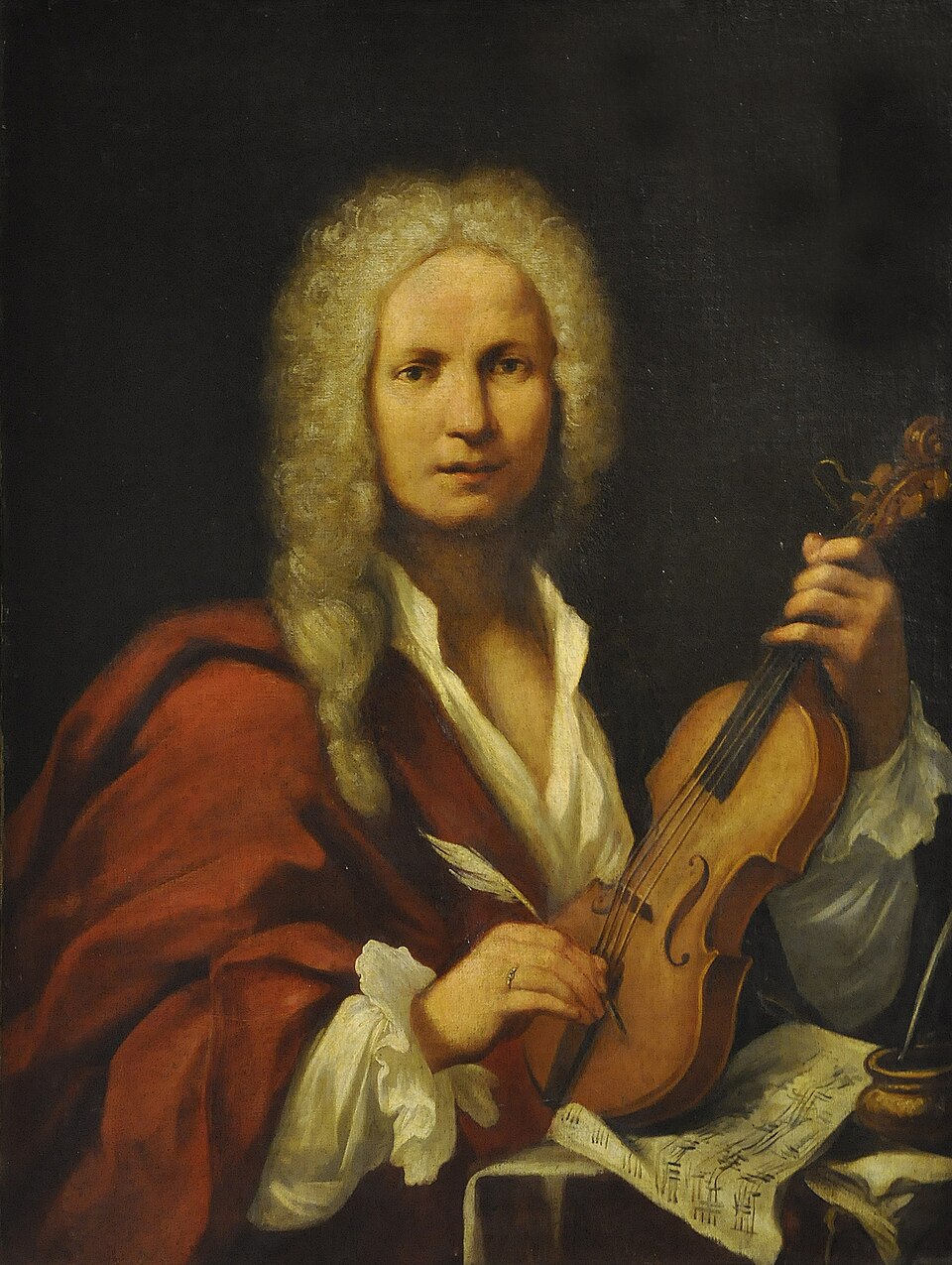
Anna Girò was my singer, my best interpreter, the one for whom I wrote the leading roles and whose voice carried my operas from one end of Italy to the other. That she lived under my roof with her sister set the bigots gossiping. In 1737, as I was preparing a season in Ferrara, Cardinal Ruffo closed its gates to me: a priest who does not say Mass and drags a singer in his wake could not enter his city. This refusal cost me dearly, in ducats and reputation. I may swear that our bond is honest and all about work, but who will ever believe a churchman whose house smells of stage lights and makeup rather than incense?
—Your prodigious speed of composition is praised. How do you explain it?
I am said to be prodigal with notes, and I admit it without shame: I boast that I can write a concerto, in all its parts, faster than the copyist can copy it. More than five hundred have flowed from my goose quill, on ruled paper, at the Pietà or in my lodgings on the Riva degli Schiavoni. Some will see facility in this, and may one day say that I wrote the same concerto five hundred times. Let them try to write it just once. Speed is not laziness: it is a fever, a hand chasing a music already complete in the head, and with no other fear than of losing it before setting it down.
Speed is not laziness: it is a hand chasing a music already complete in the head.
—Here you are, about to leave for Vienna. What do you expect from this journey?
I am leaving for Vienna, sir, toward the favor of Emperor Charles VI, who loved me and listened to me. A composer without a patron is but a learned beggar, and Venice tires of me as one tires of an old tune. I have sold manuscripts in bundles to pay for the road. If I must imagine the worst—dying there far from my lagoon, buried hastily in a hospital cemetery, forgotten for a century or two—then I want to believe that one day unknown hands will reopen my stacked scores, and that these seasons, these glories, these violin storms will begin to sound again. A piece of music is never quite dead as long as there remains, somewhere, ruled paper and someone to read it.
A piece of music is never quite dead as long as there remains, somewhere, ruled paper and someone to read it.
This imaginary interview was generated by artificial intelligence from sources documented in Antonio Vivaldi's profile. It dramatises what the figure might have said based on what we know about them, but does not constitute attested historical testimony. For primary sources and factual documentation, refer to the full profile.