Kids interview Antonio Vivaldi
by Charactorium · Antonio Vivaldi (1678 — 1741) · Music · 5 min read
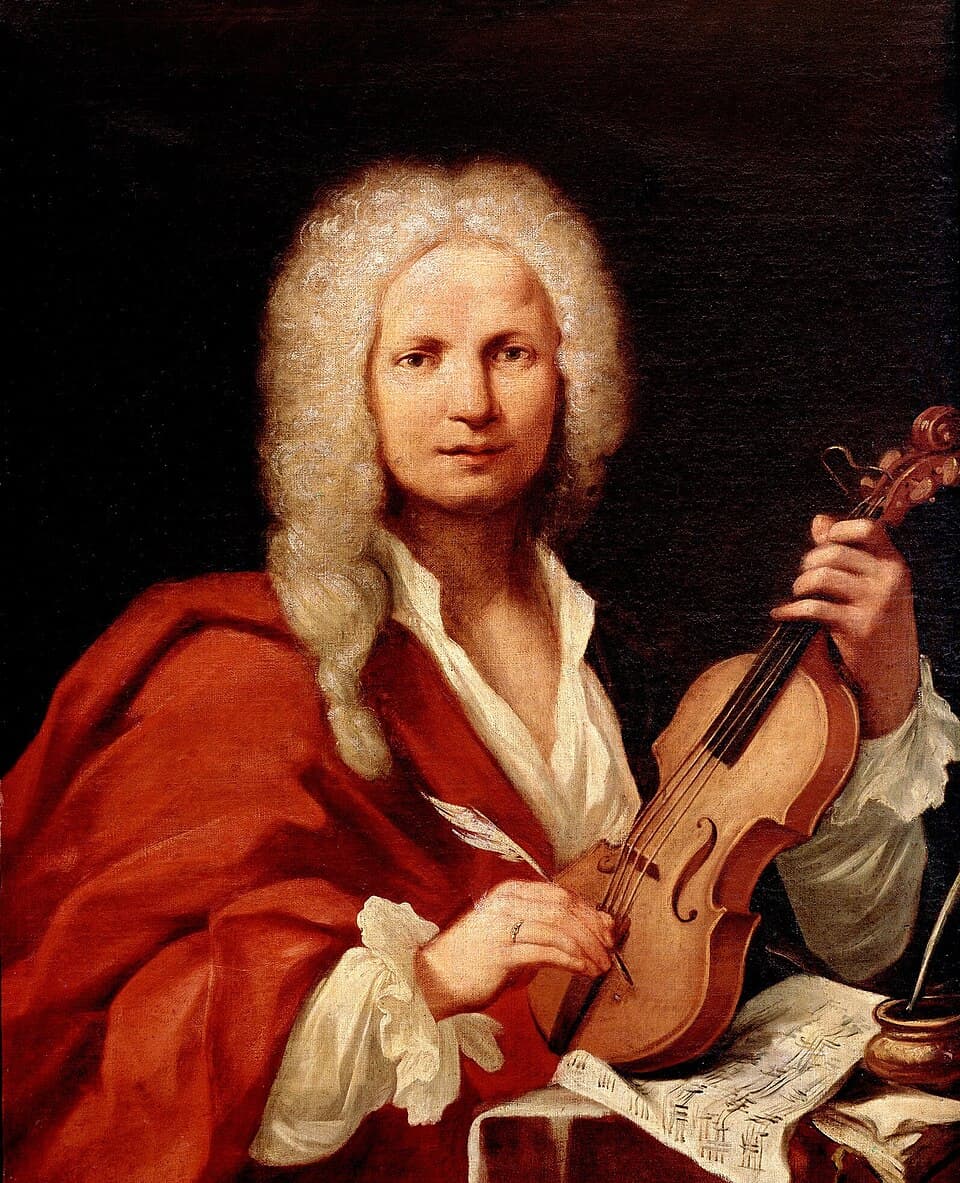
Two middle-school students, on a class trip to Venice, push open the door of an old orphanage by the water. A man in a black cassock, wig askew and red hair poking out, awaits them, a violin in hand. It's him, the master. He smiles: “Come closer, ask your questions.”
—Why were you called “il Prete Rosso,” the Red Priest?
You know, it's quite simple. In 1703, I was ordained a priest. And I had a thick head of red hair, as fiery as a sunset over the lagoon. So the Venetians, who love nicknames, called me il Prete Rosso, the Red Priest. Imagine a city where everyone knows each other, where people chat on the bridges. Your appearance follows you everywhere. For me, it was my hair. But you see, a priest normally says Mass every day. And very soon, I couldn't anymore. That's another story, a sad one. I'll tell it if you like.
In my city, your appearance follows you everywhere — for me, it was my red hair.
—What was that illness that kept you from saying Mass?
A tightness in the chest, my child. Like a hand squeezing your lungs when you run too fast. Today they might call it asthma. I called it “an ailment that has weighed on me since birth.” At the altar, you have to stand for a long time, speak loudly, without stopping. Three times I had to leave Mass in the middle, without finishing it. Can you imagine the shame? So I gave up. Not because I was forbidden, no — by my own choice. I kept my cassock, but I put all my prayer into music. Believe me, my Gloria speaks to God better than I ever could have out loud.
I put all my prayer into music.
—What was it like teaching violin all day to orphan girls?
It was my life for nearly forty years, here at the Ospedale della Pietà. An ospedale is a home that takes in abandoned little girls, without parents. We teach them one true treasure: music. In the morning I directed rehearsals; in the afternoon I gave lessons, one by one. Imagine a large room, dozens of bows rising and falling together, like a flock of birds. Some of my students played better than the men of the great European courts! I wrote my concertos specifically for their hands. They were my music daughters, in a way.
They were my music daughters.
—Did people really come from far away just to hear your girls play?
Oh yes! From all over Europe. A French traveler, Monsieur de Brosses, came to hear us and said my girls “sing like angels.” Imagine: no easy roads in my time, you traveled for weeks by carriage or boat, jostled and tired. And yet nobles, princes, made that entire journey for a single evening concert at the Pietà. In the evening, the hall was full, candles flickering. And behind a grille, my orphans played violin, flute, cello. You could barely see their faces. You only heard that miracle. That was my greatest pride.
Behind the grille, you couldn't see their faces — you only heard the miracle.
—How did you get the idea to have a violin tell the story of the seasons?
Close your eyes and listen to the world, my child. In spring, birds chirp and thunder rumbles. In summer, heat crushes everything, flies buzz. In winter, your teeth chatter and you slip on ice. Well, I put all that into four concertos: The Four Seasons, in 1725. I even attached little poems, sonnets, so the listener would understand what the music means. The violin imitates the cuckoo's song, the wind, the barking dog. It's not just a pretty sound: it's a painting you make with your ears.
It's a painting you make with your ears.
—Is it true you wrote faster than the copyist could copy?
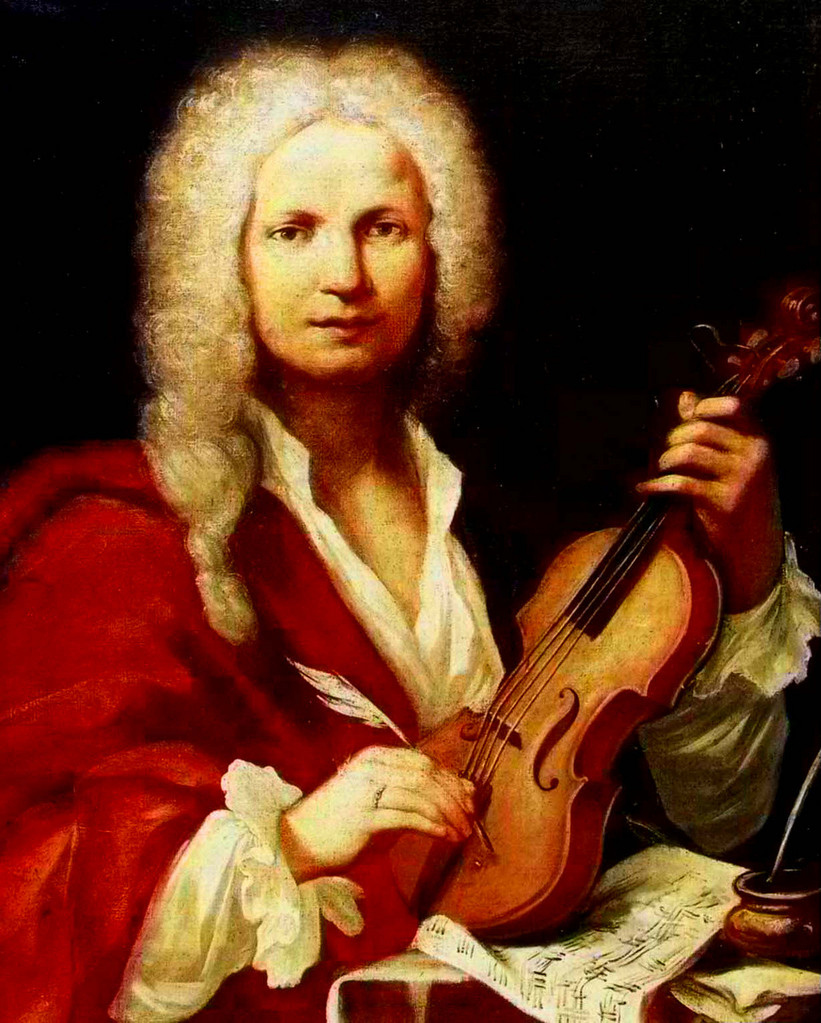
Ha! I liked to say that, yes. Give me ruled paper and a goose quill, and I'll compose a concerto before the copyist has finished copying the previous one! I am credited with over five hundred concertos, can you imagine? Notes came to me like water from a fountain. Much later, a musician sneered that I had “written the same concerto five hundred times.” That's unfair. When you write a letter to a friend, is it always the same letter? No. Each concerto has its mood, its color, its little surprise. Speed does not hinder the heart.
Speed does not hinder the heart.
—I heard you also ran a theater. What was that like?
It's true! At the Teatro Sant'Angelo in Venice, I was what they call an impresario. That means the boss of the show: I chose the operas, hired the singers, paid the bills, risked my own money. An exhausting job! Imagine: you have to convince a temperamental star, calm a vexed poet, fill the hall. If no one comes, you lose everything. I composed nearly fifty operas, like my Orlando furioso. By day I negotiated like a merchant; by evening I listened to my audience hold its breath. I was priest, teacher, composer, and businessman all at once.
By day I negotiated like a merchant, by evening I listened to my audience hold its breath.
—Why did a cardinal forbid you from entering a city?
Ah, here's the story that set tongues wagging. A singer, Anna Girò, sang the great roles in my operas. She was a faithful friend, traveling with me for my work. But you know how people are: they invented rumors. A priest traveling with a singer, what a scandal! In 1737, Cardinal Ruffo forbade me from entering the city of Ferrara because of it. That hurt me deeply. I had a troupe, performances planned, and suddenly a door closes over a rumor. Remember this: malicious tongues sometimes travel faster than the truth.
Malicious tongues travel faster than the truth.
—And in the morning, in Venice, what did you eat before working?
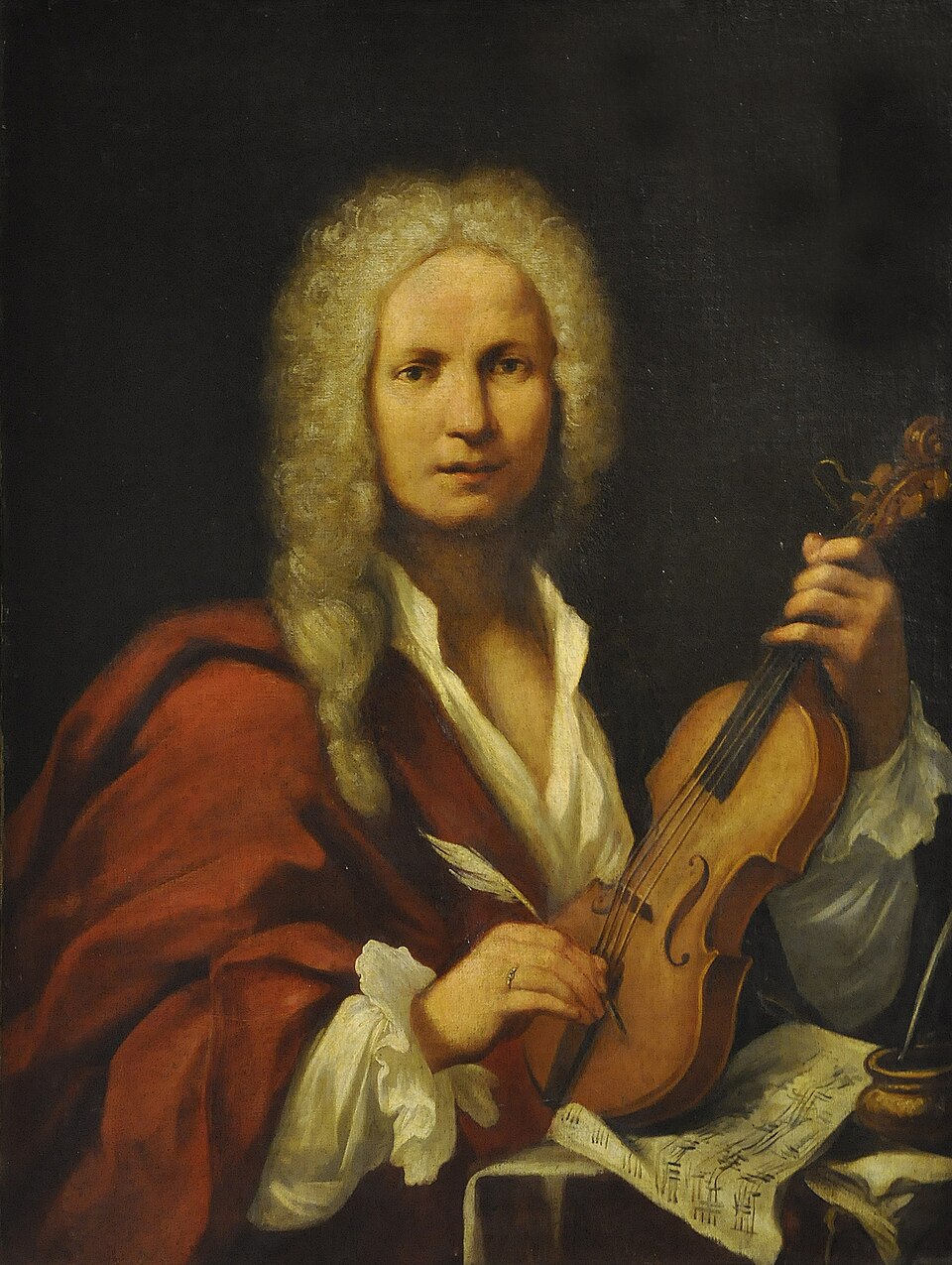
Simple things, my child, nothing luxurious. At home, we ate a lot of fresh fish caught in the lagoon, polenta — a hot cornmeal porridge —, rice, bread. And in the morning, ah, coffee! Venice was crazy about it. Imagine little steaming cups in noisy cafés, where people talked music and business. I often got up before dawn to compose, in the silence, while the city still slept. No engine, no noise: just the lapping of water against the steps and, sometimes, a gondolier's cry in the distance. That was my favorite hour.
My favorite hour: the sleeping city, the lapping water, and the music coming.
—Is it true you died poor and far from home?
Yes, and it's the saddest end to my story. In 1740, old and tired, I left my Venice for Vienna, Austria. I hoped for the protection of Emperor Charles VI, an admirer of my music. But a few months after my arrival, he died. And I, without a patron, without money, passed away on July 28, 1741, in the house of a saddler's widow. I was buried without ceremony, in a small hospital cemetery. Imagine: the one whose music had made princes travel, gone in silence, like a candle blown out. No one, that day, wept for the Red Priest.
The one whose music made princes travel left like a candle blown out.
—How does it feel to know you were forgotten, then rediscovered?
That's the most astonishing story of all. After my death, my music slept for nearly two centuries, forgotten, stored in dusty boxes. Imagine hundreds of my scores sleeping, like seeds under the snow. And then, in the 1920s, an Italian scholar, Alberto Gentili, found a whole collection of them in Turin. My notes woke up! Today, I'm told, The Four Seasons resound all over the world. So my advice, my young friends: never fear being forgotten. What you do with your heart can cross time and return, long after you, more alive than ever.
What you do with your heart can cross time, more alive than ever.
This imaginary interview was generated by artificial intelligence from sources documented in Antonio Vivaldi's profile. It dramatises what the figure might have said based on what we know about them, but does not constitute attested historical testimony. For primary sources and factual documentation, refer to the full profile.