Kids interview Anubis
by Charactorium · Anubis · Mythology · 5 min read
Two students are on a school trip to an ancient necropolis when the torchlight catches a tall figure — a man's body, a black jackal's head, perfectly still. The air smells of cedar and dry stone. Then the figure turns, and speaks.
—What exactly happens when you weigh someone's heart on your scales?
Ah — you go straight to the heart of things, and that is exactly right! When a soul arrives before me, I take their heart and place it on one side of my balance. On the other side sits a single feather — the feather of Ma'at, the feather of truth. Imagine a whole life — every kind act, every lie, every moment of courage or cruelty — pressed into a small, warm lump of flesh. I hold the scales very steady. If the heart is as light as that feather, the soul passes forward into eternity. We call this ceremony the Psychostasia. Every step of it is written in the Book of the Dead, so that no soul arrives unprepared.
—What happens if the scales tip the wrong way? Does the soul just disappear?
That is the question every heart quietly dreads. If the heart is heavy — weighed down by cruelty or dishonesty — then a creature called Ammit is waiting nearby. She has a crocodile's head, a lion's chest, and the back of a hippopotamus. She swallows the heart whole. That soul simply ceases to exist — no eternity, no second chance. I know it sounds frightening, my friend. But think about what it meant for the living: every Egyptian knew that one day their heart would sit on my scales. So they tried, every single day, to live lightly. In the Papyrus of Ani, the oldest copy of the Book of the Dead we have, you can see me standing right beside the balance, watching every tremor of the needle.
Every Egyptian knew their heart would one day sit on my scales.
—Did you really teach humans how to mummify the dead?
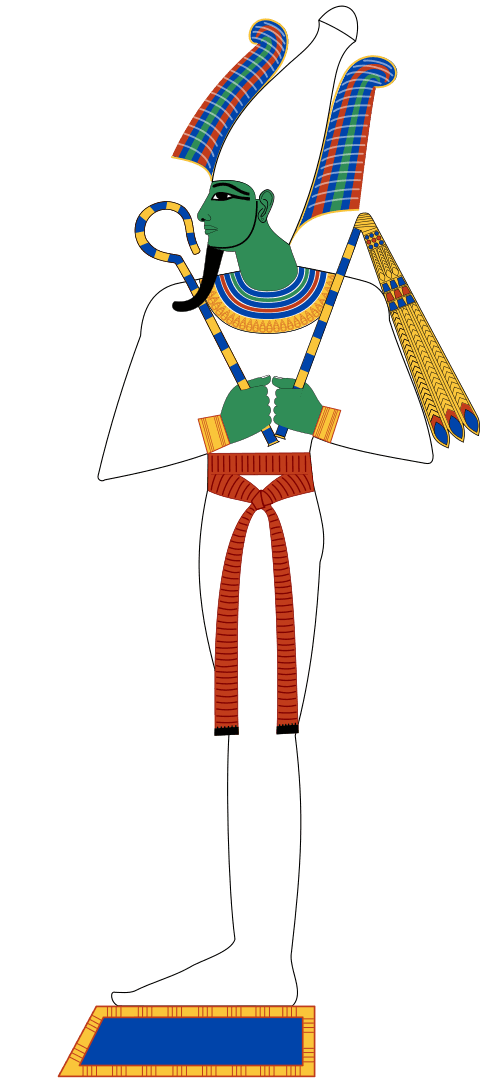
I discovered it out of love, actually. My father Osiris was killed by his jealous brother, his body torn apart and scattered. I gathered every piece back together — and then I wrapped him in strips of linen, the way I had been shown by the divine order of things. That was the very first mummification. After that, I taught the embalmers of Egypt the full sacred technique: removing the organs into their canopic jars, anointing the body with oils and resins, winding on the bandages layer by layer. You see, a soul can always return to its body — but only if the body is still there. The body is the home. You must keep the home standing.
—Why did priests wear a jackal mask when they were wrapping up dead bodies?
Because in that moment, they were acting as me. The chief priest put on a black jackal mask — my face — so that the soul hovering nearby would feel safe. Imagine waking up in the dark, confused, and seeing strangers working over your body. Frightening! But if you see Anubis, the protector you have prayed to all your life, you feel calm. Those priests were remarkable people. They worked day after day in the embalming halls of Memphis and Saqqara, reciting sacred words, performing every gesture with absolute care. Each time they put on my mask, they became something more than themselves.
They wore my face so the soul would not be afraid.
—Your name means 'he who is in putrefaction' — that sounds really creepy. Why?
I can see why that startles you! My ancient name, Inpu, touches on decay — on what happens to a body after death. The ancient Egyptians watched jackals prowling near their cemeteries every night. They could have feared those animals and chased them away. Instead, they made the jackal sacred. They took something that seemed threatening and turned it into something protective. I am not the god of rot, my friend — I am the god of transformation. What looks like an ending is really the beginning of something new. That is one of the deepest ideas the Egyptians ever had: even in the darkest place, life is waiting to begin again.
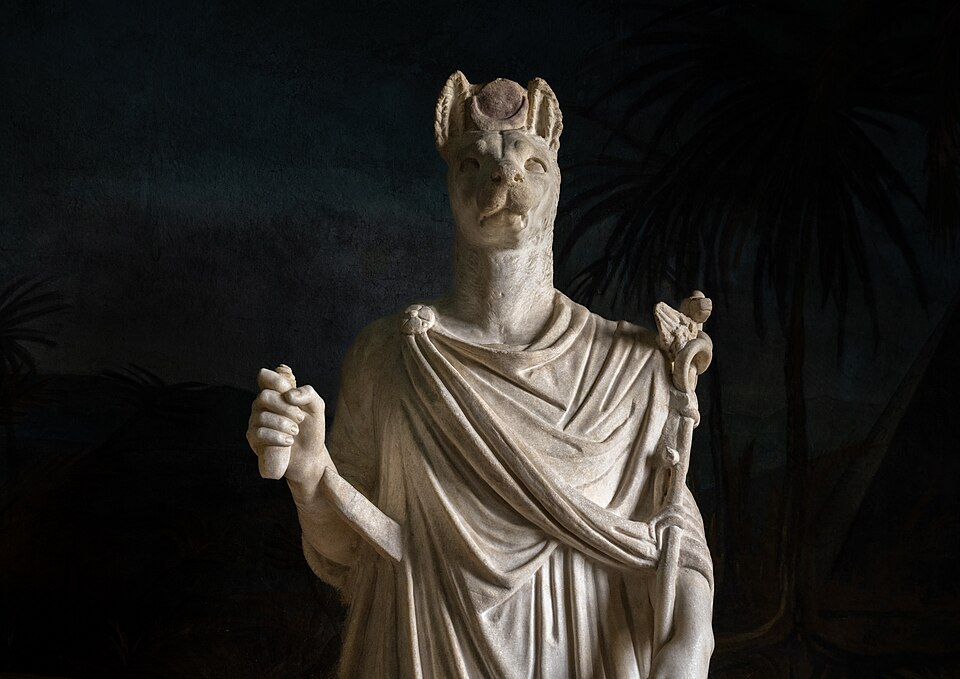
—Why are you always painted black if real jackals are sandy brown?
You are very sharp — real jackals are indeed a sandy, golden brown. But black meant something completely different in Egypt. Every year, the Nile flooded its banks and left behind rich black mud. From that mud grew barley, wheat, everything the people ate. Black was the colour of fertile soil, of new growth, of life itself. So when you see me painted jet black, that is a message: I bring rebirth, not an ending. The small amulets people wore around their necks — carved jackal figures in dark stone — carried that same promise. Death, with me beside you, is not a wall. It is a door.
Black was the colour of new life, not of death.
—Were you really the most powerful god of the dead before Osiris came along?
Yes, that is true. Since the very first pharaohs united Egypt around 3000 BCE, I was the one who welcomed the dead. The oldest sacred inscriptions we have — the Pyramid Texts, carved inside royal tombs around 2400 BCE — name me as the one who presides over the House of the Dead. For a very long time, I was the first, the most important. Then, slowly, Osiris rose to become the great king of the underworld, and my role shifted. I became his guide, his right hand. But my purpose never disappeared. I kept the scales. I kept the gates of the Duat. The dead still came to me first.
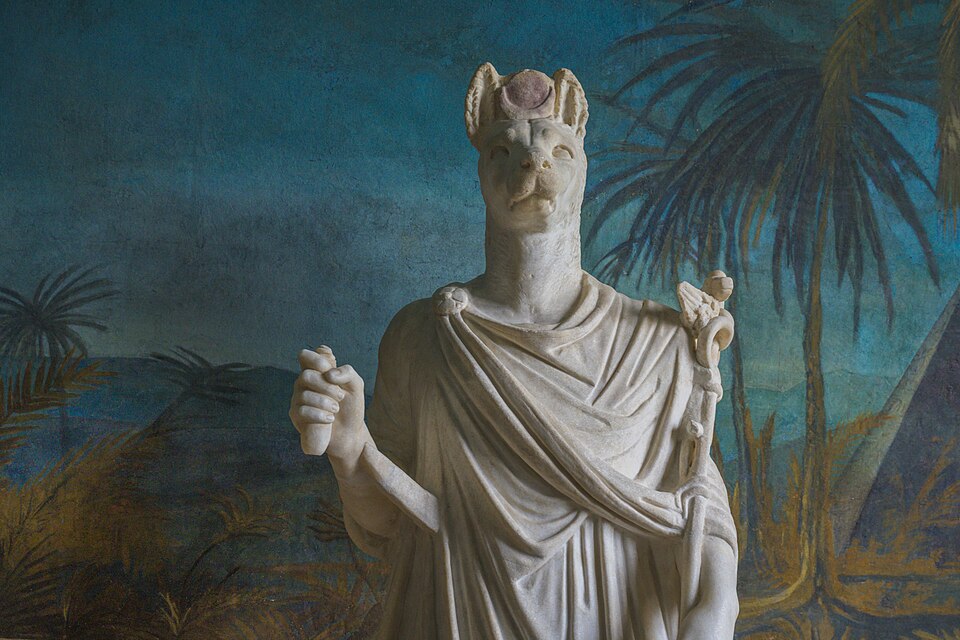
—Were you sad when Osiris took your place?
That is a kind question, and I want to answer it honestly. Perhaps, at the very beginning, there was something like sadness. But gods do not hold onto wounded pride the way people sometimes do. Osiris had been killed unjustly, scattered, and then brought back together — his story spoke to every Egyptian who feared death, and that was every single one of them. My story is about protecting and guiding. His story is about dying and rising again. The two things belong together, like the two sides of my scales. I think I found something more lasting than power: I found a purpose that no one could ever take from me.
Purpose lasts longer than power.
—What was Cynopolis like — your special city?
Cynopolis — the Greeks gave it that name, meaning city of the dog, but its ancient Egyptian name was Hardai. It lay along the banks of the great river in Upper Egypt. People walked for days to reach it — families who had just lost someone they loved, priests come to learn the sacred rites, ordinary men and women who wanted my protection. Imagine a whole city where every festival, every ceremony, every conversation was woven around the world of the departed. The priests there kept real, living jackals in my honour. At dawn, you could hear them calling in the distance, and the priests would pause and bow their heads. That sound was a prayer.
—When pharaoh Akhenaton tried to ban all the gods, were you scared he would erase you?
Scared? I have guided millions of souls through the deepest darkness there is. One pharaoh's decree could not extinguish me. Around 1353 BCE, Akhenaton declared that only the sun disk Aten deserved worship. My temples grew quiet. Offerings stopped. My name was whispered instead of spoken aloud. But ordinary people — the farmers, the potters, the mothers — still buried their dead. They still needed someone to hold the scales. They did not forget me, even in silence. And when young Tutankhamun came to power, he restored the old ways. My name rang out again across every necropolis in Egypt. The dead always need a guide. That need has no end.
This imaginary interview was generated by artificial intelligence from sources documented in Anubis's profile. It dramatises what the figure might have said based on what we know about them, but does not constitute attested historical testimony. For primary sources and factual documentation, refer to the full profile.