Kids interview Archimedes
by Charactorium · Archimedes (286 av. J.-C. — 211 av. J.-C.) · Sciences · 5 min read
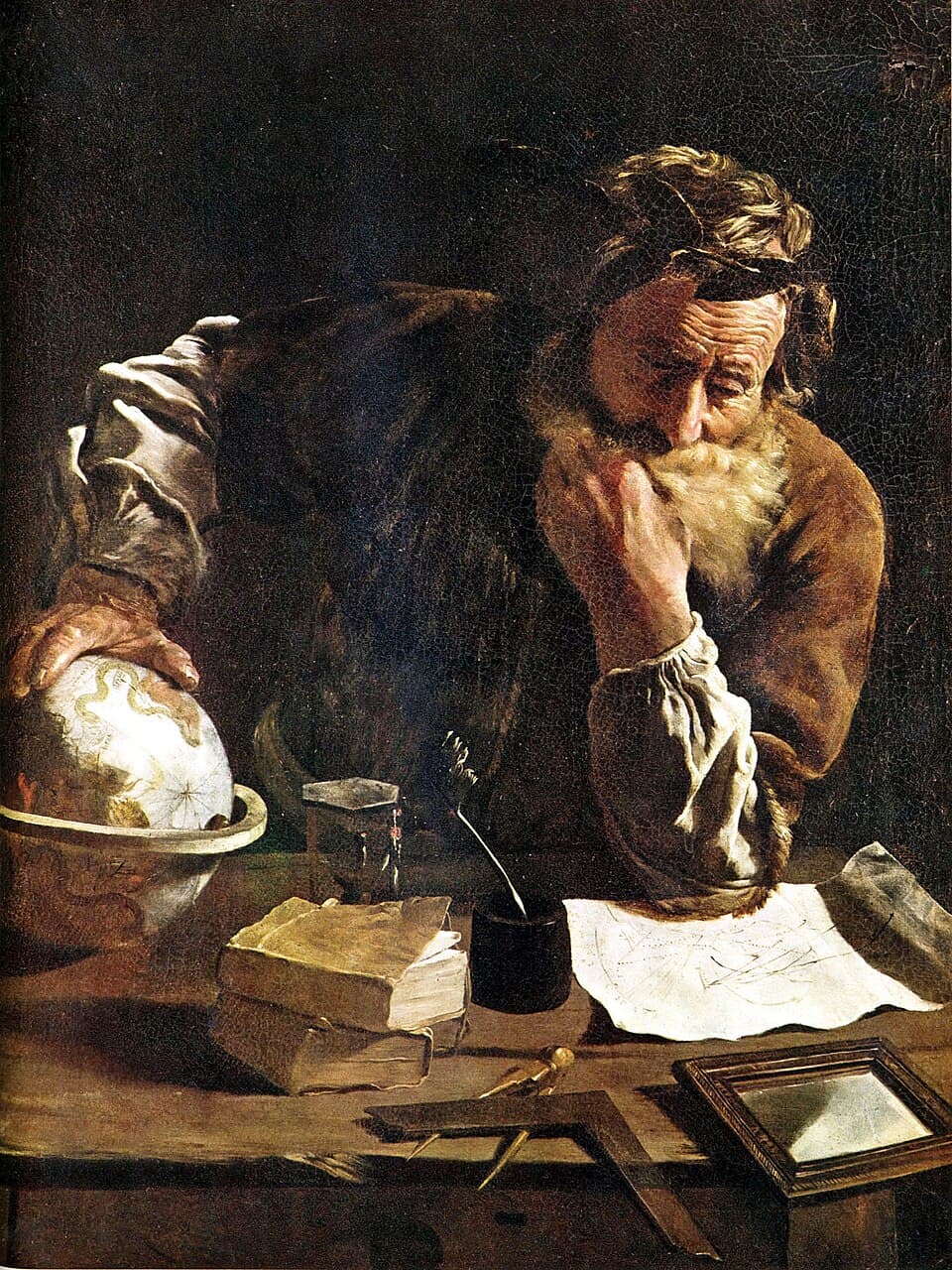
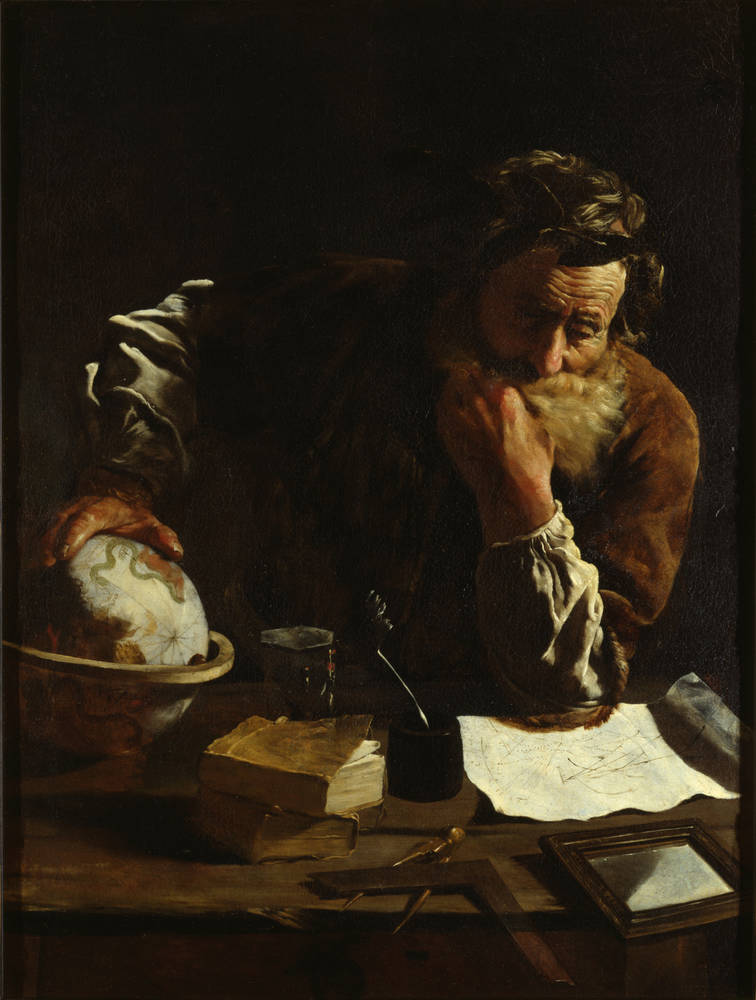
That morning, a class on a field trip was walking through the alleys of ancient Syracuse. Two twelve-year-old students lingered near an old stone engraved with a sphere and a cylinder. And then an old man in a tunic, with a mischievous look and hands full of chalk, agreed to answer all their questions.
—Is it true you figured everything out in your bath?
Ah, you've heard that story! King Hieron II had given me a puzzle. Was his crown pure gold, or had a craftsman cheated him? I couldn't melt it down to check. One day, I slipped into my bath. Water spilled onto the floor. And then it all became clear! A body immersed in water displaces an amount of water equal to the space it takes up. That was the key. I was so happy I shouted Eureka — "I've found it!" — running through Syracuse. I later wrote it all down in On Floating Bodies. Sometimes, my child, the greatest ideas come when you stop looking for them.
—And in the morning, what did you eat before working?
Oh, simple things! Wheat bread, a little olive oil, some figs or goat cheese. At home, we drank wine, but always mixed with water — pure wine was for the reckless. But I'll let you in on a secret: I often forgot to eat. When a geometry problem gripped me, nothing else existed. My family almost had to drag me to the table. Imagine an old man staring at circles drawn in the hearth ashes, not even seeing the dish placed before him. Well, that was me!
—They say you moved a ship all by yourself. Is that possible?
All by myself, yes — but not with my bare arms, mind you! King Hieron II didn't believe me. So I had a large ship moored, loaded with men and cargo. I set up a system of pulleys, what we call a block and tackle: several wheels that redirect the rope. And then, sitting calmly, I pulled. The ship glided toward me as if floating on oil. The whole court stood dumbfounded. The secret is the lever: with the right fulcrum, a small force moves a huge weight. I dared to tell the king: give me a place to stand, and I will move the world.
Give me a place to stand, and I will move the world.
—But how can such a small force move something so heavy?
Good question! Take a plank resting on a stone. Put a big rock on one side, close to the stone. On the other side, far away, press with just your finger. And the rock lifts! The farther you are from the fulcrum, the more your force counts. That's the law of the lever. I studied all this in my treatise On the Equilibrium of Planes. I was looking for the center of gravity of objects — the precise point where they balance, as if by magic. But it's not magic, my child. It's geometry. And geometry never lies.
—Is it true you built war machines?
Alas, yes. The Romans, led by General Marcellus, came to besiege my beloved Syracuse around 214 BC. I didn't like war; I preferred my circles. But my city was in danger. So I put my geometry to its service. I designed huge cranes, like giant iron arms. They grabbed Roman ships by the prow, lifted them out of the water, then dropped them suddenly. Imagine the terror of the sailors! Marcellus, furious and impressed, said he was fighting a geometer-Briareus — Briareus was a hundred-armed giant from our old legends.
—Were you afraid during the siege?
Of course I was afraid, my child. Who wouldn't be? For months, we heard cries in the distance, near the port of Syracuse. But you know, when I worked on a méchanè — that's our Greek word for "machine" — fear faded. My hands drew plans, calculated angles to aim. The art of defending a besieged city was called poliorcetics. I focused on every rope, every weight, every detail. It's strange: it was by thinking that I stopped trembling. Thought, you see, is a refuge when the world crumbles around you.
—And your favorite discovery, which one was it?
Ah, you touch my heart! Many admire my machines. But what I preferred was something very quiet, without any noise. Take a ball, a sphere. Enclose it in a well-fitted tube, a cylinder, where it touches the walls everywhere. Well, the ball takes up exactly two-thirds of that tube. Always! No more, no less. I proved this in my treatise On the Sphere and Cylinder. This idea, so simple, so perfect, I found it more beautiful than all my war cranes. A truth no one had seen before me, and that will remain true forever.
—Why did you want that drawn on your tomb?
Because it was my greatest pride, far more than any victory! I asked for a sphere in a cylinder to be engraved on my stone. Not my name, not my machines. Just that figure, and the two-thirds ratio. It was my way of saying who I really was. And you know what? Much later, a Roman named Cicero passed through Syracuse around 75 BC. My tomb was forgotten, overgrown with brambles. But he recognized the sphere and the cylinder, and he found it! Imagine: a simple geometric figure allowed me to cross the centuries.
—Is it true you died because of a drawing on the ground?
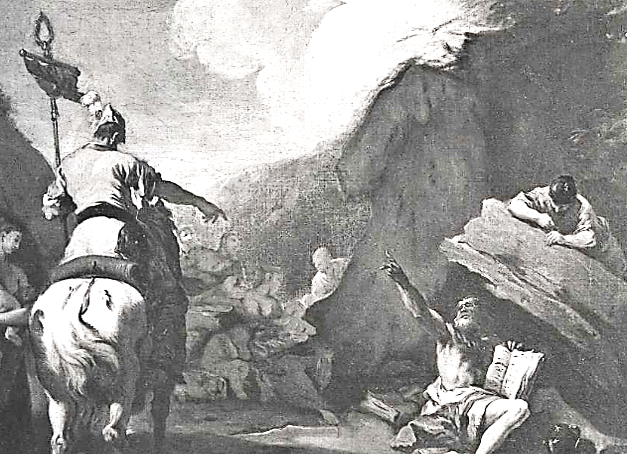
That's a sad story, but yes. Syracuse had just fallen to the Romans, around 212 BC. I was sitting on the ground, completely absorbed. I was drawing circles in the sand, lost in a problem. A soldier came up, sword in hand. He wanted me to follow him immediately. But I was so focused that I asked him not to disturb my circles. The soldier, furious, struck me. Yet General Marcellus had ordered that I be spared; he was deeply grieved by my death. You see, I didn't look up in time. Loving an idea too much can cost dearly.
Do not disturb my circles.
—What would you like people to remember about you today?
Not my war engines, certainly not. I'd like them to remember the joy of seeking. You know, I once wrote a text, The Method, where I explained how my ideas came to me. It was lost, scraped off, forgotten for centuries… then rediscovered in 1906 on an old hidden manuscript! I already sensed things that others would only understand two thousand years later. But the important thing isn't to be right before everyone else. The important thing is to wonder. At a drop of water, a spiral, a grain of sand. You too, my child, keep your questions alive.
Keep your questions alive: that is a scholar's greatest treasure.
Read further
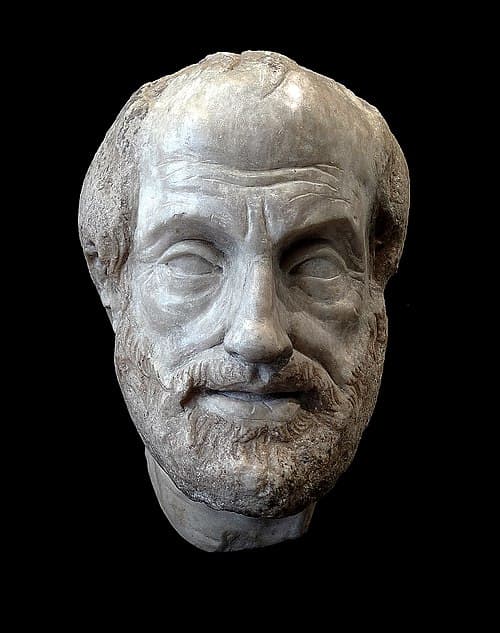
This imaginary interview was generated by artificial intelligence from sources documented in Archimedes's profile. It dramatises what the figure might have said based on what we know about them, but does not constitute attested historical testimony. For primary sources and factual documentation, refer to the full profile.