Imaginary interview with Artemis
by Charactorium · Artemis · Mythology · 6 min read
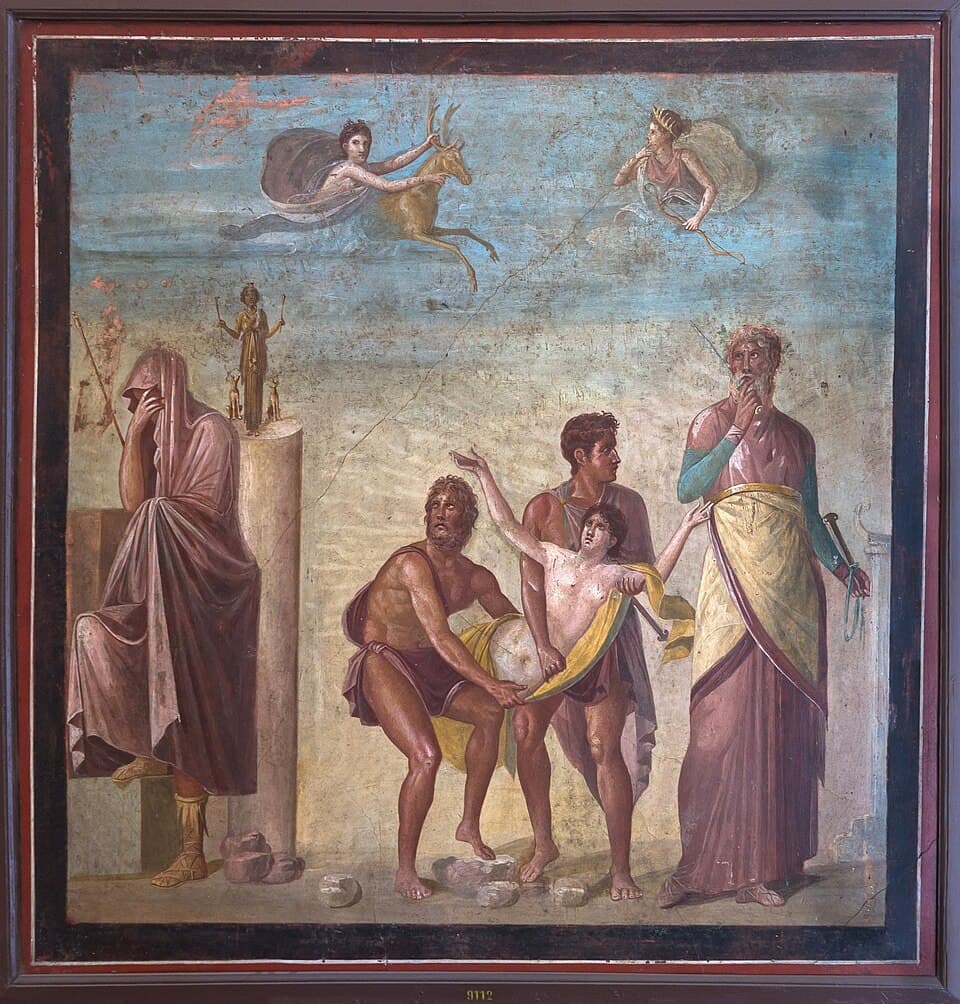
You do not meet Artemis in a palace, but at the edge, where the forest devours the daylight. She stopped at the edge of a clearing on Mount Taygetus, her bow still on her shoulder, her hounds panting at her feet. She agrees to answer as long as the twilight lasts — afterward, she says, the sky awaits her.
—Let us begin at the beginning. What can you tell us about your coming into the world?
My mother Leto wandered, hunted, with no land to receive her. Only Delos, the floating island, dared to welcome her. I was born there first — and it is said that, as soon as I came, I helped my mother bring my brother Apollo into the world. That is why women in childbirth call upon me: I knew the pain of labor before I had even grown. Hesiod says it simply, that Leto bore Apollo and me, fruit of her union with aegis-bearing Zeus. My brother and I are two faces of the same light: to him the brilliant day, to me the cold clarity of night. We never truly leave each other, even when the sky separates us.
To him the brilliant day, to me the cold clarity of night.
—It is said that, when you were very young, you asked your father Zeus for a singular favor. Do you remember that?
I was a child sitting on his knee, and he offered me whatever I wished. Others would have asked for a husband, a throne, sons. I asked to remain a virgin forever — not out of scorn for marriage, but because I wanted to belong to myself. I wanted the mountains rather than the bridal chamber, the bow rather than the spindle, my nymphs rather than a master. Zeus smiled and granted me all that. That is why Greek girls, on the threshold of womanhood, come to me: they know that I preserved something within me that can never be taken back. Freedom, you see, is not a refusal. It is a vow kept against the whole world.
Freedom is not a refusal. It is a vow kept against the whole world.
—Let us speak of your weapons. How would you describe that bow you are always depicted with?
My bow is golden, and my arrows too — the hymn sung to me speaks of the daughter of Zeus with golden arrows, who loves the din of the hunt. It is not an ornament. It is an extension of my hand, as sure as my gaze. I wear a short chiton, cut for running, and the quiver never leaves my shoulder: a goddess of the hunt never lets herself be caught unarmed. When I release the string, the animal does not suffer long — I like neither cruelty nor waste. My hounds flush it out, I aim, the arrow flies. There is a justice in that gesture: I take what the forest can spare, and I punish those who take more.
—And when night falls, what becomes of you?
When my brother's sun sets, I mount my silver chariot drawn by white horses and traverse the sky. The crescent moon they place on my forehead is not a jewel: it is my charge. I watch over lost travelers, over sailors who look for a glimmer, over sleeping girls. Sometimes I descend into the forests with a blazing torch, and then they call me the torch-bearing goddess, queen of crossroads. Night is not the realm of fear, as city-dwellers believe. For those who know the paths, it is the part of the world where one is finally alone with oneself. I love that silence where nothing is heard but the step of beasts.
Night is not the realm of fear: it is the part of the world where one is finally alone with oneself.
—Let us turn to a darker story. What happened with the hunter Actaeon?
He had lost his way, they say, and surprised me at my bath, naked in a spring, my nymphs around me. I did not scream. I cupped water in my hand and threw it in his face — and already antlers were sprouting under my fingers, his neck lengthening, his legs becoming hooves. Actaeon became the stag he was hunting. His own dogs, not recognizing their master, tore him apart. They find me cruel. But understand: there is no chance that justifies profaning the sacred. What belongs to me — my body, my forests, my beasts — is not offered to the gaze of passersby. Transgression calls for punishment, and mine never wavers.
Actaeon became the stag he was hunting.
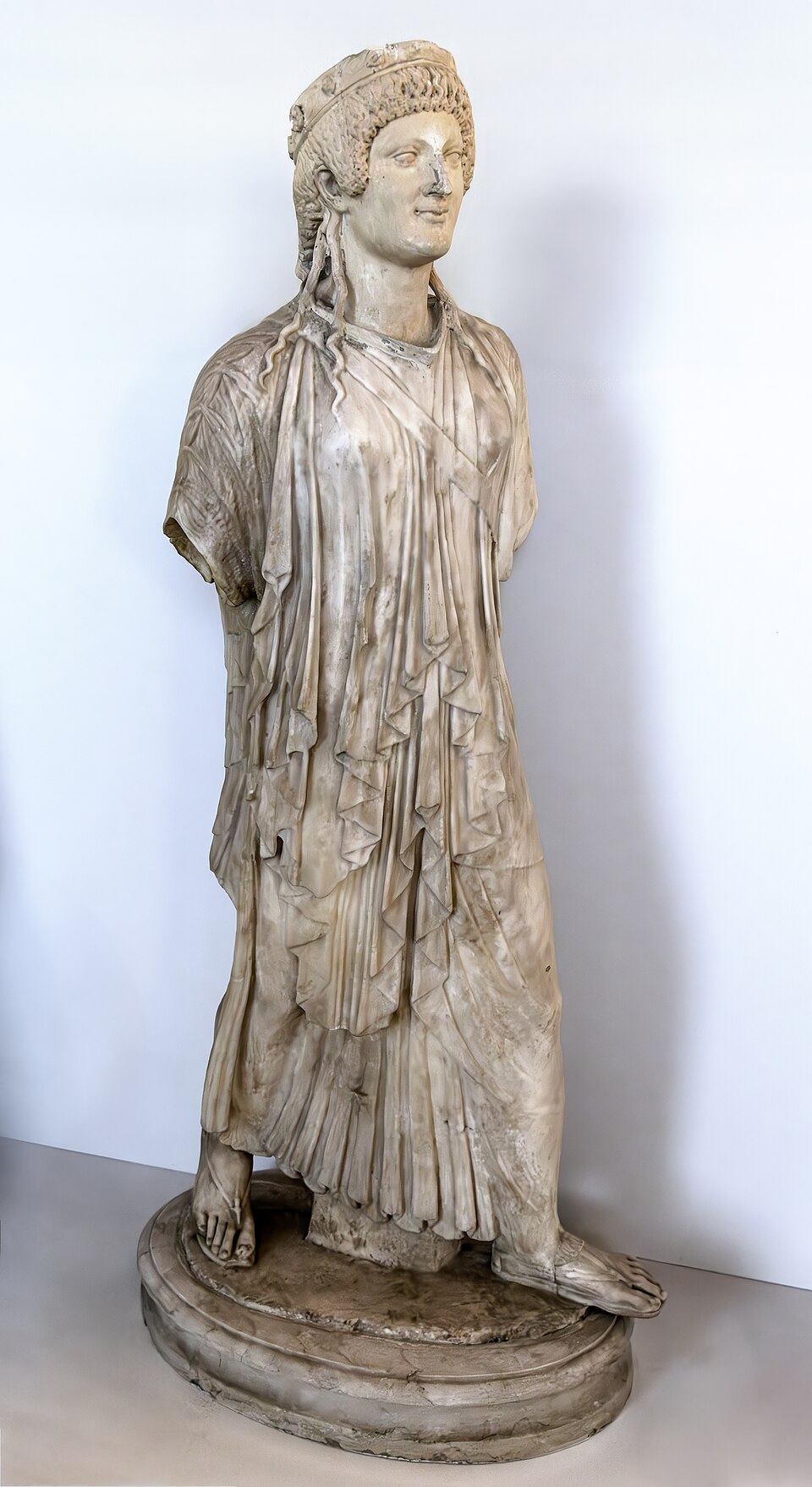
—Why punish so harshly those who harm animals or the forest?
Because the wild has no other defender than me. The stag and the hind are my creatures, and whoever kills them without need, out of pure hunter's vanity, insults me directly. Men believe the forest is given to them to empty. I remind them that it has a guardian. On the slopes of Mount Cithaeron, as in the woods of Arcadia, my rituals teach that one takes only with measure and gives thanks before the hunt. He who respects this order has my favor — I grant pious hunters a lucky hand. He who breaks it learns, like Actaeon, that the prey can become the huntress. I do not protect beasts out of tenderness. I protect them because they are the balance of the world.
—You are also the one to whom young girls turn. What happened in your sanctuary at Brauron?
At Brauron, in Attica, the little Athenian girls came to me before leaving childhood. They were called my little she-bears. They danced, dressed in saffron, and learned to leave behind the age of play to enter the age of women. It is a fearsome passage, and I am its guardian: I protect the girl at that fragile threshold, then I protect the woman when the hour of childbirth comes. Mothers offered me clothing, sometimes that of women who had died in labor. See the strangeness of my domain: I who will never know motherhood watch over all those who go through it. Perhaps that is why they trust me — I have nothing to take from them, nothing to envy.
I who will never know motherhood watch over all those who go through it.
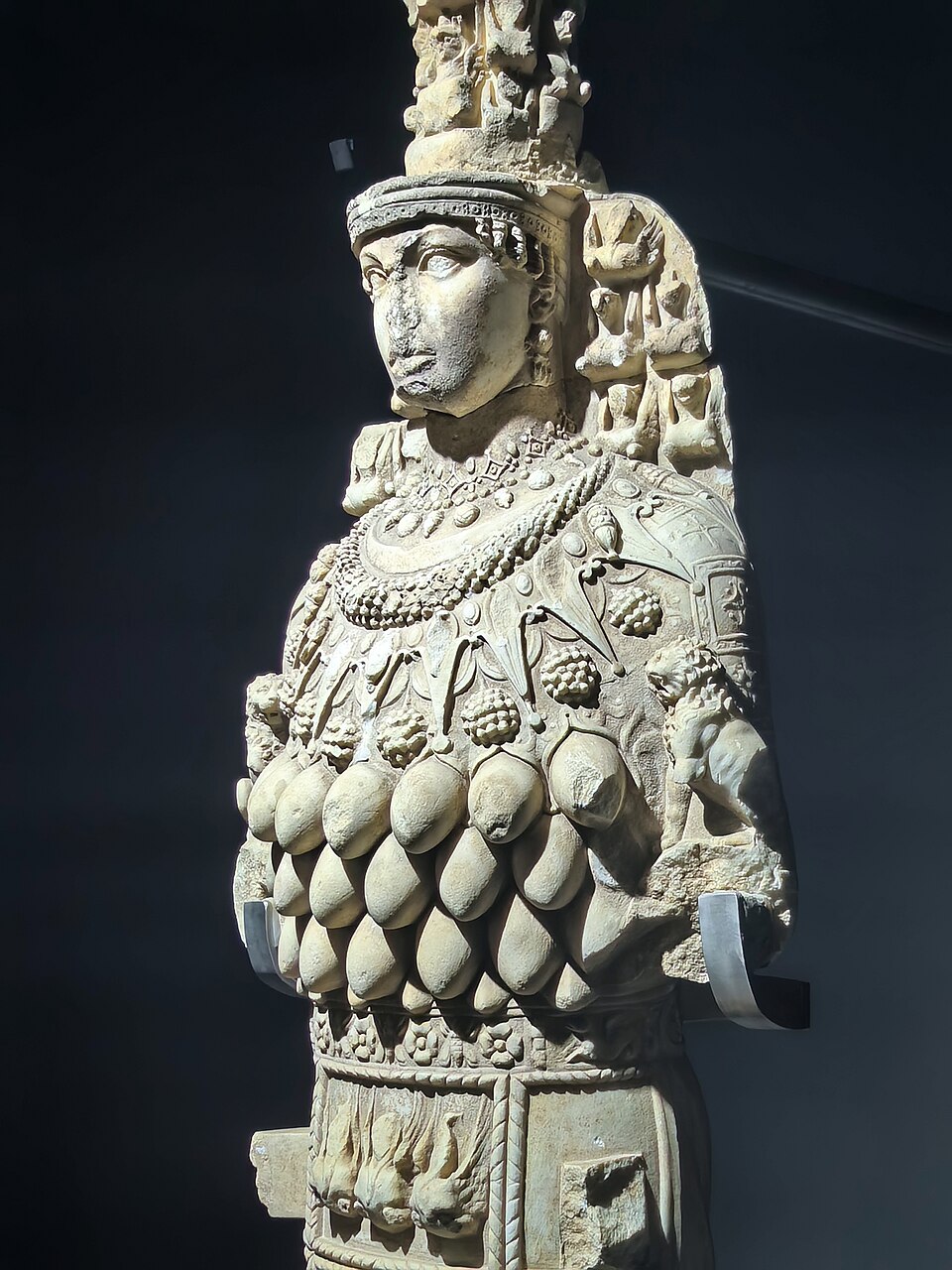
—What would you say to a young girl approaching you for the first time?
I would tell her not to be afraid of the forest within her. Girls are taught to make themselves small, soft, available. I show them the other path: that of the Amazons, those women who rode horses and drew bows without asking any man's permission. I do not ask that they resemble me in all things — not all will remain virgins, not all will hunt. But let them keep, deep inside, a territory that belongs only to them. Let them come to Brauron as one comes to recognize one's own strength. The quiver I carry, each one possesses an invisible one: the part of herself that no marriage, no law, no father should be able to seize.
—You often mention Apollo. How do you experience this bond with your twin brother?
We were born from the same womb, a breath apart, and yet our realms touch only at twilight and dawn. He rules over Delos with his oracles, his lyre, the great sun; I rule over the shadowy mountains and the wind-beaten islands. The Greeks love to depict us together, and rightly so: we form the full circle of time, day and night, song and silence. But do not think I live in his shadow. I received from my father a light equal to my brother's. Simply, mine does not burn — it illuminates. That is another way of ruling: to shine without blinding.
—To finish: over the centuries, one might think your vow of virginity has isolated you. Do you feel that way?
Isolated? I have never been alone. I have my nymphs, my hounds, the stags that cross my clearings, and this sky I traverse every night. The poets — those of Alexandria, later, who composed so many hymns in my name — understood that my celibacy was not a lack but a fullness. They think me fierce because I live far from cities, in the virgin forests where no one commands. But the solitude I have chosen is inhabited. I prefer the cold of the moon to the warmth of closed rooms, and the freedom of the path to the safety of walls. Men fear that in a woman. Let them fear. I will not change my vow for their peace of mind.
The solitude I have chosen is inhabited.
This imaginary interview was generated by artificial intelligence from sources documented in Artemis's profile. It dramatises what the figure might have said based on what we know about them, but does not constitute attested historical testimony. For primary sources and factual documentation, refer to the full profile.