Imaginary interview with Arundhati Roy
by Charactorium · Arundhati Roy (1961 — ?) · Performing Arts · Literature · Society · 6 min read
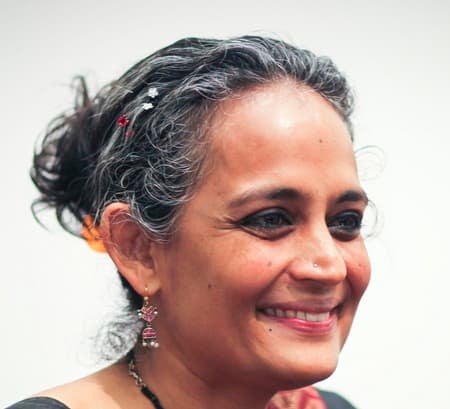
A monsoon afternoon in New Delhi, in an apartment overflowing with books, folded newspapers, and handwritten manuscripts. Masala tea steams on the coffee table. Arundhati Roy sits cross-legged, a notebook beside her, and speaks in a low, precise voice that never yields an inch of ground.
—How was The God of Small Things born, the novel that changed everything for you?
It was born slowly, over five years, in a notebook I always kept with me. I wrote by hand, sentence after sentence, like placing stones in a river to cross without drowning. The setting, I didn't invent: it's Aymanam, my village in Kerala, its green canals, its rice paddies, the smell of the river, and that caste hierarchy you breathe in from childhood. The book is about a Syrian Christian family like mine, a love that transgresses an ancient Law—the one that decides who can be loved and how much. When the Booker Prize came, in 1997, I became the first Indian woman to receive it. Six million readers, suddenly. But I remembered above all the notebook, and the silence in which one writes.
I wrote by hand, like placing stones in a river to cross without drowning.
—Why did you wait twenty years before publishing a second novel?
Because fiction seemed a luxury when the country was burning outside my window. After the first novel, I felt that my battles were more urgent than my characters: the dams, the bomb, the displaced. So I wrote essays, reportage, I marched. The novel waited in a corner, patient. It only returned in 2017, with The Ministry of Utmost Happiness. I gathered there all those India prefers to forget: a hijra who lives in a cemetery, Kashmiris, broken activists. It took twenty years for those voices to assemble in the same house of words. A novel, for me, is not a story: it's an entire city you inhabit, with its sewers and its temples.
Fiction seemed a luxury when the country was burning outside my window.
—What drove you to write against your own country's nuclear tests?
Shame, first of all. In 1998, when India exploded its bombs in the Rajasthan desert—Operation Shakti—a whole people believed we had just gained dignity. I saw a nation applauding its own death sentence. I wrote The End of Imagination in anger, over a few nights. I said a simple thing: "Unlike us, the bomb is incapable of differentiating between the sublime and the ridiculous. It can't tell the difference between a hero and a coward." The bomb has no homeland, no morality, no memory. They called me a traitor. But what patriotism demands that you love a device capable of erasing our children more than the children themselves? I prefer to be loyal to the living.
I saw a nation applauding its own death sentence.
—You fought for a long time against large dams. What exactly were you defending?
I was defending those whose tears are never counted. The Sardar Sarovar dam, on the Narmada river, was supposed to bring progress; in reality it drowned the lands and lives of hundreds of thousands of peasants and tribals. I walked with them, in the valley, alongside the Narmada Bachao Andolan, notebook in hand. In 1999, I turned it into The Greater Common Good. Forced displacement is not a simple move: "It is the demolition of the structure of their lives, the destruction of the ground beneath their feet." They take away the soil, the river, the buried dead, the very language of the place. And they call it the 'greater common good.' I wanted people to hear exactly who is being presented with the bill.
They take away the soil, the river, the buried dead, and they call it progress.
—Do you remember the day you went to prison for contempt of the Supreme Court?
I remember it as a strange theater. It was 2002. For publicly criticizing the Court's decision on the Narmada dam, I was found guilty of contempt of court. One day in prison, symbolic—a way to pat me on the head and shut me up. I decided to turn the tables: I turned myself in at Delhi prison, surrounded by a crowd of journalists and activists, walking head held high rather than bowed. A court can punish you for speaking, but it cannot decide the meaning you give to your punishment. That day, my cell was not a sanction: it was a platform. I sent the shame back to them, folded into my own steps.
A court can punish you for speaking; it cannot decide the meaning you give to your punishment.
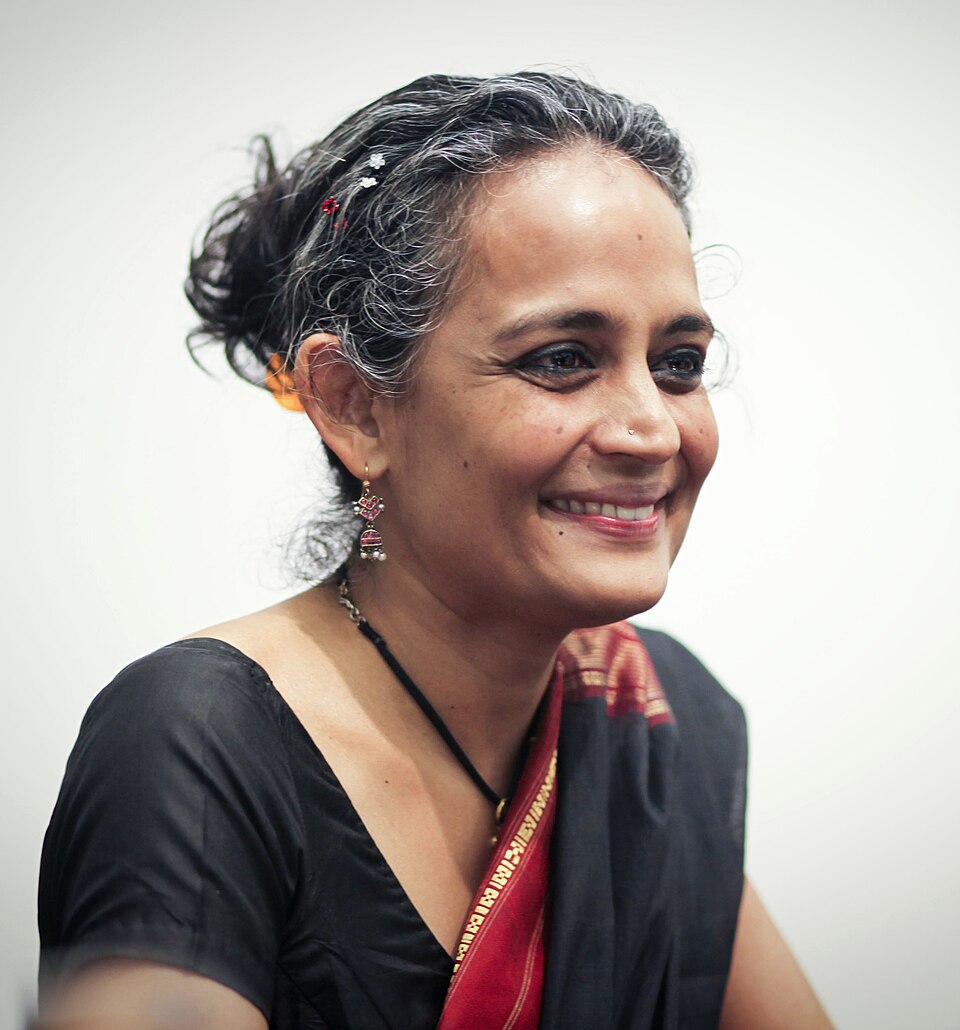
—What does it cost, in India, to criticize institutions so openly?
It costs comfort, and sometimes more. They label me an enemy of the nation, accuse me of sedition, demand I choose sides. In 2004, I refused the Sahitya Akademi Award, the highest state literary honor: you cannot denounce a government and accept its medal in the same hand. A writer, in our country, is not supposed to leave the page to go down into the Narmada valley or walk with the displaced. But I know of no clean writing that stays on the balcony. The word 'traitor' has become, in my country, the title given to those who refuse to lie in chorus. I wear it without pleasure, but without giving it back.
I know of no clean writing that stays on the balcony.
—How did you come to walk with the Naxalite guerrillas in the forests of Chhattisgarh?
By wanting to see with my own eyes what was hidden behind the word 'terrorists.' In the forests of Dandakaranya, in Chhattisgarh, the state was waging a silent war against its own tribals, to hand over their lands to mining companies. I went in on foot, in 2010, to write Walking with the Comrades. What I found was not an ideological abstraction, but hungry people, women, children, armed because that was all they had left. The Naxalites knew every path, every tree, every season of that forest—but the state knows how to burn an entire forest. I was reproached for walking on the wrong side. I reply that I was simply walking on the side where people die without any newspaper noticing.
They know every path, every tree—but the state knows how to burn an entire forest.
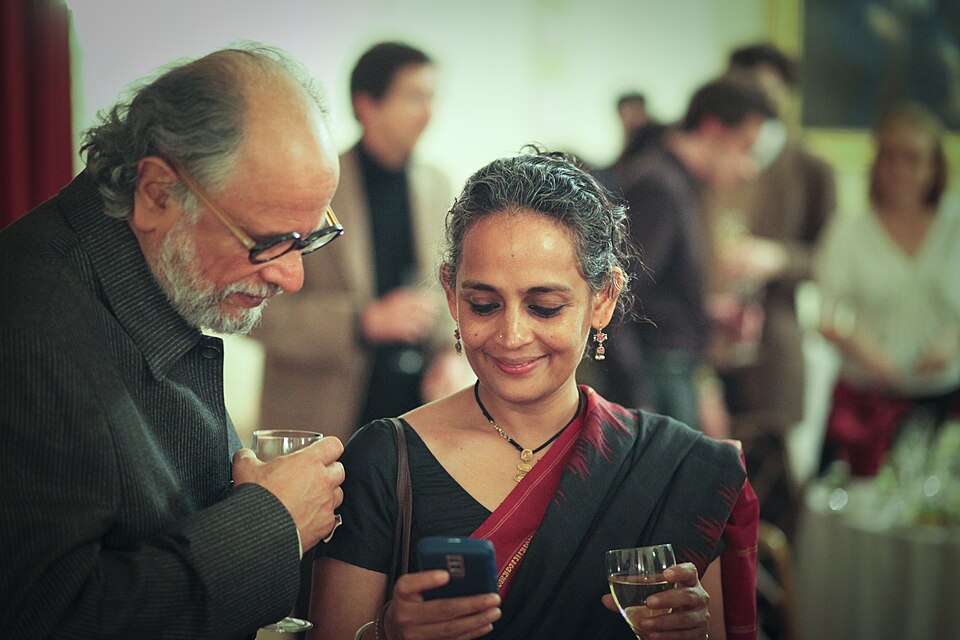
—What do you say to those who accuse you of romanticizing the armed violence of the poorest?
That I romanticize nothing: I describe a trap. When a people sees its forest, its water, its dignity taken away, and its complaints are answered with police camps planted in the middle of the Dandakaranya, non-violence becomes a luxury forbidden to them. I do not praise the gun. I only ask who put the gun in those hands, and why. It is easy, from an armchair in Delhi, to preach moderation to those you are starving. In Walking with the Comrades, I wanted to render the thickness of those lives: the songs around the fire as much as the fear. Understanding is not absolving. But refusing to understand is already shooting.
Understanding is not absolving; but refusing to understand is already shooting.
—In Santa Fe, in 2002, you called for 'laying siege to the empire.' What did you mean?
That power is not only fought head-on, with weapons you don't have. One year after September 11, in my speech Come September, I proposed another strategy: "Our strategy should be not only to confront empire, but to lay siege to it. To deprive it of oxygen. To shame it. To mock it. With our art, our music, our literature, our stubbornness, our joy, our brilliance, our sheer relentlessness." The empire feeds on our silence and our fear; so we must cut off its air. Laughter, stubbornness, a novel, a song—these are slow weapons but they do not rust. You don't overthrow an empire in a morning. You besiege it, patiently, until it suffocates from its own excess.
Laughter, stubbornness, a novel, a song—slow weapons that do not rust.
—What did the World Social Forum in Mumbai, in 2004, represent for you?
A collective breath, the living proof that another world was not just a slogan on a banner. In Mumbai, in 2004, tens of thousands of people from everywhere—peasants, unionists, tribals, writers—gathered against neoliberal globalization, against the IMF, against the privatization of water and land. The alter-globalization movement was not a salon theory: it was this crowd, these mixed languages, these drums. I spoke there about the empire, the dams, everything that connects a displaced person from the Narmada to an unemployed person in Detroit. We did not have power, but we had numbers, imagination, and a strange joy. And I understood that day that the solitude of the activist is always temporary.
Another world was not a slogan on a banner: it was this crowd, these mixed languages, these drums.
This imaginary interview was generated by artificial intelligence from sources documented in Arundhati Roy's profile. It dramatises what the figure might have said based on what we know about them, but does not constitute attested historical testimony. For primary sources and factual documentation, refer to the full profile.