Imaginary dialogue between Mohandas Karamchand Gandhi (Mahatma Gandhi) and Arundhati Roy
by Charactorium · Arundhati Roy (1961 — ?) · Performing Arts · Literature · Society · 5 min read
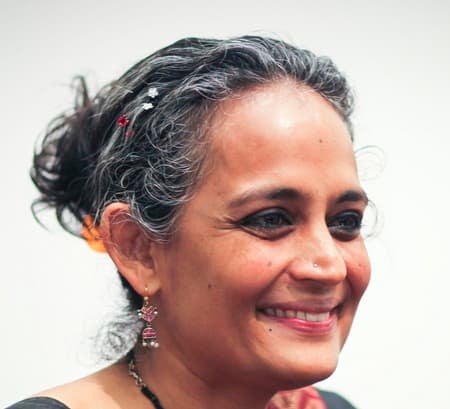
It is under the great banyan tree of the Sabarmati Ashram, by the river, that Bapu receives Arundhati one monsoon morning, the cotton thread of the charkha still between his fingers. The white light falls on her sari of khaddar, the same hand-spun cotton they both share. They know each other through that thread — that of unarmed resistance — and the old salt marcher has come to understand how a novelist from Kerala has turned her pen into a march. A blackbird whistles in the fig tree; she places her handwritten notebook on her lap.
—My daughter, I am told you carried a single book for five years, by hand. What did slowness teach you?
Bapu, you who spun your cotton each day like a prayer, will understand me better than anyone. I wrote The God of Small Things for five years, often by hand, in a notebook I kept close to me. Slowness was not patience: it was a way of disobeying the world's speed. Each sentence, I reworked like rethreading a broken thread. When the Booker Prize came in 1997, I was told I was the first Indian woman to receive it, and that the book had sold millions of copies. But what matters is that a child from Kerala had dared to tell, in his own inner language, the things that cannot be said.
Slowness was not patience: it was a way of disobeying the world's speed.
—You were born to a Syrian Christian mother and a Bengali Hindu father. Tell me, this border you carry within you, did it wound you or awaken you?
Both, Bapu. I grew up in Aymanam, among the rice paddies and canals, in a country where everyone knew exactly who could touch whom, drink from which glass, love whom. To be born on both sides of a border is to have no place anywhere — and thus to see the border itself, which those who are well settled never see. You who fought the idea of untouchability, you know how it survives in the tenderest gestures. My novel speaks of a forbidden love between a caste woman and a dalit man. I was criticized for that book. But I only wrote the Law of Love as I had seen it as a child: the law that prohibits, forbids, punishes what the heart desires.
To be born on both sides of a border is to see the border itself.
—When your own government thundered the bomb in 1998, you raised your voice against it. Were you not afraid of being called a traitor?
I was afraid, yes, but of another silence: that of keeping quiet. After the nuclear tests, Operation Shakti, the whole country was drunk with pride, as if the bomb had become our god. I wrote The End of Imagination. I said that the bomb is incapable of distinguishing the sublime from the ridiculous, the hero from the coward — it knows only ash. I was showered with insults, accused of betraying the nation. But you, Bapu, taught me that loving one's country is not applauding its strength: it is refusing to let it become an executioner. True patriotism, sometimes, is to disobey collective pride.
Loving one's country is not applauding its strength: it is refusing to let it become an executioner.
—It is said that in 2002 you surrendered yourself to prison, surrounded by a crowd. Explain this choice to me — was it not pride?
You who entered the Empire's jails so many times, you can judge. The Supreme Court had convicted me for contempt, because I had criticized its decision on the Narmada dam. A symbolic day in prison. I could have paid, discreetly. I preferred to walk to the prison gate, accompanied by journalists and activists, so that the conviction itself became a text, a public lesson. It was not pride: it was turning punishment into a platform. A court that punishes speech judges itself. You taught me this without knowing it — that the cell can be freer than silence.
A court that punishes speech judges itself.
—These great dams you fight — why oppose them, when they are said to be sources of progress and light for millions?
Because the light of some is paid for by the night of others, Bapu. The Sardar Sarovar project drowned entire valleys and displaced hundreds of thousands of peasants and tribals, without asking them anything. In The Greater Common Good, I wrote that displacing a people is not only uprooting them from their land: it is demolishing the very structure of their life, destroying the ground under their feet. You who walked to the sea for a handful of salt, you know that a people without land is nothing. They call it the 'common good'. But a good that demands the sacrifice of the poorest is nothing but the theft of the powerful dressed up as the future.
A good that demands the sacrifice of the poorest is nothing but the theft of the powerful dressed up as the future.
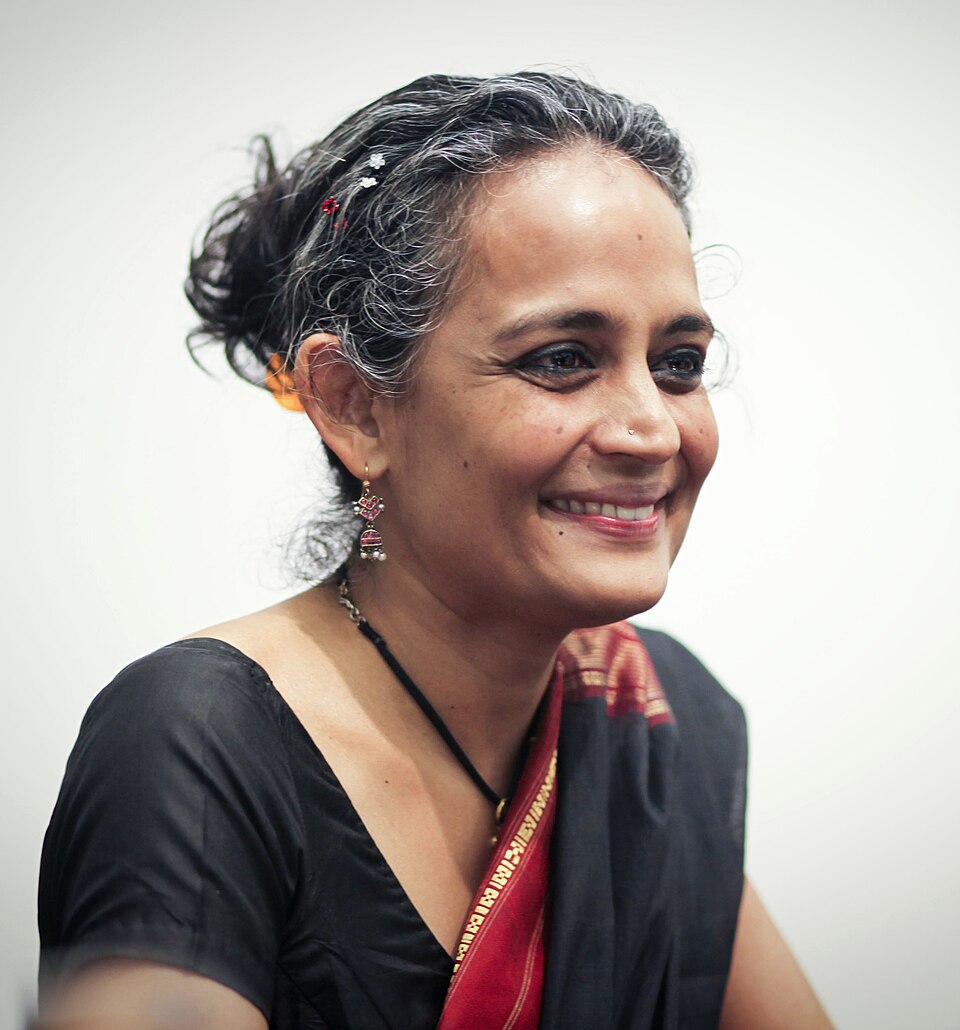
—Here is what troubles me, my child: you went to live with armed rebels in the forest. How do you reconcile that with non-violence?
That is the question I dreaded from you, Bapu, and I will not lie to you. In 2010, I walked with the Naxalite comrades in the forests of Chhattisgarh, among the tribal communities. I saw villages burned, women driven out to deliver the land to mines. The forest is full of police camps; the tribals know every tree, every season — but the state, it knows how to burn a forest. I do not glorify the gun. But I refuse to preach non-violence to those who have nothing left. Your satyagraha assumed an adversary capable of shame. What do we do when the state has ceased to feel shame? I have no easy answer — only the duty to tell their silence.
I refuse to preach non-violence to those who have nothing left.
—You say the state has ceased to feel shame. So what is the point of writing still, if words no longer make anyone blush?
Because words are not a weapon, Bapu: they are a patient siege. I once said, in a speech in Santa Fe, that our strategy should be not only to confront the empire, but to besiege it — to deprive it of oxygen, to cover it with shame, to mock it, with our art, our music, our literature, our stubbornness, our joy. To write is to refuse that the state has the last word on what is true. Even when no one blushes, the story remains: it bides its time, like a seed under ash. As long as a story is faithfully told, power has not yet won.
Words are not a weapon: they are a patient siege.
—After that award-winning novel, you fell silent for twenty years in fiction. Why did you let the storyteller sleep so long?
It was not sleep, Bapu, it was a construction site elsewhere. I felt that my battles — the dams, the bomb, the dispossessed tribals — were more urgent than inventing characters. The political essays became my way of writing, my own charkha: a repeated, stubborn gesture against injustice. But fiction secretly feeds on everything we think we have set aside. When I finally published The Ministry of Utmost Happiness, twenty years later, I poured into it the hijras, the Kashmiris, the activists, all the marginalized of a fractured India. The novel had not slept: it had waited for me at the end of all those roads.
The essays became my charkha: a stubborn gesture against injustice.
—You who wear khaddar like me, tell me: is this cotton for you a garment, or something more?
It is a silent declaration, Bapu, and you are its origin. I wear simple cotton saris, hand-spun khaddar, and I avoid anything that smacks of wealth or status. This cloth connects me to you, to your march, to the idea that one can resist with one's hands rather than with slogans. When I walk with the Narmada Bachao Andolan alongside the displaced, this cotton says that I do not come to look down on them, but to stand at their level. A garment can be a lie or a truth. Mine tries not to betray those whose lives I write.
One can resist with one's hands rather than with slogans.
—One last thing concerns me, Arundhati. When you are no longer here to shout, what will remain of all these struggles?
Perhaps nothing visible, Bapu, and yet everything. You too do not know what your cotton thread will become in a hundred years. But I believe that just struggles are not measured by their victories. I have documented forced displacements, nuclear tests, burned forests; I have been dragged before courts, showered with insults. None of that stopped the dams. And yet, each text is a witness deposited for later, a memory that cannot be drowned in concrete. What remains is the refusal itself — the proof that at least someone did not consent. You taught me that this is already a form of victory.
Each text is a witness deposited for later, a memory that cannot be drowned in concrete.
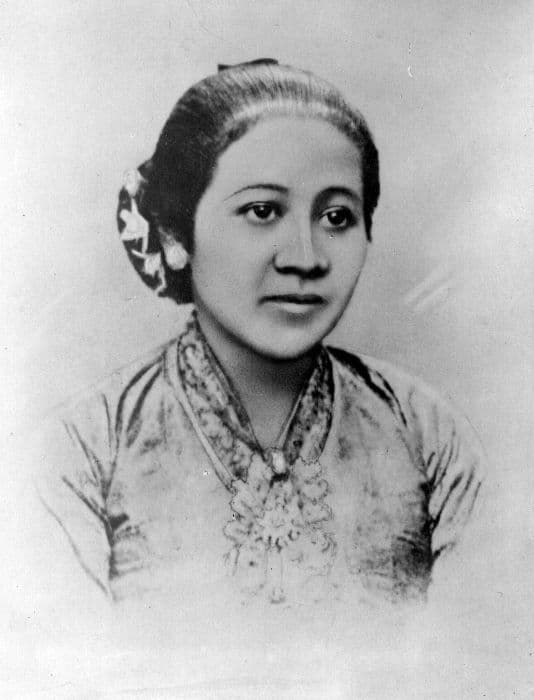
This imaginary interview was generated by artificial intelligence from sources documented in Arundhati Roy's profile. It dramatises what the figure might have said based on what we know about them, but does not constitute attested historical testimony. For primary sources and factual documentation, refer to the full profile.