Kids interview Arundhati Roy
by Charactorium · Arundhati Roy (1961 — ?) · Performing Arts · Literature · Society · 5 min read
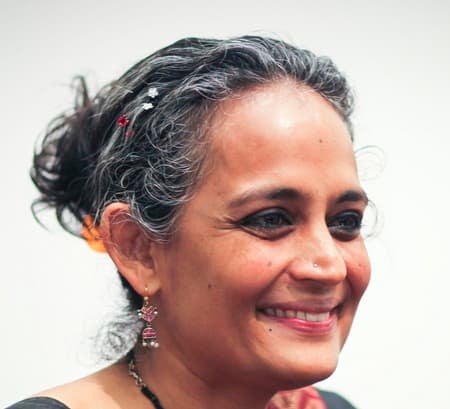
Two sixth graders, on a class trip, prepared their questions the whole way. That morning, a lady in a cotton sari was waiting for them, a notebook in hand. She smiled: 'So, you want to talk for real?'
—What was your home like when you were little, in Kerala?
You know, my child, I grew up in Aymanam, a village full of canals and rice paddies. The morning smelled of masala tea and grated coconut. My mother was Syrian Christian, my father Bengali Hindu. Imagine two worlds in one house! Around us, there were very harsh rules: who could touch whom, who had to stay below. People called Dalit those they treated as 'untouchables.' Even as a little girl, that revolted me. This village, its secrets, its forbidden loves, I kept them in my head. Later, they became the heart of my first novel.
Two worlds lived in a single house, and that taught me to look.
—What did you eat in the morning when you were a child?
At home, we ate simply, mostly vegetables. Imagine a bowl of red rice, a lentil soup called sambar, and thoran — sautéed vegetables with coconut. Fish was for family meals. Even today, I drink my tea standing in the kitchen, before dawn, before writing a single word. You see, I never liked flaunting wealth. I often wear a simple cotton sari, the khaddar, the one Gandhi loved, hand-spun. Eating local, dressing simply: to me, that's already choosing a side.
Eating simply and dressing simply is already choosing a side.
—Is it true you wrote your first book by hand?
Yes! And it took me five years. I often wrote by hand, in a notebook I always kept near me. No rushing: I set down words, crossed them out, started over. The book is called The God of Small Things. It tells of a Kerala family torn apart by caste and a forbidden love. When it came out in 1997, it won a major English prize, the Booker Prize. I was the first Indian woman to win it! The book sold millions of copies. But you know, what mattered to me was having told the truth about my village.
Five years, a notebook, and the courage to tell the truth about my village.
—What does it feel like to win such a big prize all at once?
It's dizzying, I promise. Overnight, everyone wanted to talk to me. But I was also a little scared. When you become famous, people want to put you in a box: 'the novelist.' And I saw enormous injustices in India around me. Dams driving poor families away, bomb tests. I thought: what's the use of being heard if I stay silent? So I decided to use that voice. I set the novel aside and started writing fighting texts. Some thought it was crazy. I thought it was just necessary.
What's the use of being heard, if it's to stay silent?
—Why did you write against the bomb of your own country?
In 1998, India exploded atomic bombs for its tests. Many people were proud, shouting about power. It chilled me. I wrote a text called The End of Imagination. I said a simple thing: the bomb cannot tell a hero from a coward, it destroys everything equally. Imagine a giant match that doesn't know the difference between beauty and ugliness. Criticizing your own government was risky. I was insulted a lot. But I'd rather be hated for saying no than praised for silence. That's when I truly became a writer of struggle.
I'd rather be hated for a no than praised for silence.
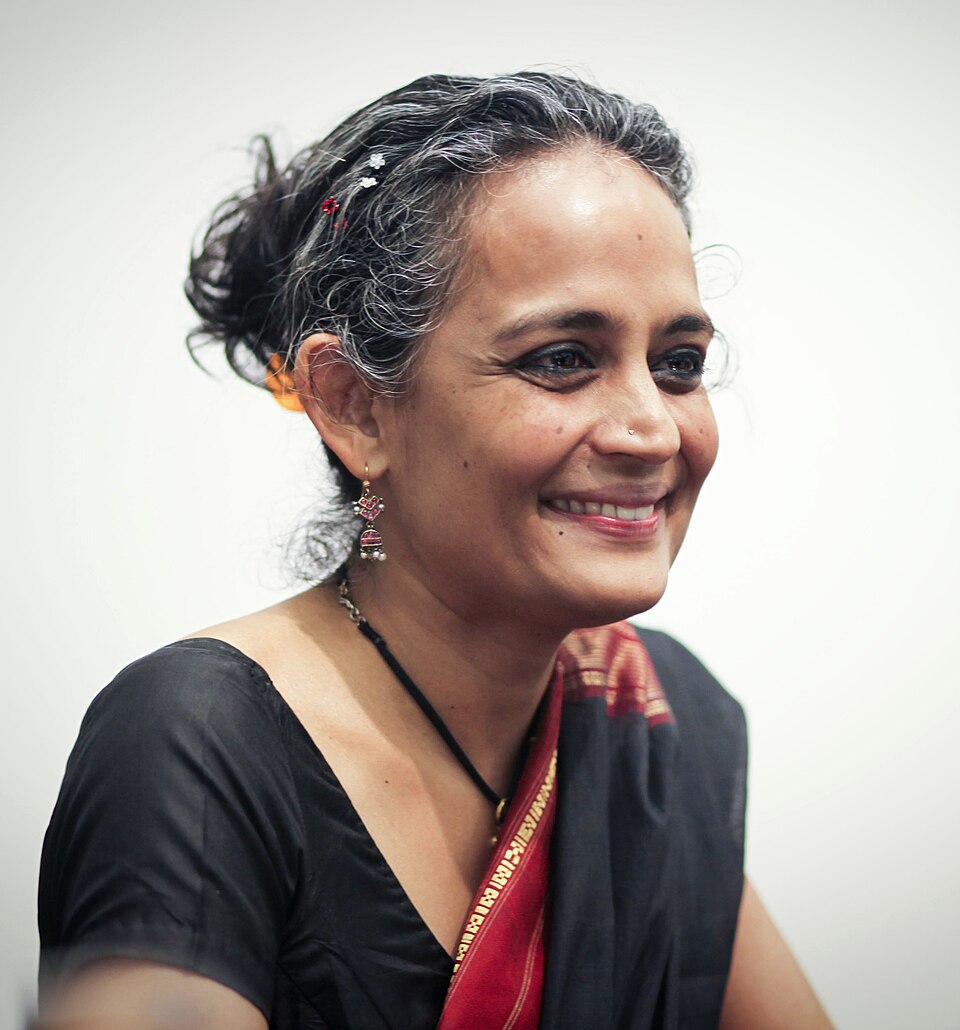
—What's that story about the dam that made you angry?
In the Narmada valley, they built a giant dam, the Sardar Sarovar. A dam is a big wall that holds back river water. It seems useful, but here it drowned the lands of hundreds of thousands of poor people. They were driven from their homes! I wrote a long text, The Greater Common Good, in 1999. I said that moving people is not just shifting furniture: it's destroying the ground under their feet. I marched with them, a megaphone in hand, in the movement called the Narmada Bachao Andolan. We sang, we resisted, together.
Driving people from their land is destroying the ground under their feet.
—Is it true you went to prison? Were you scared?
Yes, in 2002. I had criticized the Supreme Court, the highest court in the country, because of its decision on the dam. They sentenced me to one day in prison. Just one day, but still: prison! You know what I did? I turned myself in, head held high, surrounded by journalists and activists. I turned the punishment into a protest. Of course I was a little scared pushing the door. But when you believe in something, fear becomes smaller than courage. A day behind bars is nothing compared to a lifetime of silence.
When you believe in something, fear becomes smaller than courage.
—You went to live in the forest with guerrillas, isn't that crazy?
A little crazy, yes! In 2010, I went to the Dandakaranya forest in Chhattisgarh. There live very poor people, the tribes, and armed fighters called Naxalites. Imagine a vast forest, with no roads, where every tree has a name for those who live there. I walked with them, slept on the ground, listened to their stories. I made a reportage of it, Walking with the Comrades. I wanted to understand why such poor people end up taking up arms. It's not simple, you know. There was violence on both sides. But you can't judge without going to see with your own eyes.
You can't judge people without going to see with your own eyes.
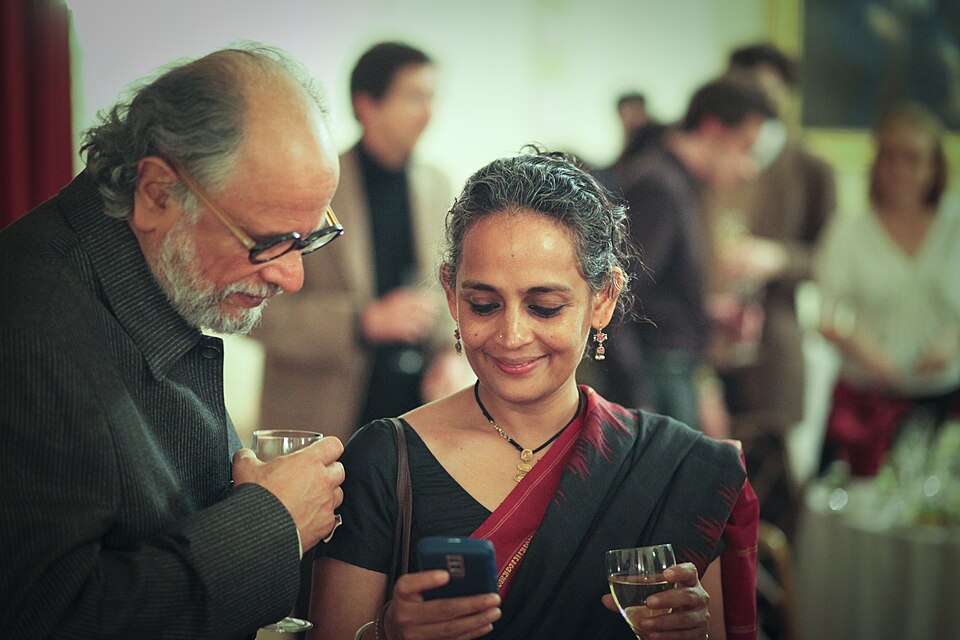
—Were you scared at night, alone in that forest?
At night, in the forest, everything changes. You hear sounds you don't know. And there were police camps everywhere. The tribal people, they knew every trail, every season, every tree. But the state, it knew how to burn an entire forest. That was scary. Yet I felt safer with those poor families than with the powerful in big cities. In the evening, we shared whatever little food there was. You learn a lot, in the dark, when you really listen. I kept my notebook against me, and wrote everything down by firelight.
I wrote everything down by firelight, my notebook against my heart.
—Why did you wait twenty years to write another novel?
Good question! For a long time, I thought my struggles were more urgent than stories. How could I invent characters when real people were losing their homes? So I wrote battle texts, not novels. But stories always come back for you. In 2017, I finally published my second novel, The Ministry of Utmost Happiness. It brings together people the world pushes into corners. Twenty years of waiting, can you imagine? What I understood is that a struggle and a novel are two ways of saying the same thing: look at those no one wants to see.
A struggle and a novel say the same thing: look at those no one wants to see.
—If a child wants to change the world like you, where should they start?
You touch me deeply with this question. I'll tell you: start by looking. Really look around you, who is suffering, who is not listened to. Then ask questions, like you're doing today. For me, it all started from a village, Aymanam, and a little girl who thought caste was unjust. I had no army, just a notebook and stubbornness. Our strength is not power: it's our art, our music, our tenacity, our joy. We don't fight the powerful only with anger. We also fight them by refusing to be afraid, and by never stopping telling the truth.
I had no army, just a notebook and a lot of stubbornness.
This imaginary interview was generated by artificial intelligence from sources documented in Arundhati Roy's profile. It dramatises what the figure might have said based on what we know about them, but does not constitute attested historical testimony. For primary sources and factual documentation, refer to the full profile.