Imaginary dialogue between Odysseus and Athena
by Charactorium · Athena · Mythology · 6 min read
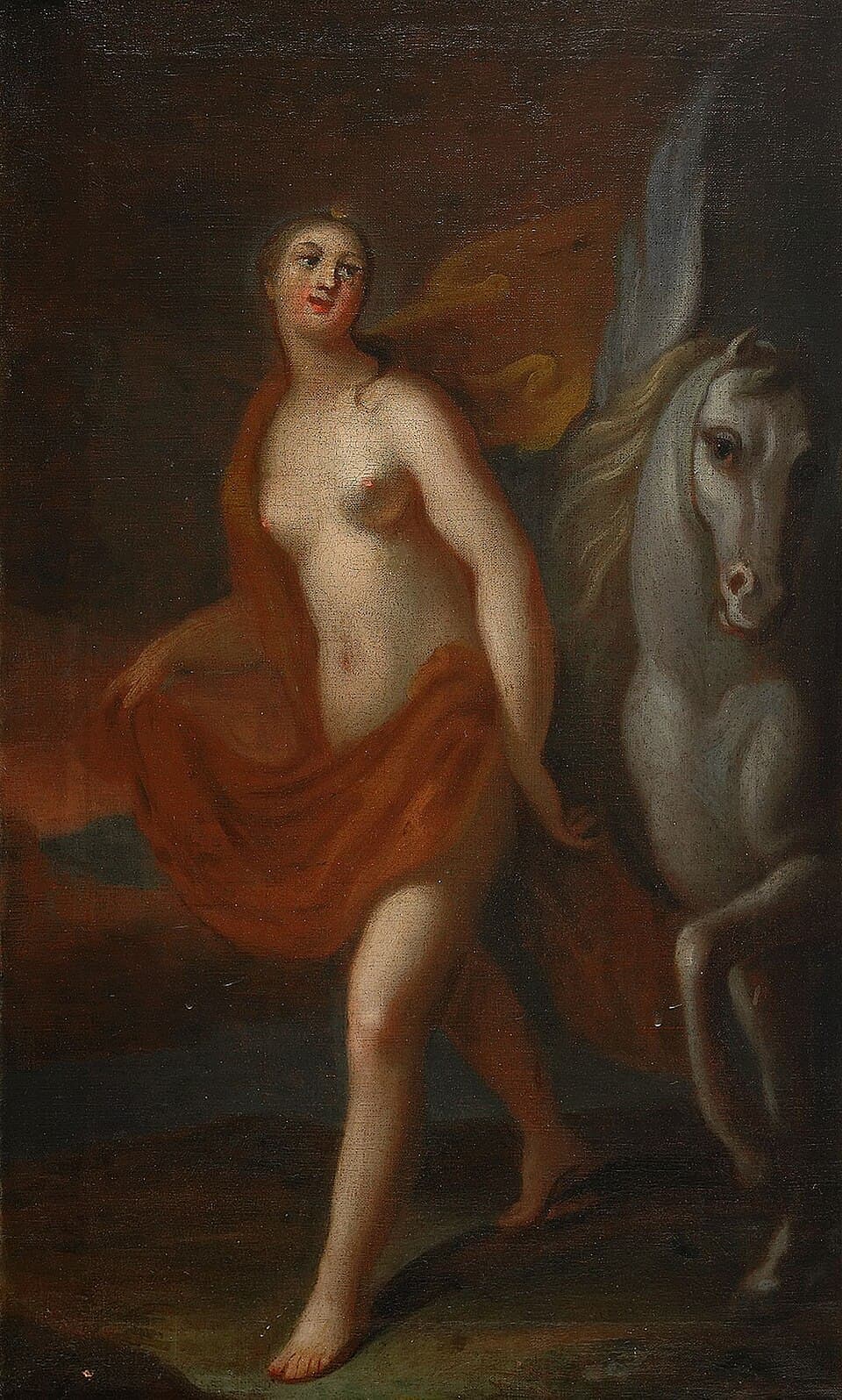
It is on the heights of the Acropolis, in the hour when the last light turns the bare limestone pale gold, that Odysseus seeks out Athena. A lone owl wheels in silence above the olive trees, and the smoke of evening sacrifices drifts up from the city below. They have spoken before — on the shores of Ithaca, in the disguises she chose and the moments she chose to abandon them — and tonight he comes not as a suppliant but as a man who has survived her protection and wants to understand what it truly was.
—Grey-eyed goddess, you held back Achilles at Troy when his rage threatened the Greek alliance. Yet with me you chose counsel and patience. Why so different?
Because Achilles was fire, Odysseus — pure, consuming, magnificent fire. Fire must be checked or it burns everything it needs. You were something rarer: a mind that could be aimed. When I took his wrist at Troy, I saved not him but the purpose he was in danger of destroying. With you, I never needed to seize anything. I planted a thought, shifted a shadow, sent a breeze at the right moment — and your own mind did the rest. The lance I carry is not for butchering; it is for pointing. You were the only mortal who understood that a god's favour is not a shield against all harm. It is direction. I gave you direction, and you had the intelligence to follow it.
The lance I carry is not for butchering; it is for pointing.
—The aegis you sometimes extend over a battle — what does it truly protect? The body, or something that outlasts the body?
The aegis turns aside spears, yes, and the sight of Medusa's face upon it breaks lesser wills. But what it truly protects is clarity. In battle, the body fails long before the mind needs to. Fear is the wound that kills first — the cold that begins in the chest and travels to the sword arm. What I protect, when I spread the aegis over a man or a cause, is the capacity to think in the middle of terror. Ares gives rage. I give the cool second before the fatal choice. You know this better than most: in the cave of the Cyclops, you had a spear, you could have killed him while he slept. You waited, you thought, you used him as a door. That was the aegis working — not bronze, but mind.
—They say you were born fully armed from the skull of Zeus himself. Does a goddess who never grew, never suffered, truly understand what mortals endure?
You ask a question that cuts, Odysseus — I will grant you that. I did not grow slowly into wisdom the way a boy grows into his father's sandals. I arrived with it, whole, from the mind of Zeus, fully armed, to the astonishment of the gods themselves. But consider what that means. I did not learn wisdom through failure and suffering — I am the form that wisdom takes when a god thinks it into being. I understand what mortals endure not because I endured it, but because I hold the pattern that their endurance tries to reach. When you crossed the sea for ten years, you were trying — imperfectly, painfully, magnificently — to become something I simply am. That is not distance. That is the closest relation there is.
When you crossed the sea for ten years, you were trying, imperfectly, to become something I simply am.
—Zeus swallowed thought itself and you were the result. Did he make you, or merely provide the occasion for you to exist?
Even among the gods, that question is left unresolved, and perhaps wisely. Zeus swallowed Metis, my mother, because it was foretold that her children would surpass him. He swallowed thought itself. And what came from the skull of the greatest of gods, hammered open by Hephaestus's axe, was not a daughter in the ordinary sense — it was wisdom remembering itself. I do not know whether he made me or whether the idea of me was always present, waiting for a god powerful enough to be its vessel. What I know is that I arrived already knowing what I was, already knowing my purpose, already knowing the city I would one day protect. Whether that is creation or recognition, I leave to those who come after us.
—You chose Athens over Poseidon's gift of the sea. You are goddess of war as much as wisdom — why the olive tree and not the waves?
Poseidon struck the rock and salt water burst forth — powerful, dramatic, and nearly useless to a city living above the sea. I planted an olive tree. The Athenians judged the gifts rather than the spectacle, and they judged well. An olive tree feeds a city: oil for lamps, for food, for healing, for the torches of festivals and the skin of wrestlers. A salt spring is a reminder of the sea's indifference. I did not choose Athens because I preferred gentleness to power. I chose it because I saw what the city would need in order to flourish — and flourishing is a longer victory than conquest. The waves Poseidon offered would have carried Athens to war. The tree I offered carried it toward civilization.
Flourishing is a longer victory than conquest.
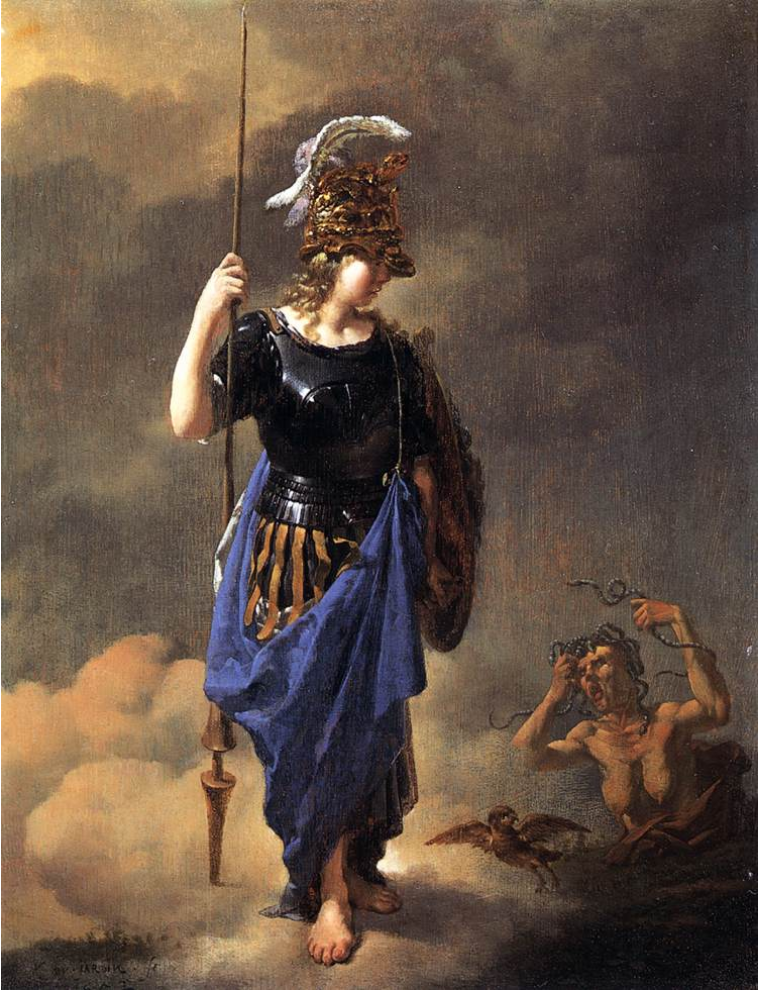
—You have guided me for years, yet Athens — not Ithaca — is your city. Does protecting me pull you away from your true home?
Odysseus, you are not so simple a mortal that you require a goddess rooted in one harbor to follow you. Ithaca is a rock in the sea with a good anchorage and a patient queen. Athens is the idea of a city learning to govern itself through intelligence. These are not rivals for my attention — they are the same thing at different scales. When I guide you, I am practicing the same art I exercise over Athens: turning a capable mind toward its best use. You are, in your own way, a small city-state of one — deliberating, strategizing, knowing when to speak and when to remain a beggar in your own hall. I am never away from Athens when I am with you. I am merely teaching it in a different classroom.
—You taught mortals the art of weaving, then punished Arachne for weaving too well. Forgive me, goddess — that seems contradictory.
It seems contradictory only if you confuse excellence with overreaching. Arachne did not simply weave well — she chose, on her cloth, to mock the gods themselves: their deceits, their failures, their cruelties to mortals. Her craft was flawless. Her subject was a declaration of war against the order of things. I do not punish skill — I am skill; I have no reason to fear it in a mortal. What Arachne refused was the distinction between mastering a craft and mastering the cosmos. She confused the loom with the world itself. The spider she became still weaves, still produces something perfect and necessary. I took nothing from her except the delusion that excellence in one domain grants authority over all others.
She confused the loom with the cosmos.
—You invented the loom and taught it to mortals. Why give them the arts at all — does excellence not eventually make them dangerous to the gods?
It makes them more human, which is entirely different from dangerous. A mortal who cannot weave, cannot build, cannot create — a mortal reduced to raw survival — is dangerous in the way an animal is: unpredictably, blindly, driven by need alone. Craft gives a human being something to care about beyond mere appetite. The man who has learned to weave a fine cloth knows what excellence is — and that knowledge makes him capable of recognizing it elsewhere, in law, in justice, in the governance of a city. I did not teach the arts to make mortals useful. I taught them to make mortals worthy of aspiring to something higher than fear. You yourself are a craftsman, Odysseus — your words are your loom, and you have woven your way through kingdoms with them.
—The city raises temples to you on Athens' high rock. Does it truly please you to be carved in stone and dressed in offerings?
What pleases me is not the stone or the gold — those are for the Athenians, who need visible things to remind them of invisible commitments. A city that builds a great temple is making a public promise to govern itself by what the temple represents. The craftsmen who cut the marble and raise the columns are practicing the very discipline of excellence I have always asked of them. The offering of the péplos woven for my statue, carried through the streets at the great festival — that long cloth is not flattery. It is a city rehearsing its own values in public. I am honoured by what the building demands of its builders, not by the fact of the building itself. Precision matters more to me than grandeur. That is how I prefer to be understood.
I am honoured by what the building demands of its builders, not by the fact of the building itself.
—When I left Ithaca, you knew I'd wander for twenty years. Did you watch every day, or does a goddess's attention sometimes drift?
A goddess does not watch the way a sentinel watches a gate. I hold a thread — your thread — and I feel when it pulls taut against something it should not. There were years, it is true, when Poseidon's anger was loud enough that even I was asked by the will of the gods to stand apart. Those years on Calypso's island were not my design; they were the cost of the balance among powers. But when the thread told me you were close to something irreversible — the Cyclops, the great bow, the moment in the hall when one wrong step would have ended everything — I was there, not always visible, sometimes only a thought arriving at exactly the right moment. You used every one of them. That is why you were worth the attention.
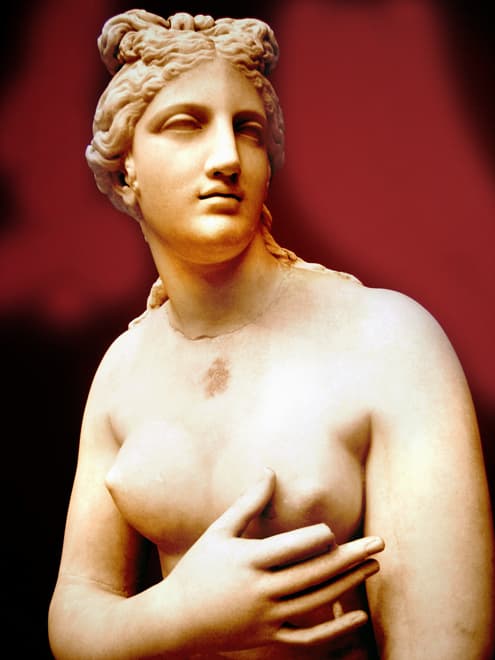
This imaginary interview was generated by artificial intelligence from sources documented in Athena's profile. It dramatises what the figure might have said based on what we know about them, but does not constitute attested historical testimony. For primary sources and factual documentation, refer to the full profile.