Imaginary interview with Averroes
by Charactorium · Averroes (1126 — 1198) · Philosophy · 5 min read
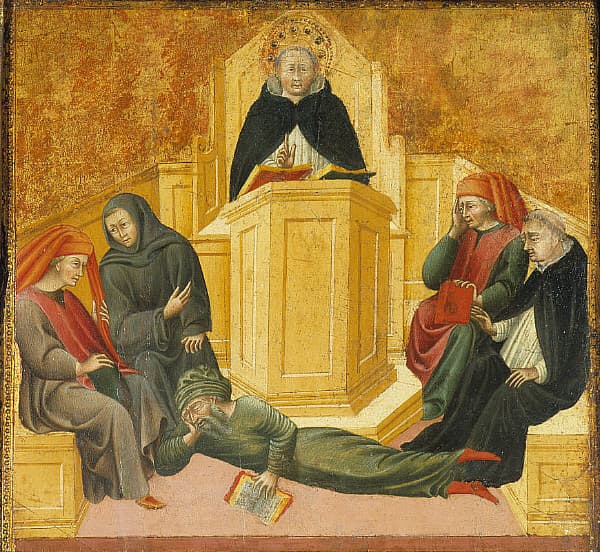
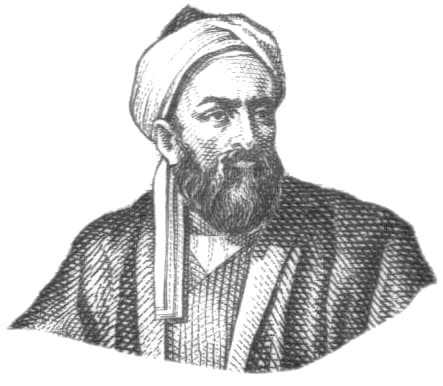
Cordoba, under the reign of the Almohads. In a house nestled around a patio planted with orange trees, the grand qadi receives between two hearings, a copper oil lamp already watching over the pile of Aristotle's manuscripts. The man who will soon be called "the Commentator" sets aside his reed pen and agrees to speak of his life divided between the court, medicine, and falsafa.
—How did you enter the circle of the Almohad caliph?
It was Ibn Tufayl who led me before Abu Yaqub Yusuf, in Marrakesh, around the year 1169. I was but a provincial qadi busy with his manuscripts, and suddenly I found myself in the palace of a prince who ruled from the Maghreb to the shores of Al-Andalus. The sovereign, may God prolong his memory, did not merely protect scholars: he tested them. From this meeting was born the heaviest charge ever entrusted to me, for the caliph wished the books of the Ancients to be made clear to the men of our language. I left that audience trembling, but carrying within me the seed of the work of my entire life.
I was but a qadi busy with his manuscripts, and suddenly I stood in the palace of a prince.
—It is said that this first interview nearly fell through. What happened?
The prince looked at me and asked, as one sets a trap or opens a door, what the philosophers thought of the sky: was it eternal or created in time? Before me stood a caliph, theologians on the lookout, and fear sealed my lips. I prevaricated, I feigned ignorance, for that question could lead a man to the stake. But Abu Yaqub Yusuf himself unfolded the arguments of the Ancients and the moderns with such knowledge that I understood: he was not seeking to catch me in error, he was seeking a man capable of pursuing this thought. Then my tongue was loosened. That day sealed my destiny as a commentator of Aristotle.
Before me stood a caliph, theologians on the lookout, and fear sealed my lips.
—Why devote so many years to commenting on a Greek philosopher who died fifteen centuries earlier?
Because Aristotle was, in my eyes, the limit that human intellect could reach, a gift of providence to show men the highest degree of perfection. Before his Manuscripts translated into Arabic, placed there under the lamp, I did not feel learned: I felt a servant. The Sharh, the line-by-line commentary, is the humble work of a man who wipes the dust off a mirror so that others may see themselves in it. I carried out this labor in three ways — the great, the medium, the small — for the beginner as for the master. They credit me with more than twenty thousand folios; I would only say that I almost never rested my reed pen, except on my wedding day and the day my father left this world.
The commentary is the humble work of a man who wipes the dust off a mirror.
—In Latin lands, you are called "the Commentator," plain and simple. What does this title inspire in you?
If men from the other shore, who pray in another tongue and revere another Law, designate me thus without needing to pronounce my name, it is because the work has held. The Sharh is not a personal glory: it is a bridge. Before the Great Commentary on the Metaphysics, I wanted the word of Aristotle to reach intact those who knew it only in fragments. I do not consider myself equal to the Master — who could? But if one day I am read in Paris or Toledo as I am read in Cordoba, then the reed pen will have served better than the qadi's sword.
The commentary is not a personal glory: it is a bridge.
—Many doctors of the Law consider philosophy a threat to faith. What do you answer them?
I answer them with what I wrote in the Decisive Treatise: "the study of the books of the Ancients is obligatory according to the Religious Law," for their aim coincides with that which the Law itself commands us to pursue. Falsafa is not the enemy of the Quran; it is its sister, since both lead to truth, and truth cannot contradict truth. He who possesses ijtihad, the effort to interpret through reason, has not only the right but the duty to reflect on the Creator's work. To forbid philosophy to the capable believer is to forbid him to know God better through the knowledge of His creatures.
Philosophy is not the enemy of faith: it is its sister, for truth does not contradict truth.
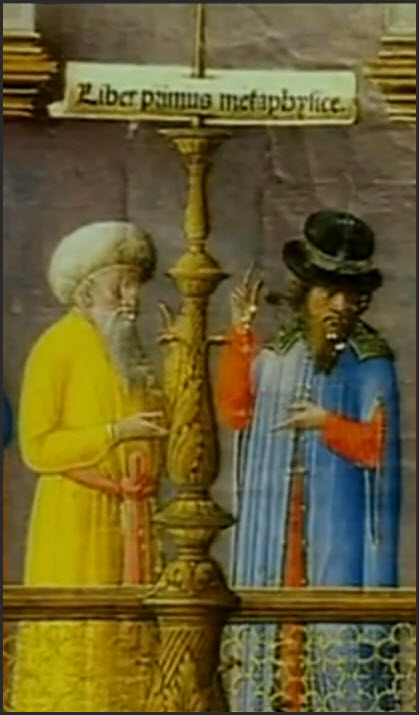
—You crossed swords with the theologians of kalam, especially Al-Ghazali. Why did this polemic matter so much to you?
Al-Ghazali, in his Incoherence of the Philosophers, had dealt a terrible blow by accusing reason of leading to impiety. I had to respond, folio against folio, in The Incoherence of the Incoherence. To deny that God established an order of causes in His creation, as some masters of kalam did, is not to honor His omnipotence; it is to dissolve the world into caprice. Now if nothing holds by causes, medicine, law, astronomy become mere guesswork. I considered kalam a poorly forged weapon: it claims to defend faith with too fragile arguments, and it ends up exposing it. Better the solid demonstration of the Ancients than the rhetoric of disputants.
To deny that God established an order of causes is to dissolve the world into caprice.
—Besides philosophy and justice, you practiced medicine. How do you reconcile such different fields of knowledge?
They are not as different as one might think, for all rest on the same requirement: to know causes before judging effects. I gathered in the Colliget seven books of anatomy, pathology, remedies, and hygiene, in the tradition of Galen, whom I long pondered. Medicine is not an art of conjecture, but a science with certain principles: the good physician knows the general causes of an illness before approaching the patient. I served as physician to the caliph himself, and at his table I advocated measured food — wheat, figs, olive oil, lamb without excess. Healing the prince's body or settling a dispute in court proceeds from the same care for order.
Medicine is not an art of conjecture, but a science with certain principles.
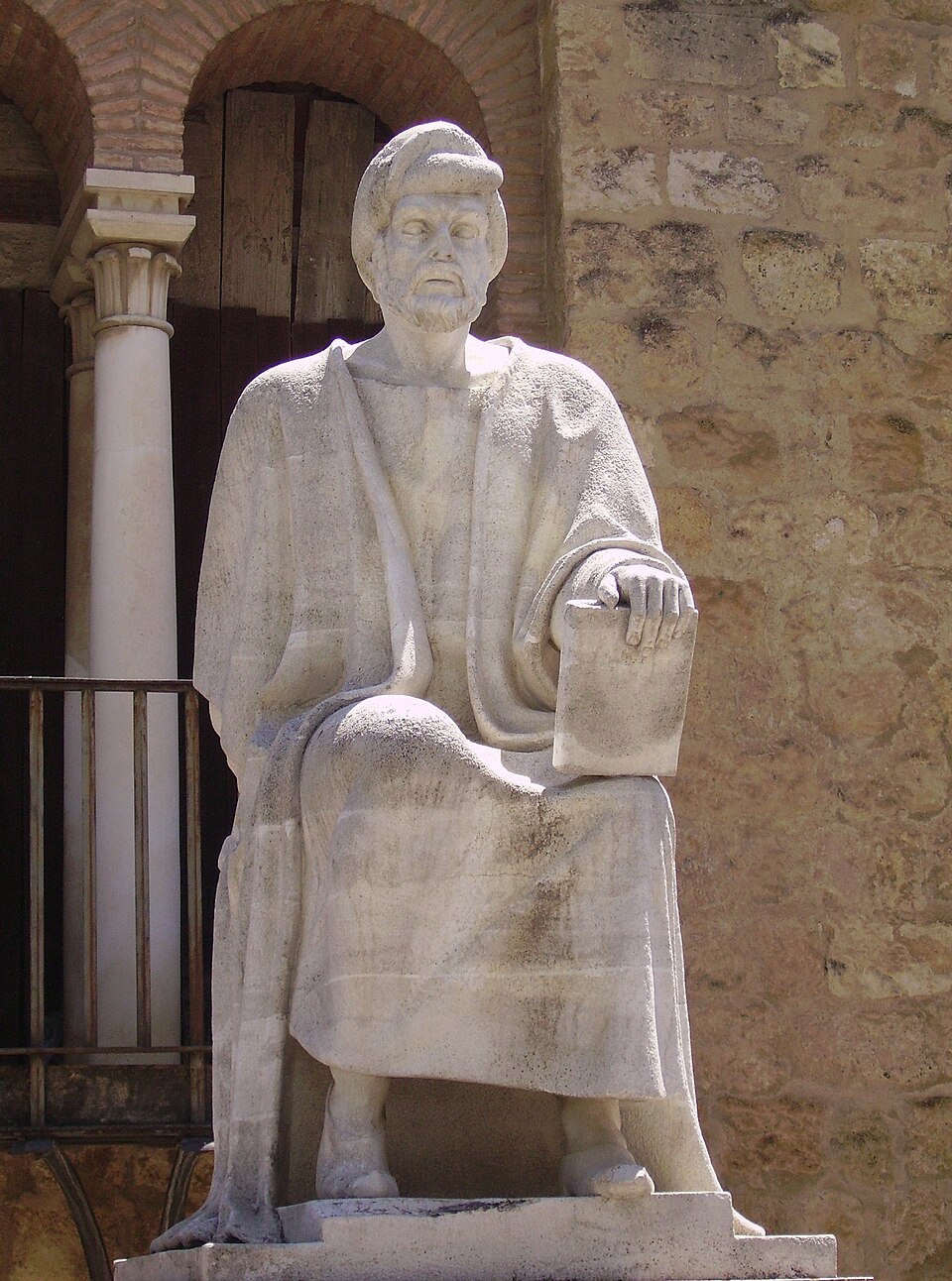
—What did one of your days look like, between court and study?
I rose before dawn for the fajr prayer, then I gave my first hours, the clearest of the mind, to the commentary on Aristotle. The afternoon belonged to the court of Cordoba: grand qadi, I was as my father and grandfather had been before me, dispensing justice according to Maliki law, the compendium open before me. But it was at night that I became fully myself again. After the maghreb prayer, I took up the reed pen by the light of a copper oil lamp, writing my treatises until fatigue forced me to stop. They say I stopped writing only two days in my entire life; I believe it is true.
It is at night, by the oil lamp, that I became fully myself again.
—Toward the end of your life, you experienced a brutal disgrace. How did you experience it?
Around 1195, Caliph Al-Mansur yielded to the pressure of conservative doctors, who saw my falsafa as poison. My philosophy books were gathered and burned in the public square — to see years of vigil, the work of so many nights under the lamp, go up in flames is a pain I wish upon no scholar. I was exiled to Lucena, a small town near Cordoba, where I lived in seclusion, far from my circles and disciples. I bore no rancor toward the prince: a sovereign must also govern the fears of his people. But that day I understood that free thought always remains a fragile guest, even in enlightened lands.
To see the work of so many nights go up in flames is a pain I wish upon no scholar.
—You were rehabilitated, but too late to see Cordoba again. What remains of this final trial?
The prince called me back into favor shortly before my end, and I thanked God for it. But I died in Marrakesh, in that year 1198, without having seen again the orange-tree patio where I had worn out so many reed pens. I am told my body was brought back to Cordoba to finally rest there, and this thought consoles me: man returns to the earth that saw him born, even when exile has long kept him away. I leave my commentaries, my Decisive Treatise, my Colliget. May others, believers of my Law or another, open them and find in them food for thought: the reed pen outlives the hand, and that is all the consolation of an old servant of Aristotle.
The reed pen outlives the hand, and that is all the consolation of an old servant of Aristotle.
This imaginary interview was generated by artificial intelligence from sources documented in Averroes's profile. It dramatises what the figure might have said based on what we know about them, but does not constitute attested historical testimony. For primary sources and factual documentation, refer to the full profile.