Imaginary dialogue between Abu Yaqub Yusuf and Averroes
by Charactorium · Averroes (1126 — 1198) · Philosophy · 5 min read
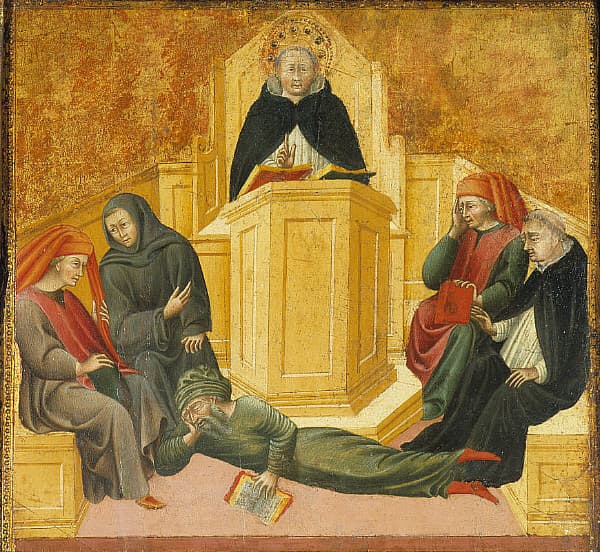
It is in the gardens of the Alcázar of Seville, where a fountain murmurs beneath the orange trees, that Abu Yaqub Yusuf summons Averroes once more in late summer 1180. Eleven years have passed since the day Ibn Tufayl presented the philosopher at court, and the caliph has lost none of his curiosity about questions the crowd would deem dangerous. The light fades on the horseshoe arches as a servant sets down a tray of figs. The sovereign wishes to hear, from the qadi's own mouth, how far along the commentaries on Aristotle that he once commissioned have come.
—Abu Bakr, do you remember the day Ibn Tufayl brought you before me? You seemed to fear my first question about the eternity of the heavens.
How could I forget it, Commander of the Faithful? I was petrified. You asked me whether the heavens were created or eternal from all eternity, and I dared not admit what the philosophers thought, for fear of the kalam and its guardians. It was you who saved me: you yourself expounded the arguments of Aristotle, Plato, and the theologians, with a learning that astonished me. I understood then that I served a prince who did not fear reason. When you entrusted me with clarifying the books of the Sage, because their language was obscure, you gave me the work of my life. Without that day, I would have remained a qadi like any other.
You gave me the work of my life: clarifying the books of the Sage.
—Those Commentaries I commissioned—how far along are you? I am told you are writing three kinds.
That is correct, my lord. For each treatise of Aristotle, I compose three levels: the long commentary, where I cite the text phrase by phrase and explain it line by line; the middle, which paraphrases and illuminates; the short, which summarizes for the hurried student. I have covered the Physics, the De Anima, the Metaphysics, and I continue. Aristotle remains for me the utmost limit of human intellect, a perfection given by divine providence. My task is not to invent, but to extract his thought from the errors accumulated by translators and glosses. It is a labor of patience, which I carry out at night, by lamplight, when the affairs of the court allow me leisure.
—Many at my court murmur that the falsafa leads away from the Law. You who are a judge, how do you answer this reproach?
I answer, Prince, that the Law itself commands it. In my Fasl al-Maqal, my Decisive Treatise, I show that the study of the books of the Ancients is obligatory according to religious Law, because their purpose is precisely that which Revelation urges us to pursue: to know God through His creatures. Truth cannot contradict truth. When the letter of the sacred text seems to oppose demonstration, it must be interpreted, and this interpretation, ijtihad, falls to those capable of it. The common people will follow the letter, the theologian his arguments, and the philosopher demonstration: each reaches God by the path of his understanding. To refuse philosophy is to disobey the Law.
The study of the books of the Ancients is obligatory according to the Law, for truth does not contradict truth.
—So you distinguish three paths to God. Is that not reserving wisdom for an elite, to the detriment of the simple believer?
Not at all, Commander of the Faithful. I take nothing away from the simple believer: his faith is complete and leads him to salvation. I only say that one should not impose on him demonstrations he does not understand, nor deliver to the common people the subtle interpretations that would disturb his certainty. That is the fault of the kalam theologians: they display in public disputes that sow doubt and divide the community. The medicine of knowledge must be dosed according to the patient. To each the food he can digest. The Law is wise precisely because it addresses everyone through images that the philosopher reads as veiled truths.
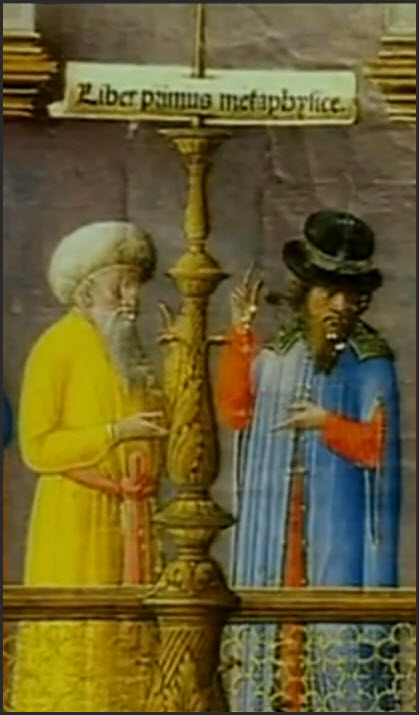
—Much is read, even in the East, of the deceased Al-Ghazali and his Incoherence of the Philosophers. You have answered him, it is said, with uncommon vigor.
I devoted an entire book to it, my lord: the Tahafut al-Tahafut, the Incoherence of the Incoherence, where I refute him point by point. Al-Ghazali accuses the philosophers of impiety because they affirm that fire burns by its nature, that the cause produces its effect. But to deny natural causality is to deny the very order that God has established in His creation! If nothing depended on anything, there would be no science, no medicine, no wisdom possible. Knowledge of God comes through knowledge of His creatures and the laws He has given them. In wanting to defend divine omnipotence, Al-Ghazali reduces it to a whim. I defend God better than he does: by showing the coherence of His work.
To deny natural causality is to deny the very order that God has established in His creation.
—Do you not fear that you will be judged as you judge Al-Ghazali, and that the accusation of impiety will be turned against you?
Fear must not silence truth, Prince—but I am not reckless. I do not write these delicate matters for the crowd; I reserve them for those who have received the necessary training. Under your protection, I can think freely, and I know what I owe to your benevolence. But times are not always serene, and the guardians of the letter keep watch. I therefore strive always to show that my philosophy serves the Law and does not fight it. As long as a prince reigns who knows, as you do, how to expound the arguments of the Ancients, wisdom will have its home in al-Andalus. May God prolong your reign.
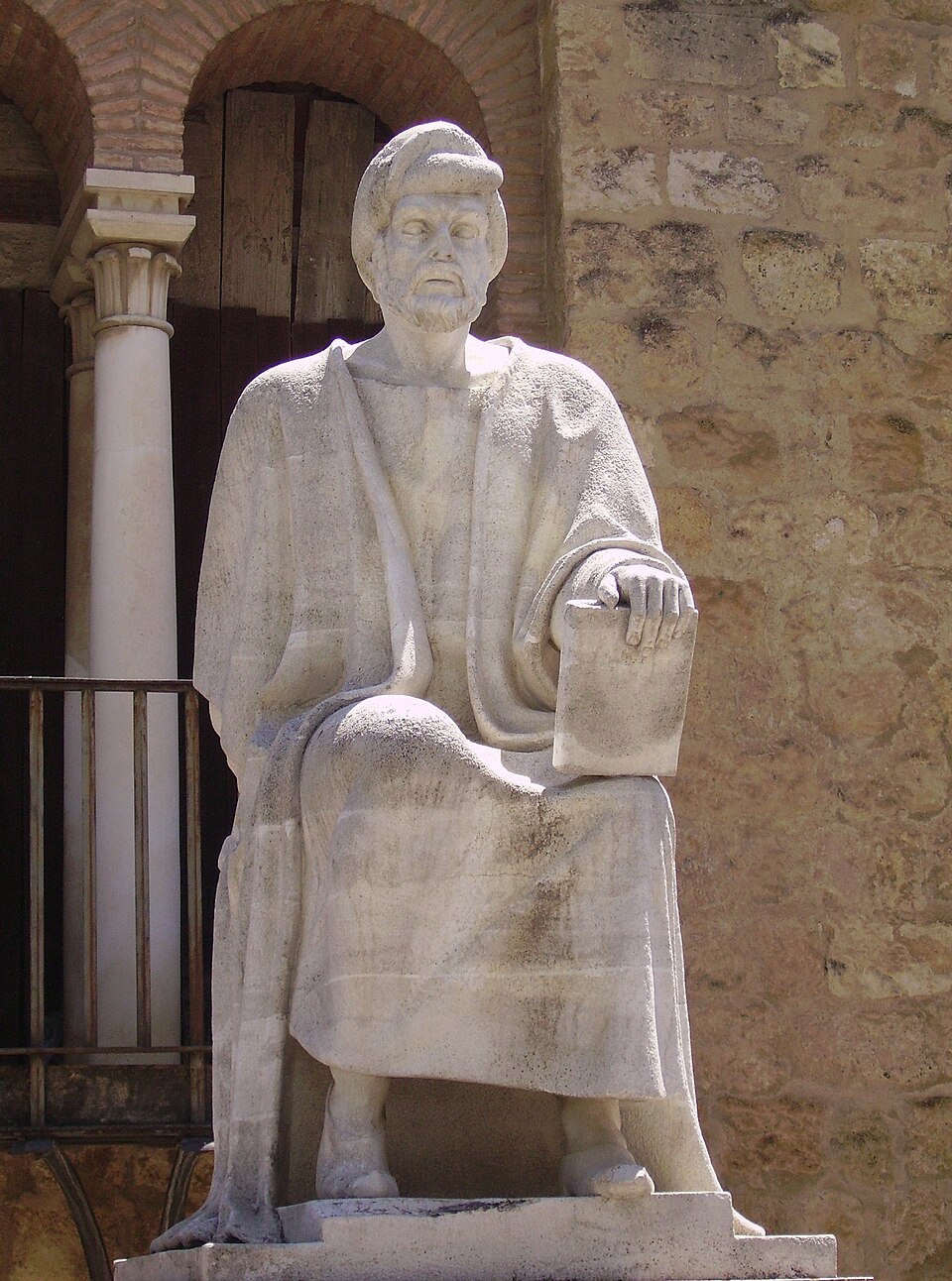
—You are the grand qadi of Cordoba, a position held by your father and your grandfather. How do you reconcile the court by day and philosophy by night?
With little sleep, my lord! In the afternoon, I preside at court, settle disputes according to Maliki law, receive litigants, and manage the community's affairs. This position comes to me from my father and my grandfather; it is the honor of my house. But as soon as the maghrib prayer is done, I take up the reed pen and do not set it down until the heart of the night, by the light of an oil lamp. I wrote the Bidayat al-Mujtahid for jurists, setting forth the divergences of the schools, and my commentaries for philosophers. They say I have only stopped writing for two days in my life: the day of my wedding and the day of my father's death. The rest belongs to work.
I have only stopped writing for two days: the day of my wedding and the day of my father's death.
—You are also my physician, and the author of a great medical compendium. Is medicine for you merely a diversion from Aristotle?
On the contrary, Commander of the Faithful: it is the sister of philosophy. In my Colliget, my encyclopedia in seven books, I maintain that medicine is not a conjectural art but a science founded on certain principles. The physician must know the general causes of diseases before treating the particular case—just as the philosopher ascends from effects to causes. There I comment on Galen, that great Greek master, as I comment on Aristotle elsewhere. Watching over your body, Prince, and watching over truth proceed from the same care for the order that God has placed in things. Body and soul obey laws; understanding them serves both the sovereign and science.
—One last question, my friend, before night falls on these gardens: what do you expect from all this work I have commissioned?
I expect it to outlast me, Prince. That men who come after, in whatever language they read, will find in my commentaries a clear path to the thought of the Sage, freed from errors and obscurities. I do not seek glory but transmission: that the falsafa may not go out in al-Andalus like a lamp one forgets to feed. You who once put me at ease when I trembled, you know that thought needs protection to flourish. If my books help a single man to know God through the reason He has given him, then my nights of vigil will not have been in vain. That is all a commentator can hope for.
That the falsafa may not go out in al-Andalus like a lamp one forgets to feed.
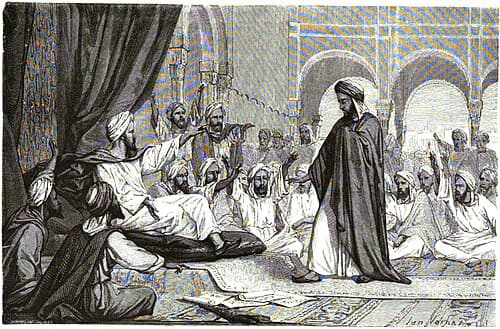
This imaginary interview was generated by artificial intelligence from sources documented in Averroes's profile. It dramatises what the figure might have said based on what we know about them, but does not constitute attested historical testimony. For primary sources and factual documentation, refer to the full profile.