Kids interview Averroes
by Charactorium · Averroes (1126 — 1198) · Philosophy · 5 min read
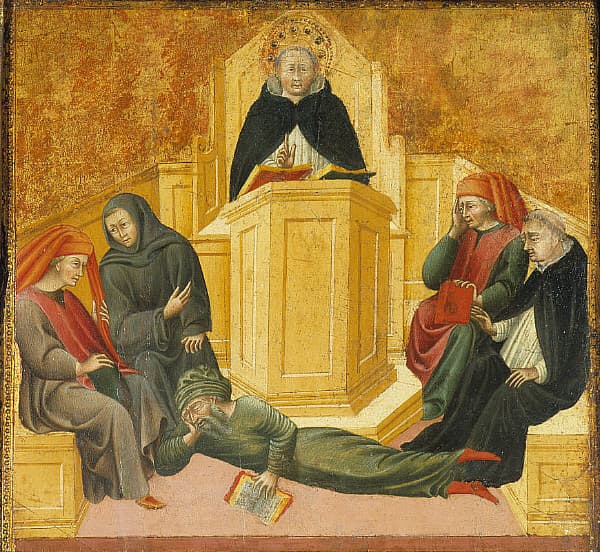
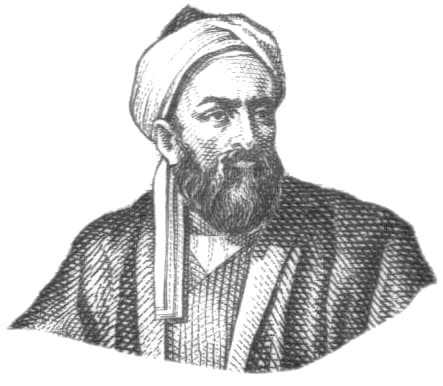
Two middle school students visit an exhibition on Al-Andalus that morning. In front of an old manuscript covered in Arabic script, they dare to ask a funny question out loud. And then an old man in a white djellaba, calamus in hand, answers them with a big smile: Averroes, the sage of Cordoba, agrees to tell them everything.
—What was a normal day like in your life?
You know, my child, I led two lives in one. In the morning, before sunrise, I prayed, then I read my manuscripts in the quiet. In the afternoon, I changed clothes: I became a judge. In Cordoba, I was grand qadi — a qadi is one who settles disputes according to the law. My father and grandfather had held this office before me, as if it were in the family's blood. And when evening came, after prayer, I became who I preferred to be: a man who writes. By the light of a small copper oil lamp, I worked very late into the night.
—What did your home smell like when night fell?
Imagine a cool house built around an inner courtyard. In the center, a fountain sang, and orange trees perfumed the air. When night fell, I lit my lamp, and its oil smell mixed with that of the old paper of my manuscripts. My study overflowed with books — it was my true treasure. For the meal, we ate simply: wheat bread, figs, raisins, a bit of lamb seasoned with saffron and cumin. As a doctor, I always advised eating in moderation. Outside, no engine noise, of course: only the horse's steps and the call to prayer rising above the rooftops.
—Is it true that a king asked you a trick question?
Ah, you touch on a memory I never forgot! My friend Ibn Tufayl, a philosopher, introduced me to the caliph Abu Yaqub Yusuf, around 1169. The caliph looked at me and asked: has the sky always existed, or was it created one day? A fearsome question in my time — one could be condemned for a wrong answer. I was so intimidated that I dared not say anything at all! But this caliph was a learned man. He began to expound the philosophers' ideas himself, to put me at ease. Then I understood he was not setting a trap.
He was not setting a trap: he was seeking a mind to talk with.
—And after that, what did he ask you to do?
From that meeting my entire life as a scholar was born. The caliph found the books of the great Greek sage Aristotle too difficult to read. The sentences were obscure, sometimes poorly translated into Arabic. So he entrusted me with an immense mission: to explain everything clearly, so that everyone could understand. Imagine being asked to illuminate, one by one, the most complicated pages in the world! I said yes. I did not yet know that this work would take me nearly thirty years, until the end of my life. But that day, in Marrakech, before that curious king, my path was already laid out.
—How do you explain such an old book?
Patiently, my child, line by line. I took Aristotle's text and opened it like one cracks a nut, to reach its core. I even wrote three kinds of explanations: a short one, a middle one, and a long, very detailed one. In Arabic, this is called a sharh — an explanation that follows the text word for word. For easy sentences, I went quickly. For difficult passages, I stopped a long time, I circled around, I gave examples. With my calamus in hand — a reed sharpened to a point that one dips in ink — I blackened, they say, more than twenty thousand pages in my lifetime.
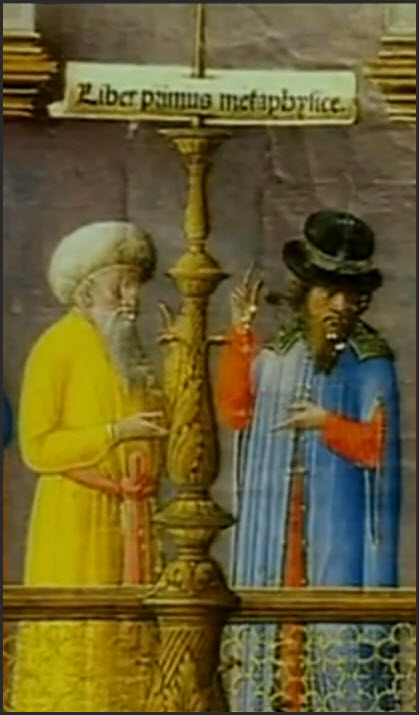
—What did people call you because of that?
I was given a nickname that followed me long after my death, even into distant European schools: 'the Commentator.' With a capital letter, as if there were only one in the world! You know, I deeply admired Aristotle. I thought his intelligence had reached the highest limit that the human mind could touch. Christian students, who did not speak a word of Arabic, read my explanations translated into Latin to finally understand him. Imagine: a Muslim judge from Cordoba becoming the master thinker for young people hundreds of leagues away, in countries he never saw with his own eyes.
—Was it forbidden to think when you were a believer?
Many thought so, and that is where I disagreed. For me, thinking with one's reason and believing in God are not contradictory — it's walking on both legs. I wrote an entire book to demonstrate this, the Fasl al-Maqal, called the Decisive Treatise, around 1179. In it I said something bold: studying the books of the ancient sages is not only permitted, it is almost a duty for a believer. This Greek way of philosophizing was called falsafa. Understanding the world, for me, was a way of admiring the one who created it.
Thinking and believing are not contradictory: it's walking on both legs.
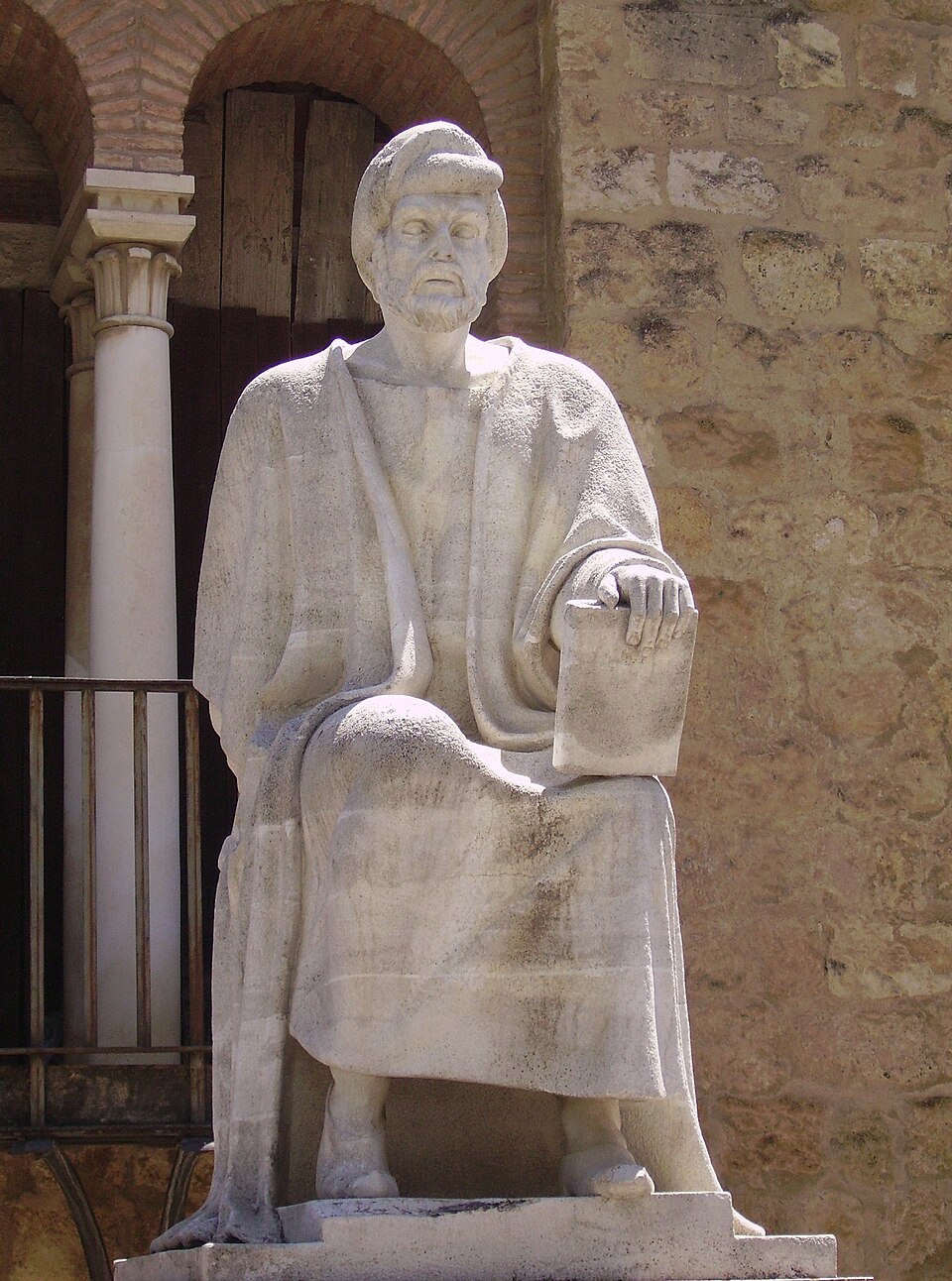
—Were there people who completely disagreed with you?
Oh yes, many! Some scholars, called the people of kalam — theology that defends faith through great reasoning — reproached me for going too far. And a famous thinker, Al-Ghazali, had written a book to assert that the philosophers were wrong. So I answered him, point by point, in a work with a funny title: The Incoherence of the Incoherence, around 1180. I defended a very simple idea: in nature, things have causes. Fire burns, water quenches thirst. Understanding these causes is not insulting God — it is honoring the order He placed in the world.
—Is it true that all your books were burned?
Yes, my child, and it was the greatest sorrow of my life. Around 1195, the caliph Al-Mansur yielded to the strictest scholars, who hated philosophy. My books were thrown into the fire, in public, in the square. Imagine seeing the work of a lifetime go up in smoke! I was driven out of Cordoba, my beloved city, and exiled to Lucena, a small nearby town. I lived there alone for almost two full years. But do you know something? Copies of my works already existed elsewhere, safe and sound.
You can burn the paper, but you cannot burn ideas.
—And at the very end, what happened to you?
The caliph eventually forgave me, shortly before my death. But I was far from home. I passed away in Marrakech, in 1198, without having seen the orange trees of Cordoba again. Then my body was brought back to my native city for burial — so I returned, but only after my death. Do not be sad, though. For my ideas traveled much farther than I did. Young people in Europe, Jews, Christians, and Muslims, continued to read my commentaries for entire centuries.
My true home is all the curious minds who ask questions.
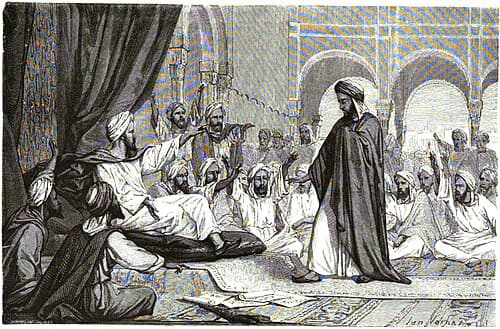
This imaginary interview was generated by artificial intelligence from sources documented in Averroes's profile. It dramatises what the figure might have said based on what we know about them, but does not constitute attested historical testimony. For primary sources and factual documentation, refer to the full profile.