Imaginary dialogue between Alan Greenspan and Ayn Rand
by Charactorium · Ayn Rand (1905 — 1982) · Philosophy · Literature · Exploration · 6 min read
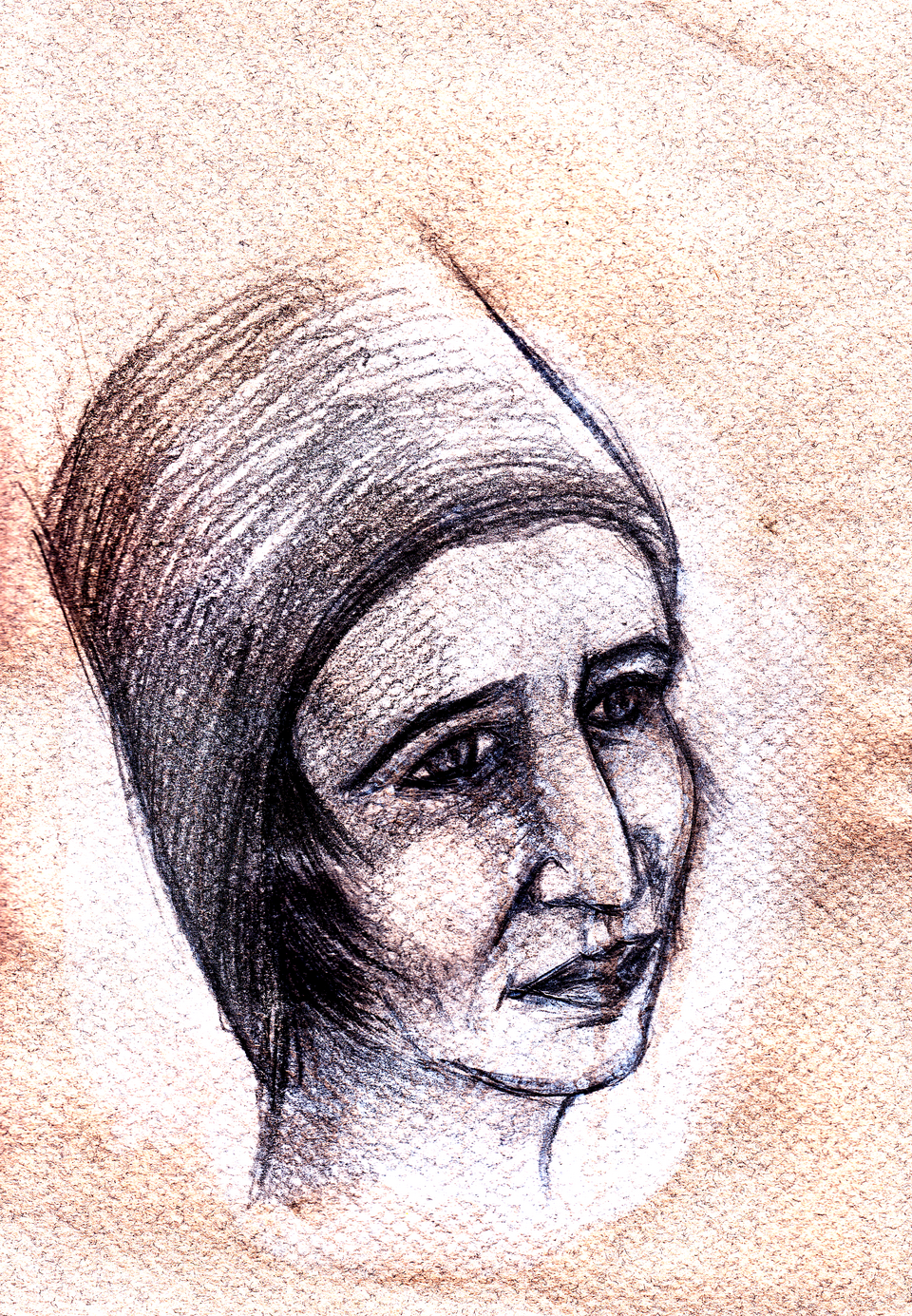
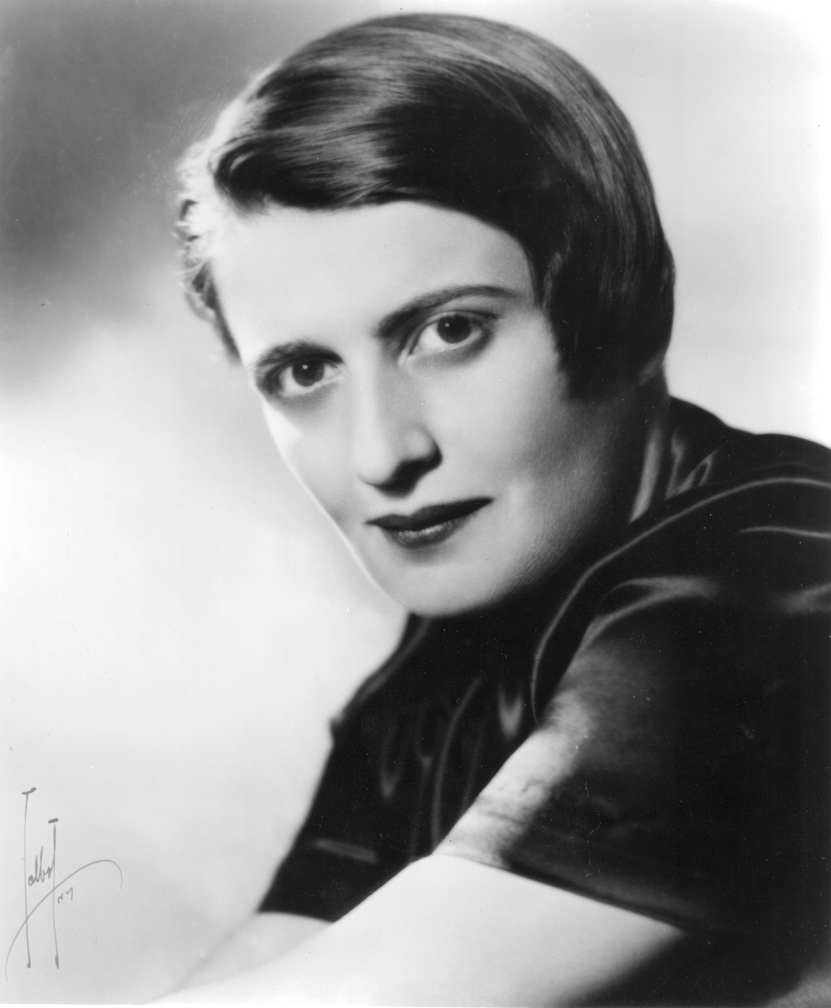
It is a winter evening in 1961, in the apartment on East 36th Street in Manhattan, that Alan Greenspan meets Ayn Rand amid the bookshelves covering the walls. The smoke from the long cigarette holder curls under the desk lamp, and the proofs of For the New Intellectual still lie on the coffee table. For years, the young economist has frequented the circle she ironically calls 'The Collective,' drinking in her reasoning as others drink black coffee. Tonight, he comes less as a disciple than as a friend curious to trace the sources of a philosophy he thought he knew.
—Ayn, you rarely speak of the child you were. In Saint Petersburg, in 1917, what exactly did you understand on the day they took your father's pharmacy?
I was twelve, Alan, and I saw armed men enter our home in the name of the people to confiscate a lifetime's work. My father had robbed no one: he had built, served, earned. In one morning, he was told that his right no longer existed, that the collective came before him. I didn't cry—I was seized by a cold anger that has never left me. That day, without the vocabulary I have since forged, I knew that sacrificing the individual to the group was not generosity but organized theft. All my philosophy is merely the rational ordering of that childhood evidence. Bolshevism did not convince me of anything: it showed me what I had to fight.
Sacrificing the individual to the group was not generosity but organized theft.
—You arrived in the United States in 1926 on a simple tourist visa. Setting foot in Hollywood, did you already know you would never leave?
I knew it before I even boarded. Russia was nothing but a prison where the word I had become suspect. America, I had seen it in the cinemas of Petrograd: skyscrapers, men who decided their own lives. It was for me not a country but an idea made of stone and steel. When Cecil B. DeMille noticed me by chance at the studio entrance and gave me work as an extra, I took it as confirmation: here, chance rewarded the one who stood ready. I spoke English poorly, I had almost nothing. But I had chosen this country by conviction, as one chooses a value. You don't go back when you have finally found where to breathe.
America was for me not a country but an idea made of stone and steel.
—Let's talk about Roark. You were inspired by Frank Lloyd Wright for The Fountainhead. What about the architect embodied the ideal man in your eyes?
It's not Wright I painted, Alan, it's what a man should be—and he was only a partial sketch of it. What interested me was the creator who draws his standard from himself and not from the approval of others. Roark prefers to dynamite his own building rather than see it disfigured by compromise. That shocks: some see it as pride. I see it as the only possible integrity. The man who creates asks no one for permission to exist, nor the burden of making others live in his place. Remember what I had you read from his speech: he does not recognize anyone's right to one minute of his life. That was not arrogance. It was the refusal to be a second-hand man.
The man who creates asks no one for permission to exist.
—You spent twelve years writing Atlas Shrugged, rejected by twelve publishers. In those years of doubt, what kept you from giving up?
Doubt, Alan? I never doubted the book—only the cowardice of the publishers. Twelve years, yes, because I wanted to say everything, down to Galt's speech, which alone took me two years. Twelve rejections, because none of them dared to publish a novel declaring that man does not have to apologize for being productive. I was told the book was too long, too philosophical, too radical. I replied that I would not cut a single line. What I described was simple: if the world's creators stopped carrying the parasites, the world would stop. It had to be shown through an entire novel, not a pamphlet. When you hear me quote Galt's oath, you know I never lived for another, nor asked another to live for me.
I never doubted the book—only the cowardice of the publishers.
—It is said that this novel became, according to some, the most influential book after the Bible. How do you receive such a religious comparison for such a secular work?
The irony is not lost on me, and it delights me. A book that celebrates reason, production, and earthly life placed near a text that demands faith and sacrifice—what better symptom of what is at stake in America? I do not seek to found a religion, Alan, you know that better than anyone: nothing disgusts me more than the demand to believe without proof. If Atlas Shrugged touches so many readers, it is not because it consoles, but because it gives a name to what they feel without daring to say: that it is not guilty to want to live for oneself. A book is influential only when it makes a thought thinkable. Mine made rational egoism finally speakable.
A book is influential only when it makes a thought finally thinkable.
—In 1947, you testified before the HUAC committee in Washington as a 'friendly witness.' You, so wary of the state—how did you experience that position?
With a discomfort I never hid. I went there for a specific reason: to denounce the way some films portrayed the Soviet Union as a smiling paradise, when I had seen hunger and fear there. I was asked if Song of Russia lied—I said it did, because hungry people had no reason to smile. That, I knew what I was talking about. But I was wary of McCarthy's methods: hunting ideas by coercion is still letting the state decide what one can think. You don't fight collectivism with the weapons of collectivism. I denounced propaganda, not consciences. The line is narrow, Alan, and many crossed it without seeing it.
You don't fight collectivism with the weapons of collectivism.
—You knew two totalitarianisms from afar, Nazism and Stalinism. For you, what do they have in common under such opposite uniforms?
They have exactly the same root, and that is why I refuse to be called 'right' or 'left.' Nazism, communism, socialism: all place the collective—the race, the class, the nation—above the individual, and demand that he sacrifice himself. The uniforms change, the moral doctrine is identical: you exist only for the group. I saw the Bolsheviks in the name of the people; others saw the Nazis in the name of blood. The content of the pretext matters little; it is the principle of sacrifice that kills. That is why I hold altruism, understood as the duty to live for others, to be the gateway to all despotisms. The man who accepts that he has no right to exist for himself has already signed his servitude.
The uniforms change, the moral doctrine is identical: you exist only for the group.
—You wear that dollar sign brooch that everyone notices. Provocation, or declaration? Knowing you, I lean toward the latter.
You know me well, Alan. It is not a provocation, it is a flag. The dollar is not, as moralists repeat, the root of evil: it is the symbol of a free exchange between men who do not plunder each other but serve each other through trade. A bill represents work, intelligence, a value produced and not torn away. When I wear this sign on my chest, I say: I am not ashamed to live from what I create, nor to salute those who do the same. Societies that despise money always end up substituting the whip or the gun. I saw Russia where people no longer paid: they obeyed. So yes, I wear the dollar as others wear a cross—with conviction.
I am not ashamed to live from what I create.
—This circle you call 'The Collective'—a mocking name for a group of individualists. What do you seek in those long nights of discussion with us?
The name is a joke, of course—the opposite of what you are. What do I seek? Minds that think, not admirers who approve. Nothing bores me more than servile agreement. When you press me with your economist's objections, when you confront my principles with the numbers of the real world, you do me a service: an idea that cannot withstand examination does not deserve to be defended. Those nights, with black coffee and smoke, are not sessions of devotion—they are laboratories. I build Objectivism piece by piece, and I need loyal opponents to test every gear. A philosophy is built like a Roark building: nothing holds if a single beam is placed out of complacency.
I seek minds that think, not admirers who approve.
—One last thing, more personal. You work at night, sleep late, smoke incessantly. Where does this strange discipline come from?
It is not discipline, Alan, it is appetite. At night, the world falls silent and no longer demands anything of me; only the page, the typewriter, and the problem I want to solve remain. I write until the light returns because thinking is the only pleasure I do not ration. The cigarette? I see it as a small emblem: a tamed flame at my fingertips, man mastering fire instead of fearing it. I eat little, dress plainly, all that is indifferent to me—they are only fuel and fabric. What matters happens in the mind. People think me austere; I am simply someone who has found where to put all her life, and who refuses to squander it elsewhere.
Thinking is the only pleasure I do not ration.
This imaginary interview was generated by artificial intelligence from sources documented in Ayn Rand's profile. It dramatises what the figure might have said based on what we know about them, but does not constitute attested historical testimony. For primary sources and factual documentation, refer to the full profile.