Kids interview Ayn Rand
by Charactorium · Ayn Rand (1905 — 1982) · Philosophy · Literature · Exploration · 5 min read
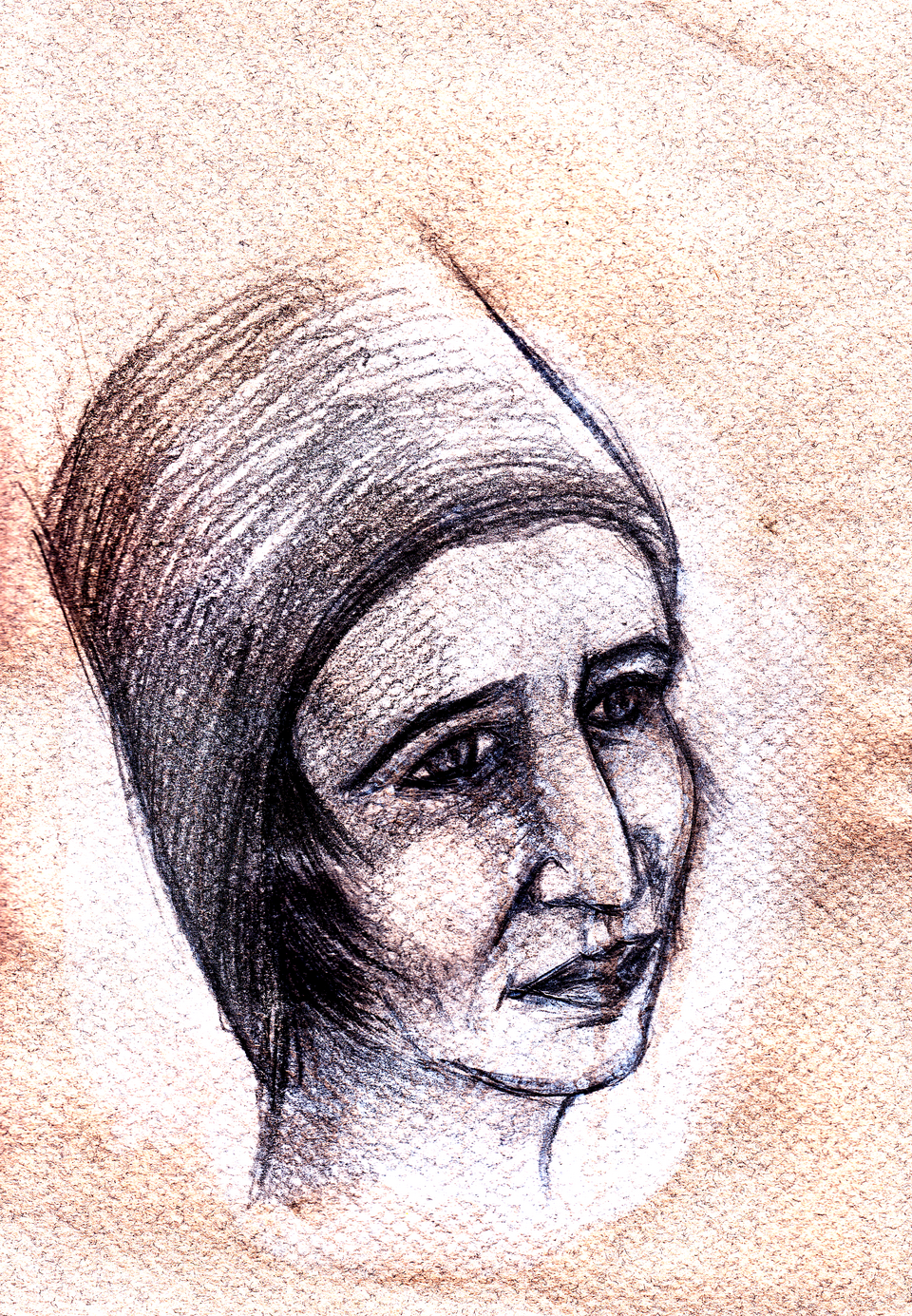
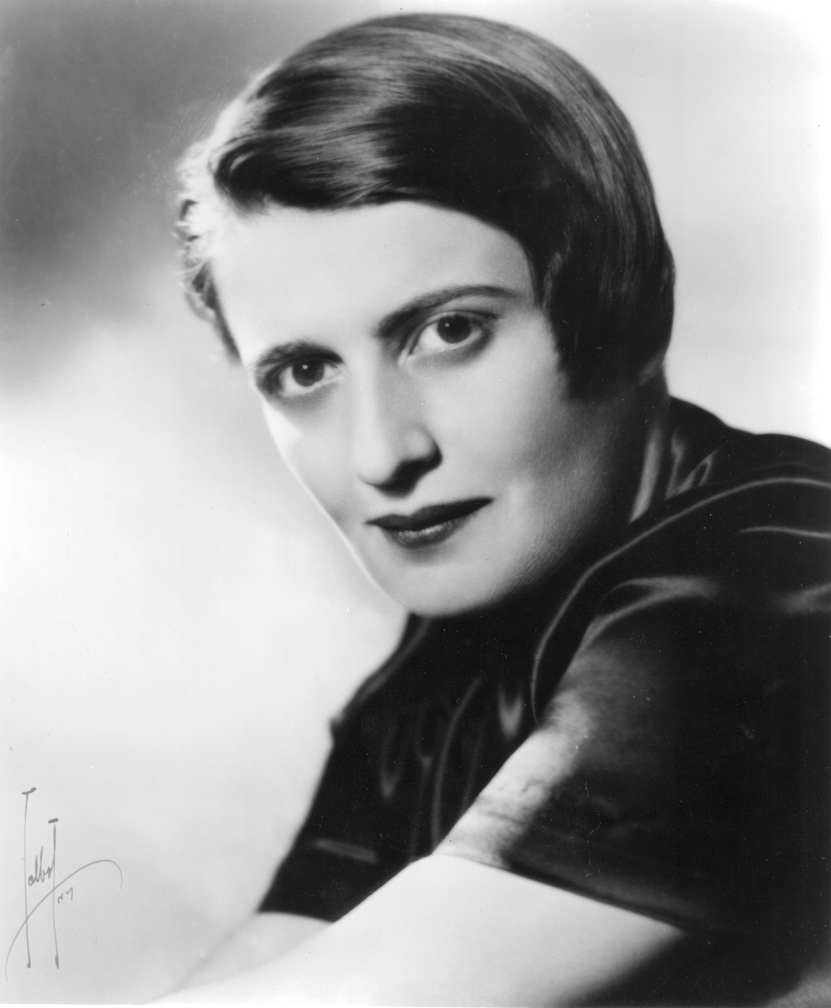
Two 12-year-old students, on a field trip, push open the door of a Manhattan apartment filled with books. A lady in a dark suit, a long cigarette holder in her hand, invites them to sit down. She looks stern, but her eyes light up at the first question.
—How old were you when the revolution came to your home?
I was twelve, my child. Exactly your age. I was called Alissa Rosenbaum then, and I lived in Saint Petersburg. My father ran a pharmacy, a beautiful clean shop with bottles lined up in rows. Then one day in 1917, men came in. They said: this shop is no longer yours, it belongs to everyone. Imagine someone entering your room and telling you your things now belong to the whole street. I saw my father's face close up. That day, something was etched into me forever.
They came into our home and said: this is no longer yours.
—What was it like to see your parents lose everything like that?
It was scary and sad, yes. But above all, it made me angry. Not a shouting anger — an anger that thinks. I asked myself: by what right do you take a man's work? My father had stolen from no one. He had built his pharmacy with his hands and his mind. They called it collectivism: putting the group above the individual. I decided the opposite. Every person counts, and no one has the right to sacrifice you for others. My entire life as a philosopher was born in that empty pharmacy.
No one has the right to sacrifice you for others.
—And how did you manage to leave for America?
Ah, that's a story of courage and luck! In 1926, I got a simple tourist visa. I said goodbye to my family in Russia, knowing deep down I would never see them again. The ship crossed the ocean for days. When I saw the skyscrapers of New York rise from the water, I wept — with joy. In Hollywood, a great director, Cecil B. DeMille, noticed me by chance in front of the studios and gave me a small job as an extra. Imagine: arriving hardly speaking the language, and ending up on a movie set. America, for me, was freedom made into a country.
When I saw New York rise from the water, I wept with joy.
—Is it true that your great book was rejected by many publishers?
Twelve times, my boy! Twelve publishers said no to Atlas Shrugged. Imagine showing your best drawing to twelve people, and twelve times you hear: no, no one will be interested. Many would have given up. Not me. I had put twelve years of work into it, twelve hundred pages written at night. When the book finally came out in 1957, it became one of the most read in America. Much later, it was said to be the book that most influenced people after the Bible. So remember this: a refusal is never the end.
Twelve times they said no. I kept going twelve times.
—What is this book about, actually?
Imagine that all the people who build, invent, make things — the engineers, creators, workers who love their craft — decide one morning to stop. To go on strike. Because everything is taken from them without a thank you. What happens then? The world stops too. That's my story. I wanted to show that those who produce are precious, that they are too often treated as if they must give everything without keeping anything. I wrote it all on my old Remington typewriter, often until dawn, a cigarette in hand. It was my fight in the form of a novel.
What happens if all those who build stop one morning?
—I've heard you love a very, very old philosopher — who is it?
Aristotle, my child! A Greek who lived over two thousand years ago. I had his books at home, covered with notes in the margins, I reread them so much. Why him? Because he said a very simple thing: reality exists, and our reason serves to understand it. A stone is a stone, whether you like it or not. Other philosophers, like Kant, I found foggy; they muddled everything. I wanted clear, solid ideas, like the foundations of a house. Aristotle taught me to think straight. He's the only one, I believe, to whom I really owe something.
A stone is a stone, whether you like it or not.
—And your own philosophy, Objectivism — what does it simply mean?
Good question, you hit the mark! Objectivism is my way of seeing the world, resting on a few ideas. One: reality is real, we don't invent it. Two: we understand it with our reason, by thinking. Three: you have the right to live for yourself, to pursue your happiness — I called it rational egoism. Mind you, it doesn't mean crushing others! It means not letting yourself be crushed either. And four: everyone must be free to exchange, to work as they wish. Imagine a garden where each plant grows its own way, without being uprooted for others.
Living for yourself does not mean crushing others.
—What is that dollar brooch you always wear?
You noticed it! Yes, I proudly wear a small brooch shaped like a dollar sign. Many find money vulgar. Not me. To me, this symbol means: someone produced something, someone created value with their work. That's beautiful! In the evening, at my home in New York, I gathered a small group of friends to discuss for hours — we jokingly called it the Collective, which was a joke, you see, since I hated collectivism. One of them, a very serious young man named Alan Greenspan, later became a major figure in American finance.
Money is proof that someone created something.
—What did it smell like at your place in the evening, when your friends came?
Ah, it smelled of cigarette smoke, of course! I smoked a lot, with my long cigarette holder. It also smelled of black coffee — I drank cups and cups of it. The walls were lined with bookshelves from floor to ceiling, and my desk overflowed with manuscripts. We would talk until very late at night, sometimes until dawn. I woke up late in the morning, around ten, a simple toast for my whole meal. Food interested me little: it was just fuel for the mind. But those evenings of ideas — that was my true feast.
Food was just fuel. Ideas, my true feast.
—Is it true you went to speak before important politicians?
Yes, in 1947, I was asked to testify in Washington, before a congressional committee. At the time, America was very afraid of communism — it was the beginning of what was called the Cold War, the confrontation between the United States and the Soviet Union. Since I had lived there as a child, they wanted my opinion. I explained that a film showing Soviet life as happy and smiling was telling a lie. I had seen hunger, fear, people keeping silent. I knew what I was talking about. It was my duty to tell the truth I had witnessed with my own eyes.
I knew what I was talking about: I had seen, with my own eyes.
—If children like us read your books today, what would you want them to remember?
That your life belongs to you, my child. That's what I made my characters shout, like the architect Howard Roark in The Fountainhead, who refused to betray his ideas to please. I want you to think for yourself. Not to believe something just because everyone repeats it. Face reality, use your head, and be proud of what you build with your own hands. I crossed an ocean and weathered twelve rejections to defend this idea. So hold it dear: you are the owner of your own life.
Your life belongs to you. Never leave it to anyone else.
This imaginary interview was generated by artificial intelligence from sources documented in Ayn Rand's profile. It dramatises what the figure might have said based on what we know about them, but does not constitute attested historical testimony. For primary sources and factual documentation, refer to the full profile.