Imaginary interview with Ayn Rand
by Charactorium · Ayn Rand (1905 — 1982) · Philosophy · Literature · Exploration · 6 min read
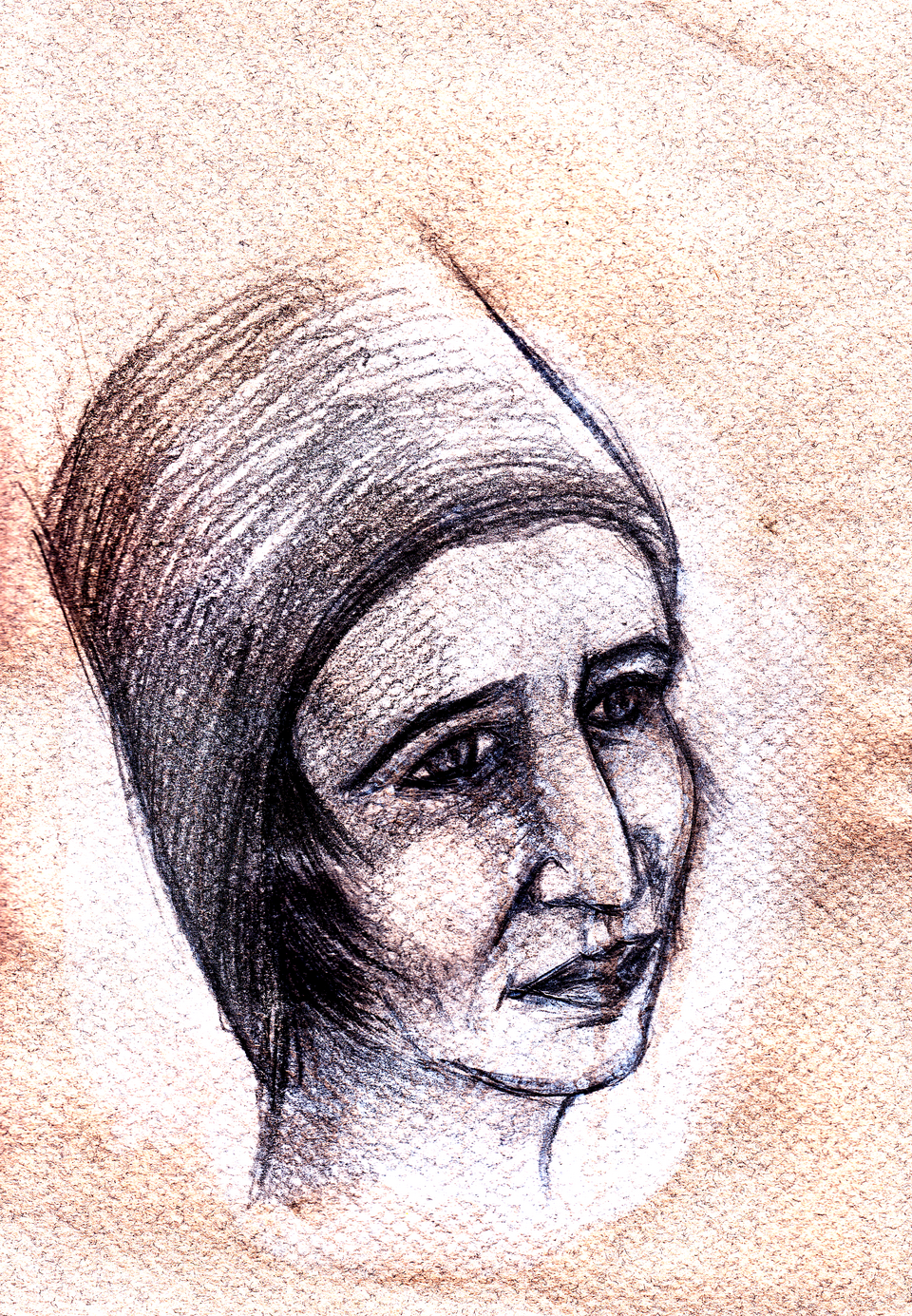
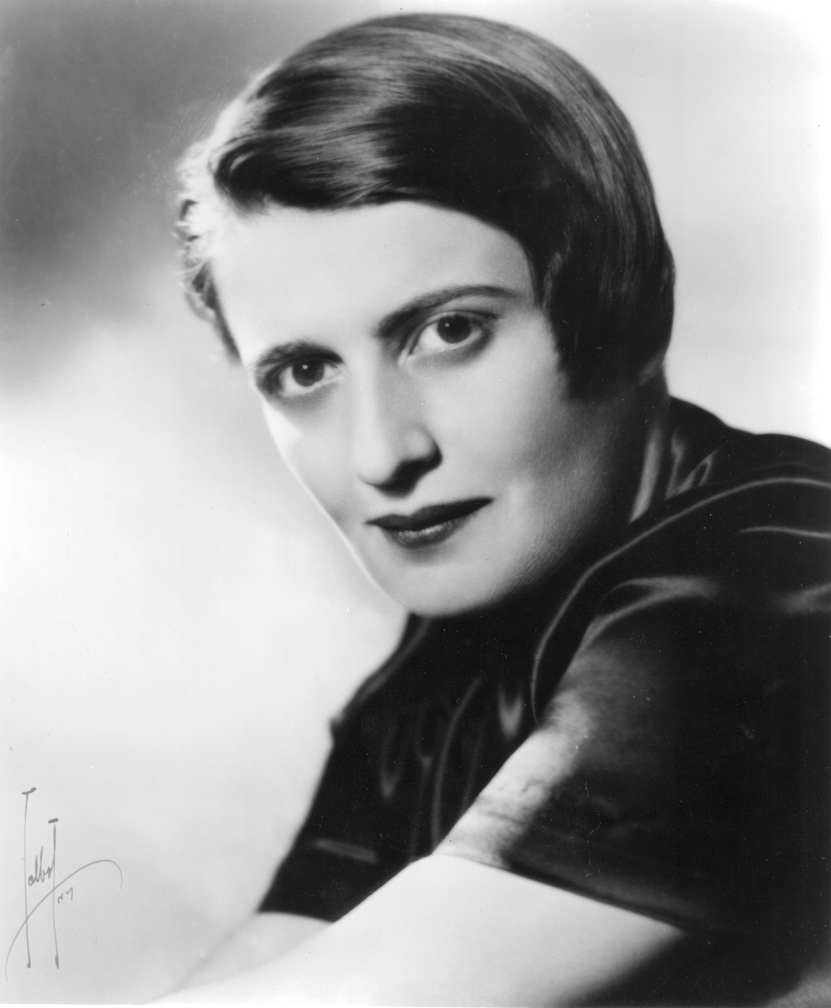
New York, winter 1979. In a Manhattan apartment with walls lined with bookshelves, a dark-eyed woman receives us, wearing a navy suit and a dollar sign brooch on her lapel. On the coffee table, a long cigarette holder and an annotated copy of Aristotle. She lights a cigarette and waits for our questions as one waits for an adversary.
—Do you remember the moment your Russian childhood changed?
1917. I was twelve years old in Saint Petersburg, and I saw armed men enter my father's pharmacy as if entering a property that had never had an owner. They dispossessed him in the name of collectivism — a word I would later use like one names a disease. That day, I understood something that most adults around me refused to see: when the group becomes sacred, the individual becomes fuel. Alissa Rosenbaum, the little girl I was, did not cry for the pharmacy. She cried for the idea that a man could work his whole life and a decree could erase his right to what he had done. My entire philosophy is contained in that scene: I have only ever written the footnote to that break-in.
When the group becomes sacred, the individual becomes fuel.
—How did that lost Russia fuel your distrust of the ideal of sacrifice?
I was raised in a country where altruism was not a Sunday virtue but a state duty — sacrifice yourself for the class, for the nation, for the radiant future. I saw what that produces: the waiting line, the denunciation, mediocrity elevated to morality. When I studied history at the University of Petrograd, in 1921, I was already reciting the official doctrine while thinking the exact opposite. That is why I never opposed communism to fascism as two enemies: they are two faces of the same rejection of the individual. The Cold War that I saw begin in the United States was not, for me, a geopolitical novelty. It was the return of a ghost I had fled in 1926, and which the naive West believed to be exotic.
Communism and fascism are two faces of the same rejection of the individual.
—What drove you to imagine Howard Roark, that architect who never compromises?
I wanted to show a whole man, not against someone but for something. In my journal of 1934, I had set myself a rule: to show not what must be destroyed, but what we want to build. A positive ideal, embodied. I looked at Frank Lloyd Wright, his lines that refused easy ornament, that man who would rather lose a contract than betray a plan — and Roark was born from that, though I never copied him slavishly. The Fountainhead, in 1943, did not sell immediately; success came slowly, by word of mouth from readers who recognized themselves in a man incapable of compromise. Roark says he does not recognize anyone's right to a minute of his life. That is the most moral sentence I have ever written.
To show not what must be destroyed, but what we want to build.
—Why did you hold so tightly to architecture to talk about morality?
Because a building does not lie. A beam either bears weight or it does not; no committee, no majority can decree that a poorly designed structure will stand. I loved that about the architect: he works against matter, not against opinion. Roark, in his great speech in The Fountainhead, distinguishes the creator from the second-hander, the one who lives vicariously, who needs the gaze of others to exist. That is the whole difference between independence and dependence. I spent nights at my typewriter, chiseling that contrast, black coffee after black coffee. I have been criticized for making characters too absolute. But I do not write reports on ordinary mediocrity — I write what man could be and should be.
A building does not lie: a beam either bears weight or it does not.
—They say Atlas Shrugged cost you twelve years. How does one sustain such a distance?
Atlas Shrugged was twelve years of my life, twelve hundred pages, and one question held at arm's length: what would happen if the men who carry the world decided one day to set it down? Twelve publishers rejected it — too long, too philosophical, too radical. I did not yield a comma of John Galt, whose oath sums up my entire ethics: never to live for another man, nor to ask another to live for me. Publishing in 1957 was like unleashing a real strike in fiction: my creators withdraw, and the collectivist world collapses for lack of those it despised. What I paraphrased there, rational selfishness, is not the greed of a plunderer — it is man's right to his own existence.
What would happen if the men who carry the world decided to set it down?
—How does it feel to learn that a country ranks your novel right behind the Bible?
I was told about that Library of Congress survey — my Atlas Shrugged named the most influential book after Holy Scripture. It would have made me smile if the irony had not struck me first: a book that preaches reason, objectivism, the end of idols, lodged just under the greatest book of faith. I do not see it as a religious consecration, but as proof of a hunger. Millions of readers sensed that they had been lied to about virtue, that they had been told that self-denial was noble. My novel gave them back permission to will themselves. Seven million copies are not bought out of snobbery; they are bought because a man, somewhere, recognized his own face in my pages.
My novel gave them back permission to will themselves.
—Tell us about that circle you hosted here in Manhattan, nicknamed The Collective.
The name was a joke, obviously — a circle of fierce individualists making fun of its own labeling. They came in the evening, to this apartment, and we debated the foundations of objectivism until dawn, the room blue with smoke. There was a young economist, Alan Greenspan, whom I could not then guess would one day govern this country's currency. I annotated books in the course of our discussions, I carved every argument like one carves stone. These sessions were not a social salon — I have never had patience for small talk. It was a laboratory, demanding, sometimes cruel, where one was not allowed to think lazily. I trained my best minds there, and I sowed, without knowing it, the seeds of my most painful ruptures.
A circle of fierce individualists making fun of its own labeling.
—Did that intense closeness with your disciples come at a price?
Terrible. In 1968, I broke publicly with Nathaniel Branden, the man I had made my intellectual heir, the most ardent promoter of my philosophy. I will not detail the reasons — some touch on betrayal of thought, others on wounds I keep to myself. But understand this: when one builds an ethics on absolute honesty, the slightest duplicity in a close associate becomes an ideological fracture as much as a human one. The Collective was never the same afterward. I have been told I was uncompromising; I answer that a philosophy that forgives lies to its friends is not worth the paper of my notebooks. I lost disciples as one loses limbs. But I did not lose a single idea.
A philosophy that forgives lies to its friends is worthless.
—That dollar sign brooch you wear — what does it represent to you?
Look at it: the dollar sign, pinned to the lapel of a dark suit. Most see it as provocation, the vulgar emblem of money. I see exactly the opposite — the most moral symbol man has forged. The dollar means that no value is owed to me for free, that every exchange is an agreement between two free beings, without plunder or charity. It is the mark of laissez-faire, of capitalism, which I defend as the only system compatible with dignity. In Atlas Shrugged, my heroes make it their sign of recognition. So I wear it, here in New York, not out of ostentation but out of fidelity. A little girl from Petrograd saw that everything could be taken from a man; the woman I am reminds that a voluntary exchange takes nothing from anyone.
The dollar is the most moral symbol man has forged.
—You still smoke as much as ever, despite everything. How do you live with that 1974 diagnosis?
This long cigarette holder never leaves me, and I know what you are thinking: in 1974, I was diagnosed with lung cancer. I will not pretend it was without consequence — but I did not stop writing or giving lectures for all that. I have always seen in the flame at the tip of a cigarette a small image of man's mastery over nature, fire domesticated in the palm of the hand. Perhaps I was wrong about the body; I was not wrong about the principle. A life is not measured by its duration but by what one has built without yielding. I spent my nights at my typewriter, black coffee and smoke, and I would rather burn out standing at my desk than prudently in a bed.
A life is not measured by its duration but by what one has built without yielding.
—If you imagined being read a century from now, what would you want to be remembered?
I refuse prophecies, but allow me this game for a moment. If readers still open The Fountainhead or Atlas Shrugged long after me, I do not want them to see a dusty economic doctrine. I want them to hear a single question, the one Galt asks in the dead of night: by what right does any man claim a minute of another's life? The rest — laissez-faire, objectivism, my ruptures, my cigarettes — is just the scaffolding. The heart is the idea that a human being is an end in himself and never the means of another. If that sentence survives when my name is forgotten, I will have succeeded. A philosopher does not ask for glory; she asks to be understood, and that one have the courage to agree or disagree for real reasons.
A human being is an end in himself, never the means of another.
This imaginary interview was generated by artificial intelligence from sources documented in Ayn Rand's profile. It dramatises what the figure might have said based on what we know about them, but does not constitute attested historical testimony. For primary sources and factual documentation, refer to the full profile.