Imaginary dialogue between Impératrice Deng Sui and Ban Zhao
by Charactorium · Ban Zhao (45 — 116) · Philosophy · Literature · 5 min read
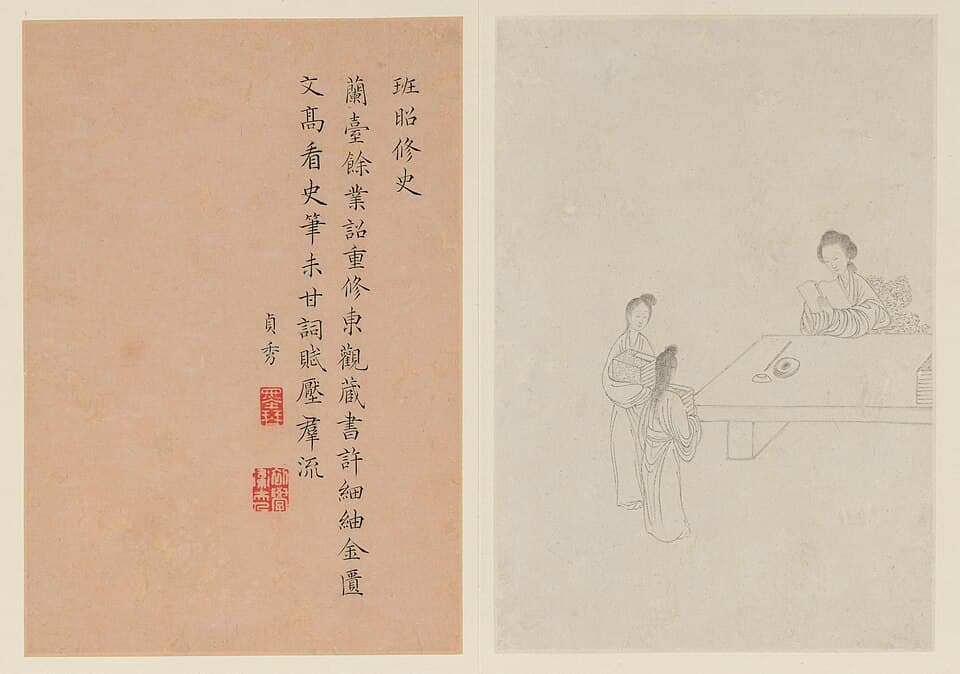
It is in the shaded galleries of the imperial palace of Luoyang, late in the afternoon of the year 113, that the dowager empress Deng Sui meets the lady Ban Zhao, whom everyone in the palace calls the Grand Lady Teacher. A water clock drips time in the silence, and the smell of freshly ground ink still floats over the low table where scrolls of the Hanshu lie. For more than ten years the regent has had her come to instruct the court ladies; today, she comes not as a student, but as a friend eager to gather, before it is too late, the story of a life wholly devoted to letters.
—Grand Lady Teacher, when Emperor He entrusted you with completing the Hanshu after your brother Ban Gu died in prison, did you hesitate for even a moment?
How could I have, Your Majesty? When I was told that Ban Gu had passed away in prison without finishing our father's work, I felt three generations of our family weighing on my shoulders. Emperor He opened the doors of the Eastern Pavilion for me, where the archives rest, and there, the only woman among the scribes, I took up the eight chronological tables and the Treatise on Astronomy that my brother could not complete. To hesitate would have been to betray the dead. I ground my ink, unrolled the bamboo slips, and counted the generations of emperors like counting beads on a rosary. Grief, you see, I carried it through work, not through tears.
Grief, I carried it through work, not through tears.
—You who taught me the circles of the sky, tell me: completing a treatise on astronomy—was that not audacity for a woman's hand?
The sky does not ask the sex of who observes it, Your Majesty. To finish the Treatise on Astronomy of the Hanshu, I had to learn to read the armillary sphere, the hun yi, those bronze rings tracing the paths of the stars. I spent my nights checking positions, my brush of animal hair, the máobǐ, in one hand, the inkstone under my elbow. They thought me fit only for embroidery; I proved that a woman could hold the historian's brush and the astronomer's instrument. Do you remember when I showed you, right here, how to measure the shadow of the gnomon? You laughed with joy like a child. Knowledge, Your Majesty, has no ditch that a woman cannot cross.
They thought me fit only for embroidery; I held the historian's brush and the astronomer's instrument.
—Everyone reads your Nüjie, those Lessons for Women. Tell me frankly: did you write them to subjugate women, or to elevate them?
Neither entirely, Your Majesty—I wrote them for my own daughters, on the eve of their marriage, like a mother afraid she would no longer be there to guide them. I set down the san cong si de, the three obediences and the four virtues, for such was the house they were entering. But read me carefully: I demand there that girls be educated as much as boys. How could a woman maintain her standing if she is denied letters? They see me as the guardian of duties; I am above all one who demands education as a right. A girl without education is a house without foundations—it collapses at the first wind.
A girl without education is a house without foundations—it collapses at the first wind.
—Do you remember the day I summoned you to the palace? Why did you agree to instruct my ladies, already burdened with years and works?
How could I forget it, Your Majesty? You sent for me when my hair was already turning white, and you told me you wanted ladies who knew more than how to be silent. I agreed because a scholar who keeps her knowledge to herself is like a well that is walled up. I taught them calligraphy, history, rites, and even astronomy and mathematics—those disciplines reserved for men. And you yourself, Your Majesty, would come sit among them, and afterward consult me on state affairs, which no woman before me had dared to advise. The ladies called me Grand Lady Teacher; but it was you who gave me the freedom to teach without fear.
A scholar who keeps her knowledge to herself is like a well that is walled up.
—You often advised me on government, when I bore the weight of the regency alone. What guided you in those delicate counsels?
Measure, Your Majesty, always measure. When you came to me, your brow heavy with court intrigues, I did not speak to you as a flattering courtesan, but as a reader of the annals. I had before me a thousand years of emperors: I had seen, in the tables of the Hanshu, how dynasties fall when pride overcomes restraint. I told you to yield when yielding strengthens, to withdraw when the ambition of your relatives threatened balance. History, you see, is not an ornament: it is a mirror I held up to your reign. You listened to me, and that is perhaps my deepest pride—not having written history, but having helped a regent not to repeat it.
History is not an ornament: it is a mirror I held up to your reign.
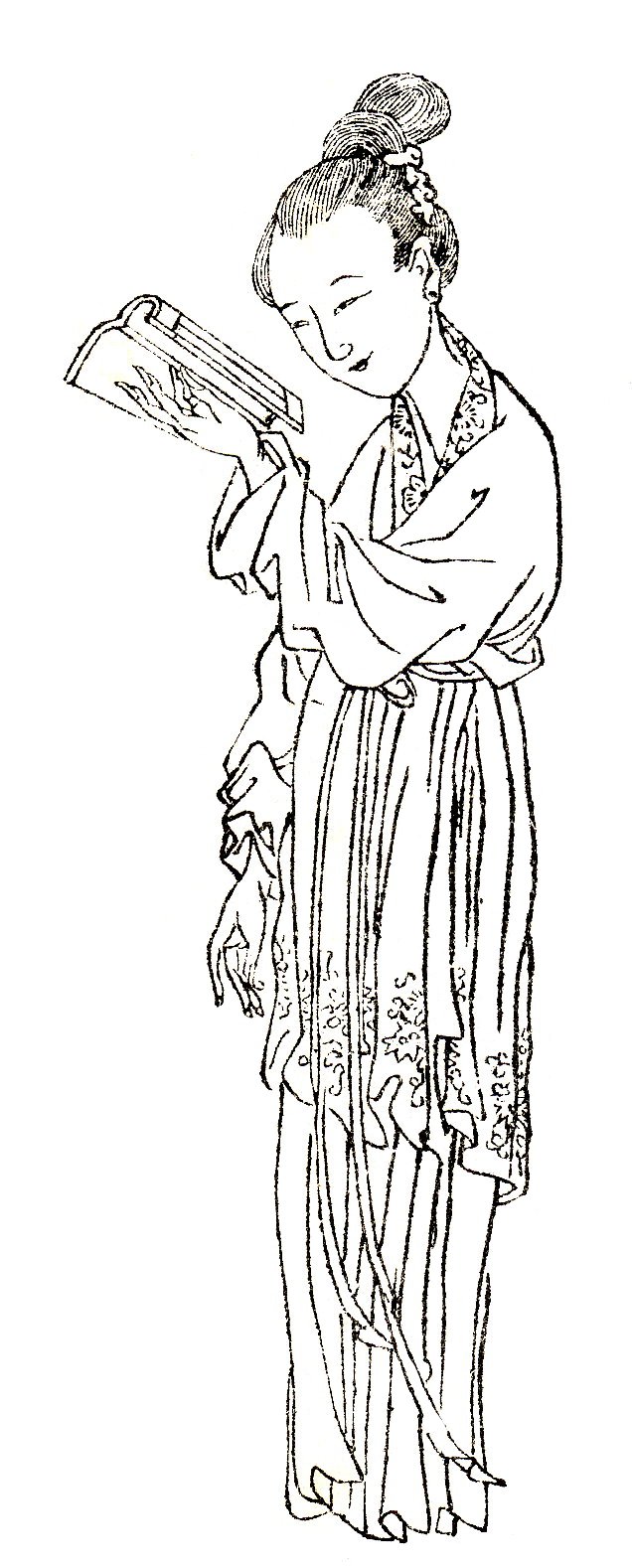
—You once composed your Dong Zheng Fu, your journey to the East. Behind the historian revered by the whole palace, who is the woman who writes these verses?
A woman who has known exile of the heart, Your Majesty. When I followed my son to his distant post, I wrote this fu of the journey eastward, and every li I traveled took me farther from the graves of my kin. The plains stretched endlessly, the wind flattened the yellowed grass, and I felt separation like a cord taut in my chest. The fu genre allows this: to blend prose and verse to say what the annals keep silent. The historian records reigns; the poetess, she admits she is cold and afraid. They remember only the scholar from me; but behind the official brush beats a trembling heart.
The historian records reigns; the poetess admits she is cold and afraid.
—Working alone at the Eastern Pavilion, among scribes and archives—how did a woman maintain her standing in that place of men?
Through silence and accuracy, Your Majesty. At the Dongguan, the scholars first looked with suspicion at this woman who demanded silk scrolls and bamboo slips. I did not answer with speeches, but with work: I checked every date, every genealogy, I cross-referenced the sources of the Former Han until no scholar could find me at fault. When the men saw that my chronological tables contained no error, suspicion turned to deference. I rose before dawn for calligraphy, and I stayed up by oil lamp long after them. Rigor, Your Majesty, was my only weapon—and the best shield for a woman in a man's world.
Rigor was my only weapon—and the best shield for a woman in a man's world.
—You speak of astronomy and mathematics, men's disciplines. Why were you so eager to pass them on to my palace ladies?
Because one does not govern, nor govern oneself, in ignorance, Your Majesty. I wanted your ladies to know how to read the calendar, understand the cycles of the hun yi, to count and reason—not to rival ministers, but never to be captive minds. A lady who knows astronomy does not tremble before an eclipse presented as an evil omen: she knows that the sky obeys laws. I put into their hands the inkstone and the brush, and I showed them that the universe can be measured. Do you remember their astonishment, that day I explained why the sun always returns to its place? To educate a woman is to give her back the sky.
To educate a woman is to give her back the sky.
—You are sometimes criticized, in your Nüjie, for preaching humility and self-effacement. Have you yourself ever effaced yourself, Grand Lady Teacher?
You touch there, Your Majesty, on my most intimate contradiction—and you are well placed to see it. I wrote that a woman must keep in the background, suffer injury without complaint, put herself after others. And yet here I am, completing the history of an entire empire, advising a regent, teaching men's disciplines. The truth is that the humility I preach is not servitude: it is self-mastery, that strength which does not shout but endures. I effaced myself in manners and asserted myself in work. A woman can bow her head and hold her brush straight. That is how I navigated a court of men without ever being caught at fault.
I effaced myself in manners and asserted myself in work.
—You are growing old, my friend, and your son serves far away. What trace do you hope to leave, from all this life of labor?
I do not know, Your Majesty, and perhaps that is not for me to judge. I have completed a history that was not mine, written for my daughters lessons that will be read or forgotten, composed verses in which I placed my melancholy. All that already escapes me like water from the clepsydra. But if I must name one trace, I would say this: let it be remembered that a woman held the historian's brush as firmly as a man. The rest—glory, titles—is but dust on the tablets. When my son rereads my fu, may he hear in them less the scholar than his mother. That is the only posterity I claim; the sky will decide the rest.
Let it be remembered that a woman held the historian's brush as firmly as a man.
Read further
This imaginary interview was generated by artificial intelligence from sources documented in Ban Zhao's profile. It dramatises what the figure might have said based on what we know about them, but does not constitute attested historical testimony. For primary sources and factual documentation, refer to the full profile.