Kids interview Ban Zhao
by Charactorium · Ban Zhao (45 — 116) · Philosophy · Literature · 4 min read
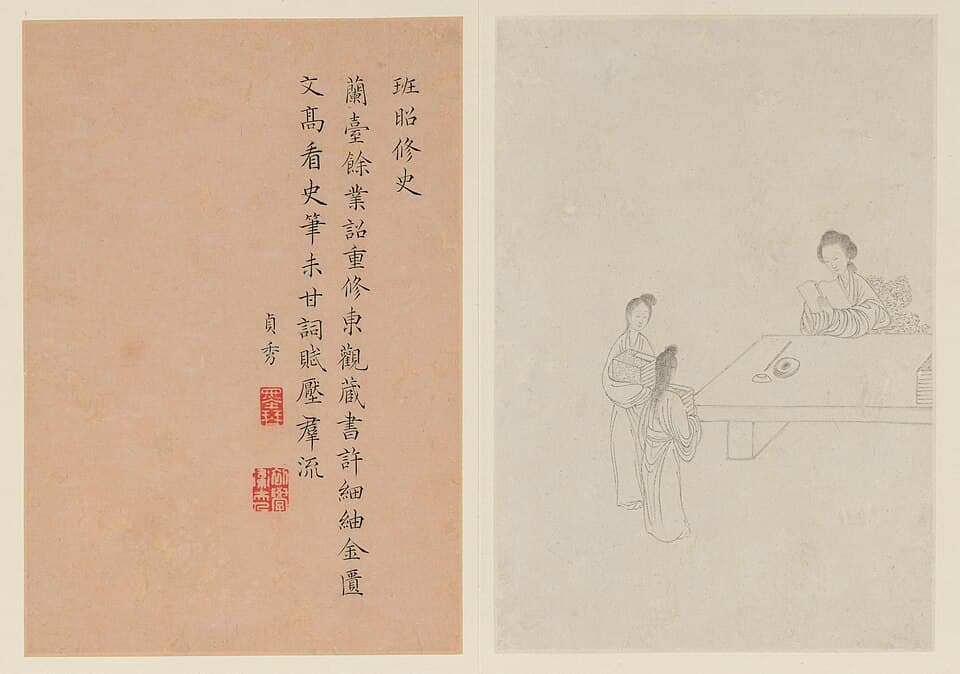
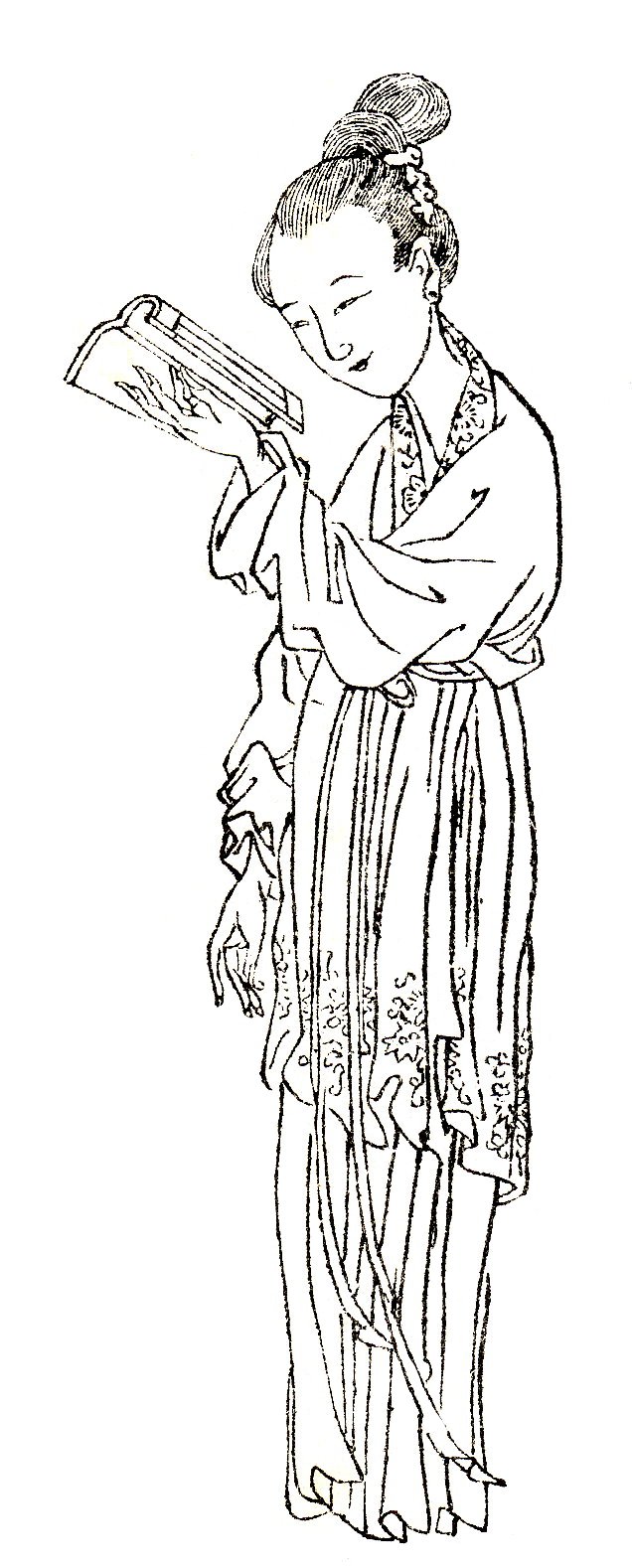
That morning, two middle school students push open the door of a quiet room, where an elderly Chinese woman with a patient smile awaits them. She lived nearly two thousand years ago, under the Han emperors. She sets down her brush, looks at them, and invites them to sit beside her.
—What was your family like? Did everyone love books?
You know, my child, in my home, we breathed history and letters. My father, Ban Biao, was a historian. He gathered old tales like one gathers treasures. My two brothers left their mark on their time: Ban Gu wrote history, and Ban Chao was a general. Imagine an older brother who goes far away, to the west, along desert and mountain roads, to reopen the Silk Road. I, the little sister, listened, read, and learned. In this family, we held a brush almost before we held a spoon.
In our home, we held a brush almost before we held a spoon.
—Why did you have to finish your brother's book?
It's a sad story, my child. My brother Ban Gu died in prison in the year 92, without finishing his great work, the Hanshu, the Book of Han. Imagine a vast work, begun by my father, nearly complete... and suddenly interrupted. Emperor He then summoned me. He said: finish it. Me, a woman! I completed the eight great chronological tables and the treatise on the heavens and stars. I worked at the Eastern Pavilion, where the archives were kept. It was a heavy burden, but it was the memory of an entire people.
Finishing my brother's book was saving the memory of an entire people.
—Were you afraid to be the first woman to do this?
A little, yes. No one before me, no woman, had written the official history of the empire. But you know, I wasn't thinking about myself. I thought of the silk scrolls and bamboo tablets before me, waiting. Every date, every name had to be correct. One mistake, and you deceive a thousand years of readers! So I ground my ink on my stone, slowly, in the morning before dawn. Fear, I turned into patience. The Hanshu was finally completed around the year 111. The first complete history of a Chinese dynasty.
Fear, I turned into patience.
—Is it true you taught the stars to the palace ladies?
It's true, my child! Empress Deng Sui, who governed the empire, was very fond of me. She summoned me to the palace to instruct the court ladies. And I taught them not only how to hold a brush properly. I taught them astronomy, the movement of the stars, numbers, history—things reserved for men! To observe the sky, we used an instrument made of metal rings, the armillary sphere. Imagine great circles representing the course of the sun and stars. The ladies called me Grand Master. That name touched me deeply.
I taught them the stars—what was reserved for men.
—What did you eat in the morning before going to work?
Good question! In the morning, my child, it was simple. Millet or rice, sometimes a hot bean soup. Tea hardly existed among us yet; we drank broths and herbal infusions. Even before eating, I practiced calligraphy. Tracing the characters was my way of calming my mind, like a silent prayer. Then the scribes would bring me the archive scrolls. Imagine a room with no motor noise, just the scratching of brushes and the dripping of the clepsydra, that water clock that measured the hours.
Tracing the characters was my silent morning prayer.
—Why did you write a book just for your daughters?
Because I loved them, simply. I was soon to marry them off, and I wanted to leave them a guide. Around the year 106, I wrote the Nüjie, Lessons for Women. Seven short chapters on how to live in one's new family. In those times, girls were taught three obediences: to the father, then to the husband, then to the son. That was our world, my child, I couldn't change it overnight. But look closely: I slipped a precious idea everywhere. A girl must be educated. Without knowledge, there is no true dignity.
Without knowledge, a woman has no true dignity.
—What exactly did you say in that book about being humble?
I asked a lot, it's true. In the Nüjie, I wrote that humility means being reserved, yielding to others, doing one's duty even when it's hard, and bearing a hurtful word without complaint. Do you find that harsh? I did too, sometimes. But understand my era: a woman who made herself very discreet earned the right to learn, to read, to think in peace. It was a ruse as much as a virtue. I bowed my head... so that I could lift my eyes to the stars. This little treatise was studied for over a thousand years.
I bowed my head so that I could lift my eyes to the stars.
—Did you also write poems? Not just history?
Yes, my child, and those came from the heart. The historian arranges facts; the poetess speaks her sorrow. Around the year 110, I composed the Dong Zheng Fu, the poem of the journey east. I told of departure, far from my loved ones, the wind over yellowed grasses, the vast empty plains. A fu, in our tradition, is a poem mixed with prose, meant to sing an emotion. In the evening, by the light of a small oil lamp, I set down on silk these words of gentle sadness. For even a scholar has a heart that aches when she must leave those she loves.
The historian arranges facts; the poetess speaks her sorrow.
—Were you sad at the end of your life?
Sad and tender at once, my child. I had grown old, and my son served the emperor in a distant province. Seeing him again was rare. So I wrote an elegy, a poem of separation, to express that longing that weighs on the chest. Imagine waiting for news that takes weeks to arrive by horseback. Time passes, seasons turn, and one thinks of all the beloved faces. That poem remains in the history books. Strange: I am remembered for my great scholarly works, but it is my tears that I have kept most alive.
I am remembered for my great works, but it is my tears that have remained alive.
—If we could see you in your house, what would we notice?
You would first see my desk, my child: a low table, lacquered wood shelves, and scrolls everywhere. On the table, my inkstone and my brush of animal hair, my most faithful companions. I wore dark silk robes, deep green or burgundy, with lacquer pins in my hair. I lived in Luoyang, the capital, in a house with curved roofs and quiet courtyards. The morning smelled of fresh ink and wood. A simple house, really—but where, with a few scrolls and a brush, one could speak to the dead and to emperors.
With a brush and a few scrolls, one can speak to the dead and to emperors.
Read further
This imaginary interview was generated by artificial intelligence from sources documented in Ban Zhao's profile. It dramatises what the figure might have said based on what we know about them, but does not constitute attested historical testimony. For primary sources and factual documentation, refer to the full profile.