Imaginary interview with Berthe de Bourgogne
by Charactorium · Berthe de Bourgogne (964 — 1010) · Politics · Society · 6 min read
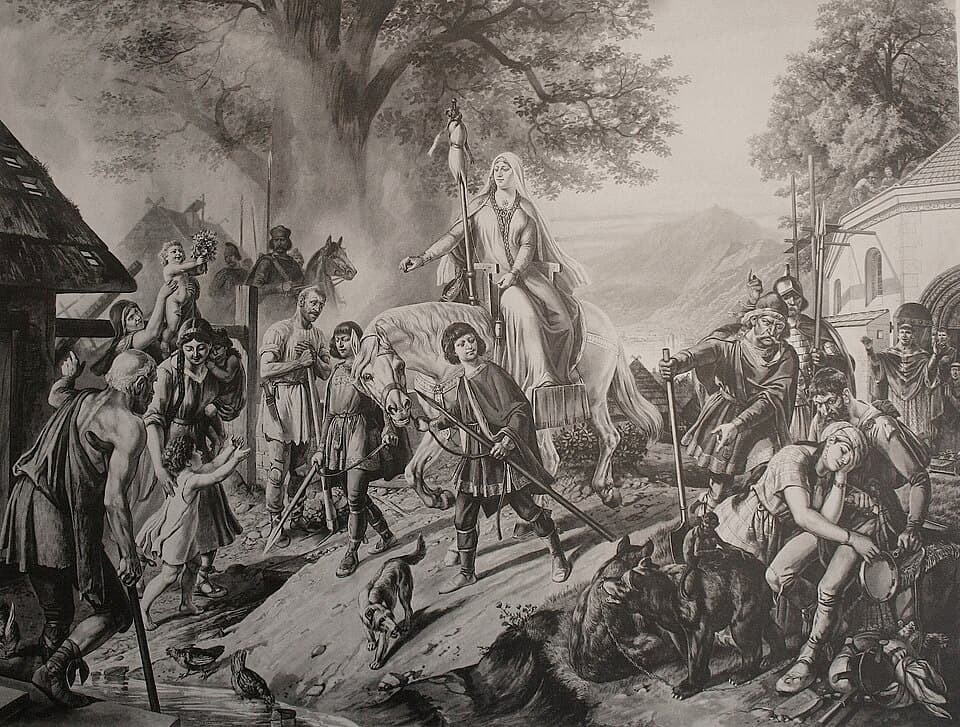
Palace of the Île de la Cité, somewhere between two offices, the year 1000 barely past. A lady stands by a narrow window, a closed psalter in her hands, her veil still marked by the crease of Matins. They call her queen; the Church, however, says she never was. Bertha of Burgundy agrees to speak, in a low voice, as one confides behind a tapestry.
—How did a daughter of Burgundy become countess at Blois?
I was born daughter of Conrad of Burgundy, and one does not ask such a daughter what she wishes; one tells her to whom she will belong. Around 985, I was given to Odo I, count of Blois and Chartres, one of the harshest lords in the kingdom, of those who make even kings tremble. My Burgundian blood was to soften this warrior, to seal a peace between two powers that eyed each other like wolves. I held the city of Blois, its great cold halls, its fiefs and vassals; I learned there that a lady is nothing but a bridge thrown between two houses. One walks on her to cross from one bank to the other, and one does not worry if she cracks.
A lady is nothing but a bridge thrown between two houses; one walks on her and does not worry if she cracks.
—What becomes of a woman like you upon her husband's death?
When Odo died, in 996, I became what our clerics call douairière: a widow left the enjoyment of part of the lands, the rank, some income, while they decide again of my fate. It is not freedom, understand me well — it is a pause. I had my wax seal with my effigy to validate my charters, my donations to the abbeys of Blésois for the salvation of our souls, and I was treated with the respects due to my widowhood. But a young dowager countess of high blood, without a husband, is a door that has not finished opening. I knew it. The great lords knew it too, and the king better than all.
—Do you remember the moment you were told your marriage to the king was condemned?
We had barely passed the first year. I had married Robert, only a few months after burying Odo, and already the word ran from mouth to mouth: consanguineous. Cousins to the fourth degree according to the clerics' computation, a blood tie that canon law strikes with prohibition. In 997, Pope Gregory V assembled a synod at Pavia, far away, in Italian lands, to judge a bed he had never seen. There, the separation of the spouses was ordered on pain of excommunication. Imagine: bishops gathered beyond the mountains, deciding my marriage like a boundary dispute. I remember the cold that entered my bones that day, more biting than that of the great stone halls.
Bishops gathered beyond the mountains, deciding my marriage like a boundary dispute.
—Did King Robert yield at once to the pope's injunction?
No. And that is the whole wonder and the whole misfortune. Robert II, whom they called the Pious, this man who himself sang the psalms and ran to offices several times a day, that man refused to obey Rome for years, for me. He was excommunicated — the supreme penalty, which cuts you off from the sacraments and releases your own subjects from their oath of fidelity. Understand what that means for a king: the ground gives way under the throne. They say his people fled his table, that they threw into the fire the dishes he had touched. He held out for a long time. No crown, no veil embroidered with gold ever honored me as much as this stubbornness of a man to keep me against the entire Church.
No crown ever honored me as much as this stubbornness of a man to keep me against the entire Church.
—Why did the Church press so hard against the union of two consenting spouses?
Because it was not about us, you see. It was about knowing who, king or pope, holds the key to royal beds. At this turn of the millennium, the Church was raising its head; they already spoke of purifying the clergy, of taking back control of the unions of the great so that no house might amass too many lands through too fine marriages. This movement of reform swelled like a tide. Canon law became the weapon of pontiffs against princes. Our marriage, Robert's and mine, was one of their first battlefields — an example they brandished, a lesson given to all Christian kings: even the throne bends before Rome. I was less a wife than a demonstration.
I was less a wife than a demonstration.
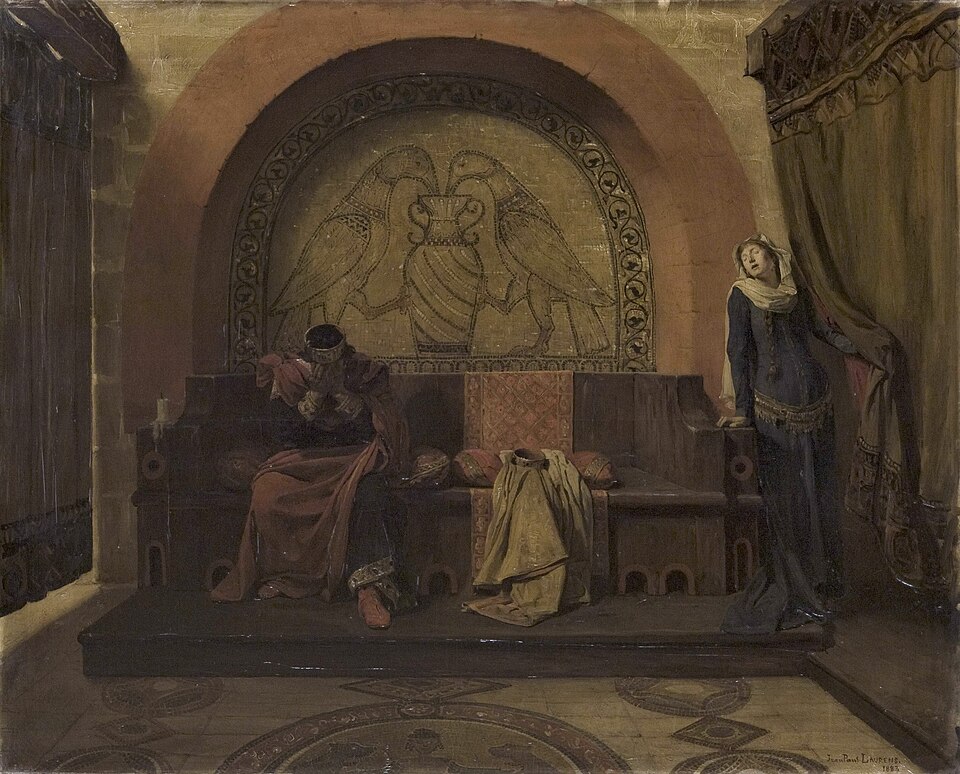
—Did any face particularly strike you in this standoff with Rome?
There was an irony I could never banish from my mind. In 999, there ascended the seat of Saint Peter a Frankish monk, Gerbert of Aurillac, the most learned man of his time — and the former tutor of my Robert himself. Having become pope under the name Sylvester II, this master who had formed the child-king now pressed the man-king to repudiate me, in the name of the decrees of his predecessors, lest divine wrath fall upon the kingdom. Imagine: he who had taught Robert his letters and his psalms now commanded him to renounce his wife. Wisdom, when it dons the tiara, knows neither former pupil nor tenderness.
Wisdom, when it dons the tiara, knows neither former pupil nor tenderness.
—What did a day at the court of such a devout king look like?
It began before daylight. One rose in the still dark night for Matins, and I prayed beside Robert in the royal chapel, he who could remain hours on his knees, an illuminated psalter open on his palms. Our days were punctuated by the offices like those of monks: Matins, Vespers, Compline, and between them fasts — numerous, severe, where venison gave way to freshwater fish and vegetables, according to monastic rules that the king imposed on himself and on us. In the afternoon, I governed my embroideries and my stewards; in the evening, we co-presided over the meal under the tapestries, by candlelight. I was given the holiest of kings as husband. It is a sweet and heavy thing to share the bed of a half-cloistered man.
It is a sweet and heavy thing to share the bed of a half-cloistered man.
—Did you find any consolation in this imposed devotion?
Do not think I merely endured it. Robert's faith was not a yoke for me; it was the air we all breathed. I had my veil for the offices, my charters of pious donation to monasteries, and I held that by endowing abbeys I worked for the salvation of my soul as much as for the rank of my house. In my husband's entourage, they carefully kept the reliquaries, those goldsmith's caskets where the bones of saints slept, pledges of Heaven's protection. I knelt before them with true fear. But what bitterness, too, to serve so devoutly a Church that, at the same time, declared my marriage abominable. I prayed to the same God who, through the mouth of his pope, drove me away.
I prayed to the same God who, through the mouth of his pope, drove me away.
—How did the end of your marriage come?
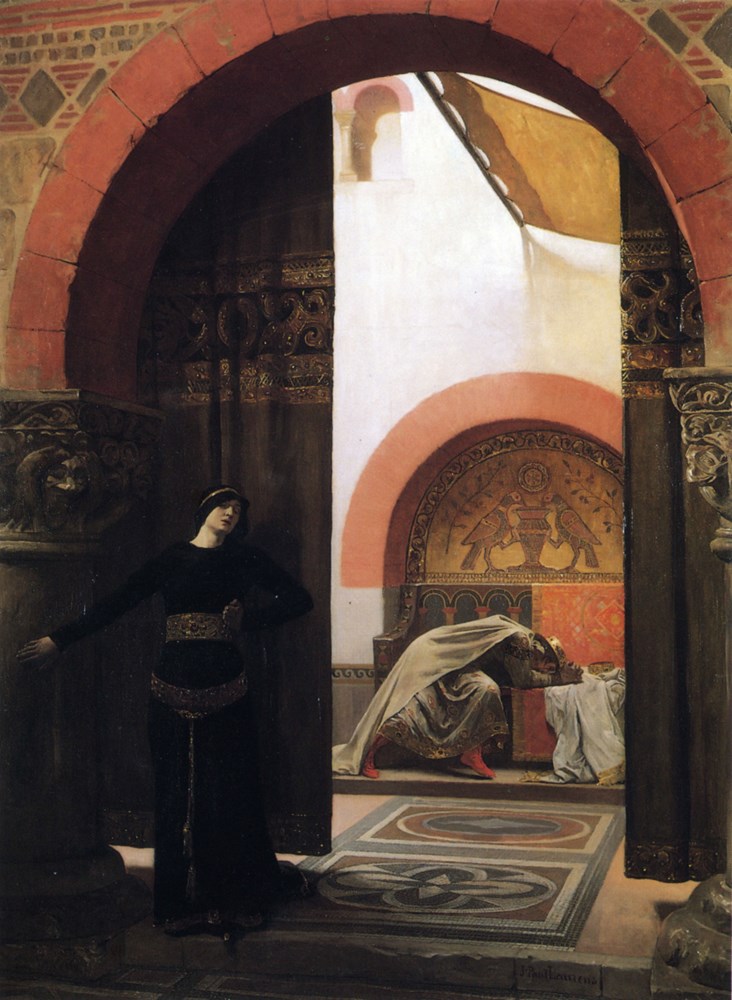
It came as great wearinesses come: slowly, then all at once. In 1001, under the joint pressure of the pope and the bishops of the kingdom, Robert finally bent. The chroniclers — an Adhemar, later the monk Helgaud of Fleury — wrote it in their own way: the most Christian king separated from me reluctantly, after long years of resistance. Reluctantly. There is no truer word and no colder word. I was undone of the crown as one undoes a knot that has become bothersome. The Franco-Burgundian union that had been dreamed of to bind my Burgundy to the crown died without a cry, without a battle — by a simple decree of bishops.
I was undone of the crown as one undoes a knot that has become bothersome.
—What becomes of a queen decreed never to have reigned?
She fades away. Barely two years after my repudiation, in 1003, Robert married Constance of Arles, who would give him sons, including the one who would reign after him. As for me, I withdrew into silence. Search for me in the chronicles after that date: you will find almost nothing, a few lines, a shadow. I would die around 1010, never having regained a rank worthy of a queen. Countess of Blois, then queen of France, then nothing — that is my course. The destiny of a woman of my blood lies entirely in the alliances woven for her and unwoven without her. They did not even grant me the dignity of a remembered tomb.
Countess of Blois, then queen of France, then nothing — that is my course.
—If you were to be read in a century, what would you want to be remembered?
That is a dizzying thought, and I dare not believe it. If, by some grace, memory of me were kept in a century or two, I would ask neither to be pitied nor sung. Let them remember only this: that at the time when the Church was learning to bend kings, there was a woman whose marriage served as a lesson to all Christendom, and that a most holy king preferred excommunication to her repudiation, for a few years. It is not nothing, to have been loved against Rome. The rest — the veil, the seal, the great cold halls of the palace of the Cité — is but the ordinary dust of which all ladies' lives are made. Remember the standoff, and you will remember me.
It is not nothing, to have been loved against Rome.
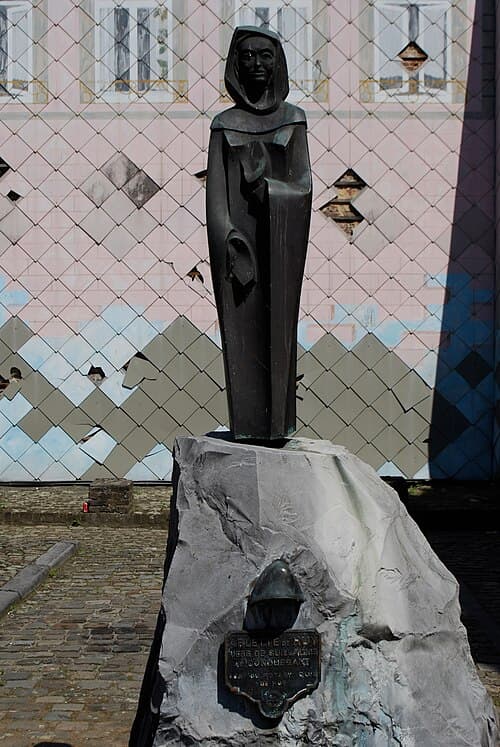
This imaginary interview was generated by artificial intelligence from sources documented in Berthe de Bourgogne's profile. It dramatises what the figure might have said based on what we know about them, but does not constitute attested historical testimony. For primary sources and factual documentation, refer to the full profile.