Kids interview Berthe de Bourgogne
by Charactorium · Berthe de Bourgogne (964 — 1010) · Politics · Society · 5 min read
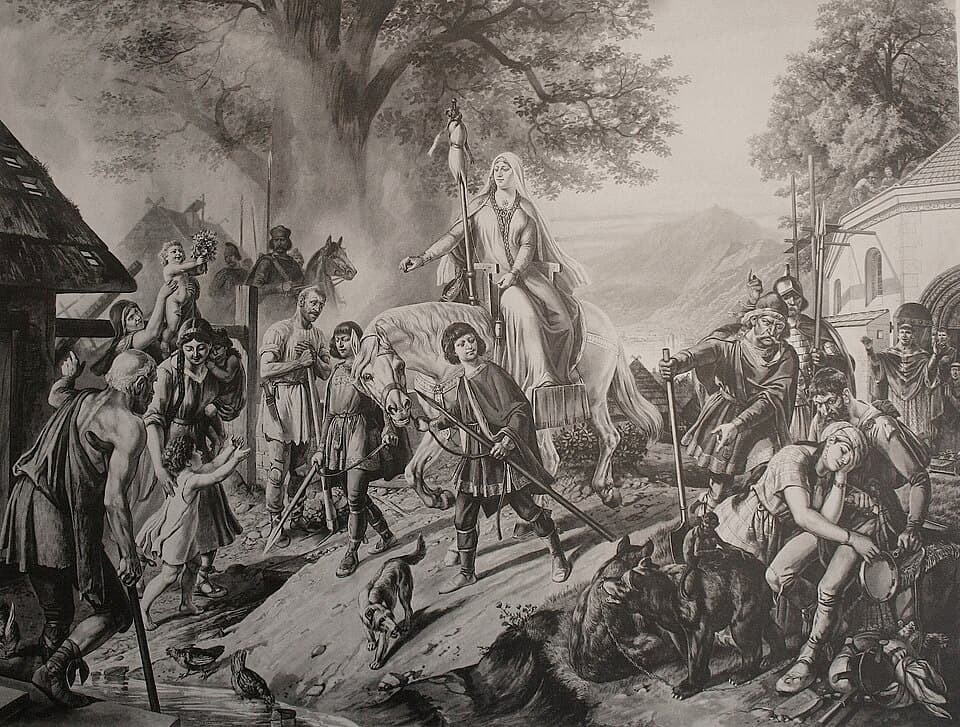
Two young visitors, on a school field trip, push open the door of a cold stone room. Before them stands a lady in a gold-embroidered veil: Bertha of Burgundy, countess then queen. She smiles at them, touched that anyone still takes an interest in her, and invites them to sit by the fireplace.
—How old were you when you were first married?
You know, my child, I was very young, barely out of childhood. My father was Conrad of Burgundy, one of the most powerful lords in Europe. Being his daughter was like carrying a treasure: everyone wanted to marry me. So they married me to Odo I, the count of Blois. Picture a proud man, with castles and soldiers, who barely obeyed the king. The king was called his suzerain, the one to whom he owed loyalty. But Odo did as he pleased! I had to manage the household, seal charters, unite two rival families. No one asked if I agreed.
Being a duke's daughter was like carrying a treasure that everyone wanted.
—And then, how did you become queen of France?
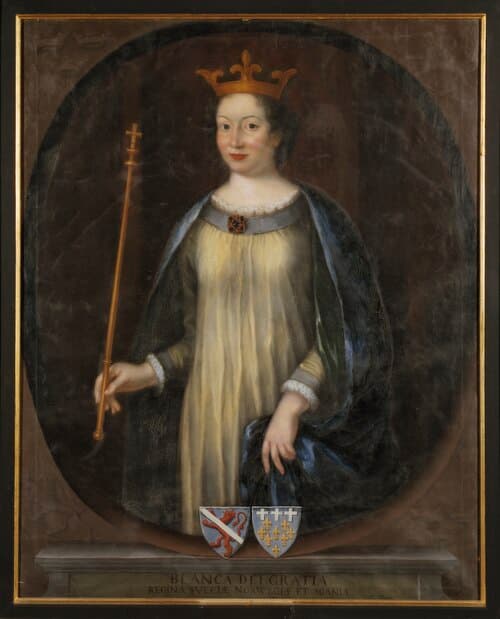
Odo died, and I became a widow, what was called a dowager: I kept my lands and my rank. Then a king noticed me, Robert II, son of the very first Capetian king. He was called the Pious, so much did he pray. We were married around 996. Imagine: I went from being the wife of a turbulent vassal to queen of the entire kingdom! I wore the crown, I lived in the stone palaces of Paris. But this marriage wasn't just a love story. It was an alliance: to unite Burgundy and the crown so the king would be stronger against the great lords. Marriages, in our time, served to make peace or war.
In our time, a marriage served to make peace or war, never to choose.
—Why was the Church against your marriage to the king?
Ah, that was the great misfortune of my life. Robert and I were cousins: our families intersected a few generations back. This was called consanguinity, having common blood. The Church forbade marriage between cousins, even distant ones. It was their rule, canon law, the laws that priests enforced. So the pope gathered bishops at Pavia, in Italy, in 997. Picture a great hall full of men in robes, deciding your life without listening to you. They said: this marriage is forbidden, separate! We loved each other. But before the Church, love did not weigh heavily.
We were cousins, and before the Church love did not weigh heavily.
—What did it mean to be excommunicated? Was it serious?
Terribly serious, my child. Because Robert refused to leave me, the pope excommunicated him in 998. That means: driven out of the Church. He could no longer receive the sacraments, nor Mass, nor the priests' forgiveness. Imagine being told: you no longer have the right to enter any church, and God turns his back on you. For a king, it was even worse. His subjects could consider themselves freed from their oath of loyalty. An entire kingdom could tip! The chroniclers of the time, like Ademar of Chabannes, told this story. Robert held out for years, out of attachment to me. But a king alone against the pope never wins for long.
Being excommunicated meant being told that God turned his back on you.
—What was it like living with a king who prayed all the time?
Oh, Robert was the most pious of men! He rose before dawn for matins, the morning prayer, and he sang the psalms himself. Imagine a king who knows his big prayer book, the psalter, all gilded and painted with little pictures, by heart. Our days began in the chapel, in the cold, by candlelight. He often fasted: on meatless days, we ate river fish and vegetables. And yet, this same devout man defied the pope to keep me! That's what touched me most. A king who loved God with all his heart, and who risked everything for me.
He loved God with all his heart, and yet he defied the pope for me.
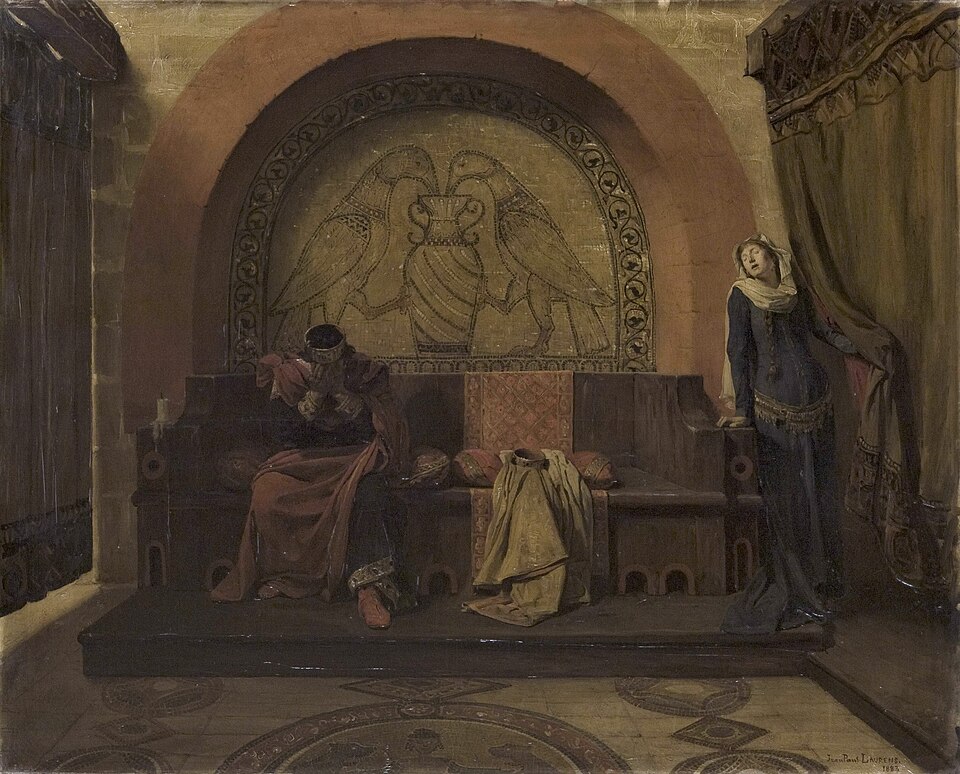
—What did it smell like, what was it like in the evening in your palace?
The evening, my child, was my favorite time. After evening prayers, the court gathered for the great meal. Picture a huge stone hall, lit only by torches and candles, with tapestries hung on the walls to keep out the cold. It smelled of wood smoke, wax, and warm bread. They served venison — game meat —, roast poultry, white wheat bread reserved for nobles. Sometimes a minstrel told stories or played music. I wore a bliaut of embroidered silk, a long fitted garment. But beneath the laughter, they spoke in hushed tones of the kingdom's affairs and the threats from Rome.
Beneath the laughter of the meal, they spoke in hushed tones of the threats from Rome.
—But why did the Church absolutely want to command kings?
Good question, you're clever. In my time, the Church wanted to become stronger than kings. This great movement was called the Gregorian Reform. The priests sought to decide who could marry, especially among nobles. Why? Because by forbidding certain marriages, they prevented great families from becoming too powerful by uniting their lands. My marriage to Robert became an example for them: proof that even a king must obey. Picture two powers contending, the sword on one side, the cross on the other. And me, a woman, caught in the middle like a pawn. Our story served as a lesson to all of Europe.
Two powers were contending, the sword and the cross, and I was the stake.
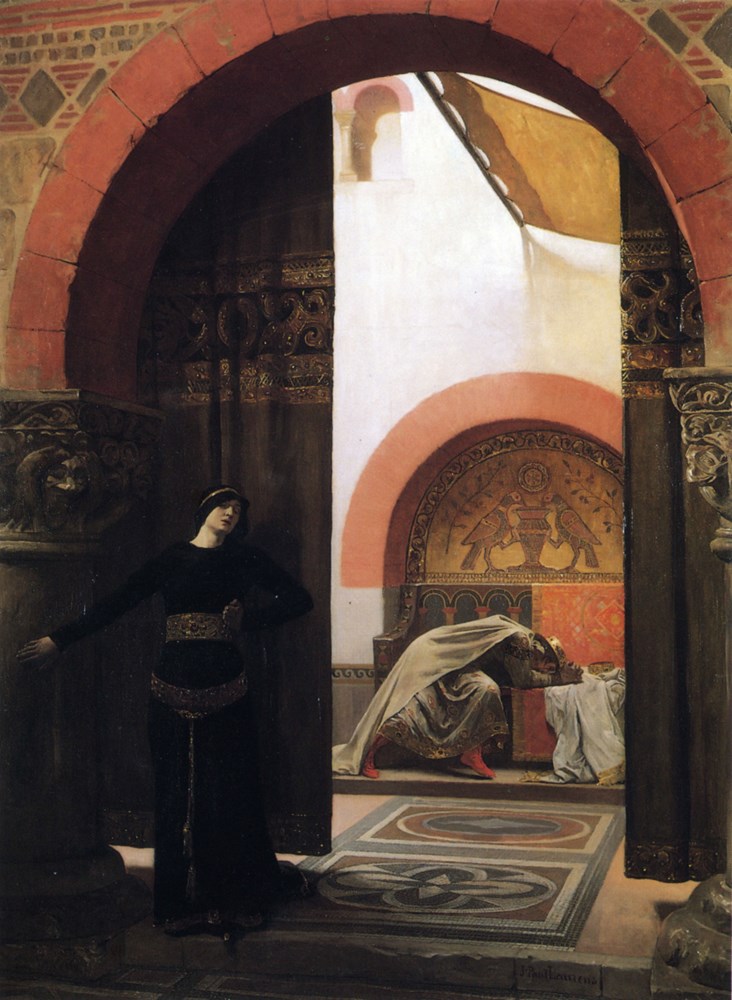
—Who was the pope who bothered you the most?
There were several, but one surprised me greatly. A very learned French monk, Gerbert of Aurillac, became pope in 999 under the name Sylvester II. And do you know what? He had been the teacher, the tutor, of my Robert when he was a child! Imagine: your former teacher becomes the head of the entire Church, and he orders you to leave your wife. His letters demanded that Robert obey the rules, on pain of bringing God's wrath upon the kingdom. Such a cultivated man, who had taught my husband to read, did not defend me. This taught me that even friendship bends before the laws of the Church.
Even friendship bends before the laws of the Church.
—Were you sad when they finally separated you?
Yes, deeply. Around 1001, after years of resistance, Robert gave in. The pope and the bishops of the kingdom were too strong. Our marriage was annulled, as if it had never existed. Imagine erasing years of your life with a stroke. I was no longer queen. Two years later, Robert married another lady, Constance of Arles, and had children with her. I left, never to regain such a high rank. That was the hardest part: realizing that my will counted for nothing. The fate of a noble woman depended entirely on kings and the Church, never on her own heart.
They erased our marriage like erasing years of your life.
—Why is so little said about you in history books?
Because after my separation, I almost disappear from the chronicles, my child. The monks who wrote history spoke only of kings, battles, the powerful. A repudiated queen, a woman without a crown, no longer interested them. I died around 1010, in silence. The location of my tomb is not even well known. Imagine an entire life — countess of Blois, queen of France, then forgotten — of which only a few lines remain. That's why your question touches me so much. By taking an interest in me, you bring me back to life a little. Remember: behind every great king, there were women who were forgotten to history.
Behind every great king, there were women who were forgotten to history.
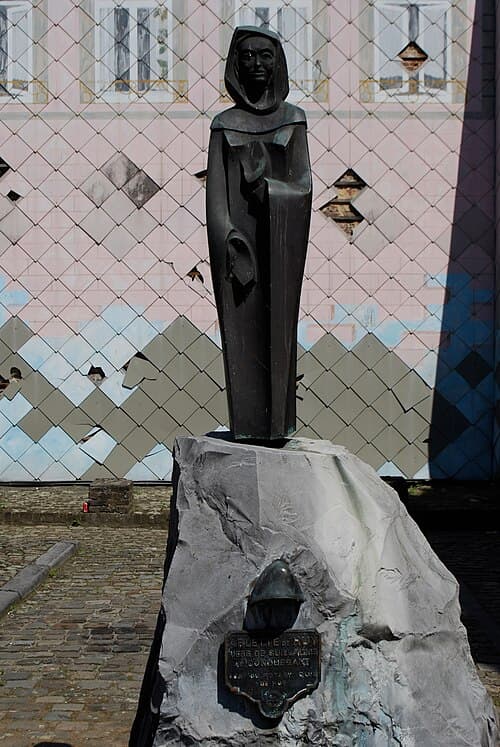
This imaginary interview was generated by artificial intelligence from sources documented in Berthe de Bourgogne's profile. It dramatises what the figure might have said based on what we know about them, but does not constitute attested historical testimony. For primary sources and factual documentation, refer to the full profile.