Imaginary dialogue between Robert II le Pieux and Berthe de Bourgogne
by Charactorium · Berthe de Bourgogne (964 — 1010) · Politics · Society · 5 min read
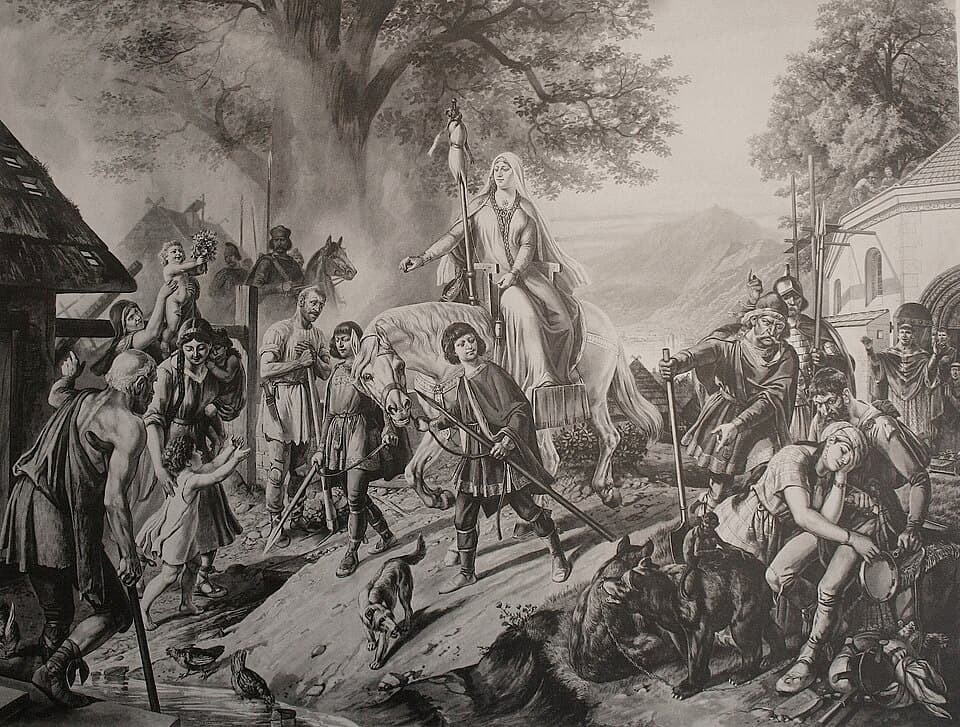
It is in a low hall of the Palais d'Orléans, one evening in the year 1001, that Robert II and Bertha of Burgundy meet one last time. The candles flicker, the smell of hot wax mingles with that of damp tapestries, and outside the bells ring for compline. They have loved each other since their marriage, four years earlier, but the king has just learned that he must repudiate her in order not to lose his soul and his kingdom. He questions her one last time, no longer as a sovereign, but as a husband seeking to understand what blood, the pope, and reason of state have broken.
—Bertha, before I knew you, you already reigned over Blois alongside Odo. What were you in that county that rivaled mine?
I was the daughter of Conrad of Burgundy, my lord, and no one asked my opinion when I was taken to Blois, around 985, to marry Odo. Understand what that marriage was: two northern powers were bound together so that they would stop tearing each other apart. I held the position of a countess there, managing fiefs, sealing charters, receiving my husband's turbulent vassals. That county which your young dynasty feared, I inhabited it as one inhabits a frontier: always between two fires. You who fought so much against the house of Blois know better than anyone how much I too was a piece on the chessboard.
No one asked my opinion: I was a piece on the chessboard of the powerful.
—When Odo died in 996, and I took you as my wife a few months later, did you think you were marrying a king or escaping your widowhood?
I will answer you frankly, since it is you. I had become a dowager countess, a rank that keeps the revenues but freezes a woman's life in waiting. Our union strengthened the ties between Burgundy and your crown — that is how it was presented to the great men of the kingdom. But I will not lie before you: there was also affection, and perhaps imprudence. We hurried, barely had Odo been buried. I wanted to believe that being queen would erase the grayness of widowhood. I did not yet know that this very haste would give the bishops the weapon they needed to destroy us.
I wanted to believe that being queen would erase the grayness of widowhood.
—Pope Gregory V convened the Synod of Pavia in 997 to condemn us as cousins. Did you understand, that day, that everything was over?
No, not that day. They said we were related in the fourth degree, united by blood according to their canonical computation, and that our bed was therefore incestuous in the eyes of God. But you, my king, refused to bend. How many times did I see you return from the chapel, your face closed, having sung your psalms all day, and still tell me that you would not drive me away? I believed that your piety itself would give you the strength to stand up to them. Consanguinity — that word I could not pronounce before it became our condemnation — bound us more surely than our vows, but in the wrong way.
Consanguinity bound us more surely than our vows, but in the wrong way.
—They excommunicated me for keeping you, around 998. Do you know what it cost me to remain despite the anathema?
I know, and it is the wound I will always carry. Excommunication is not a cleric's threat: it deprived you of the sacraments, it could release your subjects from their oath, shake the very throne beneath your feet. A king cut off from the Church is a king his nobles can abandon. And you endured that for me, you the most pious of princes, you who attended services several times a day. Every mass from which you were excluded was a wound. I could see that you were consumed between your love and your faith. No woman should be worth a man risking his salvation — and yet you did it.
No woman should be worth a man risking his salvation — and yet you did it.
—Gerbert of Aurillac, my former teacher, became pope under the name Sylvester II. Did you think he would spare us, he who taught me?
I hoped so, I admit. A man who had taught you letters and numbers, how could he strike you? But I understand today that it was not a matter of men. Rome was not only seeking to undo our marriage bed: it wanted to establish that the pope commands kings, that no princely union escapes canon law. Our marriage was an example that had to be broken for the edification of all. Gerbert, for all our friendship, maintained the pressure because a pope cannot yield without weakening himself. We were not two lovers being judged — we were the battlefield where the Church proved its new strength.
We were not two lovers being judged, but the field where the Church proved its strength.
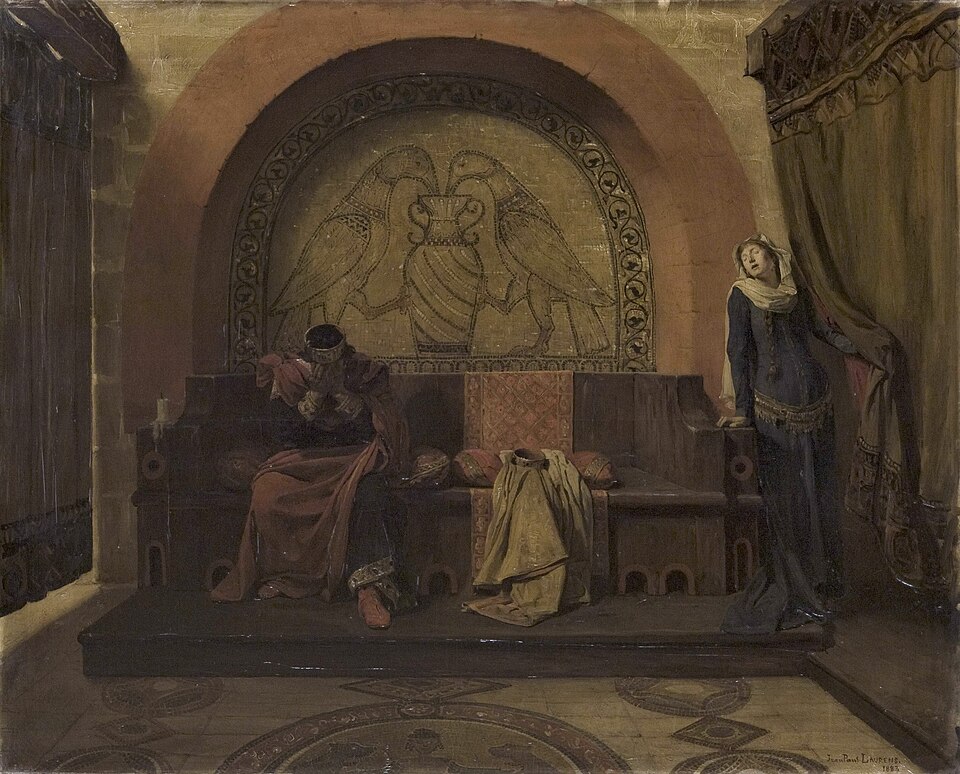
—Much is said about a reform that seeks to subject princes to Rome. You who have governed lands, do you understand what they really want?
I understand it better than they think, my lord. The Church is afraid, deep down. It sees the great houses marrying among themselves, piling up fiefs, concentrating lands and power, and it has understood that marriage is our sharpest weapon. By forbidding unions up to the seventh degree of kinship, it holds us all: for who among the high nobility is not a cousin to the one they marry? This reform movement wants to place the crozier above the crown. We, as you see, served as a demonstration. Where you saw a wife, they saw a precedent to be engraved in the law of all Christendom.
Where you saw a wife, they saw a precedent to be engraved in the law.
—Our mornings began together at matins, before daylight. What will you keep of our hours at court, once I have lost you?
I will keep the dawn, Robert. You rose before everyone for the chapel, and I followed you in the cold of the great, poorly heated halls, where we shivered under furs. I remember your voice singing the psalms, more accurate than that of your chaplains. Then came my ladies, the slow toilette, the veil embroidered with gold, the silk bliaut brought from Byzantium. In the afternoon, I governed my embroidery workshops and my stewards; in the evening, we presided together over the meal, venison on meat days, fish on the fast days you multiplied. A life regulated like an office. It is this daily peace, more than the crown, that is being torn from me.
It is this daily peace, more than the crown, that is being torn from me.
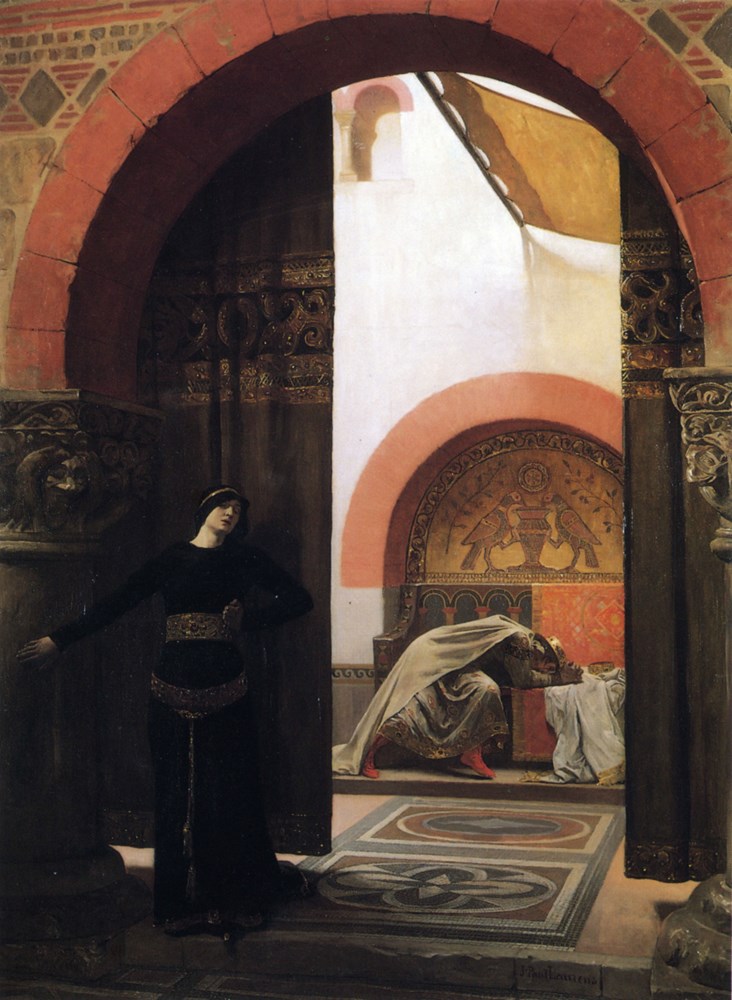
—I am said to be excessively pious. Did my devotion weigh on you, in the intimacy of our days in Paris and here?
Weigh on me? No, it first reassured me. A king who prays so much, I thought, will know how to protect what he loves in God's name. I shared your illuminated psalters, your reliquaries, your vespers and complines. I fasted with you when the table renounced meat. But I will tell you what I would have told no other: your piety was both our refuge and our ruin. For a prince so devout could not, in the end, disobey the Church without tearing himself apart. Those who saw you sing at the offices knew that you would eventually submit. Your faith made you incapable of keeping me against God.
Your piety was both our refuge and our ruin.
—Tomorrow, when you leave this court, what will become of you? I fear, Bertha, that you will be entirely forgotten.
Your fear is justified, and I have already accepted it. A repudiated queen does not regain her rank; she returns to the shadows from which one no longer emerges. The chroniclers who write your reign will barely note my name, a line perhaps, between two affairs of the kingdom. They will say that Robert the Pious had a consanguineous wife, and they will move on. I will return to my pious donations, to some abbey in Touraine or Blois, for the salvation of my soul, since that is all that remains for women who are set aside. Do not torment yourself about my memory: the destiny of a noble woman has never been to endure in stories, but to serve alliances.
A repudiated queen does not regain her rank; she returns to the shadows from which one no longer emerges.
—The nobles urge me to take another wife to ensure my succession. How do you expect me to live after having driven you away?
You will live as kings live: bending your pain to the good of the kingdom. They will find you a wife who will give you sons, heirs for your crown, and the Capetian throne will be strengthened by my disappearance. Do not deny it, Robert: it is the order of things, the very one that led me to you and then tears me away. Pray for me, if you wish to remain faithful to me still — that is the only fidelity now permitted to you. And when you sing your psalms at dawn, in the cold we knew together, remember that a woman loved you enough to give you back to God and to your duty without a reproach.
Pray for me, if you wish to remain faithful to me still: that is the only fidelity permitted to you.
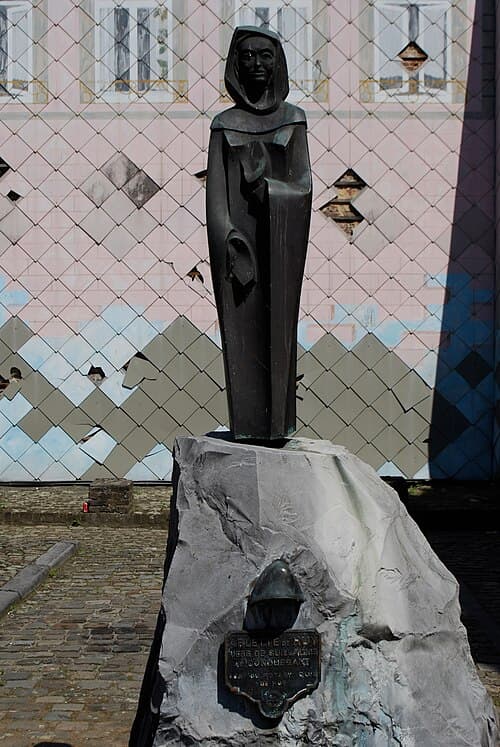
This imaginary interview was generated by artificial intelligence from sources documented in Berthe de Bourgogne's profile. It dramatises what the figure might have said based on what we know about them, but does not constitute attested historical testimony. For primary sources and factual documentation, refer to the full profile.