Imaginary interview with Berthe Morisot
by Charactorium · Berthe Morisot (1841 — 1895) · Visual Arts · 6 min read
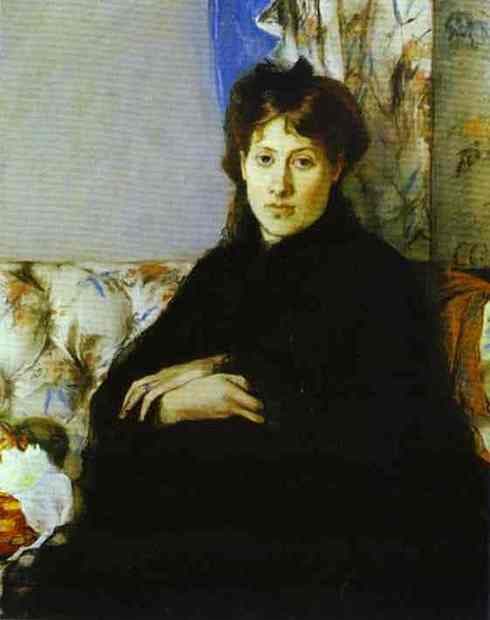
Mézy-sur-Seine, a summer morning in 1893. The garden smells of cut grass and turpentine. Berthe Morisot sets down her brush, wipes her fingers stained with pearly white, and agrees to speak in a low voice, as if confiding a secret between two sittings.
—How did you experience that day in April 1874, when you hung your canvases on the Boulevard des Capucines?
They thought we were mad, and perhaps we were a little. In the former studio of photographer Nadar, on the Boulevard des Capucines, our canvases hung alongside those of Monet, Renoir, Degas — and I was the only woman among them. I had hung The Cradle, where my sister Edma watches over her sleeping child. The critics sneered, spoke of daubings, of wallpaper in a sketchy state. A woman of my station should have died of shame. But I clenched my teeth and stayed. Leaving the Official Salon for this band of outcasts meant closing the door to respectability behind me. Yet I never regretted choosing true light over medals.
I was the only woman among them, and I never regretted choosing true light.
—For a bourgeois woman, wasn't it a considerable risk to show yourself like that?
You have no idea what was expected of a well-born young lady under the Third Republic: a husband, a salon, harmless watercolors to show guests on Sundays. Painting for yourself, yes; exhibiting among men who were dragged through the mud, never. When I presented The Cradle in 1874, I knew my name would be thrown to the wolves along with the others. My mother worried, society whispered. But the child sleeping under the muslin of the cradle, that veil touched by Edma's hand — that was what I wanted to paint, and no academic jury would have given me permission. I preferred scandal to blandness. A free brushstroke is worth more than a polite compliment.
I preferred scandal to blandness.
—Do you remember your meeting with Édouard Manet in 1868?
I was copying at the Louvre, like so many young girls, when I was introduced to Édouard Manet. He had a mocking elegance, a confidence I envied and that annoyed me. Very quickly, he wanted to paint me — and he never stopped. Eleven of his canvases feature me: sometimes in mourning, face serious, sometimes with a bouquet of violets. Being his model and his equal was a strange position, sometimes painful. He gave me advice that I didn't always follow, he admired me without ever admitting it openly. Our bond was not what one imagines: it was a dialogue of painters, made of admiration and petty rivalries, lasting until his death in 1883.
Being his model and his equal was a strange position, sometimes painful.
—And this marriage to Eugène, Édouard's younger brother, how did it come about?
The very year of our first exhibition, 1874, I married Eugène Manet. It was said I was thus tying my life to the family that had opened painting to me — and it's true, in a way. Eugène was not jealous of my work, which, believe me, was rare. He carried my sketchbooks, put up with my moods in front of the motif. In the summer of 1875, we traveled to the Isle of Wight, and I painted him at the window, watching sailboats pass behind the curtains. Eugène Manet on the Isle of Wight — a man seated, the outside calling him, the interior holding him back. That was a bit like our life: me turned toward the garden light, him ensuring nothing distracted me from it.
A man seated, the outside calling him, the interior holding him back — that was a bit like our life.
—Your colleagues painted cafés, train stations, boulevards. Why is that world absent from your canvases?
Because it was closed to me, quite simply. Monet set up his easel at the Gare Saint-Lazare, Degas haunted the wings and café-concerts; I, a woman of my rank, could not enter alone without losing my reputation. I was confined to interiors, gardens, children's rooms. I could have complained all my life. I preferred to make it my kingdom. The cradle, reading in the garden, a young woman gazing at herself in a dressing table mirror — those domestic trifles that men deemed too slight for great painting, I took seriously. The light falling on a child's cheek is worth that of a locomotive. Constraint gave me a subject; I turned it inside out.
Constraint gave me a subject; I turned it inside out.
—What were you seeking in those gardens of Bougival or Mézy where you spent your summers?
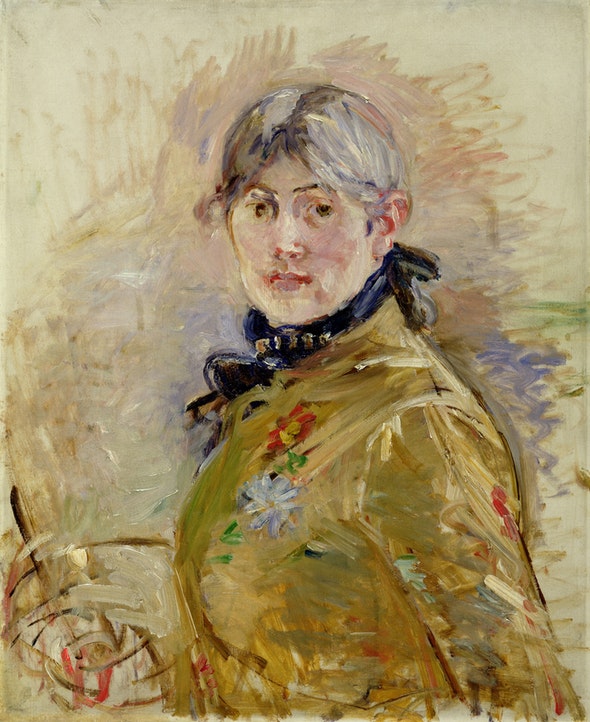
The light that moves. From early morning, I would take my field easel, light, collapsible, set up in three gestures among the flowerbeds. At Bougival, then here in Mézy-sur-Seine, the garden was not a backdrop: it was the painting itself. The vegetation vibrates, the foliage trembles, a muslin dress blends with the flowers — everything starts to quiver if you know how to look long enough before setting down the brush. The Garden at Bougival was born of those mornings. I watch for the moment when the summer light makes things tremble, and I hurry, because that moment does not return. Painting en plein air is a race against the sun that you always lose, and that you begin again each day.
Painting en plein air is a race against the sun that you always lose.
—It is said that Édouard Manet once advised you to rework a canvas. What did you reply?
I remember it as if it were yesterday. I wrote to my sister Edma in 1869: 'Monsieur Manet advised me to rework my painting... but I preferred to leave it as is. There is a freshness in the sketch that I never find afterward.' That sums up my stubbornness. Édouard had a sure eye, I don't deny it. But when you go over a canvas to 'finish' it, you kill what made it alive — that first breath where the hand moved faster than thought. The sketch retains the trace of the surprised gaze; the polished painting keeps only the embalmed memory. I disobeyed Manet, and I believe I was right.
There is a freshness in the sketch that I never find afterward.
—Critics constantly reproached you for neglecting form. How did you receive that reproach?
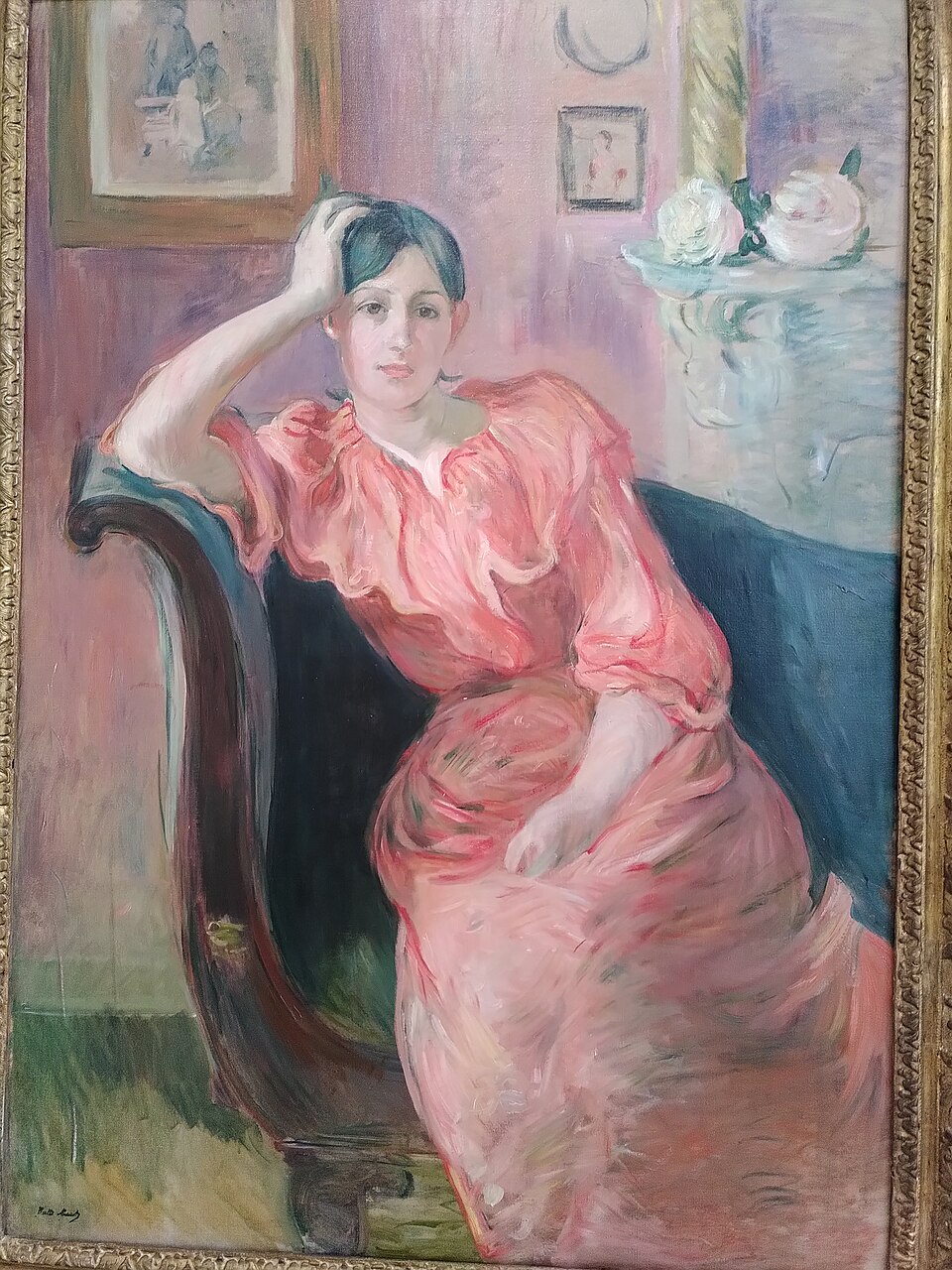
With an obstinacy that nothing could discourage. I wrote it myself, in my letters: 'I am always reproached for neglecting form; it is true that I sometimes sacrifice precision to the general impression.' For those gentlemen of Academicism, draw first, color afterward, that was the law. But the eye does not see outlines; it sees patches of light, colors that bite into each other. When I paint my daughter Julie with the cat, I do not outline her face with a black line: I let the brushstroke convey the roundness of the cheek, the fuzziness of the animal's fur. Sacrificing precision is not laziness — it is choosing the truth of the gaze over the truth of the compass.
The eye does not see outlines; it sees patches of light.
—Tell us about those Thursday evenings on Rue de Villejust, where so many brilliant minds gathered.
Every Thursday, in our apartment in the sixteenth arrondissement, on Rue de Villejust, Eugène and I held open house. Nothing ostentatious — a bourgeois salon, but where painting and poetry were discussed until unreasonable hours. Renoir arrived with his gruff cheerfulness, Degas with his biting remarks, and Mallarmé, my dear Mallarmé, whose sentences seemed painted too, so much did they seek the intangible. Sometimes Monet joined us. These were not society dinners in the sense understood in the smart districts: they were a workshop of words, where each defended his way of seeing. Julie, still a child, listened from the stairs. I believe those evenings were worth as much as our exhibitions: it was there, out loud, that everything we sought to paint was forged.
These were not society dinners: they were a workshop of words.
—You pass a lot on to your daughter Julie. What would you like to remain of all this, after you?
I don't like to think about the after; we work for the day's motif, not for posterity. But since you ask: I would like Julie to remain. I teach her to paint, to look long before setting down the brush, as I was taught. She keeps a diary where she notes our Thursday dinners, the words of Renoir and Mallarmé — without knowing it, she preserves the memory of an entire world. If I am read in a century, I would like them to say not 'Manet's sister-in-law,' nor 'the lady who painted cradles,' but a woman who looked light in the face and did not lower her eyes. The rest — medals, retrospectives — is the business of the living.
A woman who looked light in the face and did not lower her eyes.
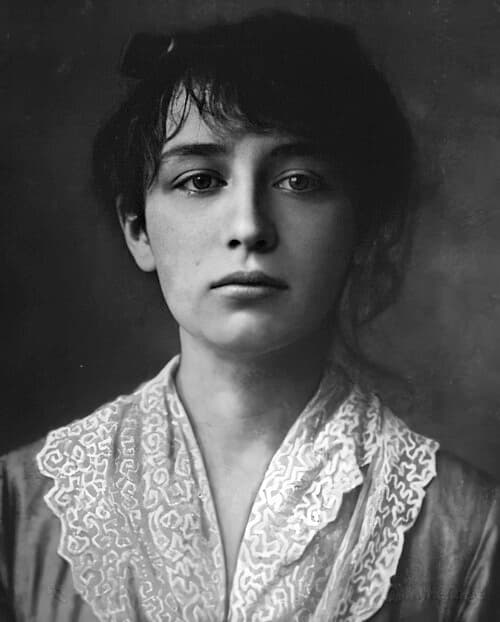
This imaginary interview was generated by artificial intelligence from sources documented in Berthe Morisot's profile. It dramatises what the figure might have said based on what we know about them, but does not constitute attested historical testimony. For primary sources and factual documentation, refer to the full profile.