Kids interview Berthe Morisot
by Charactorium · Berthe Morisot (1841 — 1895) · Visual Arts · 5 min read
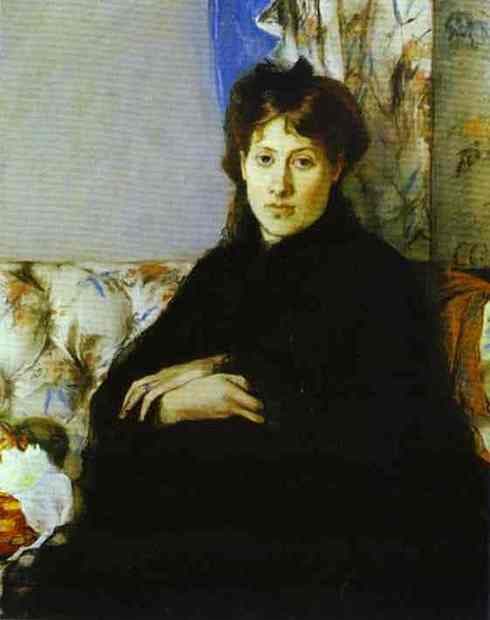
Two young visitors of twelve push open the door of a light-filled studio on rue de Villejust. A lady in a painter's apron sets down her brush and smiles at them. She agrees to answer all their questions, even the simplest ones.
—What was it like to be the only woman exhibiting with the other painters in 1874?
You know, my child, I was 33 years old that spring, on Boulevard des Capucines. Around me: Monet, Renoir, Degas. And me, the only woman in the group. Imagine a room where everyone mocks our paintings, where the newspapers call us daubers. It was risky for a young girl from a good family like me. But I had hung Le Berceau, where my sister Edma watches over her sleeping baby. I cared about it. At the time, the safe path was the Salon officiel, that big exhibition judged by the State. I chose the path of the rebels. They laughed at us? Too bad. I wasn't going to hide.
They laughed at us? Too bad. I wasn't going to hide.
—What did your parents say when you wanted to paint like that?
Imagine a very proper bourgeois family. A girl from that background could draw a little, like learning the piano. But to make it her profession, to exhibit, to sell? That wasn't really done. My first teacher, Joseph Guichard, warned my mother: with my sister and me, it would turn into a passion, almost a danger. He was right. I started seriously around 1857, then I learned from the great Corot, who painted landscapes like no one else. Gradually, painting ceased to be a salon pastime. It became my whole life, my daily obstinacy.
—Is it true you knew the painter Manet? Were you friends?
Oh yes, and what a meeting! It was in 1868, at the Louvre. Édouard Manet was already famous, and a bit scandalous. We quickly became very close. He painted me so many times — eleven paintings, imagine that! I posed, he watched, he discussed painting with me for hours. But mind you, I wasn't just a docile model. One day, he advised me to retouch one of my canvases. I'll tell you what I replied in a letter to my sister: “Monsieur Manet advised me to retouch my painting... but I preferred to leave it as is.” Even with him, I kept my freedom.
—And then you married him? I'm a bit confused!
Ah, you've touched the most beautiful part of the story! No, I didn't marry Édouard. I married his younger brother, Eugène Manet, in 1874, the very year of our big exhibition. Imagine: a whole family bound by art. Eugène understood me. He painted me in front of sailboats, on the Isle of Wight, in England. And when Édouard died, in 1883, it was a huge grief for all of us. I helped protect his memory, to show his paintings. You see, in my life, painting and family were never separate. They were the same thing, the same love.
In my life, painting and family were never separate.
—Why did you mainly paint ladies, babies, gardens? Never the street?
Good question, my child, and the answer is both sad and beautiful. In my time, a woman of my background could not walk alone in cafés, train stations, grand boulevards. My friends Monet or Renoir, they painted those places freely. I was forbidden to do so. So I did otherwise. I looked at what was before my eyes: my sister leaning over a cradle, my daughter Julie with her cat, a garden in summer at Bougival. I turned a closed door into an open window. My home became my most beautiful country to explore.
I turned a closed door into an open window.
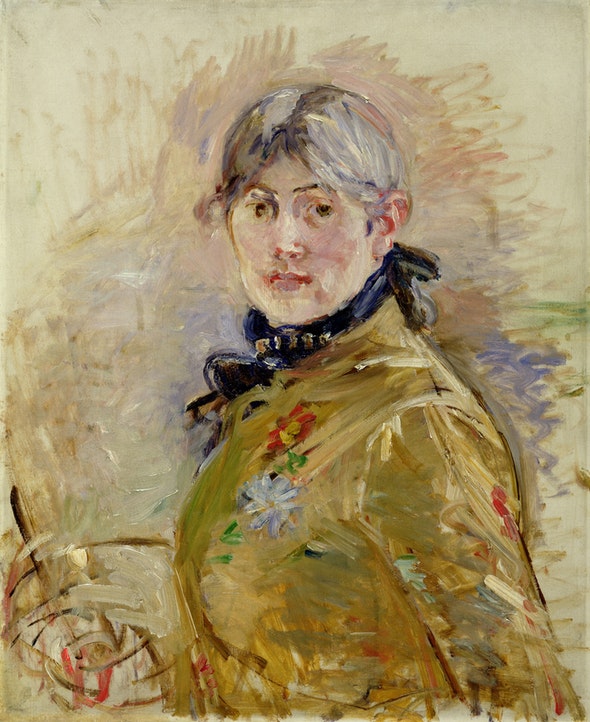
—What was your home like? What was in your studio?
Imagine a bright apartment, in the 16th arrondissement of Paris, with a studio bathed in soft light. On my table, my box of oil paints: whites, pale blues, pinks, soft greens. I loved light tones, almost pearly. Also lying there, my sketchbooks, because I drew a lot before painting. And a toilet mirror, which I loved to slip into my paintings to play with reflections. In summer, we went to the countryside, to Mézy, and the garden became my backdrop. I painted outdoors, on my little folding easel, until the light faded.
—People said your paintings were unfinished. Did that make you sad?
At first, yes, a little. I was always reproached for neglecting form, neat drawing. But I had chosen my path. You see, I wanted to capture the impression: that fleeting sensation of a moment, the light that passes and will not return. Not a frozen photograph, no. The breath of life. I wrote it myself: “it is true that I sometimes sacrifice precision to the general impression.” For that, my touch remained visible, rapid, vibrant. Many found it unfinished. I saw in it the very quivering of things. And I worked with an obstinacy that nothing could discourage.
I wanted to capture the breath of life, not a frozen photograph.
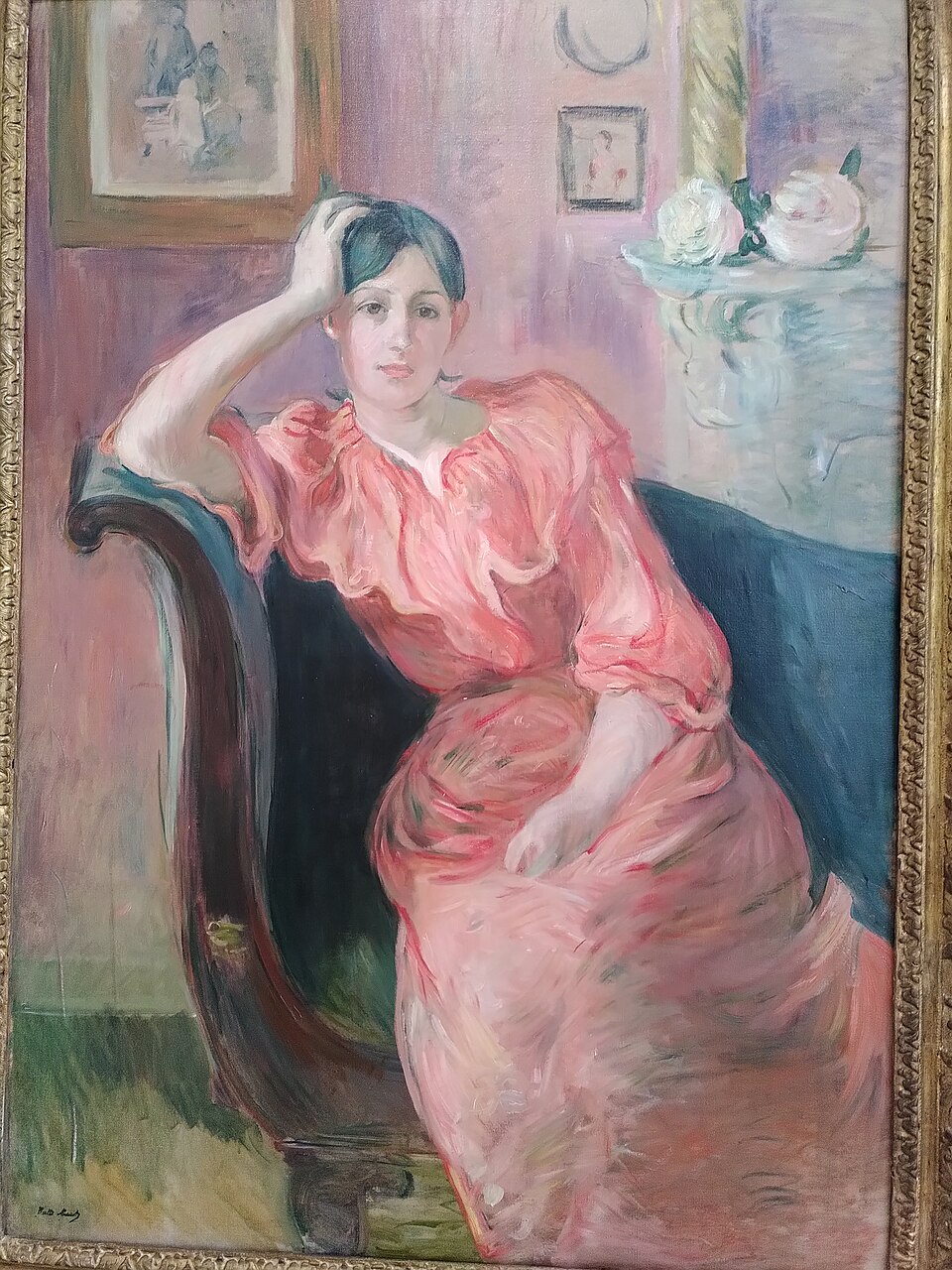
—What is a sketch? And why did you like it more than the finished painting?
A sketch is the very first state of a painting. You quickly lay down the broad masses, the light, without specifying everything yet. It's almost a draft, but a living draft. And you know what? I often found a freshness in it that I later lost. I wrote to my sister: “There is a freshness in the sketch that I never find afterward.” Imagine a rose barely opened: if you wait too long, it wilts. My job was to capture that instant, neither before nor after. Facing the motif, outdoors, I looked for a long time before setting down the brush, so as not to kill that quiver.
There is a freshness in the sketch that I never find afterward.
—What did you do in the evenings? Did you entertain friends at home?
Ah, Thursdays! That was my weekly joy. In the evening, with Eugène, we received guests on rue de Villejust. Imagine a salon without flashy luxury, but full of wit. Renoir, the poet Mallarmé, sometimes Degas or Monet would come. We talked painting, read verses, listened to music until late. My daughter Julie attended and wrote everything in her journal — a treasure for understanding our era. These were not dinners of bored rich people. They were friends who loved each other and believed in the same things. Around a table, we remade the art world.
—When people talk about you later, what would you like them to say?
What a beautiful question to end with, my child. I don't ask that they say “she was a woman painter.” Just “she was a painter,” simply, fully. I held firm in a man's world, without shouting, but without yielding. When I left, my friends Degas, Renoir and Monet themselves organized a large exhibition in my honor. True artists saluting one of their own: that's the most beautiful thing that ever happened to me. So if you remember me, remember one thing: you can paint the light of a cradle and stand up to the whole world. Both at once.
You can paint the light of a cradle and stand up to the whole world.
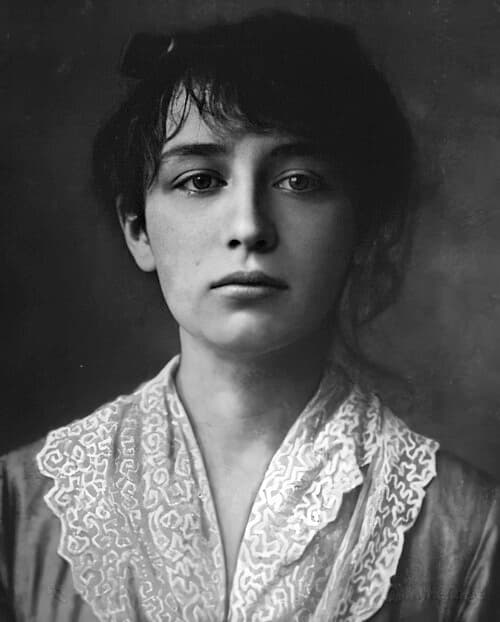
This imaginary interview was generated by artificial intelligence from sources documented in Berthe Morisot's profile. It dramatises what the figure might have said based on what we know about them, but does not constitute attested historical testimony. For primary sources and factual documentation, refer to the full profile.