Imaginary dialogue between Édouard Manet and Berthe Morisot
by Charactorium · Berthe Morisot (1841 — 1895) · Visual Arts · 5 min read
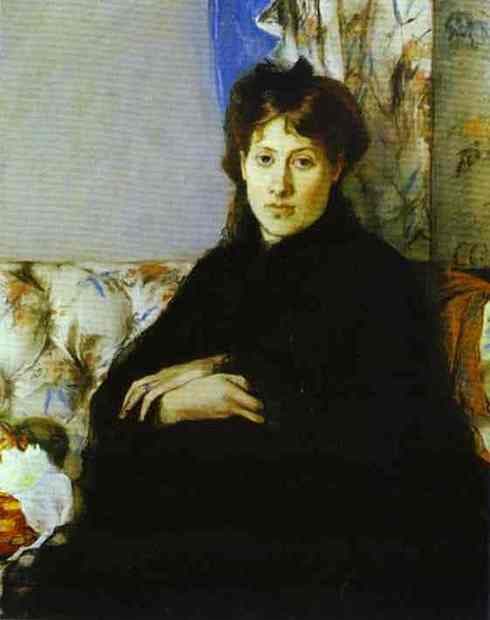
It is in the garden of a rented house in Bougival, on an afternoon in the summer of 1881, that Édouard Manet meets his sister-in-law Berthe Morisot. The air smells of cut grass and linseed oil; a folding easel remains planted near the flowerbeds, a barely sketched canvas drying in the sun. They have known each other for thirteen years — since that day in 1868 when they were introduced at the Louvre — and this bond of studio and family allows questions that another would not dare. Manet comes as a painter and a friend, curious to know what, behind the society woman, holds the brush so firmly.
—Berthe, I remember that spring of 1874, on the Boulevard des Capucines — you were the only woman among us. What did you feel hanging The Cradle in that uproar?
You know better than anyone, Édouard — my heart was pounding. Hanging The Cradle among your canvases, in that cacophony of laughter and insults, meant exposing myself doubly: as a painter, and as a woman who dares. My mother begged me to give up, to stay safe at the Salon. But I had seen my sister Edma watching over her sleeping child — that silence, that light on the sheet — and it had to exist on canvas. When visitors stopped to sneer, I clenched my teeth without lowering my eyes. And yet I have never regretted joining your band. You had told me my place was among you; that day, I believed it, and I never looked back.
It meant exposing myself doubly: as a painter, and as a woman who dares.
—You know how many times I made you pose — eleven canvases, Berthe. Do you remember our first meeting, in 1868, before the Old Masters?
How could I forget? It was at the Louvre, in 1868 — we were introduced before the masters, and you looked at me as one sizes up a painter, not a girl to be married. It moved me deeply. Then you had me pose so many times that I ended up knowing your way of squinting before attacking the canvas. Standing still before you while you painted was a school: I learned your boldness, that way of laying down black as a living color. But I confess, Édouard: under your brush, I was only a model. I always had to return to my studio to become the one who holds the handle.
You looked at me as one sizes up a painter, not a girl to be married.
—Do you remember that canvas I urged you to rework? You stood your ground. Why do you always prefer the sketch to the finished work?
Standing up to you! Yes, I remember. I tried to rework it, out of deference — and I spoiled everything. There is a freshness in the sketch that I never find afterwards. The first stroke retains the trace of the gaze, the emotion of the moment when the light seizes you. Going over it again is smoothing, it's lying a little. I prefer a canvas that still breathes hesitation to one that thinks itself finished. They may call me unfinished, sketchy — so be it. I'd rather tremble justly than paint falsely. You, who lay down black in a single stroke without repentance, should understand me better than anyone.
There is a freshness in the sketch that I never find afterwards.
—We others are reproached for cafés and train stations. You, Berthe, what keeps you so in gardens and rooms?
What keeps me? The only life I can reach, Édouard. You dash off to the café, the station, the grand boulevards — I am not allowed to go there alone. A woman of my class does not sit at Tortoni's. So I have made my constraint my kingdom. The garden, the bedroom, the cradle, a woman doing her hair: that is what I know by heart, what I can observe for hours without being reprimanded. And I find treasures of light that your boulevards lack — muslin filtering the sun, a face bent over needlework. It is my territory, and I defend it. They closed the doors of the outside to me; I opened wide those of the inside.
They closed the doors of the outside to me; I opened wide those of the inside.
—That folding easel you bring here to Bougival — painting outdoors, under this sun that never stops moving, isn't it a challenge?
A challenge, yes — and a joy. I plant this light easel here, under these trees, and I chase a light that won't stay still. No sooner have I captured the shadow on the grass than it has already slipped elsewhere. You must paint quickly, with a free wrist, without thinking, or the motif escapes you. My hands get covered in green and white, the wind makes the canvas tremble, Julie plays at my feet. You see, it's not the quiet studio where you recompose at leisure: it's a struggle against time. But when a corner of the garden finally vibrates on the canvas as it vibrates before me, I know why I persist like this in full sunlight.
You must paint quickly, with a free wrist, otherwise the motif escapes you.
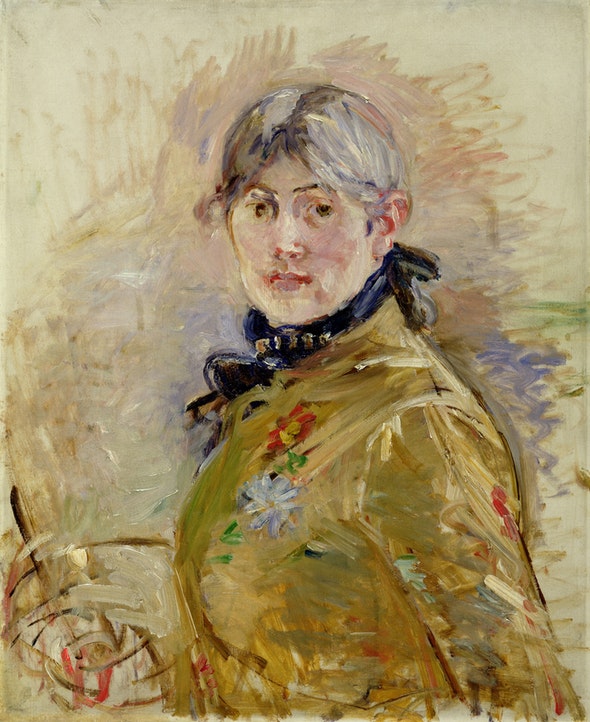
—The critics mocked us mercilessly, you know. But for a woman of your station, isn't that contempt even harder to bear?
Harder, no doubt. You are called mad, daubers — that's almost an artist's insult, a badge of honor. For me, they always add: 'for a woman.' As if my sex excused or aggravated every brushstroke. They praise my feminine grace when they want to diminish me, they marvel at my firmness when I hold my ground. I never wanted to be a curiosity, Édouard — the lady who paints. I want to be a painter, period. So I work with an obstinacy that nothing can discourage. That is my only answer to those who sneer: to still be there the next year, and the one after, my canvas hung on the same wall as yours.
I never wanted to be the lady who paints. I want to be a painter, period.
—My brother Eugène married you in 1874, the very year of our exhibition. How do you live being both a Manet and yourself, a painter?
A strange fate, isn't it? Meeting you, then marrying your brother — entering the Manet family as one enters a family of painting. Eugène understands me; he set aside his own ambitions to protect mine, he carries my canvases, he discusses my hangings. Few men would do that. But I am careful not to dissolve into that illustrious name. They could so quickly say: Manet's sister-in-law, Eugène's wife, as if I were just a satellite. I sign Berthe Morisot, and I hold on to that name. Being one of you gave me everything — a milieu, friends, your example. But before my canvas, I am alone, and that is just fine.
They could so quickly say: Manet's sister-in-law. I sign Berthe Morisot.
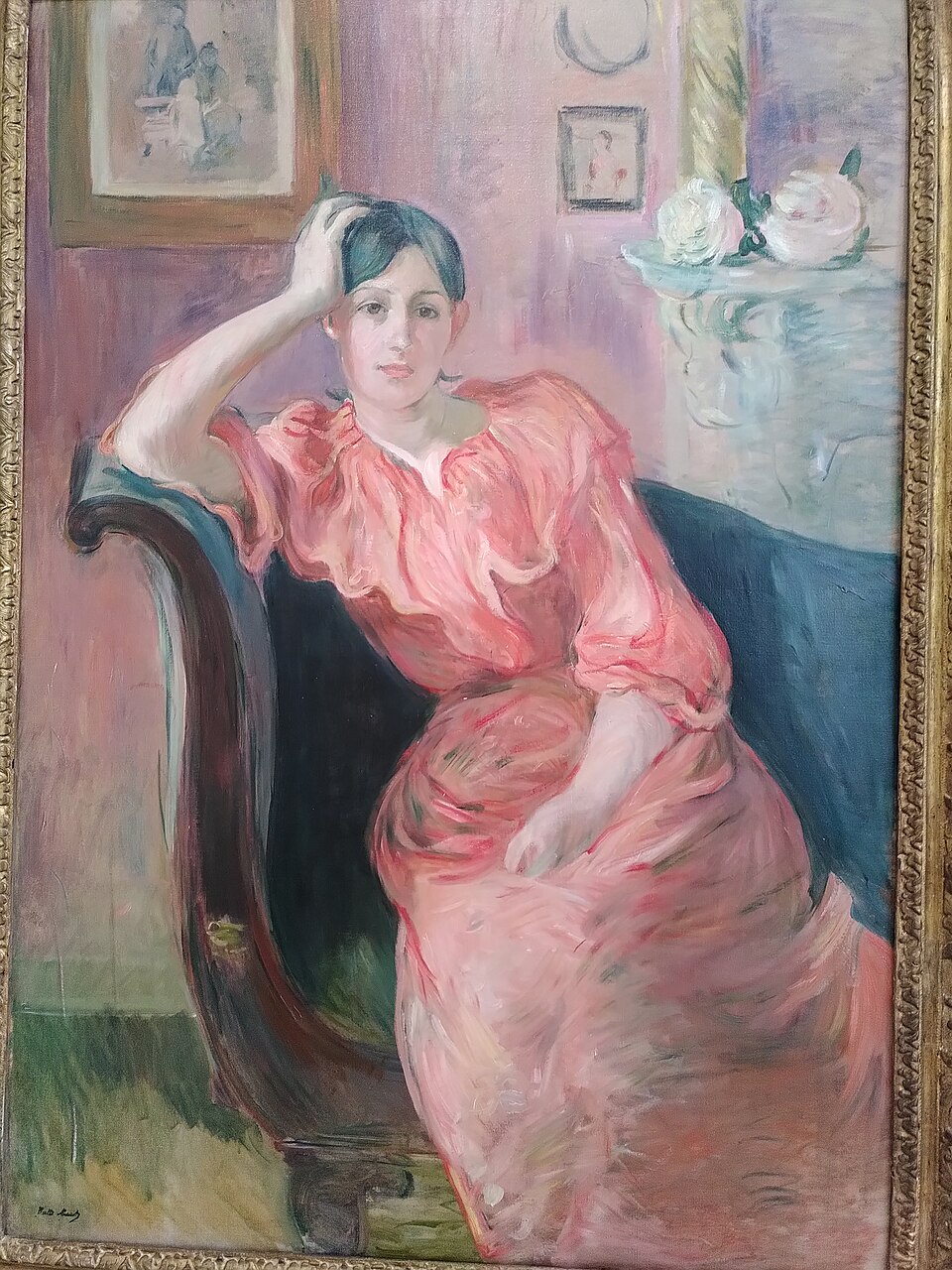
—You are reproached, I often hear, for neglecting form. What do you say to those who want more precision in your touch?
Let them reproach me, so be it. It is true that I sometimes sacrifice precision to the general impression — and I fully accept that. What is a sharp outline but a polished lie? The eye does not see lines, it sees patches of light, vibrations, things that tremble. To want to outline everything, to fix everything, is to kill what makes a face alive. I seek the impression, what remains when you close your eyes. If for that my form dissolves a little into the air and color, so much the better. The academicians want a polished finish; I leave them their plaster statues. I want the sensation, fleeting and true.
The eye does not see lines, it sees patches of light that tremble.
—Little Julie grows up amid our brushes and smells of turpentine. Do you already think of passing on this craft to her?
Think of it? I think of it every time she dips her fingers in my palette! Julie is barely three, but already she watches me paint with a seriousness that moves me. I don't know if I would want this craft for her — it is so hard for a woman, as you well see. But I will forbid her nothing. If painting takes hold of her, I will be there to teach her to see before teaching her to draw: to look long, as I do, until the thing yields its secret of light. That is what I would like to pass on to her, more than recipes — that patience of the gaze. The craft of the hands, she will learn if her heart is in it.
Teach her to see before teaching her to draw.
—On Thursdays, your salon fills with Renoir, Mallarmé, Degas. What is at stake for you in those evenings?
What is at stake? Everything, Édouard — except business and honors. When Renoir, Degas, Mallarmé crowd into our home, it is not to sell or to shine. We talk about painting as we breathe, we read verses, we argue over a touch, a light. Mallarmé brings his obscure poems, Degas his brilliant malice, and I listen more than I speak — it is in those silences that I learn the most. These evenings are our true academy, the one we were not given. Far from juries, far from the press that mocks us, we are simply among people who believe in the same thing. When everything else is hostile to us, these Thursdays keep me standing.
These evenings are our true academy, the one we were not given.
This imaginary interview was generated by artificial intelligence from sources documented in Berthe Morisot's profile. It dramatises what the figure might have said based on what we know about them, but does not constitute attested historical testimony. For primary sources and factual documentation, refer to the full profile.