Imaginary interview with Bessie Coleman
by Charactorium · Bessie Coleman (1892 — 1926) · Technology · Society · Exploration · 6 min read
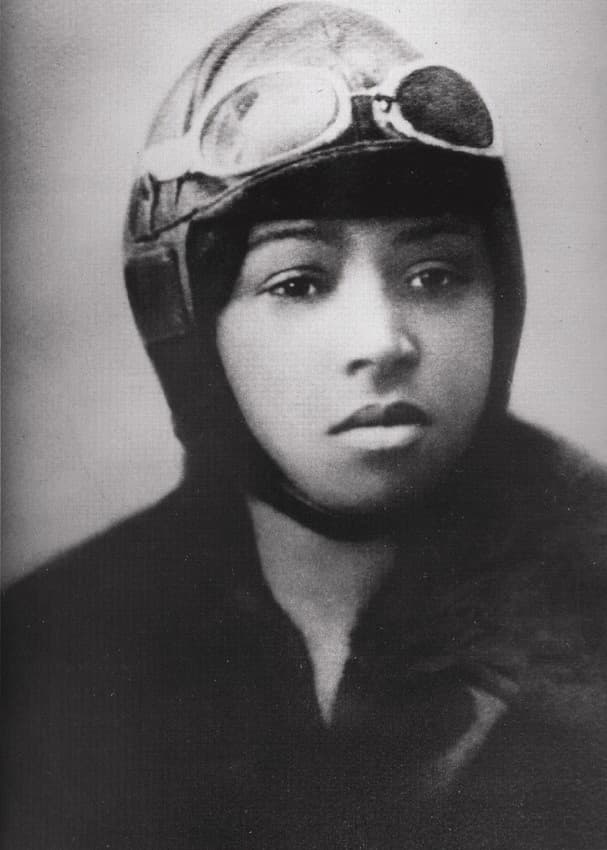
Chicago, an autumn evening in 1925. In a boarding house on the South Side, Bessie Coleman has just returned from a tour, her aviator goggles still lying on the table next to a crumpled aeronautical map. She agrees to tell her story, her voice steady and eyes bright, about the long journey that took her from Texas to the skies of France.
—How did you come to cross an entire ocean to learn to fly?
Because here, no door was open. I knocked at every flight school in America, and everywhere the same answer: neither women, nor people of my color. I was a manicurist in Chicago, listening to the stories of pilots back from the Great War, and I told myself that if the sky didn't want me here, I would go seek it elsewhere. So I learned French, word by word, at night, exhausted. I saved up, took the boat, and landed at the Caudron brothers' school, in Le Crotoy, on the edge of the Bay of the Somme. The cold seeped into my bones, the planes were far from gentle, but they looked at me as a student, not an intruder. It was there, at last, that the sky was willing to have me.
If the sky didn't want me here, I would go seek it elsewhere.
—What does that license you obtained in France, that famous document from the Fédération Aéronautique Internationale, mean to you?
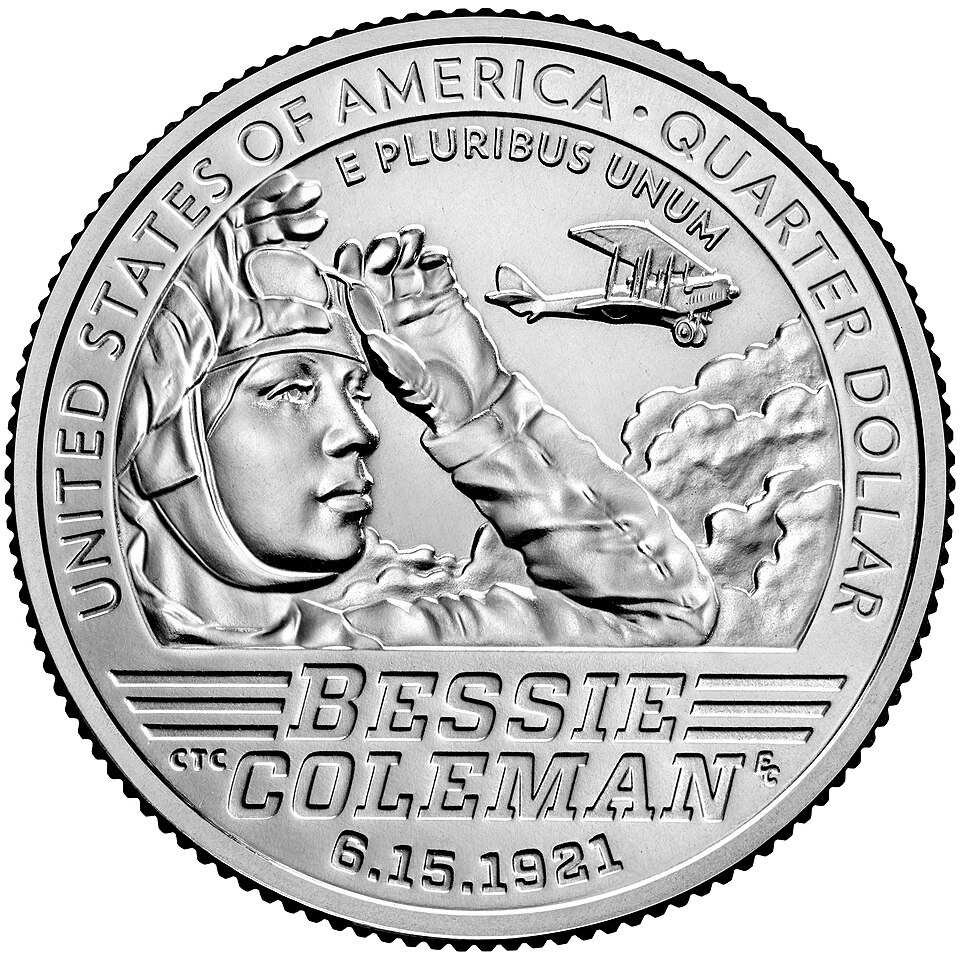
On June 15, 1921, I was handed a paper with a number, 18310, issued by the Fédération Aéronautique Internationale. A simple card, you might say. But that card was recognized in every country in the world, and it bore the name of an African American woman, the first. Think about it: every hangar in my own country had been denied me, and here I held a license that no one, anywhere, could take away. I kept it pressed against me on the boat back, like one keeps proof. Not proof that I knew how to fly—I already knew that. Proof that they could no longer pretend not to know it.
They could no longer pretend not to know it.
—Do you remember your first big air show on American soil?
September 3, 1922, at Curtiss Field, out near Garden City. Thousands of people under the sun, and me in my old Curtiss JN-4 biplane, that Jenny we bought from the army for a song. I remember the silence of the crowd when I dove toward the ground, then the roar when I pulled up at the last moment. Soon they called me Queen Bess in the papers. I liked that name, not for the crown, but because it said that a sharecropper's daughter from Texas could reign over something—even if only over three minutes of sky. That day, I understood that my plane was not just a machine: it was a platform.
My plane was not just a machine: it was a platform.
—What does a day on tour look like, when you live from one air show to the next?
The morning belongs to the engine. Before even coffee, I inspect the Jenny with my mechanic: the control surfaces, the wing fabric, every cable. These secondhand planes forgive little, and a forgotten bolt costs dearly. The afternoon belongs to the crowd: rolls, tight turns, low dives that make spectators hold their breath. Between flights, I sign autographs and answer reporters, whether Black or white. And the evening belongs to my people: I speak in a church, a community hall, I lodge with a family that opens its door to me, because hotels often remain closed. It's a life without a home, stitched together from contracts and roads, but each stop is a seed I plant.
The morning belongs to the engine, the afternoon to the crowd, the evening to my people.
—It's said that you sometimes refused to fly. Why give up your fee?
Because there are skies I will not rent. When an organizer proposed that I perform above a crowd where a barrier had been set up—Blacks on one side, whites on the other—I refused flatly. If he maintained that separation, I canceled, even if it meant leaving without a dollar. Jim Crow laws already ruled the grandstands, the trains, the restaurant doors; I would not let them rule my show as well. Aviation, as I see it, is something that brings together heads raised toward the same point in the sky. A segregated audience watches two different planes. I fly only one.
There are skies I will not rent.
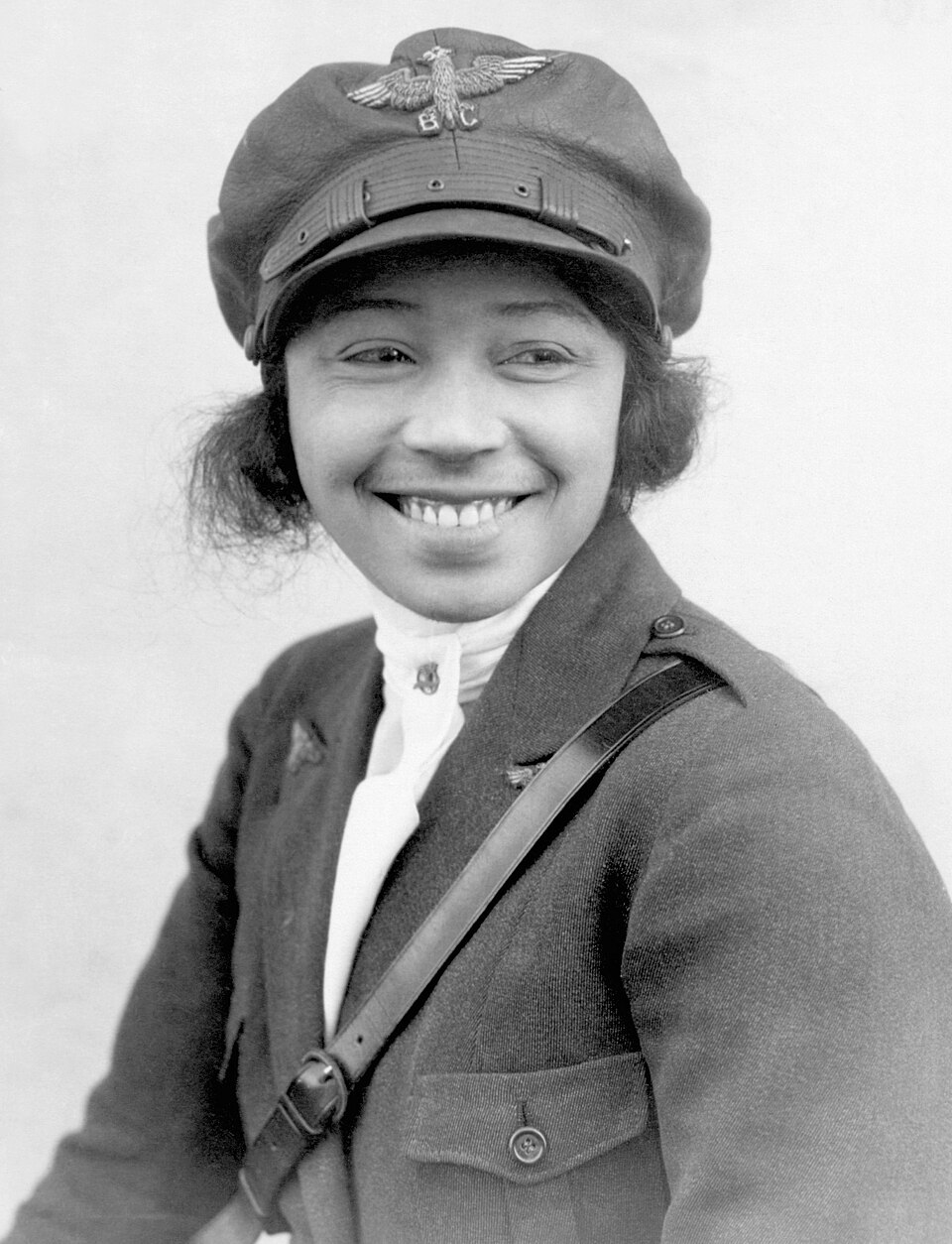
—In the evenings, you often take to the pulpit in churches and schools. What do you come to say?
I come to tell the young people of my community that no barrier is meant to last, except those we carry inside. In those halls, often a Black church or a small association, I tell them about my Texas, my sharecropper family, the corn and beans on our table, then I tell them about Le Crotoy and the license. I want them to see the whole path, so it doesn't seem impossible. Some look at me as if I came from another planet; others, I can feel, leave with a new idea lodged in their minds. It's for those last ones that I make the journey. A stunt demonstration lasts three minutes; a kindled vocation lasts a lifetime.
No barrier is meant to last, except those we carry inside.
—These funds you amass from town to town, what do you really intend them for?
For a school. A flight school, here, in America, open to those of my race. Every dive, every roll I perform above the fairs is a stone I lay for that building that doesn't yet exist. I know better than anyone what it costs to have to cross the Atlantic just to touch a joystick: French learned in exhaustion, the boat, exile. I don't want a single boy, a single girl from our people to have to go abroad like me to learn to fly. When I landed in Chicago in 1921, I told the newspapers I wanted a school open to all, without distinction. That wasn't a casual phrase. It's the house I am building, air show after air show.
Every roll I perform is a stone I lay for a school that doesn't yet exist.
—You are convinced that your people need female aviators. Where does that certainty come from?
From seeing no one. As a child, in that South crushed by segregation, I never saw a Black woman at the controls of a machine, not on a poster, not in a newspaper. You don't dream of what you've never seen. So I decided I would be what I wished I could have seen. I once told a Los Angeles newspaper that I knew we needed Black female aviators, and that if someone had to lead the way, it would be me. That wasn't pride; it was necessity. A little girl who sees me splitting the clouds will no longer need to be told it's possible: she will have seen it with her own eyes.
You don't dream of what you've never seen.
—Flying these old planes carries dangers. Have you ever come close to the worst?
In 1923, in Santa Monica, my engine failed and I crashed. They picked me up with a broken leg, cracked ribs, and thought I was finished. I spent months immobile, healing. But as soon as I could stand, I went back up. Those secondhand Jennys are capricious beasts: they carry you and betray you on the same day. I know it, my mechanic knows it, and every morning inspection is a conversation with death that we try to postpone. But to give up the sky because it had thrown me down? Might as well give up breathing. You don't tame such a machine by fearing it.
These old planes carry you and betray you on the same day.
—You still take risks that others would consider reckless. Why fly without even a seatbelt?
Because before each stunt, you have to see. See the field, spot where the plane can dive safely for the crowd, measure the wind near the ground. For that, I unfasten the belt and lean out of the Jenny's open cockpit, observing every hedge, every dip. I know what you're thinking: it's reckless. But a poorly scouted stunt is more dangerous than an open belt. This trade is made of such bargains, struck with risk in a low voice. I know those bargains, and I accept them with open eyes. The day I'm afraid to lean out and look at the ground, that's the day I no longer deserve to fly over it.
This trade is made of bargains struck with risk in a low voice.
—If you imagined being read in a century, what would you want to remain of you?
That's a question that goes a bit beyond me, but let's play along. If someone, in a hundred years, opens a newspaper and comes across Queen Bess, I'd like them not to stop at the spectacle, the rolls and the leather goggles. I'd like them to see the school I hope to build, and all those who, thanks to it, will not have had to cross the ocean like me. License 18310 is only a starting point; what matters is the line of those who come after. Perhaps in a century, a Black woman at the controls will surprise no one. That day, believe me, I will have truly flown—far higher than anything my Jenny could ever reach.
The license is only a starting point; what matters is the line of those who come after.
This imaginary interview was generated by artificial intelligence from sources documented in Bessie Coleman's profile. It dramatises what the figure might have said based on what we know about them, but does not constitute attested historical testimony. For primary sources and factual documentation, refer to the full profile.