Imaginary interview with Bathsheba
by Charactorium · Bathsheba (1008 av. J.-C. — 936 av. J.-C.) · Spirituality · Society · Politics · 6 min read
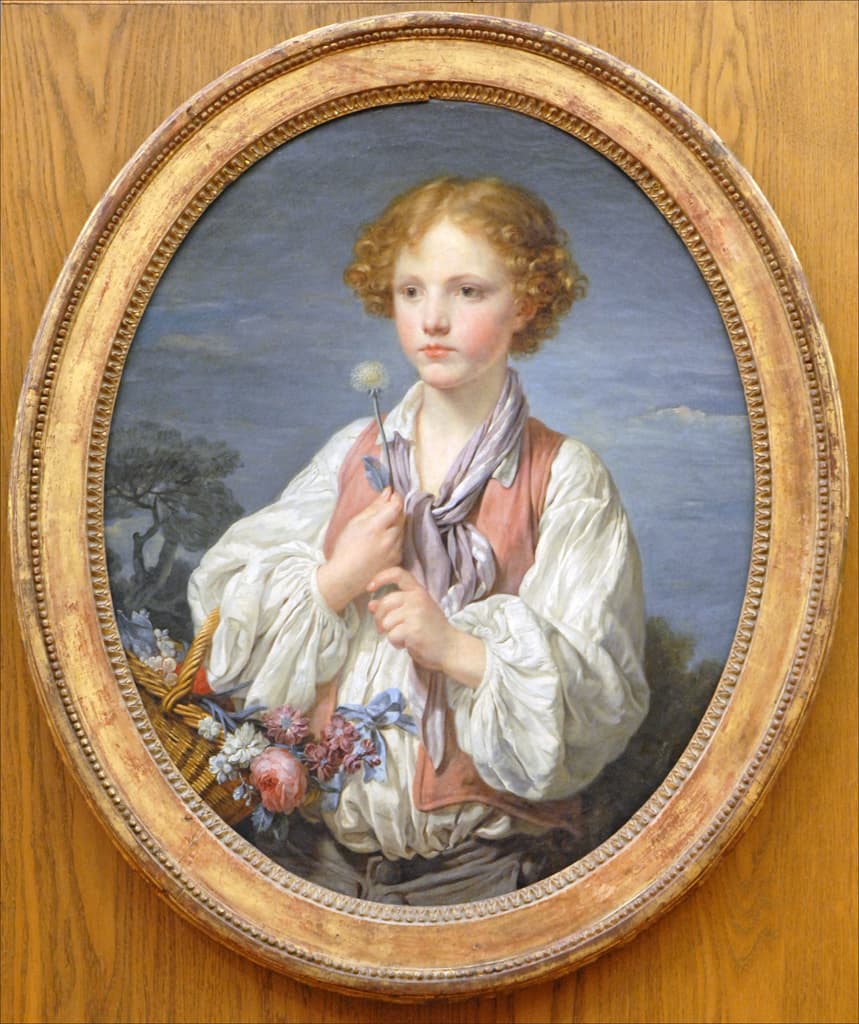
We met her in the royal apartments of Jerusalem, at the hour when the heat subsides over the City of David. Bathsheba, now queen mother with a throne at the right hand of her son Solomon, has agreed to revisit the years that led a wife of Uriah the Hittite into the heart of power. She speaks slowly, with the voice of one who has seen a child die and another girded with the crown.
—Do you remember the evening when King David first saw you?
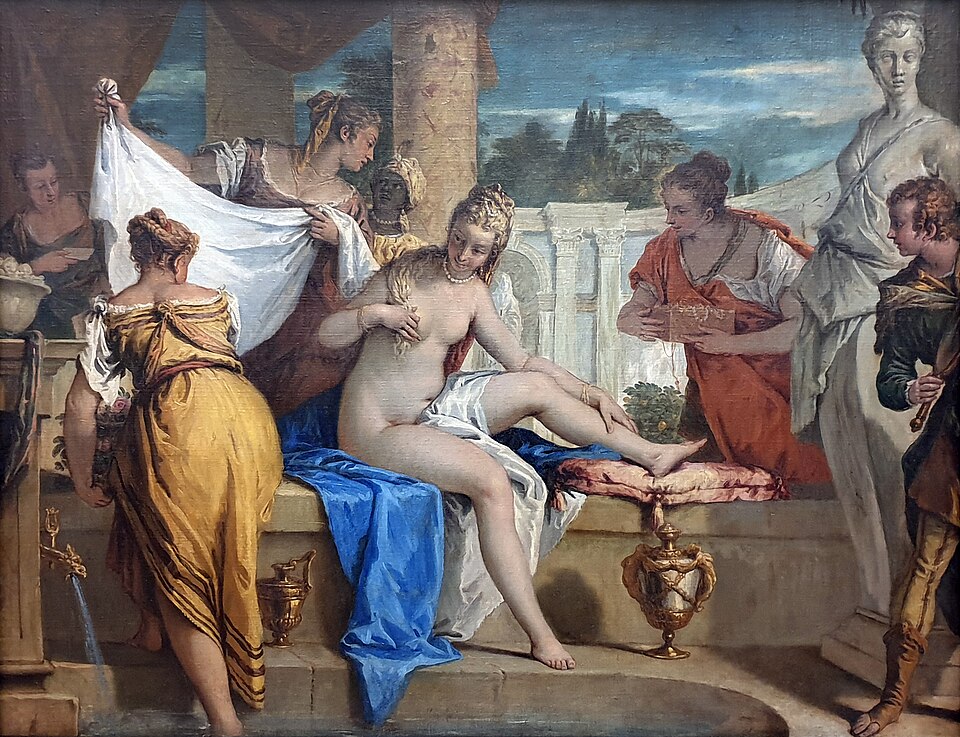
It was in spring, the season when kings usually go to war. He had stayed in Jerusalem. I had withdrawn for my ablutions, the purification waters that every woman of Israel knows, in the hidden courtyard of Uriah's house. I did not know that above, on the terrace of the king's house, a man was walking and looking down. They say he found me very beautiful of face. I saw nothing coming: servants came down, they asked my name, that of my father Eliam, that of my husband. Then I was led away. A bath of living water, which was to make me pure, became the beginning of a long impurity I had not chosen.
A bath of living water, which was to make me pure, became the beginning of a long impurity I had not chosen.
—How would you describe that terrace overlooking the city, and what it now means to you?
The palace terrace is the most beautiful place in Jerusalem: from there you embrace the whole City of David, the rooftop terraces, the valley where the spring flows. The king would go up there in the evening to take the cool air and contemplate his kingdom. I think of it differently. That belvedere made for glory was also the place from which a gaze descended upon a woman who asked for nothing. I do not blame the stone or the evening breeze. But I have known since that day that a height from which one dominates all is also a height from which one can take all. I have learned to distrust terraces as much as to love them.
—What can you tell us about Uriah the Hittite, your first husband?
Uriah was a foreign warrior who became one of David's most loyal men, a man of the kind we call a righteous one, a tsadiq. When the king recalled him from the siege of Rabbah — that city of the Ammonites, far beyond the Jordan — it was, I understood later, so that he would come home, sleep under my roof, and believe the child his own. But Uriah refused. He said that the Ark and his comrades were camping in the open field, and that he could not eat, drink, and lie with his wife. He slept at the palace gate, with the king's servants. His loyalty was his death warrant. No one in this story was more upright than the man who was sacrificed.
His loyalty was his death warrant. No one in this story was more upright than the man who was sacrificed.
—How did you learn the manner of Uriah's death?
At first the news was brought to me as a war casualty: my husband fallen under the walls of Rabbah, among other brave men. I mourned as was proper, for the duration of the mourning period. Only later did the truth come to light: a sealed letter, entrusted to Uriah himself, ordered General Joab to place him in the front line, where the fighting is fiercest, and then to withdraw from him so that he might be struck down. He had carried on his own heart the writing that commanded his ruin. Think of it: the king's hand, the king's seal, and the hand of the man who carried it unknowingly. Nothing has ever seemed more terrible to me than that letter.
—The prophet Nathan intervened after these events. How did that episode mark the court?
Nathan is a nabi, a spokesman for the God of Israel, and no king is too high for him. He came before David and, instead of accusing, he told a story: a rich man with countless flocks had taken a poor man's only ewe to offer to a traveler. David burned with anger against that imaginary thief and demanded his death. Then Nathan said to him these words that the whole court still repeats: “You are that man!” I think no king had ever been so naked before his fault. That parable, that mashal, brandished neither sword nor army. A simple story of a ewe made him bow before whom the nations bowed.
A simple story of a ewe made him bow before whom the nations bowed.
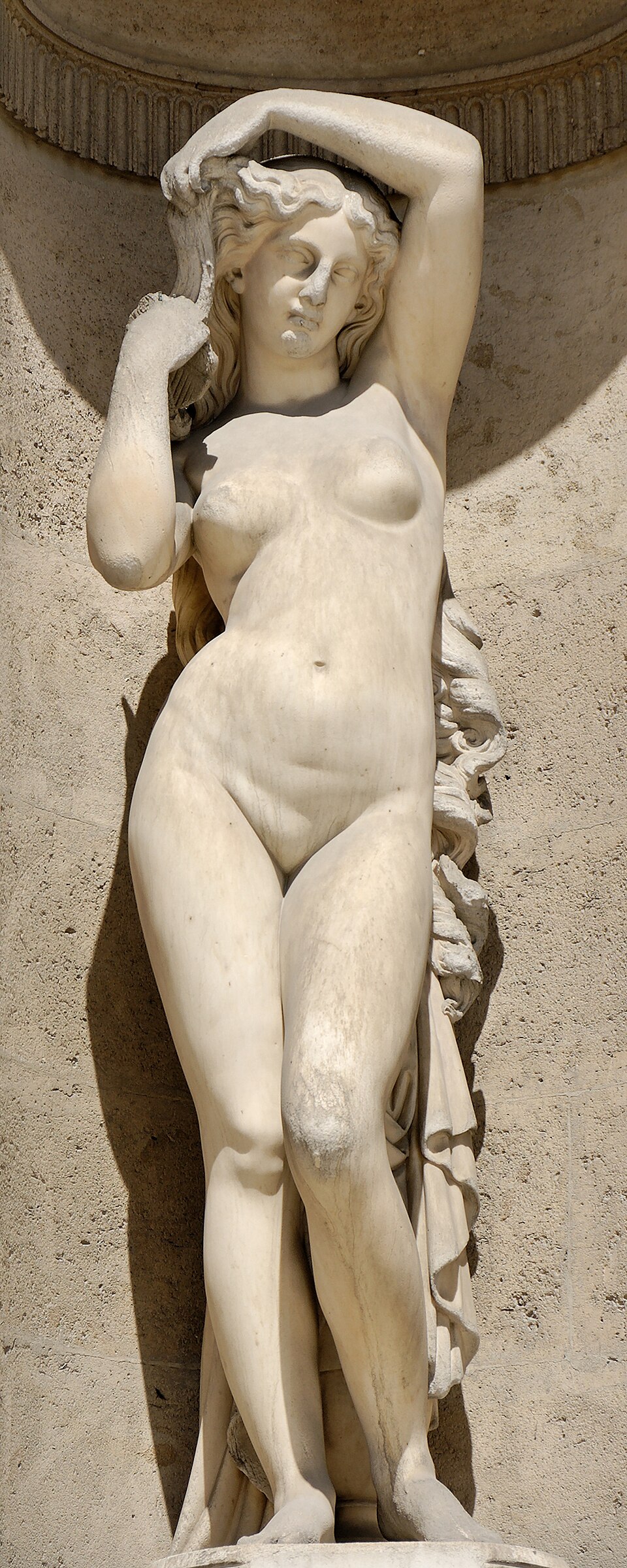
—David is credited with the Penitential Psalm, the Miserere. What does that song represent for you?
The first son I gave him fell ill and died, and we saw in it the announced punishment. David fasted, lay on the ground, refused bread. From that abyss was born, tradition says, the song called the Miserere. He pleads: “Have mercy on me, O God, according to your steadfast love; blot out my transgressions.” His harp, which usually accompanied the palace festivities, served only for this lament. I do not know how to forgive as Heaven forgives. But I heard a king confess his sin aloud, which kings do not do. And then Solomon was given to me, as if, after the night, we were given a morning.
—Years later, you intervened in the succession. What drove you to act?
David was old and cold; they covered him with clothes but could not warm him. And then Adonijah, his eldest surviving son, had had himself proclaimed king with the support of General Joab, without consulting his father. Nathan came to me: if we remained silent, my life and that of my son Solomon would be worth nothing. So I entered the king's chamber and reminded him of the oath he had sworn to me by the Lord his God: that Solomon would reign after him and sit on his throne. I did not wield the sword. I recalled a given word. In a house of kings, a kept promise is worth more than an army.
I did not wield the sword. I recalled a given word.
—How did the anointing of your son Solomon take place?
David acted at once. He ordered that Solomon be mounted on his own mule and led to the spring of Gihon, at the foot of the City. There the high priest Zadok took the horn of holy oil from the Tabernacle and anointed him; the ram's horn was sounded, and all the people shouted: “Long live King Solomon!” The city trembled. Adonijah and his guests, feasting not far away, understood by the clamor that the throne was slipping from them. Thus my son was made meshiah, the Lord's anointed, while his father was still alive. No civil war, no brother slaying brother that day: the oil had spoken louder than the sword.
—What does it mean to be queen mother at Solomon's court?
I am now called gebirah, the great lady. It is not a title of tenderness: it is an office. When I enter, the king my son rises, bows down, then has a seat placed at his right hand, and I sit there. At the king's right hand — understand the weight of those words in a court. Dignitaries who dare not approach the king come first to me to intercede. I oversee palace affairs, ties with the clergy of the Temple that Solomon is building in hewn stone and cedar of Lebanon. The woman who was once brought up in secret by servants now sits in broad daylight, in the sight of all Israel.
The woman who was once brought up in secret now sits in broad daylight, in the sight of all Israel.
—What are your days like in the royal apartments?
I rise before dawn for ablutions and the first prayers. News of the kingdom is brought to me by messengers, and I supervise the palace maids. In the afternoon, I receive: a man wants an audience, a widow seeks justice, a priest of the Temple comes to discuss oil and offerings; the protocol is strict, one does not enter the gebirah's presence as into a shop. I wear white linen of the veil, a sign of my rank, and wool dyed with Tyrian purple. In the evening at banquets, the oil lamp burns while psalms and wisdom poems are recited. My life has the slowness of ancient courts, but every gesture there is a thread of power.
—Looking back, what meaning do you give to your place in David's line?
I do not tell myself stories about myself. I was taken, not chosen; a widow before being a wife; mother of a buried child before being mother of a king. And yet, from the house born of that spring night came Solomon, who built the Temple, and a dynasty that the prophets say bears the hope of Israel. I do not know what will be remembered of me in a century or ten. Perhaps only that I was “the wife of Uriah.” If that name is kept, let it be kept well: let the upright man on whom everything was built never be forgotten. Heaven writes its lines through women who were thought to be only passing through.
Heaven writes its lines through women who were thought to be only passing through.

This imaginary interview was generated by artificial intelligence from sources documented in Bathsheba's profile. It dramatises what the figure might have said based on what we know about them, but does not constitute attested historical testimony. For primary sources and factual documentation, refer to the full profile.